
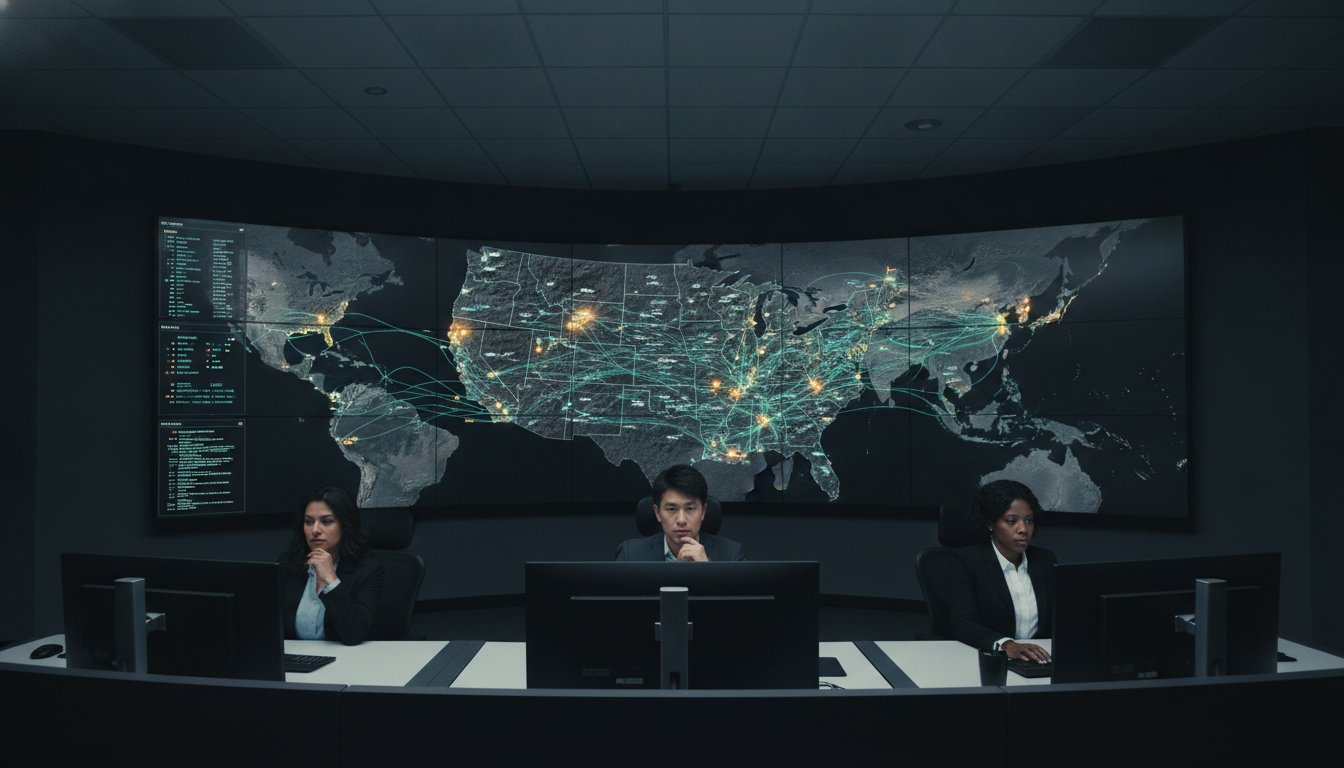
A Command and Control Center filled with high-definition displays is often just a room full of expensive distractions. You’ve likely felt the mounting tension of managing dozens of feeds while fearing a critical incident might slip through the cracks of a siloed system. Operator fatigue is a silent threat to operational readiness, especially when critical data remains trapped in fragmented platforms. Most control rooms already have the screens. What they’re missing is the layer that decides what goes on them, and escalates automatically when something needs attention.
This article outlines the transition from reactive monitoring to proactive intelligence. You’ll learn how to implement an operational intelligence layer that unifies disparate tools, such as Axon feeds, into a single, cohesive operating picture. While individual tools provide valuable data, they often lack the integration required for total situational awareness across distributed teams. We’ll explore how the vis/ability platform acts as the central hub for your entire team; reducing cognitive load and ensuring that every mission-critical decision is backed by clear, actionable insights.
Key Takeaways
- Define the modern Command and Control Center as a proactive intelligence hub that prioritizes essential data over passive screen monitoring.
- Identify the core physical and digital components necessary to build a high-performance environment that supports rapid, mission-critical decision-making.
- Eliminate data siloes and operator fatigue by implementing automated escalation protocols that surface only the most relevant information during a crisis.
- Follow a strategic blueprint to map field data directly to actionable intelligence, ensuring your entire organization maintains a unified operating picture.
- Discover how an operational intelligence layer unifies distributed teams and mobile responders into a single, cohesive platform for operational readiness.
What is a Command and Control Center in 2026?
A Command and Control Center serves as the central nervous system for high-stakes operations. Historically, command and control was defined by military hierarchies and the exercise of authority. In 2026, the definition has shifted. A modern center is a centralized hub where monitoring, analyzing, and responding to critical data happen in a unified environment. It’s no longer just about seeing information; it’s about the intelligence derived from that data to ensure operational readiness.
Legacy monitoring rooms often fail because they rely on human observation alone. Operators are tasked with watching hundreds of feeds, a process that inevitably leads to fatigue and missed anomalies. Modern intelligence centers replace this passive model with human-machine collaboration. The primary goal is situational awareness, the ability to perceive, comprehend, and project the status of an environment under pressure. Most control rooms already have the screens. What they’re missing is the layer that decides what goes on them, and escalates automatically when something needs attention.
The Evolution from Passive Monitoring to Active Intelligence
Legacy systems forced operators to “catch” incidents on screen through constant vigilance. This reactive posture is dangerous in an era of rapid digital and physical threats. Modern centers utilize event-driven architectures that flag anomalies automatically. When a sensor or software trigger identifies a threat, the system surfaces the relevant data immediately. This shift requires a total integration of cybersecurity and physical security feeds. By treating these as a single threat landscape, teams act with absolute technical reliability. The modern center doesn’t just display data; it prioritizes it.
Key Sectors Requiring Advanced CCC Solutions
- Utilities and Energy: Maintaining grid stability requires more than just oversight. It demands strict adherence to NERC CIP compliance through real-time data aggregation and constant visibility.
- Public Safety: Real-time crime centers use diverse data streams to protect communities. While tools like Axon provide critical field perspectives, they only offer a partial solution. To achieve a full common operating picture, these feeds must flow into a unifying operational intelligence layer like vis/ability.
- Transportation: National networks depend on operational continuity. A modern center ensures that disruptions in one region don’t trigger a cascade of failures across the entire network by providing a unified operating picture.
By moving beyond the limitations of legacy hardware, organizations transform their space into a proactive intelligence hub. This evolution ensures that when stakes are highest, the human element is empowered by technology rather than overwhelmed by it.
Core Components of a High-Performance Command Center
A high-performance Command and Control Center is more than a collection of furniture and monitors. It’s a synchronized ecosystem where physical infrastructure and digital intelligence converge to support rapid decision-making. Utilizing C.O.I.N. (Central Operations Intelligence Network) allows organizations to streamline business management and operational oversight within this complex environment. While basic setups focus on racks and workstations, a truly effective center integrates Video Management Systems (VMS), SIEM logs, IoT sensors, and geospatial mapping into a single, cohesive view. This integration ensures that when a critical event occurs, the team isn’t digging through siloed data feeds or struggling with fragmented systems.
Physical infrastructure remains the foundation of operational readiness. Ergonomic console furniture and specialized lighting are essential to reduce operator fatigue during long shifts. These elements work in tandem with advanced communication systems that provide unified voice, text, and field-unit connectivity throughout the Command and Control Center. Organizations looking to optimize these components often start with professional control room design services to ensure every element supports mission goals.
Video Wall Systems: More Than Just Large Screens
High-resolution, 24/7-rated displays provide the clarity required for mission-critical oversight. These video wall systems serve as the visual anchor for the team, creating a shared operating picture that everyone can see. Clarity is vital when operators must distinguish minute details in complex data sets or surveillance feeds. Yet, hardware alone is insufficient. A screen without intelligent content management is just a passive display. It doesn’t help an operator decide which of the fifty camera feeds requires immediate intervention.
The Operational Intelligence Layer
This is where the transition from monitoring to intelligence happens. Most control rooms already have the screens. What they’re missing is the layer that decides what goes on them, and escalates automatically when something needs attention. The vis/ability platform acts as this operational intelligence layer. It aggregates real-time video and data into a single interface, ensuring that the right information reaches the right person at the right time.
Application integration is the engine behind this process. It makes other tools, like field sensors or dispatch software, useful for the entire team. While some organizations use standalone tools for field data, those products often provide only a partial solution. They lack the unifying layer needed to create a full common operating picture. By using vis/ability as the central hub, organizations empower their teams to act with certainty, whether they’re in the command center, a huddle room, or using mobile devices in the field.
Solving the Crisis of Saturated Situational Awareness
Operators in a Command and Control Center often face a paradox. They’re surrounded by more data than ever before, yet they lack the clarity needed to act. Saturated situational awareness occurs when the volume of incoming feeds exceeds the human capacity to process them. When an operator is forced to monitor dozens of screens simultaneously, cognitive load increases and attention fractures. This exhaustion is a primary reason why critical incidents go unnoticed until it’s too late. Most control rooms already have the screens. What they’re missing is the layer that decides what goes on them, and escalates automatically when something needs attention.
Information overload is compounded by the presence of data siloes. In many organizations, the Network Operations Center (NOC), Security Operations Center (SOC), and Emergency Operations Center (EOC) don’t speak the same language. A network anomaly might be the first sign of a physical security breach, but if those feeds remain separate, the connection is lost. True operational readiness requires a platform that dissolves these barriers, turning fragmented data into a unified stream of actionable intelligence.
Bridging Siloed Data Streams
Standalone tools like Axon or specific VMS platforms are excellent at capturing field data, but they only provide a partial solution. They function as isolated islands of information. Without a unifying layer, these tools can’t contribute to a full common operating picture. The vis/ability platform acts as the central hub where these diverse software tools converge. This integration is vital in complex environments like transportation hubs, where response times must be measured in seconds. By aggregating transit sensors, security video, and mobile responder feeds into one interface, vis/ability ensures that the entire team works from the same playbook.
Automating Incident Escalation
Event-driven visualization is the most effective antidote to information overload. Instead of requiring operators to hunt for anomalies, the system surfaces them automatically. You can set specific technical triggers based on your mission goals. When an alarm sounds or a sensor threshold is crossed, the relevant data immediately hits the video wall. This process strips away the “noise” of non-essential feeds, allowing operators to focus their human judgment where it’s needed most. Automated escalation ensures that every stakeholder, from the commander in the center to the technician on a mobile device, sees the same critical data at the same time. This synchronization reduces the time from incident detection to decisive action, providing a sense of calm and clarity even as a crisis unfolds.

Designing Your Center for Operational Readiness
Designing a Command and Control Center requires a shift from hardware procurement to workflow engineering. A room filled with screens is only as effective as the strategy behind its layout and the intelligence of its data feeds. Operational readiness depends on a structured design process that prioritizes human judgment over raw technical capacity. By following a methodical blueprint, organizations can build environments that provide steady reassurance even during the most complex incidents.
The first step is identifying operational pain points and specific mission goals. You must understand where data currently fails to reach decision-makers. Second, map the data flow from the field to the center. This ensures every sensor and camera feed has a clear path to the operators who need them. Third, select an integration platform that supports mission critical operations. Most control rooms already have the screens. What they’re missing is the layer that decides what goes on them, and escalates automatically when something needs attention.
The fourth step involves optimizing the physical layout for operator collaboration. Sightlines to the video wall must be clear, and huddle rooms should be positioned for rapid transition from monitoring to crisis management. Finally, implement mobile and distributed access. Modern operations don’t end at the center’s walls; field units must have the same situational awareness as those in the main room.
Ergonomics and Human-Centric Design
Operator performance is directly tied to their physical environment. Specialized console furniture is essential to reduce fatigue during 24/7 operations. Effective control room design incorporates the science of acoustics, lighting, and sightlines to maintain a state of calm and clarity. When an operator is comfortable and the environment is quiet, their cognitive load remains low, allowing them to focus entirely on actionable intelligence rather than physical discomfort.
Future-Proofing with COTS and Scalable Software
Rigid, proprietary hardware often leads to technical debt. The modern Command and Control Center thrives on Commercial Off-the-Shelf (COTS) solutions that offer flexibility and scalability. Hardware-agnostic software ensures your long-term ROI because it allows the system to grow as new data sources or sensors emerge. This approach prevents the siloed architecture that plagues legacy centers. By choosing a scalable platform like vis/ability, you ensure that your operational intelligence layer remains the bedrock of your facility for years to come.
Ready to move from passive monitoring to proactive intelligence? Contact our design services team to begin engineering your next-generation operations center.
Activu vis/ability: The Operational Intelligence Hub
The vis/ability platform serves as the definitive operational intelligence layer for the modern Command and Control Center. It acts as the unifying hub into which all other software tools, sensors, and video feeds flow. While many organizations invest heavily in hardware, they often struggle with the same fragmented data feeds and operator fatigue that plague legacy systems. Most control rooms already have the screens. What they’re missing is the layer that decides what goes on them, and escalates automatically when something needs attention.
By resolving the data siloes discussed earlier, vis/ability transforms a reactive environment into a proactive intelligence hub. It prioritizes essential information, ensuring that critical incidents are never lost in a sea of non-essential data. A key feature of this platform is the Cybersecurity Common Operating Picture. This capability provides a visual bridge between digital threats and physical security, allowing teams to see a unified threat landscape in real time. While some teams utilize Barco CTRL for basic display control, that software often falls short in high-stakes environments because it lacks deep application integration and event-driven automation. vis/ability provides the missing intelligence layer that prioritizes data based on mission-critical triggers.
Unified Visibility Across the Enterprise
The power of vis/ability lies in its ability to make existing tools useful for the entire team. It creates a shared consciousness between the operators in the command center, leadership in huddle rooms, and stakeholders across the enterprise. This synchronization is particularly vital in public safety and defense, where a common operating picture ensures everyone acts with the same intelligence. When a crisis occurs, leadership can immediately view the same high-priority feeds as the operators, facilitating faster approvals and more certain decisions.
Mobile vis/ability: Extending the COP to the Field
Operational readiness doesn’t end at the walls of the command center. Mobile vis/ability extends the common operating picture directly to field units on their mobile devices. This ensures that responders have the same situational awareness as the commanders overseeing the mission. Providing field units with real-time video and geospatial data enables faster, more accurate decision-making where it matters most. By closing the loop between incident detection in the center and resolution in the field, vis/ability ensures that every action is backed by absolute technical reliability. This distributed collaboration model removes the delays inherent in voice-only communication, allowing for a seamless flow of intelligence across the entire organization.
Advancing Toward Proactive Operational Intelligence
Transforming a traditional Command and Control Center into a proactive intelligence hub requires more than just high-resolution screens. It demands a strategic shift toward event-driven visualization and the removal of data siloes that hinder rapid response. By integrating physical and digital security feeds into a single operating picture, organizations achieve the clarity needed to act with certainty. Most control rooms already have the screens. What they’re missing is the layer that decides what goes on them, and escalates automatically when something needs attention.
The vis/ability platform provides this essential layer. It’s a hardware-agnostic solution that integrates seamlessly with your existing VMS and SIEM tools. This approach reduces time-to-decision by automating the escalation of critical data. It’s a capability trusted by national utilities, transportation networks, and public safety agencies. Moving beyond fragmented systems allows your team to focus on human judgment while the technology handles the complexity of data aggregation. You can build a center that remains the bedrock of your operations even during the most urgent incidents. For those looking to implement this level of unified AI infrastructure across their entire organization or personal ventures, check out LifeOS™ by Venturis 13.
Take the next step in your operational evolution. Request a demo of the vis/ability platform to unify your operations.
Frequently Asked Questions
What is the primary purpose of a Command and Control Center?
The primary purpose of a Command and Control Center is to provide a centralized environment for the exercise of authority and direction over a mission. It serves as the hub where data from diverse sources is aggregated to facilitate rapid, informed decision-making. By maintaining a unified operating picture, the center ensures that all stakeholders can respond to critical incidents with absolute technical reliability and clarity.
How does a CCC differ from a Network Operations Center (NOC)?
A NOC typically focuses on the health and performance of network infrastructure, while a Command and Control Center manages broader operational missions. While a NOC monitors uptime and latency, a CCC integrates physical security, cybersecurity, and field operations to ensure mission success. The CCC acts as the strategic engine that translates technical data into actionable intelligence for both leadership and field units.
What are the essential technologies for a modern command center?
Modern centers require high-resolution video wall systems, robust communication tools, and integrated data feeds like VMS and SIEM. However, hardware alone is insufficient. The most essential technology is an operational intelligence layer that unifies these disparate tools. Most control rooms already have the screens. What they’re missing is the layer that decides what goes on them, and escalates automatically when something needs attention.
Why is situational awareness critical in command and control?
Situational awareness allows operators to understand the current state of an environment and predict potential threats before they escalate. In high-stakes operations, this clarity is the bedrock upon which every decision is made. Without it, teams are forced into a reactive posture, leading to missed incidents and fragmented responses that compromise safety and operational continuity across the entire organization.
How can I reduce operator fatigue in a 24/7 control room?
Reducing operator fatigue requires a combination of ergonomic design and intelligent data filtering. Specialized console furniture and optimized lighting reduce physical strain, while automated escalation protocols minimize cognitive load. By surfacing only the most relevant information, systems like vis/ability prevent operators from becoming overwhelmed by the noise of non-essential feeds, allowing them to remain focused and analytical during long shifts.
Can existing video walls be integrated into a new situational awareness platform?
Yes, hardware-agnostic platforms can integrate existing video walls and legacy hardware into a modern situational awareness environment. You don’t need to replace your entire infrastructure to gain advanced intelligence capabilities. An integration platform bridges the gap between your current hardware and new, event-driven data sources, ensuring long-term ROI and the flexibility to grow as your operational needs evolve.
What is a Common Operating Picture (COP) in a command center environment?
A Common Operating Picture is a single, identical display of relevant information shared across an entire organization. It ensures that the command center, executive leadership, and mobile field units are all viewing the same intelligence simultaneously. This synchronization eliminates the confusion caused by siloed data, allowing distributed teams to collaborate with a shared consciousness during mission-critical events where every second counts.
How does event-driven visualization improve incident response times?
Event-driven visualization improves response times by automatically surfacing critical data based on predefined technical triggers. Instead of operators manually scanning screens to find anomalies, the system brings the incident to them the moment a sensor or alarm is triggered. This automation reduces the time between incident detection and human action, providing the calm and clarity needed to resolve threats with greater certainty.