
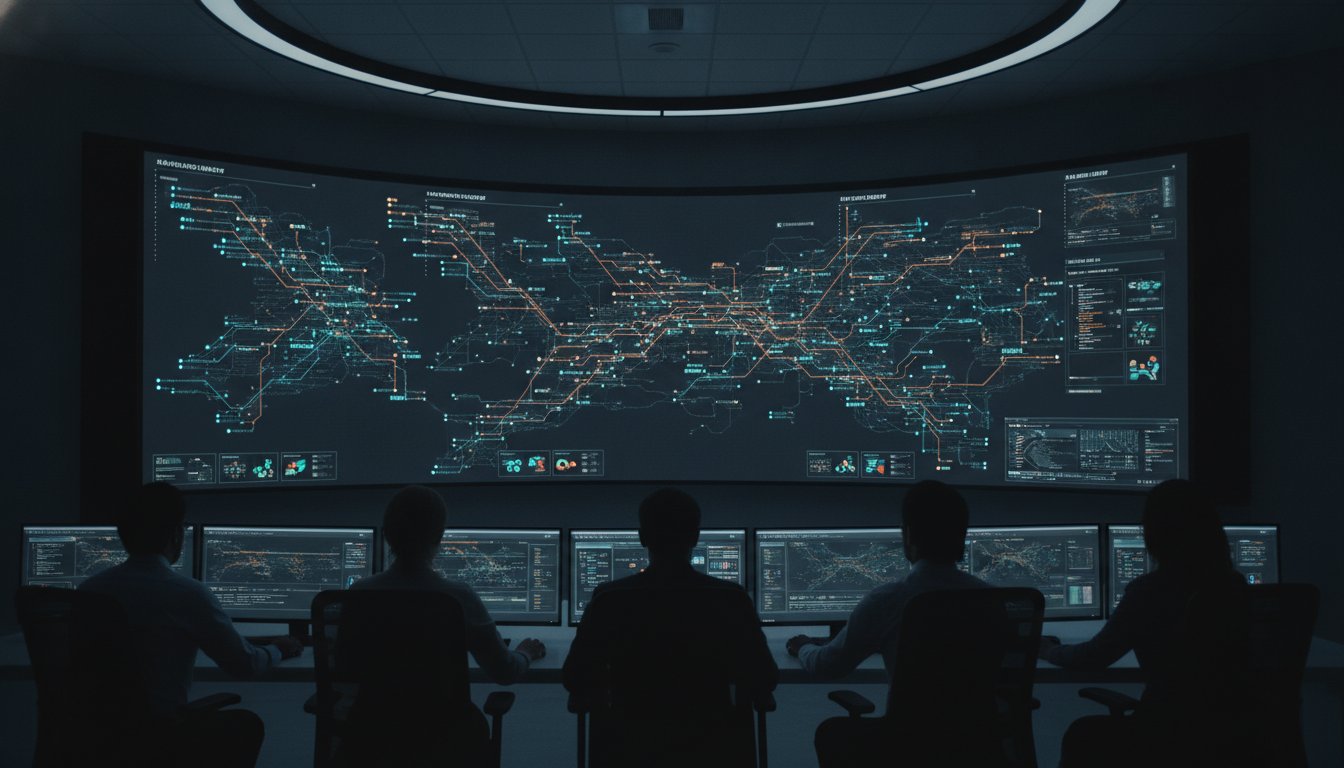
Organizations take an average of 241 days to identify and contain a data breach, largely because mission-critical information remains trapped in disconnected silos. You likely recognize the exhaustion that comes from monitoring too many screens while manual data aggregation slows your response to a crawl. This gap between IT intelligence and physical situational awareness creates blind spots that threaten your operational continuity. Real cybersecurity visualization isn’t just a display of data; it’s the clarity required to make high-stakes decisions under pressure.
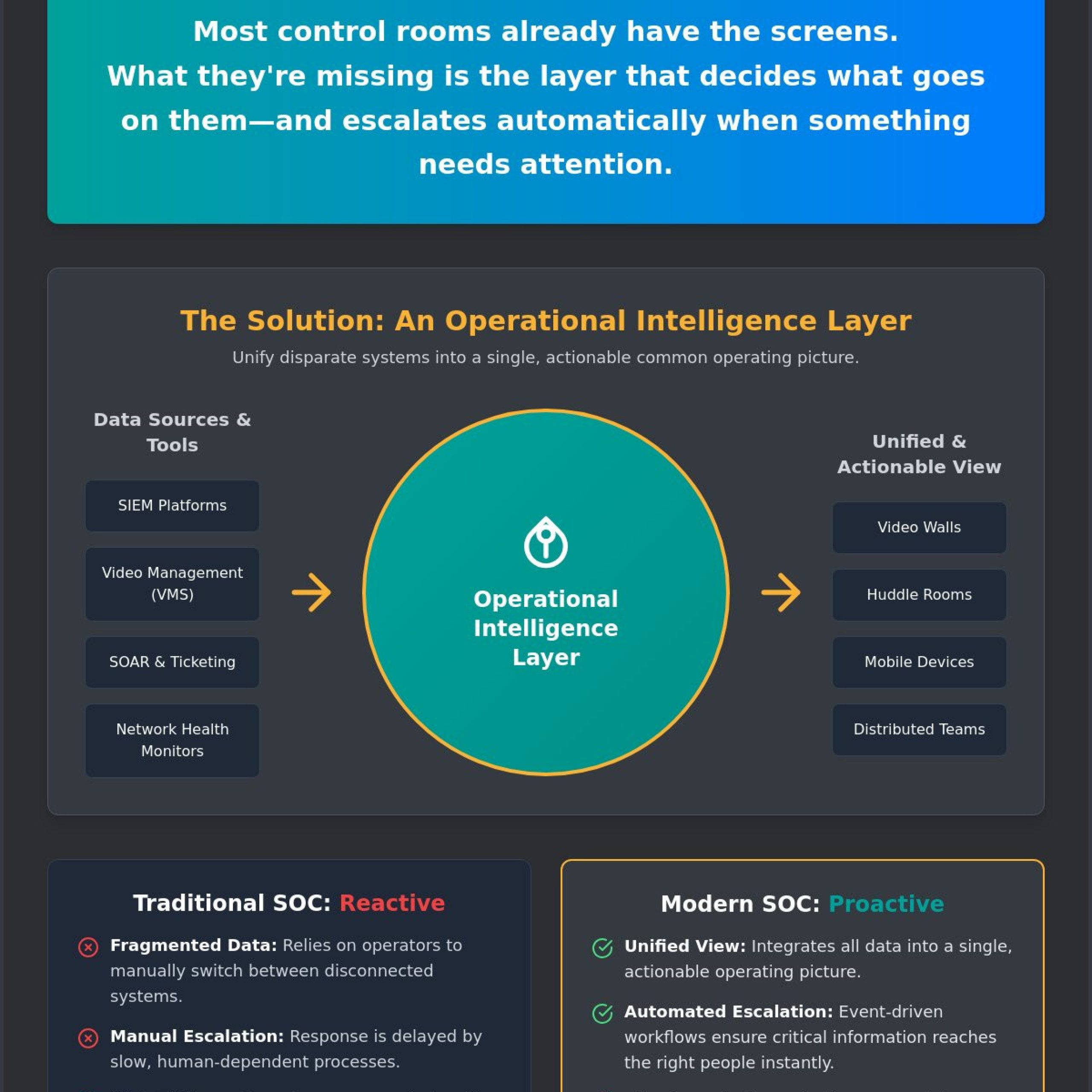
Most control rooms already have the screens. What they’re missing is the layer that decides what goes on them, and escalates automatically when something needs attention. Specialized tools like SIEM platforms or video management systems provide essential data, yet they often fail to create a complete common operating picture on their own. This guide details how to implement an operational intelligence layer that functions as a unifying hub for your entire team. You’ll gain a clear framework for modern SOC functions that eliminate silos and empower operators to respond to incidents with speed and precision.
Key Takeaways
- Understand the shift from reactive monitoring to proactive, event-driven operations that secure both digital and physical assets.
- Learn how advanced cybersecurity visualization overcomes the “swivel-chair” problem by unifying fragmented data into a single, actionable view.
- Discover the methodology for auditing operational silos and establishing automatic escalation protocols to ensure incident response remains uninterrupted.
- Explore how an operational intelligence layer serves as a central hub, enhancing the utility of existing security tools for distributed teams.
- Gain a strategic framework for prioritizing essential information, reducing operator fatigue, and maintaining absolute situational awareness during high-stakes events.
Defining the Security Operations Center (SOC) in 2026
Modern national infrastructure relies on the Security Operations Center (SOC) as its central nervous system. This facility no longer functions as a dark room where technicians wait for red lights to flash. In 2026, the SOC has evolved into a proactive, event-driven command center. It integrates digital threat intelligence with physical situational awareness to protect assets that are increasingly interconnected. While traditional models focused strictly on IT network health, the modern converged center manages everything from server room environmental data to wide-area network breaches. The stakes have never been higher. As critical infrastructure becomes more digitized, the SOC must act as a vigilant guardian, ensuring that technical tools empower individuals to act with certainty during the moment of a pivotal decision.
Most control rooms already have the screens. What they’re missing is the layer that decides what goes on them, and escalates automatically when something needs attention. Without this intelligence, operators suffer from data fatigue. They stare at hundreds of feeds without knowing which one requires immediate action. This delay in human judgment often leads to catastrophic downtime or data loss that could’ve been avoided with better data prioritization.
The Convergence of Cyber and Physical Security
Siloed security models are failing because sophisticated threats now cross the boundary between the digital and physical worlds. An attacker might use a physical breach to gain network access; alternatively, a cyberattack could disable physical security systems to facilitate an entry. Organizations require a Cybersecurity Common Operating Picture that provides a unified view of both domains. Effective cybersecurity visualization acts as the bridge here. It transforms raw logs and video feeds into a clear, geospatial map of risk. This convergence eliminates the “swivel-chair” problem where operators must manually correlate data from different systems to understand a single event.
Integrating professional physical oversight is a key component of this unified approach. Expert providers like Samuels’ Security and Investigators Ltd. offer the necessary patrol and officer services to ensure that physical vulnerabilities identified through digital visualization are addressed promptly on the ground.
SOC Objectives: Beyond Threat Detection
The primary goals of the modern SOC extend far beyond simple threat detection. Incident response, regulatory compliance, and operational continuity are the new benchmarks of success. Maintaining a steady state of operational readiness is critical for sectors like utilities, transportation, and defense. This requires more than just hardware. It requires an operational intelligence layer that aggregates data from tools like SIEM, SOAR, or VMS platforms. While these tools provide valuable data, they only offer a partial solution. They need a unifying platform like vis/ability from Activu Corporation to make that data useful for the entire team. High-level cybersecurity visualization ensures that whether the team is in the command center or responding via mobile devices, they see the same critical information at the same time. This visibility informs long-term strategic decisions and ensures the organization remains resilient against evolving threats.
The Anatomy of a High-Performance Security Operations Center
Building a high-performance command center requires a precise balance between three core pillars: people, process, and technology. Many organizations mistakenly prioritize hardware, assuming that high-resolution video walls automatically generate situational awareness. Hardware alone does not create clarity; it simply provides the canvas. True operational readiness comes from a structured environment where standard operating procedures (SOPs) dictate how data flows during a crisis. Without a platform to unify disparate data streams, even the most expensive equipment remains a collection of disconnected monitors. Most control rooms already have the screens. What they’re missing is the layer that decides what goes on them, and escalates automatically when something needs attention.
When an incident occurs, the response must be methodical. SOPs ensure that every analyst knows exactly which data points to prioritize and which stakeholders to notify. This structured approach prevents the chaos often associated with manual data aggregation. By implementing an operational intelligence layer, organizations can ensure their technology stack supports their people rather than overwhelming them. You can consult with our design experts to evaluate how your current infrastructure handles these critical data transitions.
Critical Roles and Human-Centric Design
The human element remains the bedrock of any successful operation. Tier 1 analysts require granular data to investigate alerts, while SOC Managers need a high-level strategic overview to coordinate resources. Operator fatigue is a persistent threat in 24/7 environments, where the cognitive load of monitoring hundreds of feeds leads to missed incidents. High-performance centers use cybersecurity visualization to reduce this burden. Instead of forcing analysts to stare at static screens, the system should only surface information when a specific trigger event occurs. This approach empowers human judgment, ensuring that experts remain focused and analytical when the stakes are at their highest.
The Technology Stack: Software vs. Intelligence
A modern technology stack typically integrates SIEM for log analysis, SOAR for orchestration, and various threat intelligence feeds. While these tools are powerful, they often create new silos. For example, many specialized situational awareness platforms provide vital data, yet they only offer a partial solution for a team that needs a full common operating picture. Research indicates that sophisticated Data Visualization Cuts Threat Analysis Time by removing the need for manual correlation. Within this framework, SITREP automation ensures that critical status reports are generated and distributed across the organization instantly, maintaining a steady flow of intelligence. Effective cybersecurity visualization transforms these individual software components into a unified intelligence hub, making every tool in the stack more valuable to the entire team.
The Visibility Gap: Why Traditional SOCs Struggle
Traditional security operations centers often operate under a dangerous illusion of control. While walls of monitors display endless streams of data, the underlying reality is one of severe fragmentation. Siloed systems prevent a clear, unified picture from emerging during high-stakes events. Operators are forced into the “swivel-chair” problem, manually correlating alerts from one platform with video feeds from another. This manual process is slow and error-prone. When critical alerts are buried in a sea of background noise, the organization remains vulnerable to undetected threats. Most control rooms already have the screens. What they’re missing is the layer that decides what goes on them, and escalates automatically when something needs attention.
The Problem with Fragmented Data Streams
Disparate applications create significant blind spots that attackers exploit. In sectors like transportation or utilities, a delay of even a few seconds in data correlation can lead to catastrophic operational failure. Traditional SOCs rely on operators to act as the integration layer, a role humans are not equipped to perform under pressure. Without a common operating picture, the team lacks the intelligence required to ensure operational resilience. High-quality cybersecurity visualization must do more than just show data. It must provide the context that allows a team to move from a state of complexity to a state of clear, actionable intelligence.
Operator Fatigue and Information Overload
The psychological impact of “wall of glass” monitoring cannot be overstated. Constant exposure to unprioritized data leads to cognitive exhaustion, causing even the most seasoned experts to miss pivotal indicators of a breach. Monitoring hundreds of feeds without an automated prioritization strategy is a recipe for failure. Organizations must understand how to reduce operator fatigue by moving toward event-driven visualization. This methodology ensures that screens only change when a specific trigger occurs, immediately drawing the operator’s focus to the most urgent threat. By reducing background noise, cybersecurity visualization empowers individuals to act with greater certainty when the stakes are at their highest. This transition from passive monitoring to active, intelligence-led oversight is the bedrock of a modern, resilient operation.
Architecting Situational Awareness for Mission-Critical Sectors
Architecture for situational awareness requires a methodical approach that moves beyond simple monitoring. It begins by identifying exactly where information is siloed within your current infrastructure. Operators often waste time jumping between platforms, which directly delays critical response times. To solve this, organizations must audit their existing data streams and identify where integration into a central hub is most critical. This audit reveals the gaps that prevent a unified view of organizational health.
The next phase involves defining specific trigger events that require immediate attention. Most control rooms already have the screens. What they’re missing is the layer that decides what goes on them, and escalates automatically when something needs attention. By automating this escalation through a platform like vis/ability, you ensure that the most important data is always front and center. This event-driven model removes the burden of constant manual oversight from the operator.
Effective cybersecurity visualization then bridges the gap between digital and physical assets. This creates a unified environment where a network breach alert is viewed alongside physical security camera feeds in the affected location. Extending this visibility to mobile and distributed teams ensures that field personnel and remote huddle rooms share the same intelligence. Finally, use post-incident analysis to continuously refine the operating picture, identifying new triggers and improving the response logic based on real-world performance data.
Tailoring the SOC for Specific Industries
Different sectors face unique operational demands that require specialized configurations. In Utilities and Energy, the focus is on maintaining grid stability and protecting physical infrastructure from sophisticated cyber threats. Public Safety and Fusion Centers require rapid data correlation to manage large-scale emergencies and multi-agency coordination effectively. Meanwhile, Transportation and Logistics operations must monitor vast, distributed networks where a single point of failure can disrupt global supply chains. Each of these environments benefits from a tailored cybersecurity visualization strategy that prioritizes industry-specific risks.
Implementing a Common Operating Picture (COP)
A Common Operating Picture (COP) serves as the single source of truth for the entire organization. It allows every stakeholder to view the same real-time data, which facilitates faster and more accurate SITREPs during a crisis. Integrating incident management software into this COP ensures that response protocols are followed with absolute precision. This architecture transforms the SOC into a powerful engine for operational continuity, ensuring that human judgment is supported by the most relevant data. To see how these layers integrate within your specific environment, request a strategic consultation with our team.
vis/ability: The Operational Intelligence Layer for the SOC
The modern SOC requires more than a collection of software licenses. It demands a specialized operational intelligence layer that transforms fragmented data into a clear common operating picture. The vis/ability Platform serves as this central hub, aggregating real-time data and video streams from across the enterprise. While standard tools like SIEM platforms or disparate video management systems provide critical data points, they often function in isolation. They require manual correlation that slows response times and increases the risk of error. vis/ability makes these existing tools more useful for the entire team by integrating their outputs into a single, unified interface.
Most control rooms already have the screens. What they’re missing is the layer that decides what goes on them, and escalates automatically when something needs attention. This event-driven situational awareness ensures that the SOC moves from a reactive posture to a proactive one. When a threshold is met or a specific threat is detected, the platform automatically updates the video wall and alerts relevant stakeholders. This automation removes the guesswork from incident response. It allows teams to focus on mitigation rather than data hunting.
Mobile vis/ability extends this power to field collaboration and remote decision-making. High-stakes environments often involve distributed teams that must stay synchronized during a crisis. By providing a secure, real-time link to the command center, the platform ensures that field personnel see the same cybersecurity visualization as the analysts in the SOC. This shared intelligence is the bedrock upon which critical decisions are made, providing a feeling of calm and clarity amidst potential complexity.
Unifying the Command Center and Beyond
Collaboration must extend beyond the physical walls of the SOC. vis/ability creates a seamless flow of information between the primary command center, huddle rooms, and mobile devices. This ensures that every stakeholder, regardless of location, operates from the same source of truth. Utilizing Activu Corporation design services allows organizations to optimize their physical spaces for this level of high-stakes interaction. These environments require cybersecurity-hardened visualization platforms that maintain integrity while delivering critical data to the entire operational team.
The Decision Bridge: Turning Data into Action
The ultimate goal of an intelligence layer is to facilitate the moment of a pivotal decision. By prioritizing essential information and reducing background noise, vis/ability acts as the essential bridge between raw data and human judgment. Technical tools should never replace the expert. Instead, they should empower individuals to act with greater certainty. Advanced cybersecurity visualization ensures that when the stakes are at their highest, your team has the clarity required to protect organizational continuity.
Establishing this level of operational readiness is a strategic necessity for mission-critical sectors. If your current environment suffers from data silos or operator fatigue, it’s time to implement a unifying platform. Request a strategic consultation to discover how an operational intelligence layer can transform your security operations and ensure absolute technical reliability.
Securing the Future of Mission-Critical Operations
Modern security environments require a transition from passive monitoring to active, intelligence-led oversight. You’ve identified how fragmented data and operator fatigue create the very vulnerabilities that threaten organizational continuity. By integrating digital threat intelligence with physical situational awareness, you build a foundation of absolute technical reliability. High-performance cybersecurity visualization ensures that your team remains focused and analytical, even when stakes are at their highest.
To support your transition to a more resilient security model and enhance technical reliability, visit Arena Technologies for comprehensive IT and information security solutions.
Most control rooms already have the screens. What they’re missing is the layer that decides what goes on them, and escalates automatically when something needs attention. Trusted by Federal Government and Defense agencies, vis/ability provides this essential operational intelligence layer. It reduces incident response times through event-driven automation while offering seamless integration with your existing SIEM, SOAR, and VMS tools. Request a demo of the vis/ability platform to unify your SOC operations and transform your command center into a powerful engine for successful operations. Your team deserves the clarity required to act with certainty.
Frequently Asked Questions
What is the difference between a NOC and an SOC?
A Network Operations Center (NOC) focuses on maintaining network performance and availability, ensuring that systems remain operational and meet service level agreements. In contrast, a Security Operations Center (SOC) is dedicated to identifying, analyzing, and mitigating security threats to protect organizational assets. While a NOC ensures the infrastructure remains functional, a SOC ensures the data within that infrastructure remains secure and uncompromised.
How does an SOC improve incident response times?
A SOC improves response times by centralizing disparate data streams into a single point of oversight. This consolidation removes the need for manual data correlation, which often delays action during critical events. By utilizing event-driven automation, a SOC can instantly surface high-priority alerts, allowing analysts to move from detection to mitigation in seconds rather than minutes.
What are the most important metrics for an SOC?
The most critical metrics include Mean Time to Detect (MTTD) and Mean Time to Respond (MTTR), which measure the speed and efficiency of the security operation. Additionally, tracking the false positive rate is essential to ensure that analysts aren’t overwhelmed by non-critical noise. High-performance centers also monitor the percentage of automated escalations, as this indicates how effectively the intelligence layer prioritizes essential information.
Can an SOC be managed remotely or via mobile?
Modern centers can be managed effectively through mobile tools that extend the common operating picture beyond the physical command center. Mobile vis/ability allows distributed teams to access real-time data and cybersecurity visualization from huddle rooms or field locations. This ensures that decision-makers stay synchronized with SOC analysts, maintaining operational continuity regardless of their physical location.
What technology is required for a modern SOC video wall?
A modern SOC video wall requires more than high-definition displays; it requires a specialized operational intelligence layer to aggregate and manage content. Most control rooms already have the screens. What they’re missing is the layer that decides what goes on them, and escalates automatically when something needs attention. This technology must integrate with SIEM, SOAR, and VMS platforms to create a unified visual environment.
How do you prevent operator burnout in a 24/7 SOC?
Preventing operator burnout requires a shift from passive monitoring to event-driven situational awareness. By automating the filtering of non-essential data, centers can significantly reduce the cognitive load on analysts. When screens only update in response to specific trigger events, operators remain focused and analytical during high-stakes moments rather than suffering from the fatigue of watching hundreds of static feeds.
Why is application integration critical for situational awareness?
Application integration is critical because it breaks down the data silos that prevent a clear understanding of a threat. When various physical security tools or SIEM platforms are integrated into a central hub, analysts can view cybersecurity visualization that combines network logs with physical security feeds. This context is vital for making accurate, rapid decisions that protect both digital and physical infrastructure.
What is an event-driven common operating picture?
An event-driven common operating picture (COP) is a dynamic intelligence display that automatically changes based on pre-defined triggers. Instead of showing a static set of dashboards, the COP surfaces the most relevant data the moment an incident is detected. This ensures that the entire team sees the same critical information at the same time, facilitating immediate collaboration and faster incident resolution.