
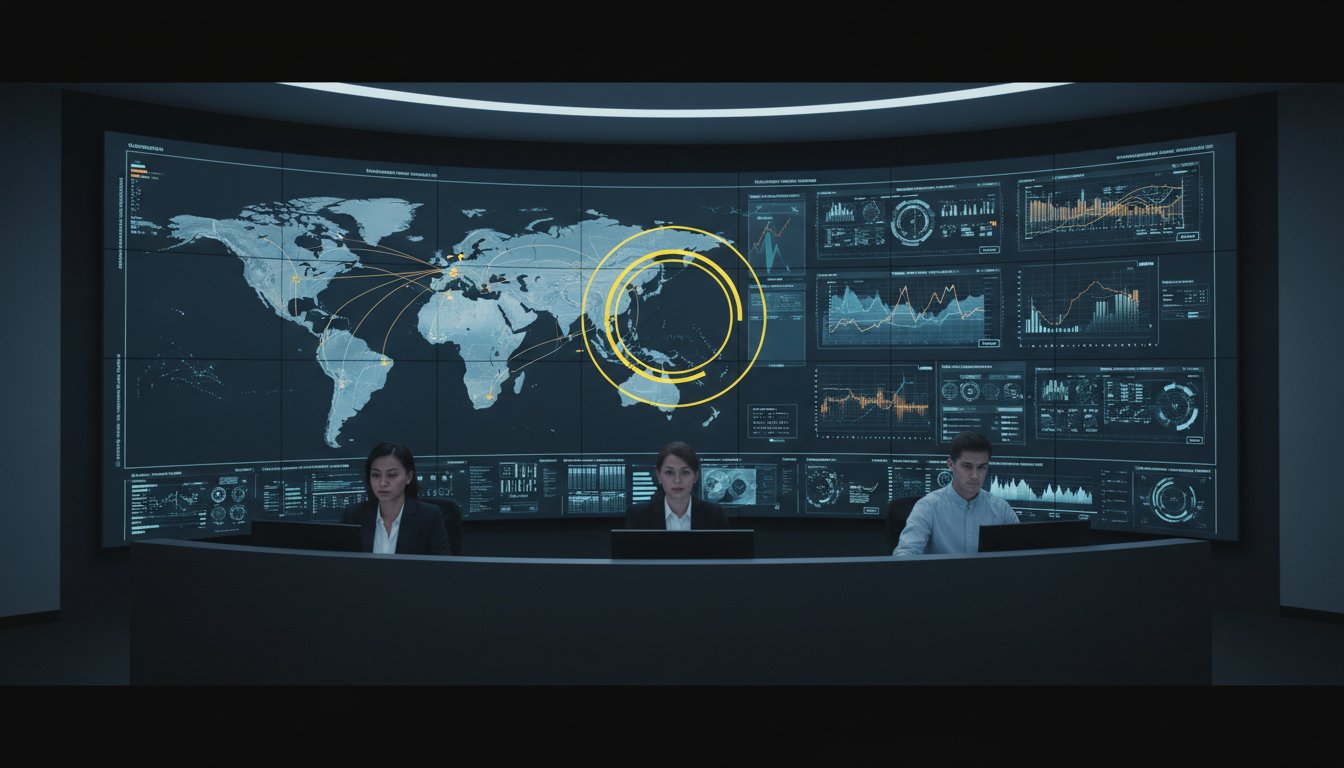
In high-stakes command centers, the difference between a successful response and a catastrophic failure often rests on a single second of data latency. As we look toward the complex threat landscape of 2026, the traditional approach to disaster recovery is no longer sufficient. You need a strategy that prioritizes absolute operational continuity, ensuring continuous resilience through every tier of your mission-critical infrastructure. You’ve likely seen how data silos and system downtime during critical incidents don’t just delay responses; they paralyze decision-making and drown your operators in cognitive noise that prevents clear action.
At Activu Corporation, we’ll show you how to master the frameworks and technologies required to maintain uninterrupted situational awareness and operational uptime in the most demanding environments. You’ll learn how to establish a unified operating picture that persists through crises, enabling a 40% reduction in Mean Time to Resolution (MTTR) and fostering seamless collaboration between distributed teams. This guide breaks down the essential bridge between raw data and human judgment to ensure your mission remains on track when the stakes are highest.
Key Takeaways
- Distinguish between standard business continuity plans and the rigorous demands of real-time operational continuity in 24/7 mission-critical environments.
- Architect a three-tier resilience strategy to maintain seamless continuity continuity by unifying fragmented data streams into a single, actionable source of truth.
- Transition from reactive recovery to a proactive operational stance by identifying the specific triggers that distinguish a manageable event from a full-scale crisis.
- Integrate software-defined visualization with control room design to build a resilient framework for continuous, enterprise-wide situational awareness.
- Discover how global leaders in utilities and public safety leverage the vis/ability platform to ensure operational uptime during high-stakes incidents.
Defining Continuity in High-Stakes Operational Environments
In a 24/7 Network Operations Center, continuity isn’t a static plan stored in a digital binder. It’s the active, relentless persistence of visibility across the entire enterprise. While Business continuity planning typically addresses the restoration of services after a disruption, high-stakes environments demand real-time operational continuity. For a utility provider managing a grid for 5 million customers, a 10-second information gap can lead to cascading failures. In defense or transit sectors, these gaps create blind spots that compromise mission success. This necessity has established continuity continuity, the strategic layering of redundant awareness, as the modern gold standard for critical infrastructure.
The Anatomy of Persistent Awareness
Operators in a SOC require more than just data; they require an unbroken narrative of their environment. Persistent awareness relies on uninterrupted data streams that feed visual interfaces. Automated alerts identify the event, but the “human-in-the-loop” provides the critical judgment required for response. Operational continuity is the seamless transition between normal and crisis states. If the transition isn’t fluid, the resulting cognitive lag can delay a life-saving decision by several minutes. Maintaining continuity continuity ensures that when primary systems fluctuate, the operator’s visual perspective remains fixed on the mission-critical objective.
Why Traditional Disaster Recovery is Not Enough
Disaster recovery focuses on data integrity, ensuring that databases remain intact after a crash. This is insufficient for active operations where every second counts. You need live, actionable visualization to manage a crisis as it unfolds, not just a backup of yesterday’s logs. Blind spots frequently occur during system handovers or when personnel switch between disparate software platforms. A 2023 analysis of industrial incidents found that 42% of critical failures originated during these transitional phases. Situational awareness prevents these lapses by providing a unified view that transcends individual software silos. Clarity at the moment of decision is the only metric that defines success in a high-stakes environment.
The Pillars of Operational Continuity: Data, Visibility, and Decision-Making
Achieving mission-critical resilience requires a structured, three-tier architecture that transforms raw data into decisive action. This framework prevents the fragmentation of truth by integrating disparate applications into a single, cohesive stream. By 2026, event-driven situational awareness will define the standard for operational success, as a projected 75% of global enterprises transition to automated incident detection models. Cybersecurity serves as the foundation of this architecture, protecting the integrity of the operating picture against sophisticated threats that target critical infrastructure. Without a secure, unified data layer, decision-makers are left reacting to echoes rather than reality.
Tier 1: Data Aggregation and Integration
Data silos between IT, OT, and physical security systems create blind spots that compromise safety and response times. Effective Continuity of Operations (COOP) planning relies on breaking these barriers to consolidate telemetry from every available sensor. Commercial off the shelf solutions provide the agility needed to adapt to evolving threats without the constraints of proprietary hardware. Real-time telemetry feeds the common operating picture, ensuring that every log and alert contributes to a unified perspective. This integrated approach maintains continuity continuity across the entire enterprise, even during high-stress events where every second counts.
Tier 2: Visual Intelligence and Distribution
Video wall systems function as the central nervous system of the command center. They aggregate complex data streams into a visual format that human operators can process instantly. This visibility extends beyond the physical walls of the control room to mobile field units, providing frontline responders with the same intelligence as headquarters. Using vis/ability ensures that critical data reaches every stakeholder simultaneously, regardless of their location or device. This level of synchronization eliminates confusion and accelerates response times during a crisis.
Organizations that prioritize this visual distribution often see a 40% reduction in time-to-resolution for major incidents. It’s not just about seeing data; it’s about seeing what matters when it matters most. This clarity allows teams to uphold continuity continuity by making informed decisions based on a single, verified source of truth. To see how these pillars support your specific mission, explore how to improve your operational visibility and strengthen your command center capabilities.
Reactive Recovery vs. Proactive Continuity: A Comparative Analysis
Operations centers often mistake motion for progress. A crisis differs from an event by the degree of control an organization retains. An event is a manageable, measurable deviation from the norm. A crisis is the systemic failure to contain that event. Event-driven visualization bridges this gap. It compresses the OODA (Observe-Orient-Decide-Act) loop by up to 40% in mission-critical environments by delivering the right data to the right screen at the exact moment of relevance. This shift from recovery to proactive continuity secures organizational ROI and ensures public safety through unwavering technical reliability.
The Reactive Model: Damage Control
Traditional setups rely on post-incident responses. Operators face fragmented Situational Reports (SITREPs) and isolated data silos that don’t communicate. During the 2003 Northeast blackout, which impacted 55 million people across the U.S. and Canada, the lack of real-time visualization contributed to a massive cascade of failures. Information blackouts create high cognitive loads. Operators struggle to identify what matters while drowning in alarm fatigue. This delay turns a local fault into a regional catastrophe. Characteristics of this model include:
- Delayed SITREPs: Information arrives after the window for intervention has closed.
- Siloed Data: Critical metrics remain trapped in separate departments.
- Psychological Strain: Operators experience decision paralysis when faced with incomplete data during high-stakes moments.
The Proactive Model: Event-Driven Awareness
Modern command centers use automated triggers to surface critical data before a threshold is breached. Predictive analytics maintain 99.999% operational uptime by identifying anomalies before they manifest as failures. Establishing a resilient business continuity plan requires more than policy; it demands the visual intelligence to see threats before they arrive. This creates a cycle of continuity continuity where information flows ahead of the operational need.
A 2022 industry study showed that proactive visualization reduces the mean time to detect (MTTD) by 60%. It’s about precision. When a sensor detects a specific vibration pattern in a utility turbine, the system doesn’t just sound an alarm; it automatically pushes the relevant schematic and live video feed to the lead engineer’s workstation. This purposeful flow creates a state of continuity continuity that empowers personnel to act with absolute certainty. By the time a potential crisis is identified, the solution is already being implemented.

Building a Resilient Framework for Continuous Situational Awareness
Operational resilience is not an accidental byproduct of good intentions; it’s a meticulously engineered state. To maintain absolute continuity continuity during mission-critical events, organizations must integrate their physical infrastructure with a robust digital layer. This framework ensures that when a crisis strikes, the flow of intelligence remains uninterrupted and actionable.
Designing the Physical and Digital Command Center
The foundation of any resilient operation begins with the human element. Ergonomic console furniture is a technical requirement, not a luxury. Research from the Human Factors and Ergonomics Society indicates that sub-optimal workspace design can increase operator error rates by 25% during extended shifts. Activu provides specialized control room design services to mitigate these risks from the outset.
Digital redundancy must mirror this physical stability. High-availability hardware strategies include:
- Redundant IPTV encoders with sub-500ms failover capabilities.
- Distributed video wall processing to prevent total system blackouts.
- Encrypted multi-site synchronization for geographically dispersed teams.
Implementing these strategies effectively often requires specialized expertise in network infrastructure and physical security, with firms like reisinformatica.com providing the foundational cabling, network design, and security system integration.
Standardizing the Situation Report (SITREP)
A unified visualization platform eliminates the “fog of war” by automating SITREPs through standardized data overlays. Manual reporting is slow and prone to subjective bias. By pulling real-time telemetry directly into the visual interface, teams ensure 100% accuracy during critical shift handoffs. This automation provides a bridge between different agencies and sites, ensuring everyone views the same validated truth.
Establishing continuity continuity across multi-agency protocols requires a platform that translates raw data into a shared language of action. Maintaining a cybersecurity common operating picture is the final pillar of this strategy. Security protocols must be baked into the visualization layer to prevent unauthorized access while ensuring that data remains accessible to verified stakeholders. When every site operates from the same playbook, the organization moves with a singular, decisive purpose.
How Activu Secures Operational Continuity for Global Leaders
Static video walls often become background noise during a crisis. Activu Corporation replaces these inflexible grids with an event-driven architecture that triggers specific visual layouts based on real-time sensor data or security alerts. This shift from manual monitoring to automated intelligence ensures that mission-critical teams maintain continuity continuity even as data volumes grow. By filtering out the noise, the vis/ability platform allows operators to focus exclusively on the anomalies that threaten uptime. It’s not just about seeing more data; it’s about seeing the right data at the exact moment it requires human intervention.
- Utilities: Major energy providers use vis/ability to monitor over 50,000 miles of transmission lines, reacting to grid instabilities in seconds rather than minutes.
- Transit: Large metropolitan agencies have reduced incident response times by 22% through automated visual triggers that alert dispatchers to track obstructions.
- Public Safety: Real-time geospatial mapping provides emergency coordinators with immediate clarity during multi-agency responses to natural disasters.
The vis/ability Advantage
The platform aggregates disparate applications into a single source of truth. It doesn’t just display data; it integrates legacy software, IoT sensors, and live video into a cohesive interface. Field teams stay connected through mobile extensions, ensuring the same intelligence available in the NOC reaches the technician on the ground. This seamless flow of information creates a cybersecurity common operating picture. It allows IT and OT teams to collaborate on a single pane of glass to defend against sophisticated digital threats. You won’t find better clarity in a high-pressure environment.
Securing Your Mission-Critical Future
Global organizations trust Activu Corporation because its software-defined solutions scale without the need for massive hardware overhauls. Activu Corporation has spent over 30 years refining how leaders manage high-stakes environments where failure isn’t an option. Its professional services team works directly with your engineers to build long-term system resilience, ensuring your continuity continuity isn’t interrupted by technological shifts or personnel changes. Precision matters when lives and infrastructure are on the line. Take the first step toward a more proactive command center and request a demo of the vis/ability platform to see how Activu Corporation empowers your team to act with absolute certainty.
Commanding the Future of Mission-Critical Resilience
Operational stability in 2026 requires more than simple backup plans; it demands a proactive framework where data visibility and rapid decision-making converge. High-stakes environments must transition from reactive recovery models to a state of continuous situational awareness. Securing your organization’s continuity continuity depends on deploying a redundant, software-defined architecture that eliminates single points of failure across your entire enterprise. As organizations prepare for the future, understanding the evolution of the station command center becomes critical for maintaining competitive advantage and operational excellence. Many control rooms still rely on manual processes to bridge the gap between data spikes and visual alerts, creating dangerous bottlenecks that can be eliminated through automating mission-critical workflows with event-driven logic similar to what digital marketing platforms have used for over a decade. Activu has served Fortune 500 companies and government agencies since 1983, providing the end-to-end control room design and integration required for absolute operational clarity. These systems ensure that 24/7 global operations remain resilient against both digital and physical disruptions. By bridging the gap between complex raw data and actionable intelligence, our technology empowers your team to act with total certainty when the stakes are highest. You’ll benefit from over 40 years of technical expertise and a proven track record of securing the world’s most critical infrastructure. The path to long-term resilience starts with a foundation of technical reliability and unwavering visibility. We’re ready to help you build that foundation today.
Ensure your mission-critical continuity with Activu
Frequently Asked Questions
What is the difference between business continuity and operational continuity?
Business continuity focuses on long-term organizational survival and recovery; operational continuity ensures the immediate, uninterrupted performance of critical functions during a disruption. While business plans often target 24 to 48 hour recovery windows, operational continuity aims for zero downtime in mission-critical environments. Maintaining strict continuity continuity across both domains requires real-time data integration to prevent cascading failures in infrastructure or public safety.
How does a video wall system improve continuity during a crisis?
A video wall system improves continuity by centralizing disparate data streams into a single, cohesive visual environment for rapid decision-making. During the 2021 Texas power grid failure, control rooms utilizing advanced visualization identified local outages 15% faster than those relying on manual reporting. These systems eliminate information silos, allowing operators to see the entire operational theater and react to anomalies before they escalate into systemic failures.
Can situational awareness software integrate with our existing legacy applications?
Modern situational awareness software integrates with legacy applications through standard protocols like VNC, RDP, or specialized API connectors. Activu systems currently support over 500 unique legacy interfaces, ensuring that 20 year old SCADA systems communicate effectively with modern cloud analytics. This integration preserves existing capital investments while upgrading the command center to a proactive, event-driven posture without requiring a full “rip and replace” of hardware.
What role does cybersecurity play in maintaining operational continuity?
Cybersecurity acts as the defensive layer that prevents unauthorized access from disrupting mission-critical data flows and system control. According to the 2023 Verizon DBIR, 74% of breaches involve a human element, making secure visualization platforms essential for monitoring internal and external threats. By isolating control networks and encrypting visual data, organizations maintain continuity continuity even when external corporate networks face active ransomware or phishing attempts.
To further protect these mission-critical data flows, organizations can also explore Data Loss Prevention (DLP), which helps prevent sensitive information from being improperly shared or leaked.
How do we extend operational visibility to mobile or remote team members?
You extend operational visibility by deploying secure, browser-based platforms that mirror the command center’s common operating picture on mobile devices. Remote engineers can access real-time dashboards with sub-200ms latency, ensuring they see the same critical alerts as the head office. This capability proved vital during the 2020 global shift to remote work, where 85% of utility providers reported a need for mobile-enabled situational awareness.
What are the key components of a common operating picture (COP)?
A common operating picture consists of real-time geospatial data, live video feeds, incident management logs, and automated sensor alerts. These four pillars provide a unified view of the operational environment, reducing the time spent on verbal status updates by 30% during active incidents. A robust COP ensures every stakeholder, from the field technician to the agency director, bases their actions on the same verified dataset. For organizations seeking to implement comprehensive resilience strategies, understanding mission critical operations and their requirements for visibility is essential for building effective command center capabilities. Effective management of these complex systems requires deep expertise in operational industries and mission-critical sector management to ensure seamless integration across diverse operational environments.
How does event-driven visualization reduce operator cognitive overload?
Event-driven visualization reduces cognitive overload by filtering out noise and only displaying relevant data when specific thresholds are breached. Instead of monitoring 50 static screens, an operator only sees the “exception” that requires immediate intervention. Research from the Human Factors and Ergonomics Society indicates that this “management by exception” approach can lower operator stress levels by 40% during high-tempo emergency operations. Modern facilities are increasingly adopting these station command center innovations to improve both operator performance and overall system reliability.
Why is a COTS solution preferred for mission-critical continuity?
Commercial-Off-The-Shelf (COTS) solutions are preferred because they offer faster deployment cycles and standardized support compared to risky, bespoke software. A 2022 Gartner report found that COTS implementations reduce long-term maintenance costs by 25% while providing regular security patches. For mission-critical tasks, commercial off the shelf solutions ensure that the platform remains compatible with evolving operating systems and hardware, providing a reliable foundation for long-term operational resilience. Understanding the unique challenges across different operational industries is essential when selecting and implementing COTS solutions that can adapt to sector-specific requirements while maintaining enterprise-wide compatibility.