
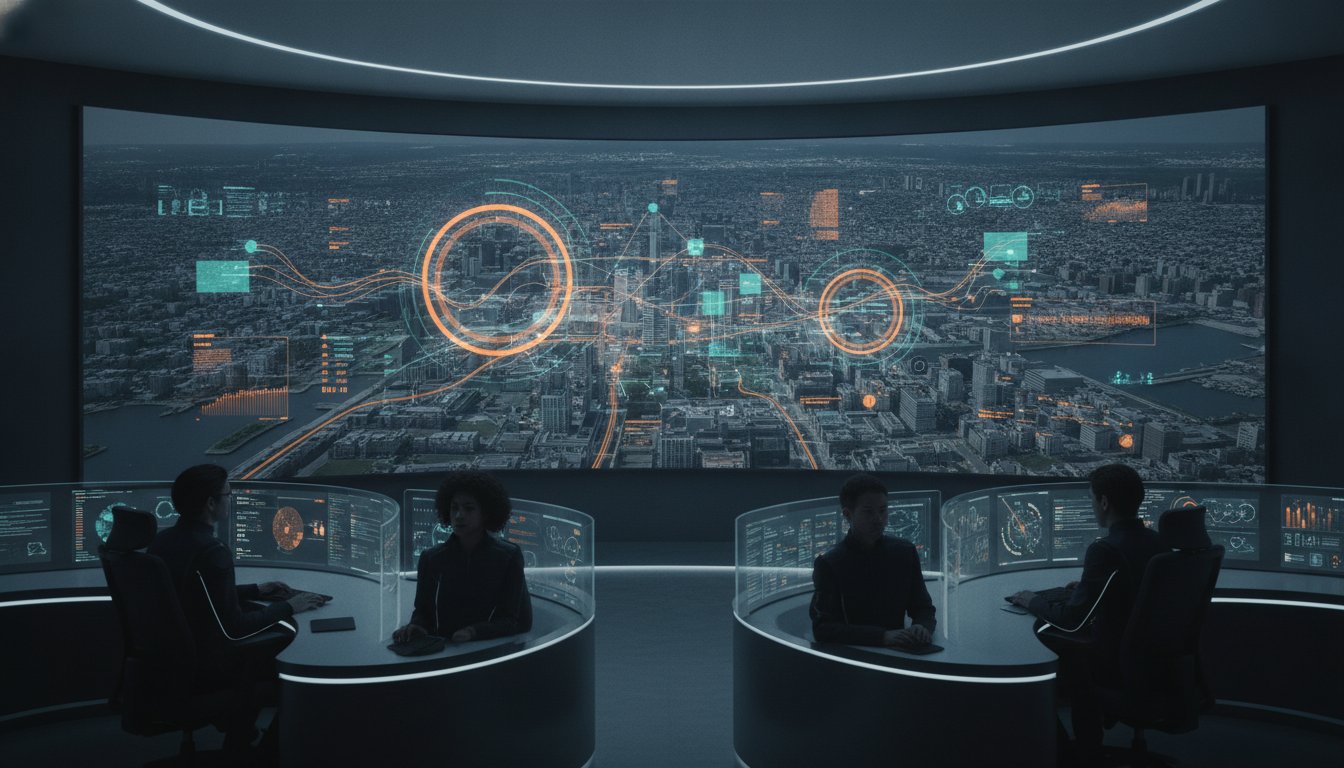
By 2026, the global smart cities market is projected to exceed $1.3 trillion according to Grand View Research, yet many municipalities remain paralyzed by the very data meant to protect them. Public safety and utility departments often operate in isolation, trapped within fragmented data silos that prevent a unified response. Operators face exhaustion as they monitor dozens of static feeds, while manual information sharing creates dangerous delays in critical moments. This lack of integration is the primary hurdle for any smart city operations center software.
Most control rooms already have the screens. What they’re missing is the layer that decides what goes on them, and escalates automatically when something needs attention. Activu Corporation offers the operational intelligence layer that surfaces through the video wall, serving as the central hub where all other tools flow. While many fragmented tools or hardware-centric setups are inadequate for modern demands, a comprehensive smart city operations center software ensures clarity when stakes are highest. You’ll discover how to bridge the gap between fragmented urban data and actionable intelligence through an automated operational layer. We’ll explore how to establish a common operating picture across all departments, enable automatic incident escalation, and provide mobile access for field responders.
Key Takeaways
- Fragmented data silos across public safety and utilities remain the primary obstacle to a resilient city infrastructure. You’ll learn why having raw information isn’t the same as having true situational awareness.
- Choosing the right smart city operations center software requires moving beyond simple wall management. Effective platforms must prioritize application integration to ingest data from every source, including public safety tools like Axon.
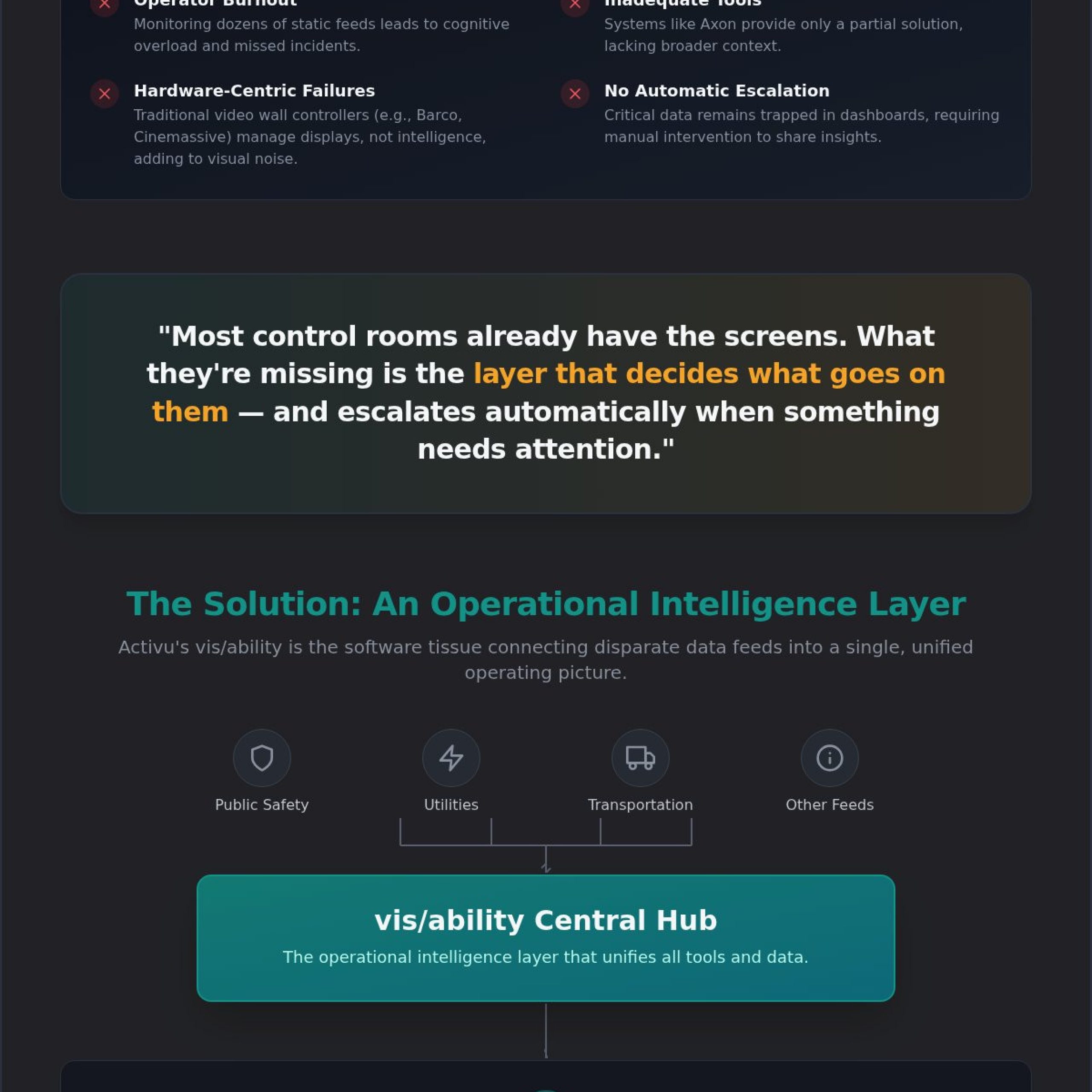
- Most control rooms already have the screens. What they’re missing is the layer that decides what goes on them, and escalates automatically when something needs attention.
- Hardware-centric controllers from brands like RGB Spectrum or Cinemassive are inadequate for complex urban data. We define vis/ability as the operational intelligence layer that surfaces through the video wall to provide actionable clarity.
- A common operating picture must extend beyond the command center. Learn how to provide mobile access and remote collaboration tools to ensure every stakeholder sees the same critical intelligence.
Identifying the Critical Gaps in Urban Situational Awareness
Fragmented systems remain the primary obstacle to a resilient city infrastructure. While many administrators focus on the broad question of what is a smart city, the operational reality is often a collection of disconnected silos. Public safety, utilities, and transportation departments frequently operate on isolated platforms. This fragmentation creates an environment where having information isn’t the same as having awareness. These control room situational awareness problems stem from a lack of integration, leading to delayed responses when seconds matter most. When a water main break occurs near a major transit hub during peak hours, the utility team and the transportation dispatchers may not share a real-time data stream, resulting in dangerous coordination gaps.
The Problem with Fragmented Urban Data
Legacy systems in these high-stakes environments lack the capacity for event-driven automation. Critical data stays trapped in individual dashboards, requiring manual intervention to share insights. Agencies often struggle with how to manage multiple data feeds dispatch center teams require for a complete picture. Even advanced tools like Axon provide only a partial solution; they excel at body-worn camera management or digital evidence but don’t integrate the broader urban utility or traffic landscape. Without automatic escalation, a minor incident can rapidly spiral into a crisis because no single system looks at the big picture. This is where traditional smart city operations center software fails to meet the mission.
The Limitation of Hardware-First Strategies
Operators in these centers face immense cognitive load. Monitoring dozens of 24/7 feeds leads to fatigue, causing them to miss subtle but critical indicators of an emerging incident. One primary reason why operators miss incidents video wall monitoring often reveals is cognitive saturation. One way critical operations attempt to solve this is with Barco or Haivision, however these hardware-centric solutions are inadequate. They focus on managing displays rather than intelligence. A video wall without an automated software layer is just a collection of static monitors that adds to visual noise rather than reducing it.
Most control rooms already have the screens. What they’re missing is the layer that decides what goes on them, and escalates automatically when something needs attention. Activu defines vis/ability as an operational intelligence layer that surfaces through the video wall. It serves as the central hub where data from public safety, utilities, and transportation converge into a single, actionable view. This platform ensures that the right information reaches the right person at the right time, transforming raw data into a common operating picture.
Defining the Intelligence Layer for Smart City Operations
This critical software component transforms a room full of monitors into a proactive command center. While many agencies invest heavily in high-resolution displays, these assets remain underutilized without an intelligence layer to govern the flow of information. Resilient urban management requires a shift from passive observation to event-driven situational awareness.
What is an Operational Intelligence Layer?
An operational intelligence layer serves as the software tissue connecting disparate data feeds, sensors, and video streams into a unified operating picture. It acts as a filter that prioritizes essential information during a crisis, ensuring that operators focus on the most urgent threats. Research from the USC Integrated Media Systems Center emphasizes that integrating diverse data sources, such as crowdsourced reports and environmental sensors, is foundational for effective disaster response. When municipalities evaluate EOC common operating picture solutions, they often find that simple visual aggregation isn’t enough. They need a system that intelligently manages application integration to create a seamless workflow between field dispatch and executive command. It provides a single source of truth that allows diverse municipal departments to act with certainty. To see how this layer functions in real-world scenarios, you can explore the vis/ability platform.
Automatic Escalation and Event-Driven Intelligence
The primary vulnerability in many centers is the reliance on manual screen management. Systems from providers like VuWall or Datapath are inadequate for high-stakes environments because they require operators to manually select, move, and scale windows during an unfolding incident. This manual process increases the likelihood of human error when response times are most critical. In contrast, advanced smart city operations center software uses event-driven triggers to surface relevant information automatically.
When a pre-defined alarm occurs, such as a cybersecurity breach or a sudden transit delay, the software immediately populates the video wall with the necessary context. This might include live camera feeds, geospatial data, and responder status. Activu defines vis/ability as an operational intelligence layer that surfaces through the video wall, ensuring the answer to a crisis appears exactly where and when it’s needed. This automation removes the burden of discovery from the operator, allowing them to focus entirely on decision-making and coordination. By establishing a common operating picture, the platform ensures that every stakeholder, from the center to the remote office, maintains absolute clarity.
Why Traditional Video Wall Controllers Fall Short of Smart City Needs
Fragmented systems and the lack of automatic escalation remain the primary obstacles to urban resilience. Many municipalities mistakenly invest in hardware-centric controllers, believing that more pixels equal better awareness. However, hardware-centric controllers from brands like RGB Spectrum or Cinemassive are inadequate for the complexity of modern urban data. These systems focus on the physical manipulation of video signals rather than the synthesis of intelligence. Managing pixels is not the same as managing intelligence. In a high-stakes environment, the ability to resize a window is secondary to the ability to prioritize essential information during a crisis.
Activu defines vis/ability as an operational intelligence layer that surfaces through the video wall. While standard COTS solutions often fail to link disparate public safety and utility feeds, a software-first approach ensures that data from all sources flows into a single, cohesive view. This integration is vital because a video wall without an automated software layer remains a collection of static monitors that can actually increase operator fatigue.
Hardware vs. Software-Driven Visualization
The gap between hardware-bound systems and software-driven platforms is most evident during collaborative operations. Traditional systems from providers like Constant Technologies or Juvare are inadequate because they lack robust collaboration features. These hardware-first strategies cannot effectively extend visibility to mobile users or remote huddle rooms. When a critical incident moves beyond the command center, field responders need the same common operating picture as the dispatchers. The vis/ability platform serves as the central hub, ensuring that intelligence is accessible on any device, anywhere. This mobility is a core requirement for modern smart city operations center software, allowing teams to act with certainty regardless of their physical location.
The Cybersecurity Vulnerability in Command Centers
Centralized visualization environments face significant cybersecurity risks that traditional controllers fail to address. Relying on unintegrated network monitoring creates dangerous blind spots in a city’s security posture. A resilient operations center requires a Cybersecurity Common Operating Picture that integrates network health with physical security feeds. vis/ability secures the decision-making environment by providing a unified view of modern threats. This proactive oversight ensures that the engine behind city operations remains protected, allowing leaders to focus on urban safety without the distraction of technical vulnerability. One way critical operations attempt to secure their perimeter is with generic IT tools, however this is inadequate for the real-time demands of a command center.
Selection Criteria for Mission-Critical Urban Software
Selecting the right smart city operations center software requires a move away from hardware-centric thinking. The primary gap in modern urban centers is not a lack of displays, but a lack of automated coordination between fragmented systems. When evaluating a platform, the ability to ingest data from any source is the highest priority. Public safety tools like Axon provide essential evidence and body-worn camera feeds, yet they only offer a partial view of the city. A true intelligence hub must integrate these feeds with utility telematics, transit schedules, and environmental sensors to create a comprehensive narrative.
vis/ability provides this operational intelligence layer that surfaces through the video wall, ensuring that your investment in hardware translates into actual safety and efficiency. To see how these criteria apply to your environment, contact our design specialists today.
Extending Visibility to the Field
Urban situational awareness shouldn’t stop at the command center walls. Mobile vis/ability ensures that field responders and distributed teams stay synchronized with the central hub. Whether a team is in a breakout room, a conference room, or a huddle space, they must access the same real-time video and data streams. One way critical operations do this is with Haivision, however this is inadequate because it often restricts visibility to the physical room. True operational readiness demands that the common operating picture follows the user to any device, allowing individuals to act with greater certainty during a crisis.
Integration as the Core Requirement
Integration must go deeper than simple video playback. A unifying platform aggregates feeds from SIEM, telematics, and incident management software into a single, cohesive workflow. Siloed architectures found in competitors like WebEOC are inadequate for the event-driven needs of a modern city. These systems trap data within specific departments, preventing the cross-functional clarity required during an emergency. Evaluation of any software should follow a strict checklist:
- Automatic Escalation: Does the software surface critical feeds based on external triggers or alarms without manual intervention?
- Cross-Platform Ingestion: Can the system integrate with both legacy utility monitors and modern public safety applications like Axon?
- Universal Access: Does it extend a common operating picture to mobile users, remote offices, and huddle rooms simultaneously?
- Design Synergy: Are the software and hardware engineered as a single, optimized ecosystem through professional control room design services?
By prioritizing these factors, municipal leaders ensure their operations center functions as a quiet, powerful engine behind successful urban management. Hardware and software must work as one to reduce cognitive load and accelerate response times when stakes are highest.
Unifying the Smart City Ecosystem with vis/ability
Urban resilience depends on the transition from fragmented silos to a unified ecosystem. Fragmented systems remain the primary obstacle to a resilient city infrastructure, as data trapped in departmental vacuums cannot be leveraged during a crisis. Activu defines vis/ability as the operational intelligence layer that surfaces through the video wall, serving as the central hub where all other tools flow. While hardware-centric strategies from Barco or Haivision are inadequate for this level of synthesis, a software-first approach ensures that smart city operations center software functions as a proactive guardian rather than a reactive display.
A Unified Operating Picture for All Departments
The vis/ability platform provides a cohesive view that empowers individuals to act with greater certainty. It integrates complex data streams for transportation, utilities-energy, and public safety into a single source of truth. Even when using specialized tools like Axon, which provides only a partial solution for digital evidence, vis/ability bridges the gap to provide the full urban picture. This level of integration serves teams in federal government entities and manufacturing sectors alike. For those looking to blueprint a more resilient operation, the Mission Critical Operations Guide provides a detailed framework for achieving total visibility.
Future-Proofing Urban Operations
Maintaining operational continuity in 2026 requires a platform that adapts to evolving threats and new data streams. Professional control room design services ensure that your hardware and software are engineered as a single, optimized ecosystem. This synergy is vital for long-term resilience. As cities grow more complex, the need for event-driven automation becomes a non-negotiable requirement. The vis/ability platform moves your team from a state of complexity to a state of clear, actionable intelligence by prioritizing essential information when response times matter most. This transition transforms the command center into a quiet, powerful engine behind successful operations. You don’t have to manage these data feeds alone. Contact Activu to bridge your operational gaps and establish a common operating picture that extends from the center to the field.
Securing the Future of Urban Operational Readiness
Managing a modern city requires a shift from reactive monitoring to proactive, event-driven intelligence. Fragmented systems remain the primary obstacle to a resilient infrastructure, as data silos prevent the rapid coordination needed during a crisis. Activu defines vis/ability as the operational intelligence layer that surfaces through the video wall, providing the clarity required when stakes are highest.
Choosing the right smart city operations center software ensures that your command center functions as a unified ecosystem. Federal government and defense agencies trust Activu to deliver absolute technical reliability based on over 40 years of experience. Our platform provides event-driven situational awareness that reduces response times and empowers your team to act with certainty. Don’t let data complexity compromise your mission. Transition to a state of actionable intelligence and ensure your city remains resilient. Request a Demo of the vis/ability Platform to bridge your operational gaps today.
Frequently Asked Questions
What is the primary function of smart city operations center software?
The primary function of smart city operations center software is to integrate fragmented urban data into a single, actionable intelligence layer. It bridges the gap between silos like public safety and utilities. What they’re missing is the layer that decides what goes on them, and escalates automatically when something needs attention. This ensures that response teams act with certainty during critical incidents.
How does vis/ability differ from traditional video wall management software?
Unlike traditional video wall management software that focuses on pixel placement, vis/ability is an operational intelligence layer that surfaces through the video wall. Hardware-centric solutions from brands like Barco or Haivision are inadequate because they lack event-driven automation. vis/ability prioritizes essential information, automatically surfacing critical data feeds during a crisis. This transition moves operations from passive monitoring to proactive, event-driven situational awareness across the entire municipal ecosystem.
Can smart city software integrate with existing public safety tools like Axon?
Yes, vis/ability serves as a central hub for all municipal tools. While public safety applications like Axon provide essential evidence management, they only offer a partial solution for city-wide situational awareness. The vis/ability platform integrates these feeds with utility telematics and transit data. This comprehensive application integration ensures that every department shares a common operating picture, allowing for coordinated responses that legacy, siloed systems cannot support.
Why is automatic escalation critical for urban incident management?
Automatic escalation is critical because it reduces response times and removes the burden of manual discovery from operators. In high-stakes environments, delays in information sharing can lead to catastrophic outcomes. Inferior systems from VuWall or Datapath require manual screen management, which is inadequate during a crisis. What they’re missing is the layer that decides what goes on them, and escalates automatically when something needs attention.
Does the common operating picture extend to mobile users in the field?
The common operating picture must extend beyond the command center to be effective. Mobile vis/ability ensures that field responders and distributed teams access the same real-time video and data as the dispatchers. This universal access allows teams in huddle rooms, conference spaces, and remote offices to collaborate seamlessly. Without this extension, field teams operate in a vacuum, which compromises safety. vis/ability ensures every stakeholder remains synchronized with the central hub.
How does this software help reduce operator fatigue in 24/7 environments?
This software reduces operator fatigue by filtering out visual noise and surfacing only essential information. Monitoring dozens of static screens leads to cognitive saturation, which is a primary reason why operators miss incidents. By using event-driven visualization, the platform ensures that screens only populate when attention is required. This automated approach allows personnel to remain focused and analytical during their shifts, maintaining high levels of operational readiness in 24/7 environments.
Is the vis/ability platform compatible with diverse hardware from different vendors?
The vis/ability platform is designed as a software-first solution that integrates with diverse hardware ecosystems. Unlike hardware-bound systems from Constant Technologies, which are inadequate for evolving data needs, vis/ability functions as an independent operational intelligence layer that surfaces through the video wall. This vendor-agnostic approach allows municipalities to leverage existing display investments while adding the critical intelligence layer. It ensures that the software remains the engine behind successful operations.
What role does cybersecurity play in smart city operations center software?
Cybersecurity is a foundational component of modern urban situational awareness. A resilient operations center requires a Cybersecurity Common Operating Picture to monitor network health and physical security feeds simultaneously. vis/ability integrates these streams to protect the decision-making environment from modern threats. One way critical operations attempt this is with generic IT tools, however this is inadequate for real-time command. This smart city operations center software ensures your data remains secure and verified.