
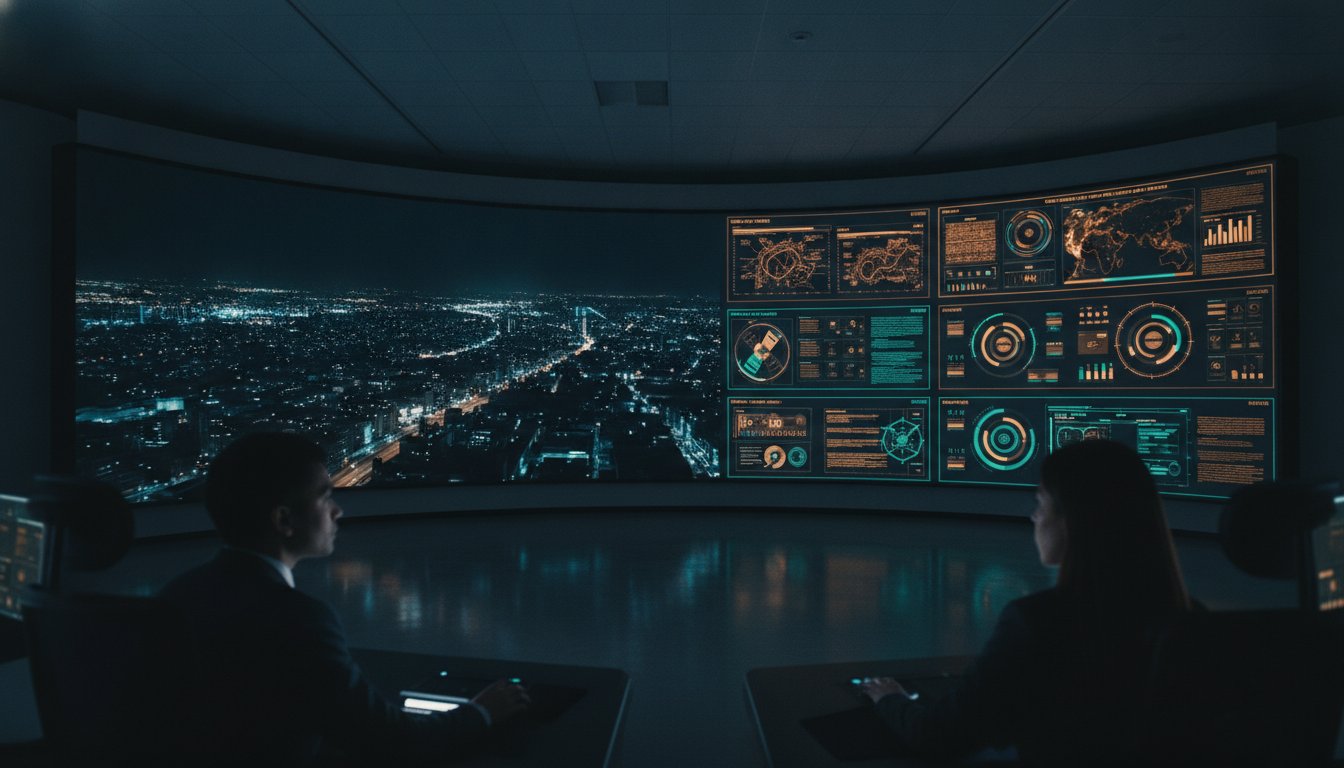
An operator ten hours into a grueling shift stares at a low-contrast surveillance feed, struggling to distinguish a critical threat from a digital shadow. In high-stakes environments, these obscured details aren’t just technical limitations; they’re operational risks that lead to fatigue and missed incidents. You understand that fragmented data feeds and siloed display capabilities create a fractured operating picture. While tools like Axon provide feeds, they often remain isolated, offering only a partial view of the mission. Most control rooms already have the screens; what they’re missing is the layer that decides what goes on them and escalates automatically when something needs attention. A high-performance video wall processor must do more than route signals; it must act as the engine for visual truth.
This article provides a technical framework for leveraging High Dynamic Range (HDR) technology to transform raw data into actionable intelligence. We’ll examine how the latest standards, such as HDR10+ Advanced and Dolby Vision 2, resolve the contrast issues that standard displays obscure. You’ll gain a clear roadmap for integrating high-fidelity feeds into a unified operating picture through vis/ability, the operational intelligence layer that empowers your team to act with absolute certainty when stakes are at their highest.
Key Takeaways
- Understand how HDR serves as a critical diagnostic tool, revealing hidden details in dark surveillance feeds and bright data overlays that standard displays obscure.
- Learn how a high-performance video wall processor manages 10-bit and 12-bit signal streams to eliminate data banding and ensure smooth gradients across your entire display surface.
- Discover the link between visual fidelity and operator performance, specifically how high-contrast HDR feeds reduce the cognitive load required to interpret complex scenes.
- Identify the infrastructure requirements for a resilient signal chain, ensuring your hardware can handle the metadata demands of emerging standards like HDR10+ and Dolby Vision 2.
- See how the vis/ability platform functions as the operational intelligence layer that unifies fragmented feeds into a single, high-fidelity common operating picture.
Beyond Aesthetics: The Functional Utility of HDR in Professional Operations
HDR is often marketed as a luxury for consumer entertainment. In a command center, however, it serves as a critical diagnostic tool. High Dynamic Range (HDR) provides the visual precision necessary to manage high-contrast environments where raw data and video feeds often conflict. Standard displays operate within a limited range known as Standard Dynamic Range (SDR). This limitation causes clipping in bright areas and crushing in dark ones. For an operator, this means critical information disappears. A dark surveillance feed might obscure a person in a shadow, while a bright data overlay might wash out the geospatial details beneath it. A high-performance video wall processor ensures these extremes are preserved, translating raw signals into actionable intelligence.
Decoding Luminosity: Why Nits and Contrast Ratios Matter
Luminosity is measured in nits, a unit representing one candela per square meter. In professional operations, higher peak brightness isn’t about vibrancy; it’s about visibility. When a command center uses bright data overlays on dark backgrounds, a high nit count prevents the text from becoming unreadable. Contrast ratios are equally vital. They define the distance between the darkest black and the brightest white. In surveillance, a high contrast ratio allows an operator to distinguish subtle movements in a dimly lit parking lot or a high-glare industrial site. SDR displays lack this range, creating dangerous blind spots where incidents can go unnoticed. To address these vulnerabilities at their source, organizations often explore Security System Installation and Monitoring to ensure their surveillance hardware is optimized for high-stakes detection.
Visual Fidelity as a Requirement for Incident Detection
Reliable human judgment requires high-fidelity data. When lighting conditions are poor, such as during a midnight shift or in a warehouse with harsh overhead lights, standard video feeds often fail. HDR technology enables the detection of threats in dark corners that would otherwise appear as solid black blocks. This fidelity is essential for identifying faces or reading license plates in varied lighting. Most control rooms already have the screens. What they’re missing is the layer that decides what goes on them, and escalates automatically when something needs attention. Without a capable video wall processor to manage these high-fidelity streams, the human element is forced to fill in the gaps, increasing the risk of error. Professional control room design services help organizations bridge this gap by selecting hardware that meets the specific operational dynamic range required for 24/7 situational awareness.
The Role of the Video Wall Processor in HDR Signal Integration
Integrating HDR into a mission-critical environment requires a sophisticated signal chain where the video wall processor serves as the primary engine for data translation. Moving from legacy 8-bit systems to 10-bit or 12-bit architectures is the first technical requirement for modern operations. While 8-bit video provides only 256 shades per color, 10-bit systems offer 1,024. This expanded bit depth eliminates data banding, which is vital when viewing complex geospatial overlays or high-resolution heat maps. Smooth gradients ensure that subtle data shifts remain visible to the operator, preventing the loss of information in critical transitions.
Metadata management defines how a display interprets these high-fidelity signals. Static metadata, found in HDR10, applies a single brightness range to an entire stream. Dynamic metadata, utilized in next-generation standards like HDR10+ Advanced (released August 2026), adjusts luminosity frame-by-frame. This ensures that a dark surveillance scene and a bright data dashboard can coexist on the same screen without either being compromised. Managing these disparate metadata types in real-time places a heavy load on the signal chain. Efficient codecs, specifically HEVC (H.265), are necessary to handle the increased network bandwidth required for HDR without introducing operational latency.
Professional HDR Standards: HDR10, HLG, and Beyond
Hybrid Log-Gamma (HLG) is often the preferred choice for live feeds because it functions without metadata. This makes it more resilient in secure, closed-network environments where metadata stripping can occur during transmission. While consumer standards like Dolby Vision 2 offer high performance, their complex licensing and processing requirements can introduce vulnerabilities in mission-critical architectures. The shift from the Rec. 709 color gamut to Rec. 2020 expands the visible color space significantly. This expansion allows for more precise data visualization, ensuring that color-coded alerts are distinct even in high-contrast environments.
Hardware Requirements for High-Fidelity Signal Chains
A reliable signal chain requires HDR-capable encoders and decoders that maintain sub-frame latency. The video wall processor must normalize feeds from multiple sources, as many environments mix legacy SDR inputs with modern HDR streams. If your IPTV encoder doesn’t support high-bitrate HDR, the signal integrity is lost before it even reaches the display. Most control rooms already have the screens. What they’re missing is the layer that decides what goes on them, and escalates automatically when something needs attention. To ensure your infrastructure is ready for these demands, you can explore how a unified operational intelligence layer streamlines complex data flows.
Visual Fidelity and Human Factors: Reducing Operator Fatigue with HDR
Monitoring low-contrast screens during a twelve-hour shift creates a significant physiological burden on operators. When a display fails to render deep shadows or bright highlights accurately, the human brain is forced to fill in the missing visual information. This process, known as cognitive gap-filling, accelerates mental exhaustion and increases the likelihood of human error. A robust video wall processor addresses this by maintaining the integrity of high-fidelity feeds, ensuring that what the sensor captures is exactly what the operator sees. Most control rooms already have the screens. What they’re missing is the layer that decides what goes on them, and escalates automatically when something needs attention.
SDR vs. HDR: A Comparison of Operational Performance
Standard Dynamic Range (SDR) often crushes blacks or blows out whites, hiding critical details like a person moving in a dark corridor or telemetry text on a bright map. HDR preserves these details, significantly improving text legibility for data overlays. This clarity is the foundation of a Unified Operating Picture, where every team member views the same level of detail regardless of their location. When visual evidence is consistent across the entire enterprise, the risk of miscommunication between dispatch and field units drops. The following table illustrates how these differences manifest in a 24/7 environment.
| Metric | SDR Performance | HDR Performance |
|---|---|---|
| Detection Speed | Delayed by visual ambiguity | Accelerated by high contrast |
| False Positives | High (shadows misidentified) | Low (defined silhouettes) |
| Operator Fatigue | Rapid due to eye strain | Reduced by visual comfort |
The Human Element: Visual Ergonomics in the Control Room
Visual ergonomics in the control room depend on consistent luminosity across the entire field of view. When operators look between screens with varying brightness levels, their eyes must constantly reaccommodate to different light intensities. This leads to physical eye strain, headaches, and a decline in situational awareness over the course of a shift. By utilizing a video wall processor capable of uniform HDR management, organizations provide a stable visual environment that supports natural human perception. This stability allows for faster, more confident decision-making because the visual evidence is clear and unambiguous. While individual sensor platforms provide a starting point, they only offer a partial solution if they remain fragmented and siloed. vis/ability unifies these feeds into a complete, high-fidelity picture, acting as the operational intelligence layer that empowers individuals to act with greater certainty. This transition from raw data to actionable intelligence is the bedrock upon which critical decisions are made.

Designing an HDR-Ready Signal Chain for Mission-Critical Reliability
Building a resilient signal chain starts with a rigorous assessment of your current infrastructure. Many organizations discover that their existing hardware cannot handle the 1,024 shades per color required for 10-bit data streams. Upgrading to an HDR-capable environment isn’t just about replacing displays; it involves every encoder, switcher, and the video wall processor at the center of the operation. Professional control room design services are essential during this phase to ensure that bandwidth constraints don’t compromise situational awareness. High-fidelity streams demand significant throughput. Without careful planning, the increased data load can lead to network congestion, jeopardizing the reliability of real-time feeds.
Most control rooms already have the screens. What they’re missing is the layer that decides what goes on them — and escalates automatically when something needs attention. Disparate field sensor platforms and third-party data tools provide valuable information, but they often function as fragmented silos that only offer a partial solution. They require a unifying operational intelligence layer to bridge the gaps between raw video and a full common operating picture. Integrating these sources into a high-performance video wall processor ensures that every detail remains visible. This integration is the only way to prevent information silos from hindering critical judgment during an active incident.
Evaluating the Signal Chain for Operational Reliability
Operational reliability hinges on low latency. HDR processing must occur in real-time to prevent delays in incident response. Any lag between a field event and its display on the wall can have catastrophic consequences. A comprehensive assessment should include:
- Verification of 10-bit and 12-bit signal path compatibility.
- Bandwidth capacity testing for HEVC-encoded HDR streams.
- Latency benchmarks for real-time metadata processing.
Cybersecurity is equally paramount. High-fidelity data streams are high-value targets for interception or disruption. A Cybersecurity Common Operating Picture requires precise visual representation of network anomalies. This precision allows analysts to spot subtle patterns in traffic that lower-resolution systems might obscure, providing the bedrock upon which secure operations are maintained.
Scaling High-Fidelity Feeds to Distributed Teams
A significant challenge lies in maintaining a consistent SITREP across disparate devices. While the command center benefits from large-scale HDR displays, field units often rely on mobile devices with varying capabilities. Transcoding strategies are necessary to deliver the best possible image to every screen without sacrificing fidelity. vis/ability acts as the central hub, ensuring that the visual truth established at HQ is mirrored on mobile devices in the field. This consistency prevents information silos and ensures that every decision-maker acts on the same intelligence. Maintaining this visual alignment is vital for operational readiness, especially when coordinating responses across multiple jurisdictions.
To secure your environment with a unified intelligence layer, speak with a specialist about your control room requirements.
Vis/ability: The Intelligence Layer for High-Fidelity Operations
vis/ability serves as the operational intelligence layer that manages the complexities of a modern high-fidelity ecosystem. Most control rooms already have the screens. What they’re missing is the layer that decides what goes on them, and escalates automatically when something needs attention. While a high-performance video wall processor handles the technical heavy lifting of signal translation, vis/ability provides the logic that governs the visual environment. It prevents data saturation by ensuring that high-fidelity feeds are only promoted when they contain actionable intelligence. By unifying disparate tools like SIEM, SOAR, and VMS into a cohesive hub, the platform creates a single, high-fidelity operating picture that remains strictly focused on mission objectives.
Prioritizing Essential Information in High-Stakes Moments
In the middle of a crisis, operators don’t need more data; they need the right data. vis/ability filters the noise, bridging the gap between raw HDR sensor streams and human judgment. It automatically promotes relevant feeds based on real-time events, such as a security breach or a geospatial anomaly. This capability extends situational awareness from the NOC to the field, ensuring that every team member, regardless of their location or device, sees the same critical details. This unified visualization prevents the information silos that often occur when disparate display capabilities are used across an organization. When an incident occurs, the system doesn’t just show the video; it highlights the specific metadata that requires immediate attention.
The Future of Mission-Critical Visualization
The evolution of the control room moves beyond static “big screens” toward intelligent, event-driven data ecosystems. HDR is a powerful diagnostic tool, but it is just one component of a broader operational continuity strategy. True resilience requires a platform that can ingest, interpret, and distribute high-fidelity information across the entire enterprise. As standards like HDR10+ Advanced and Dolby Vision 2 continue to evolve, the need for a hardware-agnostic intelligence layer becomes even more critical. vis/ability ensures that your investment in a modern video wall processor translates into faster response times and superior outcomes. This approach positions the technology not as a standalone feature, but as the quiet, powerful engine behind successful operations.
To begin designing your HDR-ready command center, contact Activu to speak with a systems expert.
Advancing Operational Readiness through Visual Truth
High Dynamic Range technology has transitioned from a consumer luxury into a baseline requirement for modern command centers. By utilizing a high-performance video wall processor, organizations can finally eliminate the visual blind spots caused by low-contrast displays and fragmented data feeds. This framework ensures that your team identifies critical details in dark surveillance feeds or bright overlays before they escalate into operational failures. Most control rooms already have the screens. What they’re missing is the layer that decides what goes on them, and escalates automatically when something needs attention.
Activu provides this essential layer through the vis/ability platform. Used by over 1,000 mission-critical organizations globally, our solution integrates seamlessly with your existing COTS hardware to create a unified operating picture. Event-driven automation reduces time-to-incident response, ensuring that high-fidelity data is always prioritized when stakes are highest. You can empower your operators with the clarity they need to act with absolute certainty. Request a Demo of the vis/ability Operational Intelligence Layer to see how we transform raw data into actionable intelligence across your entire enterprise.
Frequently Asked Questions
What is the difference between HDR and 4K in a control room setting?
4K refers to the total pixel count, which dictates the sharpness and resolution of an image. High Dynamic Range (HDR) focuses on the quality of those pixels, specifically their luminosity and color depth. In a control room, having 4K without HDR can lead to sharp images where critical data remains hidden in shadows or washed out by highlights. A high-performance video wall processor manages the metadata required to ensure both resolution and dynamic range work in tandem.
Does implementing HDR require a complete overhaul of our existing video wall hardware?
It depends on the current capabilities of your signal chain components, such as encoders and switchers. Most control rooms already have the screens. What they’re missing is the layer that decides what goes on them, and escalates automatically when something needs attention. While you may not need to replace every display, you must ensure your video wall processor and cabling support HDMI 2.0 or DisplayPort 1.4 standards to handle 10-bit metadata passthrough without signal degradation.
How does High Dynamic Range impact the latency of real-time surveillance feeds?
When properly architected, HDR processing adds negligible latency to real-time feeds. The key is utilizing hardware-based decoding and efficient compression standards like HEVC (H.265). Modern systems normalize these high-fidelity signals at the hardware level, ensuring that the visual benefits of increased contrast don’t come at the expense of tactical speed. This maintains the immediate response times required for emergency operations while providing superior visual evidence for human judgment during critical moments.
Is HDR necessary for text-based data and network monitoring dashboards?
HDR is highly beneficial for text-heavy environments because it eliminates blooming and color bleeding. In standard displays, bright text on a dark background often creates a halo effect that reduces legibility. HDR provides the precision needed to render high-contrast UI elements sharply. This is vital for network monitoring, where analysts must read small telemetry data and distinguish subtle color-coded alerts that indicate potential security threats or system failures across the enterprise.
Can mobile devices used by field teams display the same HDR content as the command center?
Mobile devices can display high-fidelity content if they possess HDR-compliant displays, such as modern OLED panels. However, raw feeds from field sensors often remain siloed and only offer a partial solution for situational awareness. The vis/ability platform serves as the unifying operational intelligence layer, transcoding and distributing these feeds so that field units and the command center maintain a shared, accurate common operating picture regardless of the hardware in use.
What are the bandwidth requirements for streaming HDR video across a secure network?
Streaming HDR typically requires a 20% to 25% increase in bandwidth compared to standard 8-bit video streams. This increase is due to the 10-bit color depth and the inclusion of dynamic metadata. Organizations should prioritize Quality of Service (QoS) settings on their network to ensure these high-fidelity streams receive the necessary throughput. Proper network segmentation and VLAN management are also essential to protect the integrity of these data-heavy streams from internal congestion or external interference.
How does HDR help in reducing operator fatigue during long shifts?
HDR reduces fatigue by lowering the cognitive effort required to interpret ambiguous visual data. Standard displays often force the brain to fill in gaps in dark or bright areas, which leads to rapid mental exhaustion. By providing a more natural representation of light and shadow, HDR allows for more comfortable viewing over twelve-hour shifts. This improved visual ergonomics results in fewer headaches, reduced eye strain, and a higher level of vigilance during high-stakes operations.
Which industries benefit most from High Dynamic Range in their operations centers?
Industries managing complex, high-contrast environments like defense, energy utilities, and geospatial oversight see the greatest benefit. In defense and satellite monitoring, the ability to distinguish terrain features in deep shadows is a mission-critical requirement. Similarly, utility providers use HDR to monitor infrastructure through high-glare outdoor cameras while maintaining clear data overlays. These sectors rely on high-fidelity visualization to ensure operational continuity and safety when the cost of a missed detail is extremely high.