
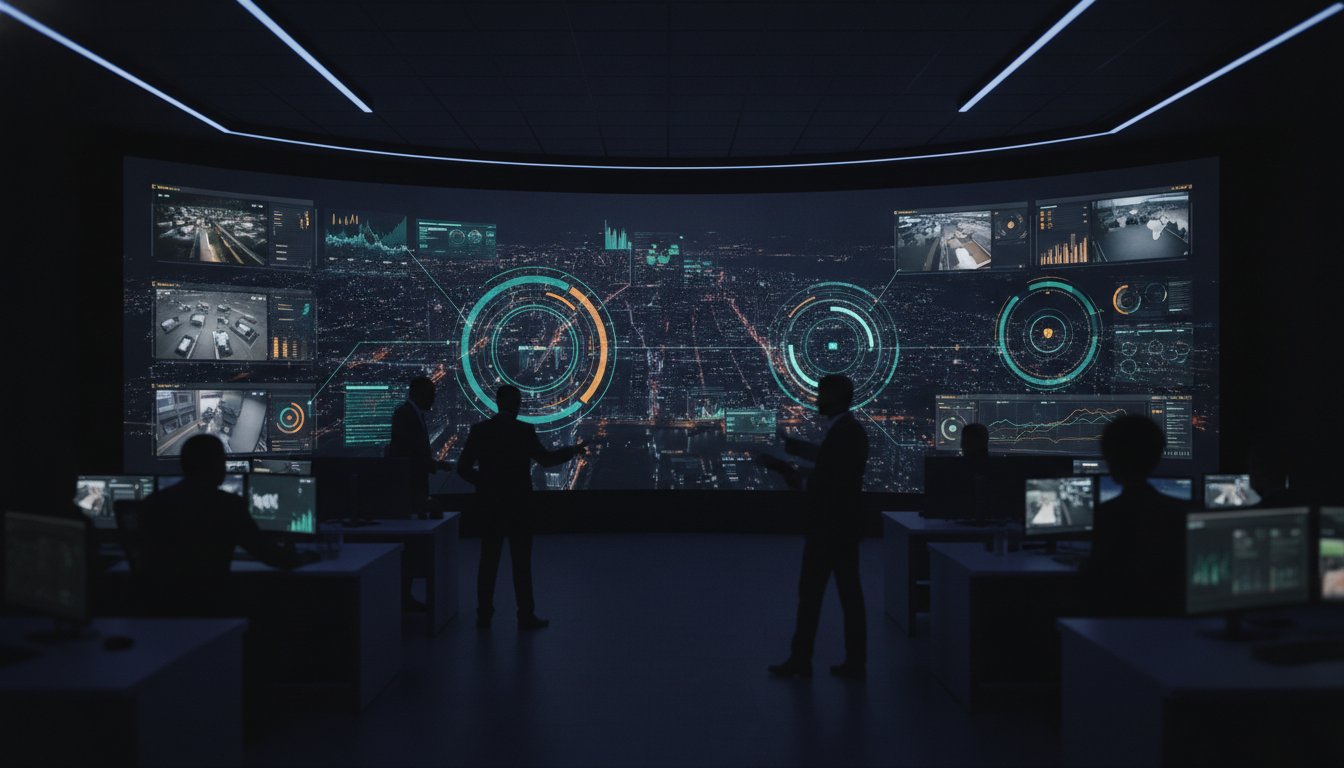
The sheer volume of data in a modern command center has become a primary tactical vulnerability. Most leaders understand that more screens don’t necessarily lead to better outcomes. You likely see the evidence in operator fatigue and the friction caused by siloed data feeds that fail to sync during a crisis. When a mission-critical incident breaks, your team shouldn’t have to waste precious minutes on manual information gathering while the clock is ticking. This fragmented environment creates a dangerous lag between the moment an event occurs and the moment a decision is made.
You can transform this noise into actionable intelligence by implementing a dedicated situational awareness platform as your core operational intelligence layer. This article details how to move from a state of reactive complexity to one of proactive clarity. We’ll explore the strategic methodology for creating a unified common operating picture that simplifies your technical landscape. You’ll discover how to automate the escalation of vital events and ensure seamless collaboration between the control room and field teams, positioning your organization to act with total certainty when the stakes are highest.
Key Takeaways
- Identify how fragmented data feeds and siloed tools create cognitive overload, leading to delayed response times during critical incidents.
- Implement a situational awareness platform as a dedicated operational intelligence layer to unify disparate systems into a single common operating picture.
- Transition from manual information gathering to automated event escalation, ensuring the most vital data reaches decision-makers the moment it requires attention.
- Extend visibility beyond the control room walls by leveraging mobile integration to provide field teams with the same prioritized intelligence as dispatchers.
- Establish a framework for selecting mission-critical technology based on event-driven architecture and operational flexibility rather than simple hardware specifications.
The Fragmented Reality of Modern Control Rooms
Mission-critical environments demand absolute precision, yet many operators face a tactical paradox. They’re surrounded by high-resolution video walls and dozens of specialized tools, but they often lack true situational awareness. This occurs because most control rooms operate as a collection of disconnected silos. While organizations use platforms like Axon to manage field-level data and body-worn camera feeds, these tools provide only a partial view of the operational landscape. They don’t communicate with your building management systems, cybersecurity alerts, or geospatial data. Without a unifying situational awareness platform, your team is forced to act as the primary integration point, manually connecting the dots between disparate streams while time is running out.
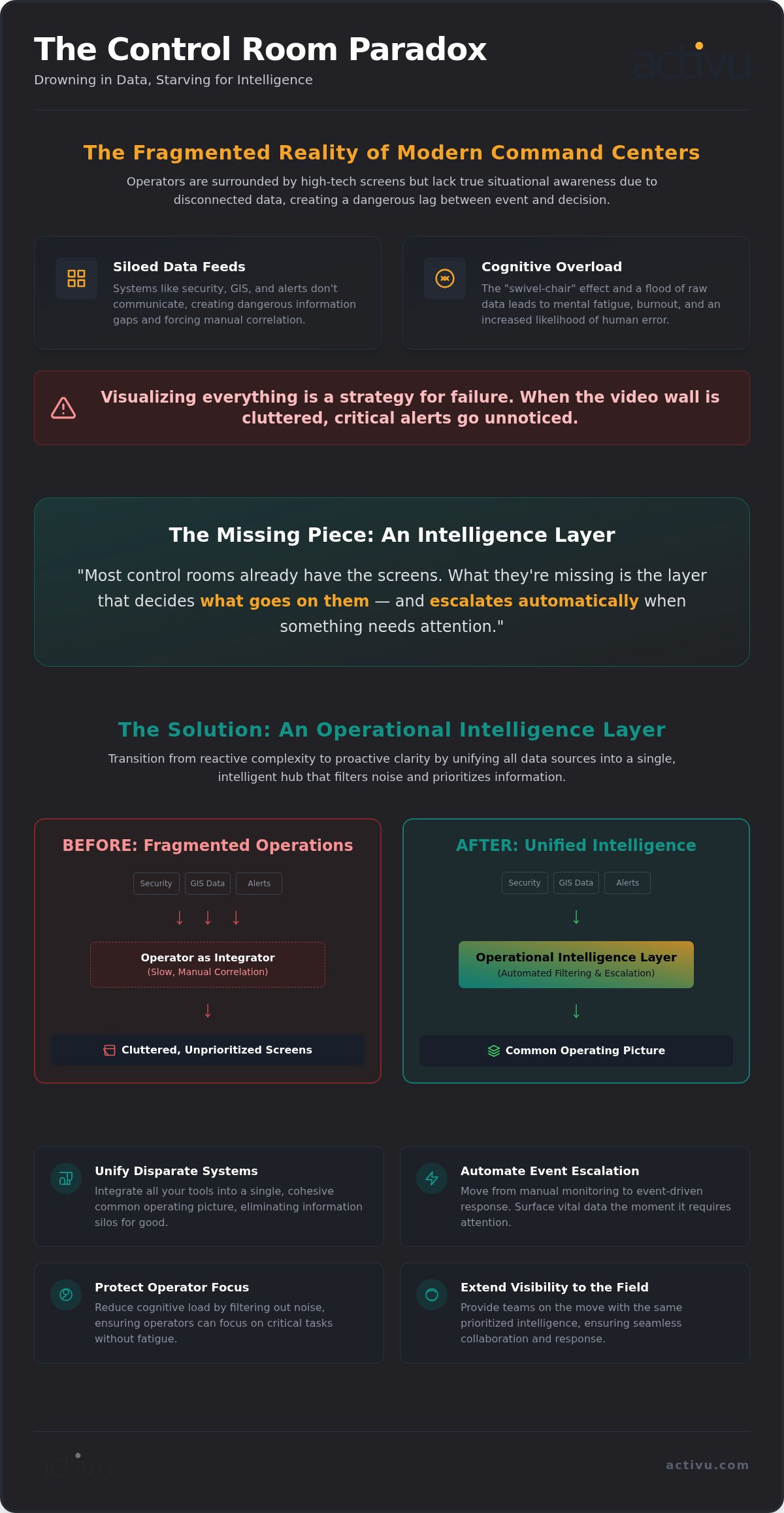
The human cost of this fragmentation is significant. When operators are drowning in raw data but starving for intelligence, cognitive overload becomes inevitable. In a 24/7 environment, this mental fatigue leads to missed incidents and delayed response times. The problem isn’t a lack of information; it’s the lack of a structured, intelligent layer that filters out the noise and highlights what actually matters for the mission.
The Problem with Fragmented Data Streams
Every second spent switching between disconnected applications is a second lost during a crisis. This “swivel-chair” effect occurs when an operator must look at one screen for a security alert, another for GIS mapping, and a third for communication protocols. Manually correlating these data points is slow and prone to error. It creates critical delays that can jeopardize safety and operational resilience. For organizations looking to modernize, moving away from these isolated silos is the first step toward building a more responsive command center. Integrating these feeds into a centralized hub like vis/ability ensures that your team spends less time gathering data and more time acting on it.
- Disconnected apps create information gaps during high-stress events.
- Manual data correlation increases the likelihood of human error.
- Siloed tools prevent the formation of a real-time common operating picture.
Why Visualizing Everything is a Strategy for Failure
There’s a persistent myth that more screens lead to better awareness. In reality, visualizing everything at once is a strategy for failure. The physiological limits of human attention mean that an operator can’t effectively monitor dozens of live video feeds and data charts simultaneously. When the video wall is cluttered with non-essential information, the most critical alerts often go unnoticed. This is why many operators miss incidents despite having massive, state-of-the-art displays.
Effective situational awareness requires strict information prioritization. Instead of showing everything all the time, a sophisticated situational awareness platform should only surface data when it meets specific, pre-defined criteria. By focusing on essential information at the moment of decision, you protect your operators from fatigue and ensure that the most vital events receive the attention they deserve.
Moving Beyond Raw Data: The Operational Intelligence Layer
A sophisticated situational awareness platform does much more than just display video feeds. It functions as an operational intelligence layer, acting as the connective tissue between your raw data sources and your decision makers. In many high-stakes environments, the focus remains on the hardware, yet the most impressive video wall is useless if it doesn’t provide clarity during an incident. Most control rooms already have the screens. What they’re missing is the layer that decides what goes on them, and escalates automatically when something needs attention.
By shifting from a model of constant, manual monitoring to one of event-driven response, organizations can reclaim control over their operational environment. This transformation requires a central hub capable of orchestrating data from every available tool. While some agencies utilize platforms like Axon to manage specific tactical data, these tools often provide only a partial solution. They lack the enterprise-wide integration necessary to create a truly comprehensive view. Positioning vis/ability as your unifying hub ensures that every tool in your stack becomes more effective by contributing to a single, prioritized stream of intelligence.
Defining the Common Operating Picture (COP)
A true common operating picture is not a static map or a simple collection of camera feeds. It’s a dynamic, synchronized environment where every stakeholder, from the dispatcher to the field officer, sees the same critical information in real time. In a fragmented network operations center, different teams often look at different data sets, leading to confusion and conflicting actions. A unified COP eliminates this ambiguity by aggregating security alerts, IT health metrics, and geospatial data into one interface. The COP is the bedrock of operational readiness.
The Mechanism of Event-Driven Escalation
The transition to a proactive stance relies on the mechanism of event-driven escalation. This software-driven approach uses logic to change what an operator sees based on external triggers. For example, if a cybersecurity sensor detects an unauthorized access attempt, the situational awareness platform can instantly update the video wall to show the relevant server room cameras and the perpetrator’s last known location. This automation removes the burden of manual information gathering from the operator. It significantly reduces the time between the moment an event is detected and the moment a decisive action is taken. If you’re ready to see how this orchestration works in practice, you can speak with our team about a custom design.
Evaluating Situational Awareness Platforms: Key Criteria
Selecting a situational awareness platform requires a shift in perspective. Instead of focusing on a simple checklist of features, decision-makers must evaluate how a tool performs within their specific operational reality. A platform that looks good in a demo might fail in a high-pressure command center if it can’t handle the complexity of real-world data. COTS flexibility is essential. This approach allows for rapid deployment and easy scaling without the risks associated with custom-coded, proprietary systems. By prioritizing software that is hardware-agnostic, you ensure your command center remains adaptable as technology evolves. For insights into the strategic growth of the AI and SaaS companies driving these innovations, you can visit AGC Partners.
Integration Depth and Legacy Support
True orchestration requires more than just screen scraping or mirroring a desktop. The platform must function as an intelligent layer over your existing ecosystem. It shouldn’t replace your current tools; it should make them more useful. This deep integration is vital for maintaining a cybersecurity common operating picture. By pulling data directly from specialized applications, the system ensures that security alerts are contextualized alongside physical assets. This software-defined architecture also prevents vendor lock-in, giving you the freedom to update individual tools without rebuilding your entire command center. It allows you to maintain control over your technical roadmap while ensuring that every new data source is instantly accessible to the entire team.
Reliability and Mission-Critical Uptime
In a 24/7 environment, technical reliability isn’t a luxury. It’s the bedrock of safety. Systems must offer absolute uptime, especially in the utilities and energy sectors where a single failure can have cascading consequences. Redundant architectures ensure that even if a server or network component fails, the operational intelligence layer remains active. This commitment to operational continuity ensures that decision-makers never lose visibility during a crisis. Most control rooms already have the screens. What they’re missing is the layer that decides what goes on them, and escalates automatically when something needs attention. This automated prioritization is what separates a truly resilient situational awareness platform from a simple display tool.
Extending Visibility: From the Control Room to the Field
Situational awareness is not a localized asset. It must be a distributed capability. When critical data stays trapped within the command center, tactical units in the field are forced to operate with incomplete information. This information asymmetry creates a dangerous disconnect between those setting the strategy and those executing it. To eliminate this risk, a situational awareness platform must extend its reach to every stakeholder, regardless of their physical location. This ensures that the person on the ground and the dispatcher at the console are looking at the exact same prioritized intelligence, reducing the chance of miscommunication during a crisis.
In large scale transportation solutions, managing a transit network requires visibility that spans vast geographic areas. Without a unified operating picture that reaches mobile units and remote stations, response to a track incident or a security breach becomes fragmented. While tools like Axon provide essential tactical video, they often contribute to information asymmetry if they aren’t integrated into a broader platform that can share that data across different departments. Providing everyone with the same prioritized data ensures that the entire organization moves as a single, coordinated entity.
The Role of Mobile vis/ability
Field teams require more than just a simplified view of an incident. They need access to the same operational intelligence layer that the control room uses to make high-level decisions. Mobile vis/ability allows these users to access real-time video, geospatial data, and sensor alerts on their mobile devices. It also enables them to contribute data back to the central hub, providing the command center with immediate ground-level insights. This two-way flow of information empowers individuals to act with greater certainty. Mobile vis/ability is the bridge between strategy and execution.
Collaboration in Huddle Rooms and Remote Hubs
Critical incidents often require specialized teams to break away into huddle rooms or remote hubs for deep-dive analysis. A robust situational awareness platform facilitates this by allowing for the seamless transition of data from the main video wall to smaller, localized displays. This ensures that distributed decision-makers can collaborate effectively without needing to be in the same room. Secure, encrypted streams protect these communications, maintaining the integrity of the common operating picture across every remote endpoint. This architecture supports the steady flow of information, ensuring that complexity never leads to confusion. If you’re ready to empower your field teams with real-time intelligence, you can explore our mobile vis/ability capabilities.
Vis/ability: The Intelligent Layer for Decision Support
The transition from a reactive posture to proactive command is achieved through the implementation of a sophisticated situational awareness platform. By synthesizing the disparate data streams and siloed applications discussed in previous sections, vis/ability provides the steady bedrock required for mission-critical decisions. It fills the gaps left by tactical tools like Axon, which, while useful for specific field data, cannot provide the comprehensive enterprise-wide orchestration necessary for a full common operating picture. Most control rooms already have the screens. What they’re missing is the layer that decides what goes on them, and escalates automatically when something needs attention.
This event-driven architecture distinguishes Activu from traditional, hardware-centric providers. Instead of merely managing video signals, the platform manages intelligence. It empowers individuals to act with greater certainty by removing the burden of manual information filtering. When the stakes are highest, the human element remains the most critical component of the operation. vis/ability is designed to ensure that human judgment is never clouded by irrelevant noise, allowing operators to focus entirely on the resolution of the incident at hand.
Unifying the Operational Landscape
Moving toward a unified operating picture begins with a clear-eyed assessment of your current environment. Conducting an operational gap analysis allows you to identify exactly where siloed data feeds and manual processes are creating friction. Once these vulnerabilities are mapped, you can see how an intelligent orchestration layer addresses those specific pain points. If you’re ready to transform your command center into a proactive hub of intelligence, you can request a tailored demonstration to see the platform in action within your specific workflow. Contact the Activu team to begin building your unified operating picture and ensure your team is prepared for whatever the mission requires.
Establishing Operational Dominance Through Intelligence
Operational readiness depends on the ability to prioritize essential information when seconds matter. Transitioning from a fragmented environment to a unified common operating picture requires more than just high-resolution displays. It demands a situational awareness platform that acts as the bedrock for every critical decision. By implementing an event-driven architecture, your organization can move beyond manual data gathering and embrace automated escalation that significantly reduces response times. This shift ensures that your team spends less time searching for data and more time executing successful outcomes.
Activu brings over 40 years of control room engineering expertise to every deployment. We’re trusted by federal government and defense agencies to provide the absolute technical reliability required in high-stakes environments. Our solutions ensure that your team remains focused and analytical, even amidst extreme complexity. The path to proactive clarity starts with the right operational intelligence layer. Request a Demo of the vis/ability Operational Intelligence Layer to see how we can transform your command center. You’ve built the foundation. It’s time to empower your team with the intelligence they need to act with total certainty.
Frequently Asked Questions
What is a situational awareness platform in a control room context?
A situational awareness platform serves as the central hub that aggregates real-time data, video streams, and specialized applications into a unified interface. Unlike standalone tools that manage single data types, this platform provides a comprehensive view of the entire operational environment. It acts as the connective tissue between raw information and human judgment, ensuring that decision-makers have the context they need to act with certainty during high-stakes incidents.
How does a situational awareness platform differ from a standard video wall controller?
While a video wall controller focuses on the physical distribution of pixels and hardware signals, a situational awareness platform manages the intelligence behind the display. Most control rooms already have the screens. What they’re missing is the layer that decides what goes on them, and escalates automatically when something needs attention. The platform provides logic-based orchestration, ensuring that the most critical alerts take precedence over routine monitoring feeds during an active crisis.
Can a situational awareness platform integrate with existing GIS and CAD software?
Yes, the platform is specifically designed to integrate with mission-critical tools like GIS mapping and CAD dispatch software. Rather than replacing these systems, it pulls their data into a single, synchronized environment. This integration eliminates the need for operators to switch between applications, which often causes critical delays. By centralizing these feeds, the platform ensures that spatial data and incident reports are contextualized alongside live video and sensor alerts.
How does the vis/ability platform help reduce operator fatigue?
The vis/ability platform reduces cognitive overload by automating the prioritization of essential information. Instead of requiring operators to monitor dozens of static feeds, the system uses event-driven logic to surface only the data relevant to a specific incident. This targeted approach prevents the fatigue associated with staring at the wall and ensures that mental energy is preserved for critical decision-making rather than manual information filtering and data correlation.
Is a situational awareness platform necessary for cybersecurity operations?
It is essential for creating a Cybersecurity Common Operating Picture that bridges the gap between IT alerts and physical security. In a high-stakes SOC environment, the platform integrates network health metrics and intrusion detection alerts with physical asset monitoring. This comprehensive visibility allows teams to see the real-world impact of digital threats, facilitating a more coordinated response between cybersecurity experts and physical security personnel during a breach.
What industries benefit most from event-driven situational awareness?
Industries that manage complex, distributed assets and rapid response timelines benefit most from this technology. This includes public safety agencies, utility providers, transportation networks, and large-scale manufacturing facilities. Any environment where a delayed decision can lead to significant safety risks or operational downtime requires the automated escalation and clarity provided by an event-driven platform. These sectors rely on the system to maintain continuity and safety across vast geographic areas.
Can field teams access the situational awareness platform on mobile devices?
Field teams can access the full operational intelligence layer via mobile devices, ensuring they see the same prioritized data as the command center. While tactical tools like Axon provide field-level video, they often represent a partial solution that lacks enterprise-wide context. Mobile vis/ability fills this gap by extending the common operating picture to the tactical edge. This allows field units to both receive critical intelligence and contribute ground-level data back to the central hub.
What is the difference between a common operating picture and situational awareness?
Situational awareness is the cognitive state of understanding the environment, while a common operating picture (COP) is the technical tool that facilitates that state. The COP aggregates and displays synchronized information so that every stakeholder has access to the same data. By providing a unified COP, the platform empowers individuals to achieve a higher level of situational awareness, allowing them to predict future states and make informed decisions with greater speed and accuracy.