
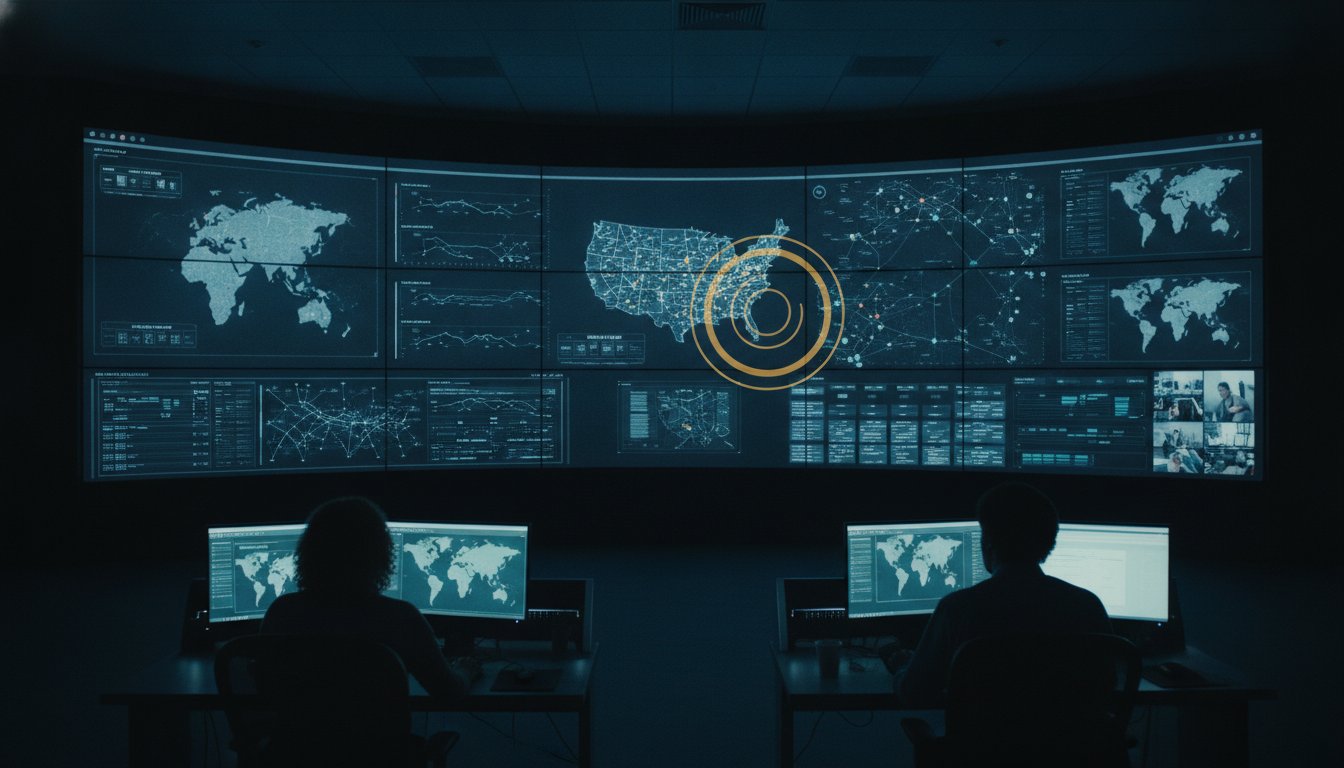
A command center’s true strength resides in the speed of its intelligence. The physical dimensions of the displays are secondary. In high-stakes environments, massive data volumes often create a paradox. More information leads to slower response. Modern control room operations must contend with fragmented silos and manual gathering processes that exhaust operators. You likely feel the weight of cognitive overload, where the search for information consumes the time needed to act upon it.
This article demonstrates how to transform that chaos into a unified, actionable operating picture. Most control rooms already have the screens. What they’re missing is the layer that decides what goes on them, and escalates automatically when something needs attention. We’ll examine how an operational intelligence layer reduces cognitive load and enables seamless collaboration across distributed teams. By moving toward vis/ability, you’ll understand how to bridge the gap between tools like Axon, which offer only a partial view, and a complete common operating picture that ensures your team never misses a pivotal incident.
Key Takeaways
- Identify the specific operational bottlenecks that lead to data drowning and operator fatigue in high-stakes environments.
- Discover how modern control room operations rely on an intelligence layer to filter essential information from background noise.
- Learn why screens alone aren’t enough and how to implement the logic that decides what reaches the operator’s attention.
- Explore how a unified platform integrates disparate applications into a single, mobile-accessible common operating picture for distributed teams.
The Hidden Friction in Modern Control Room Operations
The complexity of modern control room operations often hides a critical vulnerability. While display technology has advanced at a rapid pace, the human capacity to process information remains static. Organizations invest heavily in massive video walls and high-resolution displays, yet operators still miss critical incidents. This failure isn’t due to a lack of visual data. It’s the result of data drowning, where essential signals are buried under a mountain of noise. When every sensor triggers an alert, nothing is prioritized. This environment creates cognitive friction, a state where the effort required to navigate the system prevents the operator from actually solving the problem.
The Problem with Fragmented Data Silos
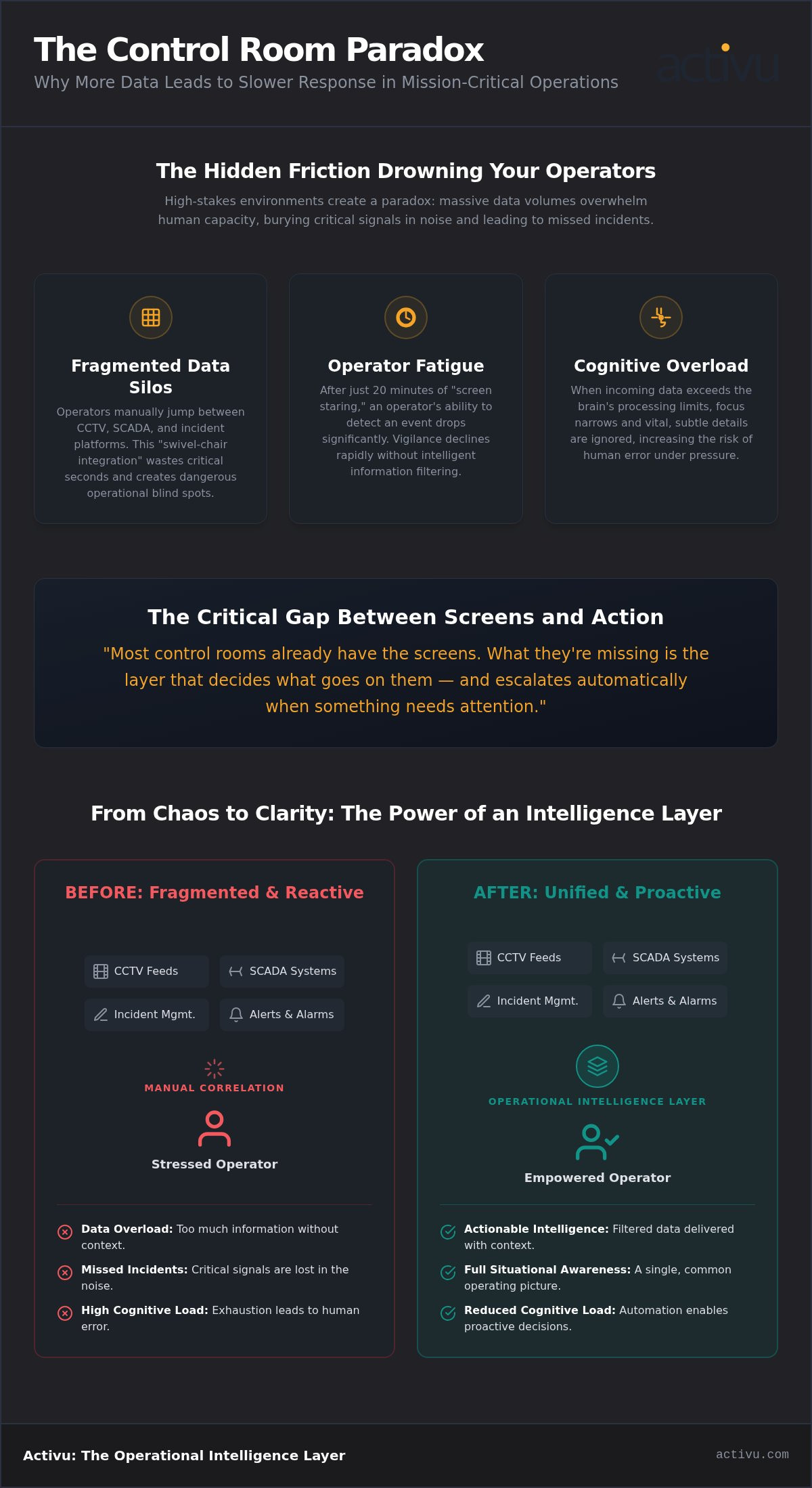
Operational environments typically rely on a patchwork of specialized tools. CCTV feeds, SCADA systems, and specialized incident management platforms operate in isolation. While these tools provide valuable data, they only offer a partial solution and require a unifying layer to create a full common operating picture. These fragmented silos create blind spots that prevent a cohesive understanding of an unfolding event. During a crisis, operators must manually jump between different interfaces to correlate information. This manual effort, often called “swivel-chair” integration, is a significant drain on time and focus. In mission-critical sectors like energy or public safety, a delay of even sixty seconds can lead to catastrophic outcomes. Without a way to unify these disparate feeds, the burden of integration falls entirely on the human operator.
Operator Fatigue and the Limits of Human Monitoring
The human brain isn’t designed to monitor dozens of static screens for hours. This “screen staring” leads to a rapid decline in vigilance. After only twenty minutes, an operator’s ability to detect a specific event on a video wall drops significantly. This psychological fatigue is exacerbated by cognitive overload, where the volume of incoming data exceeds the brain’s processing limits. Cognitive load represents the total mental effort required to interpret complex data and make a decisive judgment under pressure. When this limit is reached, the operator’s focus narrows, and subtle but vital details are ignored. Intelligent filtering is the only way to protect the human element of control room operations from the consequences of exhaustion. Without it, even the most experienced team is susceptible to human error during high-stress maneuvers in a modern control room.
Defining the Architecture of Mission-Critical Operations
A robust architecture for control room operations rests on three distinct pillars: high-performance hardware, intelligent software, and optimized human intelligence. While many organizations view these as separate procurements, they must function as a single, integrated organism. A standard monitoring center might simply display security feeds for passive observation. In contrast, a mission-critical hub serves as the nerve center for operational industries that manage national infrastructure. These environments require absolute reliability. For example, utility control rooms must maintain strict NERC CIP compliance to protect the power grid from both physical and cyber threats. Reliability isn’t just about uptime; it’s about the integrity of the information reaching the decision-maker.
This demand for absolute reliability is also seen in aviation, where UK-based AAC LTD | All About Control provides the mission-critical control systems and software engineering solutions required for the world’s most complex airport environments.
Physical Infrastructure vs. Digital Intelligence
High-performance hardware provides the foundation for situational awareness. Video wall systems serve as the canvas for operational data, but they aren’t the brain of the operation. The physical environment must support the operator’s ability to remain vigilant during long shifts. Ergonomic console furniture is essential to minimize physical strain and maintain focus. Effective control room design services from Activu Corporation ensure that sightlines, lighting, and acoustics are optimized for rapid decision-making. If the physical layer fails to support the human element, the most advanced software in the world can’t prevent an incident. A well-designed space reduces the friction between the operator and the technology they use.
The Role of Application Integration
Software integration is the bridge between raw data and action. Many teams rely on specialized tools for Computer-Aided Dispatch or emergency management. While these platforms are powerful, they only provide a partial view of the operational landscape. They are silos that require a central hub to aggregate and correlate their feeds into a single common operating picture. This is especially true for maintaining a Cybersecurity Common Operating Picture. Without a unifying layer, operators spend too much time toggling between applications rather than managing the crisis. A truly integrated control room operations strategy uses a central hub to make these specialized tools useful for the entire team. Organizations looking to harden their infrastructure should consider how their utility operations integrate these disparate data streams to ensure total visibility.
The Critical Gap Between Video Walls and Actionable Intelligence
Traditional control room operations often mistake visual density for operational effectiveness. A wall full of video feeds provides the illusion of control, but without a filtering mechanism, it merely increases the noise. Most control rooms already have the screens. What they’re missing is the layer that decides what goes on them, and escalates automatically when something needs attention. This shift from reactive monitoring to proactive intelligence marks the difference between a facility that merely records history and one that actively shapes outcomes.
What is an Operational Intelligence Layer?
Event-Driven Visualisation is the automated delivery of mission-relevant information to operators based on real-time data triggers, ensuring that critical alerts are never obscured by routine background activity. By filtering the noise, this technology ensures that human judgment is applied only where it is most needed. This proactive stance is the bedrock of modern control room operations, turning the video wall into a dynamic tool for incident management rather than a static gallery of feeds.
Human error often stems from the manual steps required to share information during a crisis. When an incident occurs, the system should instantly reconfigure the environment. An intelligent platform triggers specific screen layouts tailored to the incident type, bringing the necessary tools to the forefront without manual intervention. This capability extends beyond the main command center. Through Mobile vis/ability, the system automatically escalates the common operating picture to huddle rooms and field devices. This ensures that distributed teams see exactly what the lead operator sees, fostering seamless collaboration. Automated escalation removes the friction of information sharing. It allows teams to move directly to resolution with the certainty that they are acting on the most relevant data available.
Strategies for Enhancing Situational Awareness and Reducing Fatigue
High-stakes control room operations demand more than just comprehensive visual coverage. They require a deliberate strategy that protects the operator’s cognitive capacity. Fatigue in the command center isn’t simply the result of long shifts. It’s the cumulative effect of visual ergonomics and the constant mental strain of filtering irrelevant data. Transitioning from passive 24/7 monitoring to exception-based management allows your team to act with absolute certainty. This shift builds systemic resilience within the Incident Management Software framework, ensuring that human judgment is reserved for the moments it matters most.
Step 1: Audit Your Data Feeds and Silos
Success begins by identifying which feeds provide critical intelligence and which merely contribute to the background noise. You must map the flow of information from the field directly to the command center. Gaps typically appear where situational awareness breaks down because data remains trapped within a specific, disconnected tool. By auditing these silos, you uncover the friction points that delay response times. Understanding where information stalls allows you to prioritize the data streams that deserve a permanent place on your displays.
To further enhance your organization’s resilience and operational performance through strategic transformation, click here.
Step 2: Implement Event-Driven Logic
Automation should be the primary driver of your visual environment. Most control rooms already have the screens. What they’re missing is the layer that decides what goes on them, and escalates automatically when something needs attention. You must define specific triggers that change the video wall state based on the incident type. Integrating real-time threat intelligence into the common operating picture ensures that your team isn’t searching for answers during a crisis. This logic also powers the SITREP automation process, which generates faster, more accurate reporting by pulling data directly from the active incident profile.
Step 3: Extend Visibility Beyond the Glass
The reach of the command center shouldn’t end at the physical door. Mobile access for field supervisors and remote stakeholders is vital for maintaining Operational Continuity during a sustained crisis. When every member of the response team sees the same actionable intelligence, the organization moves with greater speed and synchronization. This connectivity ensures that decisions made in the huddle room are based on the same reality as those made on the front lines.
Step 4 and 5: Analyze and Refine Your Framework
The final stages of optimization involve continuous analysis and refinement. Reviewing incident logs allows you to adjust the logic that drives your automated displays, ensuring the system evolves alongside emerging threats. This iterative process transforms control room operations into a proactive engine of organizational safety. Schedule a consultation with an operations expert to audit your current workflow and identify opportunities for intelligent automation.
Scaling Operational Capability with the vis/ability Platform
The vis/ability platform represents the logical culmination of a modern approach to control room operations. It serves as the operational intelligence layer that transforms fragmented data feeds into a cohesive, unified Common Operating Picture (COP). Most control rooms already have the screens. What they’re missing is the layer that decides what goes on them, and escalates automatically when something needs attention. By acting as the central hub for application integration, vis/ability ensures that specialized tools provide value to the entire team, rather than remaining trapped in isolated silos. This platform prioritizes essential information, acting as the critical filter between raw data and human judgment.
Unifying Distributed Teams
True operational readiness requires synchronization between the command center and the field. The vis/ability platform connects the primary video wall to huddle rooms and mobile users, creating a shared environment for decision-making. Through the Activu Link feature, operators can instantly share critical visual information across the entire organization. This seamless flow of intelligence removes the friction of manual reporting and ensures that every stakeholder acts on the same real-time data. Whether a team member is at a central console or responding from a mobile device, the platform provides the clarity needed to act with certainty. It serves as the unifying platform that makes other tools useful for the entire team, regardless of their location.
Mission-Ready Cybersecurity Visualization
In an era of increasing digital threats, Security Operations Centers (SOCs) require a centralized interface to visualize network health and threat posture in real-time. The platform allows teams to coordinate incident response by overlaying cybersecurity data onto the broader operational landscape. This visualization enables faster identification of anomalies and more effective mitigation strategies. It projects a persona of high intelligence and unwavering dependability, remaining focused and analytical when stakes are at their highest. By unifying cybersecurity visualization with physical security feeds, vis/ability provides a level of situational oversight that fragmented systems cannot match.
Scaling your capabilities requires a partner that understands the high-stakes reality of mission-critical environments. Transitioning to an intelligence-led model ensures your team remains focused and analytical when stakes are at their highest. We invite you to see the platform in action and discover how it can transform your command center. Contact Activu for a tailored design consultation to see how the vis/ability platform can redefine your operational intelligence.
Mastering the Intelligence Layer of Mission-Critical Environments
Optimizing control room operations requires more than high-resolution hardware. Success depends on an operational intelligence layer that filters noise and prioritizes the signals that demand immediate human judgment. Most control rooms already have the screens. What they’re missing is the layer that decides what goes on them, and escalates automatically when something needs attention. By implementing event-driven automation, you reduce the time to incident awareness and protect your operators from the exhaustion of manual data correlation.
Activu has provided bedrock reliability for high-stakes environments since 1983. Our expertise is proven across Global Fortune 500 SOCs and US Federal Command Centers. We offer the technical certainty required to maintain operational continuity when complexity is at its peak. It’s time to move beyond fragmented silos and embrace a truly unified common operating picture that empowers every member of your team.
Request a Demo of the vis/ability Platform to see how we transform raw data into decisive action. Your team deserves the clarity and confidence of an intelligent command operation.
Frequently Asked Questions
What are the main challenges in control room operations today?
Modern control room operations face significant friction from fragmented data silos and the phenomenon of data drowning. Operators are often overwhelmed by the volume of information from disconnected systems. This leads to cognitive fatigue and slow response times. This failure isn’t just a lack of effort; it’s a lack of integrated visibility. Organizations struggle to maintain a clear common operating picture when essential data remains trapped in disparate tools.
How does an operational intelligence layer differ from a standard video wall controller?
A standard controller merely places pixels on a screen. An operational intelligence layer provides the logic behind the display. Most control rooms already have the screens. What they’re missing is the layer that decides what goes on them, and escalates automatically when something needs attention. This technology filters out background noise. It’s the filter that ensures only mission-relevant data reaches the operator’s attention during critical moments of decision-making.
Can vis/ability integrate with existing tools like Axon or Juvare?
The vis/ability platform acts as the central hub for application integration. Specialized tools like Axon or Juvare provide valuable data but often only offer a partial solution for situational awareness. They’re only pieces of the puzzle and require a unifying layer to create a full common operating picture. vis/ability aggregates these feeds, making them useful for the entire team. This integration ensures that information flows naturally between command centers and distributed teams.
How do you reduce operator fatigue in a 24/7 mission-critical environment?
Reducing fatigue requires a transition from passive 24/7 monitoring to exception-based management. By implementing an operational intelligence layer, you filter out irrelevant data that causes cognitive overload. Operators don’t need to scan dozens of static feeds. Instead, the system uses event-driven logic to highlight anomalies. This approach protects the human element of control room operations, ensuring that staff remain focused and analytical when stakes are at their highest.
What is the role of mobile devices in modern control room operations?
Mobile devices extend the common operating picture beyond the physical walls of the command center. Through Mobile vis/ability, field supervisors and remote stakeholders can access the same real-time intelligence as central operators. This synchronization is vital for operational continuity during a crisis. It allows distributed teams to collaborate with greater certainty. Decisions made on the front lines aren’t made in isolation; they’re supported by the huddle room’s data.
How does event-driven situational awareness improve incident response times?
Event-driven situational awareness automates the delivery of mission-relevant information based on real-time data triggers. This eliminates the manual steps usually required to identify an incident. The system reconfigures the video wall state instantly when a threshold is breached. By providing immediate visual evidence and automated SITREPs, it significantly reduces the time-to-incident awareness. This speed allows teams to move directly to resolution rather than wasting time on manual information gathering.
Is vis/ability compliant with NERC CIP standards for utilities?
The vis/ability platform is specialized for NERC CIP compliance environments found in the utility and energy sectors. It provides the secure visualization required to monitor critical infrastructure while adhering to strict regulatory requirements. The platform helps organizations maintain a cybersecurity common operating picture by visualizing threat postures in real-time. This level of technical reliability ensures that utility operations remain resilient against both physical and cyber threats to the power grid.
What is the first step in upgrading a legacy command center?
The first step is a comprehensive audit of your current data feeds and operational silos. You must identify where situational awareness typically breaks down and which feeds contribute to noise rather than intelligence. Focus on the user’s operational reality before considering new hardware. Once you understand the friction points, it’s possible to implement an operational intelligence layer to unify your disparate tools. This strategy ensures your upgrade delivers clear, actionable intelligence.