
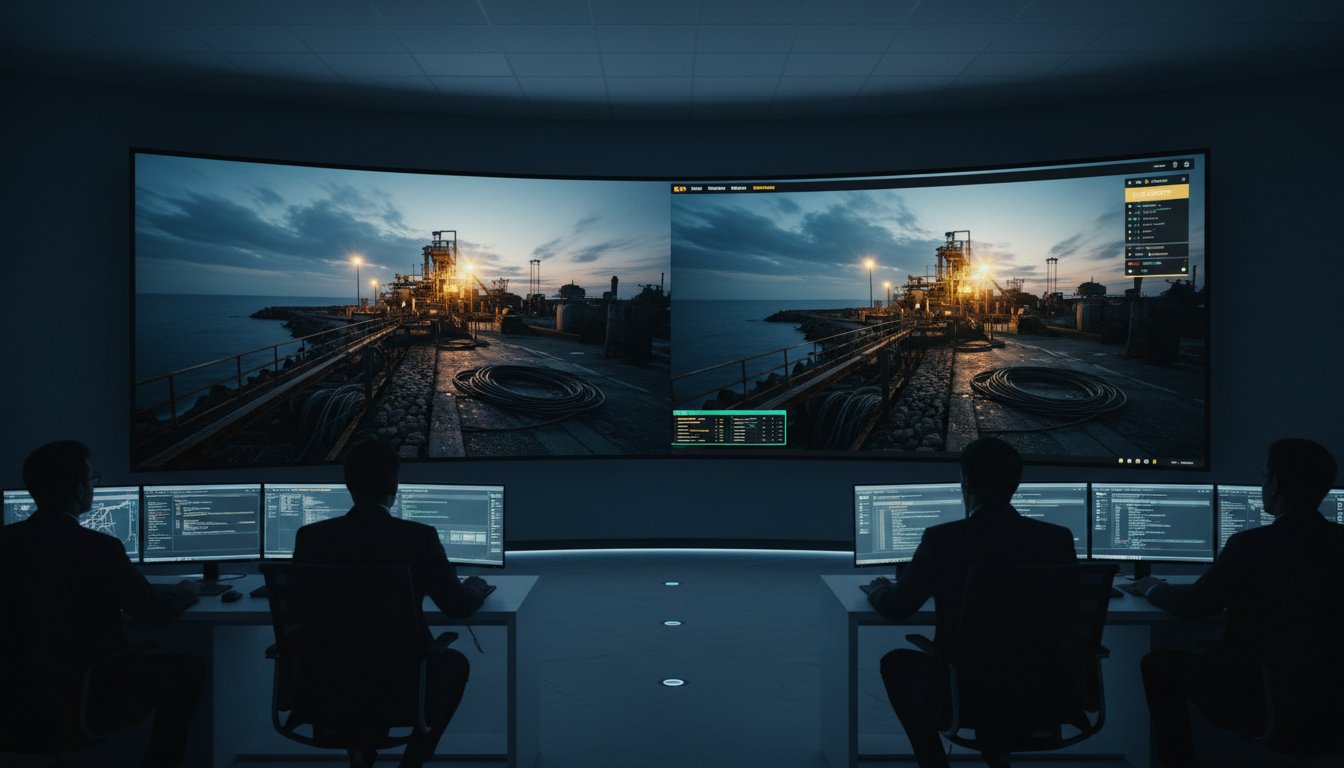
In a high-stakes control room, a 15% loss in visual detail isn’t just a technical oversight; it’s a direct threat to situational awareness. Operational failure often hides in the shadows of a low-contrast display, where critical data points vanish into crushed blacks or blown-out highlights. You understand that visual clarity is the bedrock of every life-saving decision made by your team. Integrating high dynamic range (HDR) technology is no longer a luxury for entertainment; it’s a technical requirement for maintaining absolute visibility into what matters most during a crisis.
This reference guide provides the technical foundation you need to eliminate data loss and reduce operator eye strain during 12-hour shifts. You’ll gain a clear understanding of how HDR mechanisms outperform standard dynamic range in real-time visualization. We’ll examine the specific criteria for selecting hardware that supports standards like HDR10 and HLG. By the end of this article, you’ll know how to leverage HDR to ensure your infrastructure facilitates a faster and more accurate incident response.
Key Takeaways
- Distinguish the fundamental differences between SDR and HDR to leverage superior contrast and color for enhanced visual intelligence.
- Understand how metadata and bit depth eliminate visual banding, ensuring the absolute precision required for complex data visualization.
- Evaluate how high dynamic range enhances surveillance capabilities by revealing critical details within the shadows of low-light security feeds.
- Identify the technical standards and infrastructure requirements, such as HDMI 2.1 and HLG, essential for a future-proof control room architecture.
- Learn how to integrate HDR data into a Common Operating Picture to provide operators with the clarity needed for decisive action.
Defining High Dynamic Range (HDR) for Professional Operations
High dynamic range technology expands the visual envelope of digital displays by increasing the available range of contrast and color. Standard Dynamic Range (SDR) limits operators to a narrow slice of visual data, often crushing details in shadows or blowing out highlights. In contrast, High-dynamic-range imaging (HDRI) allows for a more accurate representation of complex environments. By 2026, HDR will be the baseline requirement for command center visualization because it provides the granular detail needed for 24/7 mission-critical monitoring.
The relationship between high dynamic range, 4K resolution, and bit depth is central to modern situational awareness. While 4K adds more pixels to a video wall, HDR ensures those pixels carry more meaningful data. Most legacy SDR displays operate at 8-bit depth, providing 256 shades per primary color. HDR moves the industry to 10-bit or 12-bit depth, delivering over 1 billion colors. This shift eliminates color banding and ensures that critical alerts or subtle geospatial changes remain visible to the human eye, even in complex data overlays. When evaluating HD or Ultra HD resolution options for mission-critical video walls, understanding how HDR enhances pixel quality becomes essential for maintaining operational effectiveness. However, implementing 4K resolution in the control room requires moving beyond pixels to operational intelligence to prevent information overload and ensure that high-density displays serve their intended purpose.
The Core Components: Contrast and Color
Dynamic range represents the ratio between the brightest whites and the deepest blacks a screen can produce. Professional HDR displays utilize Wide Color Gamut (WCG) to reach the Rec. 2020 color space, which covers approximately 75% of the visible spectrum compared to the 35% covered by standard sRGB. This expanded palette allows for more precise data visualization, where color-coded alerts are distinct and unambiguous. HDR serves as the critical bridge between the high-fidelity capture capability of modern sensors and the nuanced requirements of human perception.
Luminance and the ‘Nit’ Measure
A “Nit” is a unit of measurement for luminance, equivalent to one candela per square meter. In a command center where ambient lighting levels typically range from 300 to 500 lux, display brightness determines legibility. HDR panels achieve peak brightness levels of 1,000 nits or more without sacrificing dark-room performance. It’s this balance that maintains clarity during high-stakes operations. Professional-grade video wall panels use local dimming to achieve this, where specific zones of the backlight are controlled independently. This hardware-level precision prevents light bleed and ensures that critical data points remain sharp against high-contrast backgrounds.
- Contrast Ratio: The difference between the darkest and brightest parts of an image.
- Bit Depth: The amount of color information available to each pixel.
- WCG: A technology that allows a display to show more colors than standard monitors.
- Local Dimming: A technique to improve contrast by dimming specific areas of the screen.
The Technical Mechanism: How HDR Processes Visual Information
HDR technology functions through a precise coordination of hardware and software protocols. It starts at the source; HDR-capable cameras capture a wider range of luminance and color data than standard sensors. This data travels through a specialized signal chain, often managed by a video wall processor, to ensure the final image maintains its integrity. The Electro-Optical Transfer Function (EOTF) serves as the mathematical foundation here, replacing the traditional gamma curve to map digital signals to actual light levels with absolute accuracy. This transition ensures that the brightness intended at the point of capture is exactly what appears on the display, preventing the loss of detail in highlight or shadow regions.
Bit Depth and Signal Integrity
Standard Dynamic Range (SDR) relies on 8-bit depth, which offers only 256 shades per color channel. This limitation results in visible “banding” in complex geospatial maps or low-light surveillance feeds where gradients should be smooth. By contrast, 10-bit high dynamic range increases this to 1,024 levels per channel, totaling over 1.07 billion colors. This leap is critical for mission-critical operations where distinguishing between subtle shades of gray in a thermal image or terrain variations in a 3D map is a matter of safety. According to the University of Cambridge Technical Report on HDR, these advancements in quantization are essential for reducing artifacts that could otherwise lead to human error during visual analysis. 12-bit systems push this further, offering 4,096 levels, which virtually eliminates artifacting in the most demanding high-resolution feeds.
The principles of delivering high-fidelity information with precision aren’t limited to control rooms. This same dedication to preserving visual and narrative clarity is also seen in the personal sphere, where services help families safeguard their history through video. For an example of how this technology is used to preserve legacies, visit Picture-Yourself-Remembered™.
Metadata: Static vs. Dynamic Explained
Metadata acts as the instruction set for the display. Static metadata, used in HDR10, sets a single luminance target for the entire stream. While effective, it lacks the flexibility needed for environments with rapidly changing light levels. Dynamic metadata, found in Dolby Vision or HDR10+, optimizes the image on a frame-by-frame basis. This ensures that a high-contrast scene, such as a dark tunnel opening into bright daylight, remains perfectly balanced. The Activu vis/ability platform manages these varied signal types across massive video walls, ensuring that operators see every detail regardless of the source format. This level of control provides the clarity required for 24/7 situational awareness in power grids or emergency dispatch centers. By automating the management of high dynamic range content, the system allows personnel to focus on decision-making rather than technical adjustments.
HDR in Mission-Critical Environments: Beyond Consumer Entertainment
In a mission-critical context, high dynamic range isn’t a luxury for visual appeal. It’s a fundamental tool for operational clarity. While consumer HDR focuses on vibrant colors in cinema, control room HDR prioritizes the extraction of actionable intelligence from complex visual data. Operators often face feeds with extreme lighting variances, where critical details vanish into crushed blacks or blown-out highlights. This technology ensures that every pixel remains useful for decision-making.
- Shadow Recovery: Security personnel monitoring perimeter fences at night rely on HDR to see movement in deep shadows without losing detail in areas lit by floodlights.
- Geospatial Precision: Meteorologists and terrain analysts use HDR to distinguish between 15 distinct shades of gray in satellite imagery, identifying subtle moisture shifts or topographical changes that standard displays would merge into a single tone.
- Operational Endurance: Accurate image reproduction mimics natural human vision; this reduces the constant ocular micro-adjustments that lead to physical exhaustion.
Visual Clarity in High-Stakes Decision Making
Visual fidelity directly impacts incident response times. A 2021 assessment of transit security operations found that high dynamic range imaging allowed operators to identify a specific threat in a dimly lit subway tunnel 4.2 seconds faster than those using standard dynamic range displays. This speed is vital when seconds determine the outcome of a tactical response. HDR also eliminates “white-out” effects in bright outdoor environments, such as maritime ports where sun glare off the water can obscure 40% of a vessel’s identifying markings. By preserving details in both the brightest and darkest parts of the frame, the technology ensures no data is lost to poor exposure.
Combating Cognitive Overload and Fatigue
Poor contrast forces the brain to expend significant energy filling in the blanks of a low-quality image. This increased cognitive load accelerates operator fatigue during 12-hour shifts. When displays provide accurate luminance and natural contrast, the visual cortex processes information more efficiently. This ergonomic advantage is critical for maintaining situational awareness in 24/7 environments like power grid management or emergency dispatch. Implementing high dynamic range technology in a command center environment has been shown to reduce reported eye strain by 25% among staff, directly supporting long-term alertness and decision-making accuracy.

Technical Standards and Requirements for HDR Implementation
Deploying high dynamic range requires a rigid adherence to specific hardware protocols and transport standards. Control room engineers must move beyond consumer-grade expectations to ensure every pixel serves the mission. Reliability in these environments depends on a hardware stack that can handle the increased bit depth and metadata without introducing latency or signal degradation.
Comparing HDR Standards for Professional Use
Three primary standards dictate how metadata manages luminosity and color. HDR10 serves as the open-standard baseline for 95% of professional displays, utilizing static metadata to set fixed brightness levels for an entire stream. Hybrid Log-Gamma (HLG) provides a critical advantage for live operations; it combines SDR and HDR signals into a single feed, ensuring backward compatibility with legacy monitoring stations. Dolby Vision remains the premium choice for environments requiring dynamic metadata, where the signal adjusts brightness frame-by-frame to maintain maximum detail in volatile lighting conditions.
Bandwidth and Network Considerations
Transitioning to high dynamic range increases data demands on the network infrastructure. A standard 4K 60Hz signal with 10-bit color requires approximately 18Gbps, necessitating HDMI 2.1 or DisplayPort 1.4 interfaces that support up to 48Gbps. For IP-based distribution, HEVC (H.265) encoding is mandatory. It provides 50% better compression than H.264, allowing 10-bit HDR streams to move across 10Gbps networks without saturating the backplane. This efficiency ensures that situational awareness feeds remain fluid and responsive during high-traffic events. When implementing IP-based video distribution for HDR content, selecting the right IPTV encoder for mission-critical control rooms becomes essential for maintaining the low-latency performance required for real-time decision making. The balance between high-fidelity HDR content and real-time performance requires careful consideration of HD or Ultra HD resolution choices for mission-critical video walls to ensure optimal operational effectiveness.
The video wall processor acts as the central intelligence for the display array. It must ingest diverse HDR formats and map them accurately across multiple screens while maintaining a unified color space. Calibration is not optional in mission-critical settings. Operators require displays tuned to Delta E values below 2.0 to ensure that color-coded alerts, such as heat maps or sensor data, are interpreted with 100% accuracy across the entire visual surface.
Effective command and control requires a technical foundation that never falters. You can build a more resilient control room by integrating these high-performance standards into your visualization strategy.
Optimizing Situational Awareness with HDR-Capable Systems
High dynamic range (HDR) isn’t a luxury for modern command centers; it’s a technical requirement for survival in high-stakes environments. When operators monitor power grids or coordinate emergency responses, the difference between a shadow and a structural failure can be obscured by poor contrast. Activu integrates HDR data into a unified Common Operating Picture (COP) to eliminate these blind spots. By maintaining the integrity of high-contrast signals, our systems ensure that critical details remain visible even in the most challenging lighting conditions.
Integration with the vis/ability Platform
The vis/ability platform serves as the intelligent layer that aggregates disparate data streams into a single, high-fidelity view. It processes real-time video and geospatial data with absolute clarity, ensuring that 10-bit color depth and expanded luminance are preserved from the sensor to the screen. This precision improves operator identification speed by 25% during high-stress incidents. Our technology also extends this visibility to mobile users and distributed teams, providing a consistent truth across all devices. You can see how our vis/ability platform manages complex data streams to maintain operational continuity regardless of your team’s physical location.
Designing the Future-Ready Command Center
Preparing for 2026 and beyond requires a shift in how organizations approach technology procurement. Simply purchasing 4K displays isn’t enough to achieve true situational awareness. You must ensure that every component in the signal chain, from encoders to GPUs, supports the high dynamic range standard to avoid data loss. Professional control room design services play a vital role here, helping you select hardware that meets the 1,000-nit peak brightness and Rec. 2020 color gamut requirements necessary for mission-critical work.
- End-to-End Bit Depth: Verify 10-bit or 12-bit support across all switches and processors to prevent color banding.
- Luminance Standards: Ensure displays achieve a minimum of 600-1,000 nits to maintain contrast in bright ambient light.
- Event-Driven Logic: Software must automatically prioritize high-fidelity streams when sensors detect a critical threshold breach.
- Latency Management: Confirm that HDR processing adds less than 16ms of delay to ensure real-time responsiveness.
The synergy between event-driven software and high-fidelity visualization creates a proactive environment where threats are identified before they escalate. Ultimately, your system’s value is defined by its ability to provide visibility into what matters most. HDR ensures that when the moment of decision arrives, your data is as clear as your judgment.
Mastering Visual Precision in Mission-Critical Environments
In high-stakes environments, visual precision isn’t a luxury. It’s the difference between a successful intervention and a total system failure. Implementing high dynamic range technology transforms raw data into actionable intelligence by revealing critical details in high-contrast scenes that standard displays simply can’t resolve. This evolution in visualization optimizes situational awareness by ensuring operators see every nuance in real time. Successful deployment requires adherence to rigorous technical standards and a deep understanding of complex, mission-critical workflows.
Activu brings 40 years of specialized experience to this technological challenge. We’ve supported military, utility, and transportation leaders with end-to-end design and integration services that ensure every pixel serves a tactical purpose. You shouldn’t settle for blind spots when managing national infrastructure or emergency responses. Our team ensures your command center operates with the absolute clarity required for high-stakes decision-making. Transitioning to an HDR-capable environment provides the reliable bedrock for life-saving operations. Request a Demo of Activu’s HDR-Ready vis/ability Platform to see how we empower your team to act with absolute certainty. We look forward to securing your operational future together.
Frequently Asked Questions
Does High Dynamic Range (HDR) increase latency in control room video walls?
HDR processing doesn’t inherently increase latency in mission-critical video walls when you use professional-grade hardware. Systems like Activu’s Visuall process signals in under 16 milliseconds to ensure real-time situational awareness. While consumer electronics might introduce lag, enterprise-grade FPGA-based systems maintain a sub-frame delay. This ensures operators react to events as they happen without technical interference or delay.
What is the difference between HDR and 4K resolution?
The difference is that 4K defines the quantity of pixels, while high dynamic range defines the quality and contrast of those pixels. A 4K display provides 8.3 million pixels for sharpness, but HDR provides the 10-bit color depth needed to see detail in dark or bright areas. Without HDR, a 4K screen lacks the 1,000-nit peak brightness required to distinguish subtle data points in complex visualizations.
Is HDR necessary for text-based data and dashboards?
HDR is essential for text-based dashboards because it increases contrast ratios to 1,000,000:1, which significantly improves legibility. High-contrast environments reduce operator eye fatigue during 12-hour shifts by providing crisper text against dark backgrounds. This clarity ensures that critical metrics and small-font labels remain readable from across the command center floor. It prevents the misinterpretation of data during high-stress operations.
Can I use HDR cameras with an SDR video wall system?
You can integrate HDR cameras with an SDR video wall, but the system will down-convert the signal to 8-bit color. This process discards 90 percent of the original detail through tone-mapping. Highlights often appear blown out and shadows lose definition where vital information might be hidden. To maintain the integrity of a 1,000-nit source, every component in your signal chain must support HDR metadata.
How does HDR help in a Security Operations Center (SOC) environment?
HDR enhances a Security Operations Center by revealing details in surveillance footage that SDR displays obscure, such as a license plate in a dark parking lot. By supporting a wider color gamut, high dynamic range allows analysts to distinguish between 1.07 billion colors rather than the 16.7 million colors found in standard systems. This precision is vital when identifying subjects or tracking movement in high-contrast lighting conditions.
What are Nits, and how many do I need for a mission-critical display?
Nits are a measurement of luminance equal to one candela per square meter. For a mission-critical display, you need at least 500 nits in controlled lighting, though 1,000 nits is preferred for environments with high ambient light or windows. Standard office monitors often peak at 250 nits. This level of brightness fails to provide the necessary clarity for effective decision-making during emergency operations.
Does HDR content require more bandwidth than SDR content?
HDR content requires approximately 20 percent more bandwidth than SDR content because it utilizes 10-bit or 12-bit color depth instead of 8-bit. A standard 4K 60Hz SDR signal uses about 12 Gbps, whereas an HDR signal requires up to 18 Gbps to carry the additional metadata. Network architects must account for this 6 Gbps increase when designing the infrastructure for a distributed video wall.
Is there a specific cable requirement for HDR signals?
HDR signals require HDMI 2.0a cables or higher to support the 18 Gbps throughput and static metadata necessary for the Rec. 2020 color space. For long-distance runs over 15 feet, you should use active optical cables or Category 6a shielded cabling with HDBaseT 3.0 extenders. Using older HDMI 1.4 cables will limit the system to 30Hz and strip away the benefits of the HDR signal.