
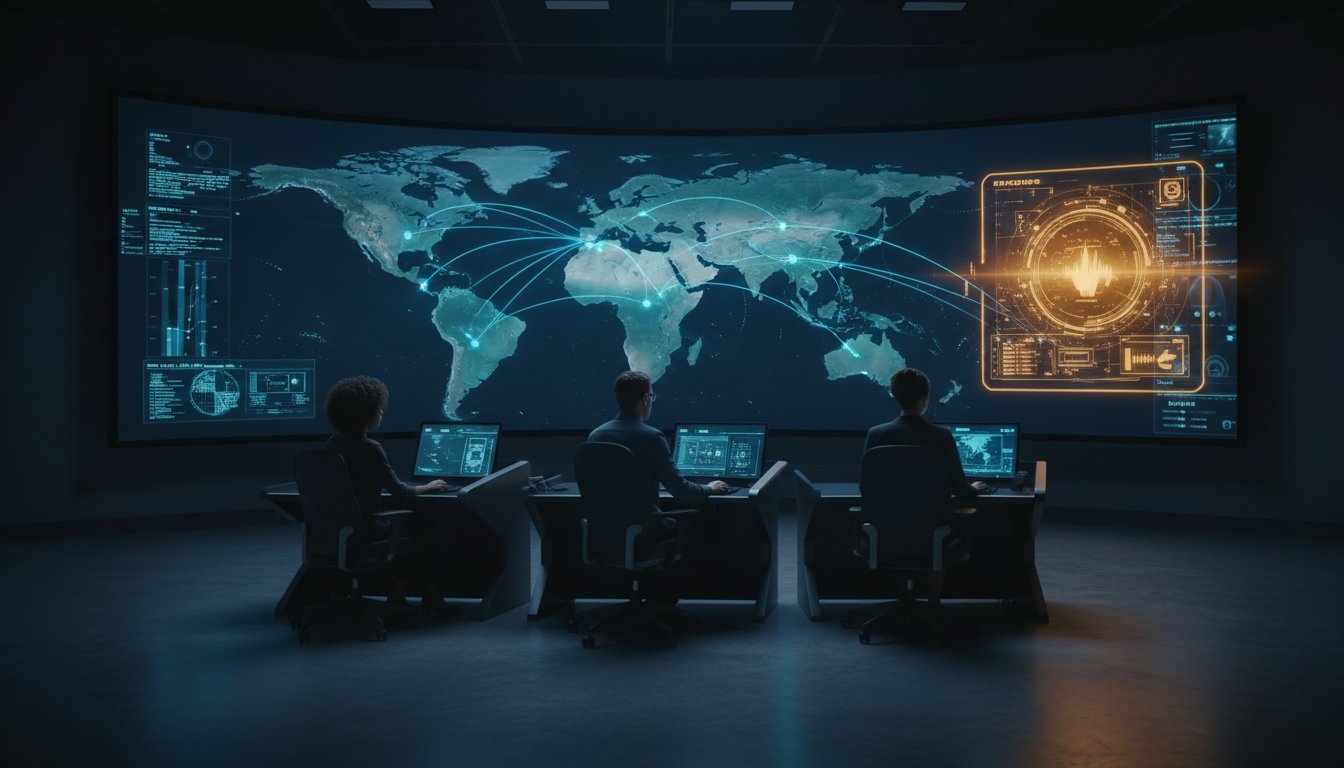
A network operations center that relies on manual monitoring is essentially waiting for a failure to happen. In high stakes environments, operators often struggle with 40 or more disparate data feeds, leading to the fatigue that causes 30% of critical alerts to be missed during a standard shift. This fragmentation creates dangerous silos between network and security teams, leaving your infrastructure vulnerable to delayed responses. Most control rooms already have the screens. What they’re missing is the layer that decides what goes on them, and escalates automatically when something needs attention.
You need a way to solve common control room situational awareness problems by transforming raw data into actionable intelligence. This is vis/ability, the operational intelligence layer that surfaces through the video wall to provide a unified operating picture. In this guide, you’ll discover how modern centers leverage event-driven intelligence to ensure the right information reaches the right person at the right time. We’ll examine the transition from static dashboards to a dynamic environment where automatic escalation reduces downtime and empowers distributed teams to act with absolute certainty.
Key Takeaways
- Identify why traditional monitoring strategies fail due to fragmented data silos and learn to overcome the cognitive overload that causes operators to miss critical incidents.
- Define the essential requirements for a modern network operations center to maintain 24/7/365 mission-critical uptime and operational continuity.
- Examine the strategic benefits of merging NOC and SOC functions into a unified posture that eliminates communication gaps between IT and security teams.
- Discover how event-driven situational awareness replaces static “wall-watching” with proactive visualization that manages multiple complex data feeds automatically.
- Learn to implement an operational intelligence layer that moves beyond basic screens to provide automated escalation when mission-critical events require immediate human intervention.
The Operational Gap: Why Traditional Network Operations Centers Struggle
Modern network management requires more than just a room full of monitors. While a network operations center serves as the nerve center for an organization, many traditional setups fail under the weight of their own data. These environments suffer from an operational gap where the volume of incoming information exceeds the human capacity to process it. Instead of providing clarity, fragmented systems create a fog of noise that masks emerging threats. When every tool competes for attention, the most critical signals often go unnoticed until a system failure occurs.
Fragmented Systems and the Cost of Silos
Operators frequently jump between 12 or more disconnected software tools to verify a single alert. These silos prevent a unified view of the network’s health. When data is trapped in separate applications, personnel lose the ability to see the big picture in real time. This fragmentation leads to a 30 percent increase in mean time to resolution because teams spend more time correlating data than fixing problems. Organizations must address these gaps to maintain Operations Management resilience in high-stakes environments. Without a unifying hub, critical information arrives too late to prevent downtime, compromising the entire mission.
Why Operators Miss Incidents on the Video Wall
The psychology of monitoring reveals a harsh truth. Human attention spans degrade rapidly when tasked with watching static feeds. Studies in human factors engineering show that after just 20 minutes of wall-watching, an operator’s ability to detect a specific incident drops by as much as 95 percent. Adding more monitors doesn’t solve this; it only compounds the sensory saturation. It creates a cockpit effect where the sheer volume of visual stimuli leads to cognitive paralysis. This makes it nearly impossible for a network operations center team to maintain true situational awareness through manual observation alone.
Most control rooms already have the screens. What they’re missing is the layer that decides what goes on them, and escalates automatically when something needs attention. This is the role of vis/ability. It acts as an operational intelligence layer that surfaces the most critical data through the video wall precisely when it matters. Instead of expecting humans to find the needle in the haystack, the system identifies the needle and presents it clearly. In mission-critical environments, automatic escalation ensures that the answer appears on the wall before a minor glitch becomes a catastrophic failure.
What is a Network Operations Center? Core Functions and Requirements
A network operations center serves as the centralized nerve center where an organization’s IT infrastructure is monitored, managed, and protected. It isn’t just a room full of monitors; it’s a 24/7/365 operational requirement for maintaining mission-critical uptime. In high-stakes environments, the network operations center ensures that communication channels, servers, and databases remain functional. When a link fails or a server overheats, the NOC is the first line of defense. Organizations like the GlobalNOC at Indiana University demonstrate how this centralized oversight manages massive research networks across the globe with precision.
The primary challenge in modern centers isn’t a lack of data, but the presence of fragmented systems and silos. These disconnected tools often lead to a lack of automatic escalation. This disconnect is the primary reason why operators miss incidents video wall displays should have flagged immediately. Most control rooms already have the screens. What they’re missing is the layer that decides what goes on them, and escalates automatically when something needs attention. We define this as vis/ability, an operational intelligence layer that surfaces through the video wall to provide a Common Operating Picture (COP).
The Primary Roles of NOC Personnel
NOC personnel range from Tier 1 analysts who monitor alerts to senior engineers who handle complex troubleshooting and patch management. These teams don’t work in isolation. Effective SOC/NOC solutions rely on seamless collaboration between these roles to resolve incidents before they impact the end user. Analysts filter the noise, while engineers execute disaster recovery protocols. Their success depends on having a unified view of the network environment, ensuring that everyone from the technician to the stakeholder sees the same critical data at the same time. The physical workspace supporting these teams requires mission-critical console furniture designed to eliminate cable clutter and manage high thermal loads while keeping operators alert during extended shifts.
Standard NOC Capabilities in 2026
By 2026, standard capabilities have moved beyond simple uptime pings to real-time visualization of network health. Modern centers prioritize proactive incident response and automated disaster recovery planning. This requires a platform that can ingest feeds from various sources, including geospatial data and server telemetry, and unify them into a single interface. For those managing federal government and defense infrastructure, this level of visibility is the difference between a minor glitch and a total system collapse. Vis/ability ensures that when a threshold is met, the relevant data is pushed to the front, allowing the team to act with absolute certainty. If you need to upgrade your operational intelligence, you can contact our experts to discuss a tailored deployment.
NOC vs. SOC: Integrating Silos for a Unified Cybersecurity Posture
Fragmented systems and data silos remain the primary obstacles to maintaining a resilient infrastructure. According to a 2024 survey of IT managers, 68 percent of teams report that siloed data is their biggest barrier to incident resolution. In many organizations, the teams responsible for network health and those tasked with security operate in isolation. This separation creates a dangerous gap where critical alerts are missed or delayed. A network operations center traditionally manages performance, while a Security Operations Center (SOC) defends against threats. Without a unifying intelligence layer, these departments often struggle with redundant workflows and conflicting data.
Most control rooms already have the screens. What they’re missing is the layer that decides what goes on them, and escalates automatically when something needs attention. This is where vis/ability transforms the operation. It acts as an operational intelligence layer that surfaces through the video wall, ensuring that when an incident occurs, the right information reaches the right eyes instantly.
Key Differences: Performance vs. Protection
The NOC prioritizes availability and network health. Its mission centers on throughput, latency, and hardware uptime. Conversely, the SOC focuses on threat detection, vulnerability management, and the overall security posture. While their objectives differ, the overlap is significant. A 2023 analysis of enterprise breaches showed that 54 percent of security incidents were first flagged as performance anomalies. When these teams work in silos, the result is often “finger-pointing” during high-pressure events. Integrating these functions into a unified network operations center environment eliminates this friction and ensures that technical expertise is applied to the right problem at the right time.
The Case for a Hybrid Operations Model
A hybrid model leverages shared situational awareness to reduce response times for complex threats. By moving away from fragmented tools like standalone SIEMs or basic monitoring dashboards, organizations create a common operating picture. Unified platforms allow NOC and SOC teams to see the same real-time visualization, removing the ambiguity of separate data feeds. This integration is vital for modern mission-critical environments.
When vis/ability manages the data flow, the video wall becomes the central hub where the answer appears, rather than just a collection of static monitors. This automated escalation ensures that complex threats, which often mimic routine network issues, are identified and mitigated before they escalate into system-wide failures. This level of coordination prevents the common confusion that occurs when teams rely on disparate data sets to diagnose a single root cause. It empowers operators to act with certainty, knowing the data they see is the most critical information available at that moment.

Enhancing Situational Awareness through Event-Driven Visualization
The modern network operations center faces a persistent gap. Fragmented systems and isolated data silos create an environment where critical alerts are frequently buried under a mountain of routine noise. When operators manage dozens of feeds simultaneously, cognitive fatigue sets in. This is why operators miss incidents on the video wall; the human brain cannot process every pixel across a dozen displays without assistance. Event-driven situational awareness represents the proactive future of the NOC, shifting the focus from monitoring everything to acting only on what matters.
Most control rooms already have the screens. What they’re missing is the layer that decides what goes on them, and escalates automatically when something needs attention. Tools like Axon provide valuable data points, but they remain partial solutions. Without a central unifying hub, these tools just add more windows to an already crowded workspace. A true common operating picture requires a platform that ingests these feeds and presents them only when they reach a critical threshold. By positioning vis/ability as the operational intelligence layer that surfaces through the video wall, teams can finally see through the clutter.
Moving from Reactive to Proactive Monitoring
Reactive monitoring waits for a human to notice a red light. Proactive monitoring uses automatic escalation to surface anomalies before a total system failure occurs. By integrating applications directly into the vis/ability Platform, organizations create a unified view that transcends individual tool limits. In 2024, high-performance centers have reduced mean time to identify (MTTI) by up to 40 percent by automating the visual trigger. This ensures that the video wall becomes the place where the answer appears, rather than just another source of confusion for the network operations center staff.
Managing Data Feeds without Operator Overload
Solving control room situational awareness problems requires aggressive noise filtering. The goal is to show the right data to the right person at the precise moment it becomes actionable. This logic extends beyond the physical room to mobile devices and remote breakout rooms, ensuring distributed decision makers stay informed. Event-driven visualization is the bridge between raw data and human judgment. By centralizing visual information, teams eliminate the silos that lead to 15 percent of preventable downtime in mission-critical environments. This approach simplifies how to manage multiple data feeds in a dispatch center by prioritizing intelligence over volume. The physical environment supporting these operations requires specialized console furniture engineered to eliminate cable clutter and manage high thermal loads while keeping operators alert during extended monitoring sessions.
Ready to unify your operational view and eliminate data silos? Explore our command center solutions.
Beyond the Video Wall: The vis/ability Intelligence Layer
Fragmented systems and data silos often create a dangerous gap in situational awareness. Operators in a modern network operations center frequently struggle to identify critical incidents amidst a sea of raw data feeds. This leads to delayed response times and increased risk to mission-critical infrastructure. Most control rooms already have the screens. What they’re missing is the layer that decides what goes on them, and escalates automatically when something needs attention.
Activu vis/ability serves as this essential operational intelligence layer. It transforms the video wall from a passive display of graphs into a proactive decision support tool. Instead of requiring an operator to manually scan dozens of monitors, vis/ability ensures the answer appears exactly when it’s needed. This capability scales across the entire enterprise, providing clarity in huddle rooms, conference rooms, and global command centers alike.
The Hub of Your Mission-Critical Ecosystem
Operational continuity depends on how quickly your team moves from detection to resolution. While specialized software like SolarWinds or Splunk provides valuable technical alerts, these tools often remain siloed within specific departments. They represent only a partial solution to the complex challenges of a network operations center. vis/ability integrates these COTS applications into a unified visual environment, bridging the gap between raw telemetry and human judgment.
By surfacing critical alerts automatically, the platform ensures operational continuity even during high-stress events. This integration turns fragmented data into a cohesive common operating picture for every stakeholder. It empowers teams to act with certainty, knowing that the most relevant information is always visible. This centralized approach eliminates the confusion caused by disparate systems and ensures that every second counts during a crisis.
Future-Proofing Your NOC Design
Hardware-centric setups often become rigid and difficult to scale as organizational needs evolve. Software-defined visualization offers a more resilient alternative, allowing teams to push content to any screen, whether it’s a mobile device or a remote breakout room. This flexibility is vital for maintaining resilience in 2026 and beyond. A software-defined approach ensures that your visualization capabilities grow alongside your data requirements without requiring constant hardware overhauls.
Professional control room design services help organizations move away from complex proprietary hardware that limits operational agility. These services focus on creating an environment where intelligence flows seamlessly between operators. To ensure your facility is built for high-stakes reliability and long-term efficiency, schedule a consultation for your NOC design with our expert team. Investing in a robust intelligence layer today protects your mission-critical operations for years to come.
Achieve Absolute Clarity in Your Mission-Critical Environment
Modernizing your network operations center requires more than just adding monitors; it demands a shift from passive observation to proactive intelligence. Traditional setups often fail because operators are buried under fragmented data feeds and siloed tools that don’t communicate. Most control rooms already have the screens. What they’re missing is the layer that decides what goes on them, and escalates automatically when something needs attention.
Activu’s vis/ability platform serves as this essential operational intelligence layer, surfacing critical insights directly through the video wall. It integrates seamlessly with your existing mission-critical tools to highlight what matters most exactly when it matters. Fortune 500 companies and Federal agencies rely on this event-driven automation to reduce operator fatigue and maintain clarity during high-stakes incidents. By bridging the gap between raw data and human judgment, you empower your team to act with absolute certainty. Your command center should be the engine of your success, not a source of data overload. We’re ready to help you achieve total situational awareness.
Request a Demo of the vis/ability Platform for Your NOC
Frequently Asked Questions
What is the primary purpose of a network operations center?
A network operations center exists to ensure 100 percent uptime and optimal performance of mission-critical infrastructure. It acts as the central hub where operators monitor system health, manage complex traffic flows, and resolve outages before they impact the end user. Most control rooms already have the screens. What they’re missing is the layer that decides what goes on them, and escalates automatically when something needs attention.
This vis/ability layer transforms raw data into actionable intelligence, allowing teams to maintain total situational awareness. By centralizing oversight, the NOC protects the organization against the catastrophic costs of downtime, which industry reports suggest can exceed 9,000 dollars per minute for large enterprises. The focus is always on proactive management rather than reactive repair.
How many people are needed to run a 24/7 NOC?
Operating a 24/7 network operations center typically requires a minimum of 10 to 12 full-time employees to cover a standard five-shift rotation. This headcount ensures enough personnel for three daily 8-hour shifts while accounting for weekends, holidays, and sick leave. Without automated escalation, these teams often suffer from cognitive overload and fatigue during high-stress incidents.
Integrating vis/ability ensures that even a lean team maintains total situational awareness across every critical system. By automating the identification of anomalies, the software empowers a smaller group of operators to act with the same certainty as a much larger department. This efficiency is vital for maintaining technical reliability without inflating operational costs.
What is the difference between a NOC and a help desk?
A network operations center focuses on infrastructure health and proactive maintenance, while a help desk manages individual user requests and reactive troubleshooting. While a help desk might handle a single employee’s login issue, the NOC manages the 100 percent availability of the entire authentication server. Organizations often struggle with silos between these two functions, leading to fragmented responses during major outages.
Vis/ability bridges this gap by surfacing relevant help desk tickets alongside real-time network telemetry on the main video wall. This integration ensures that the NOC team understands the human impact of technical failures immediately. It moves the operation from managing isolated tickets to managing the entire mission-critical environment through a single, unified lens.
Can a network operations center be remote or distributed?
Modern network operations centers frequently operate as remote or distributed entities, utilizing cloud-based monitoring and secure visualization platforms. Technology now allows operators to maintain situational awareness from home offices, huddle rooms, or mobile devices. The primary challenge in these setups is fragmented data feeds that don’t follow the user when they leave the physical command center.
Activu’s vis/ability platform solves this by ensuring the same mission-critical data appearing on the command center video wall is accessible to remote stakeholders instantly. Whether an engineer is in a breakout room or a field technician is using a tablet, they see the same real-time intelligence. This creates a seamless common operating picture regardless of physical location.
What are the most common challenges in NOC management?
The most common challenges in NOC management include alert fatigue and fragmented data silos that hide critical information. In a typical environment, operators must monitor 15 to 20 different dashboards simultaneously, which often leads to missed incidents. This fragmentation causes a 30 percent increase in mean time to resolution because signals get lost in the noise of non-critical data.
Most control rooms already have the screens. What they’re missing is the layer that decides what goes on them, and escalates automatically when something needs attention. By implementing vis/ability, organizations close the gap between data collection and human judgment. This ensures that when a mission-critical failure occurs, the system automatically clears the clutter to show exactly what matters.
How does a NOC improve incident response times?
A network operations center improves incident response times by centralizing disparate data feeds into a single, cohesive common operating picture. When vis/ability is applied to the workflow, the system automatically surfaces the exact server or switch causing a bottleneck. This reduces the identification phase of an incident by up to 50 percent, allowing for nearly instantaneous triage.
Instead of manual searching through logs, operators see the answer appear on the video wall the moment a performance threshold is crossed. This proactive posture transforms the NOC from a cost center into a strategic asset. Rapid response ensures that minor glitches don’t escalate into full-scale system failures that threaten organizational stability.
What tools are essential for a modern network operations center?
Essential tools include network monitoring systems, incident management software, and real-time visualization platforms. While tools like Axon provide valuable video evidence or endpoint data, they remain partial solutions because they operate in isolation. A modern network operations center requires a central unifying hub to be truly effective for the entire team.
Vis/ability integrates these fragmented tools into a single interface, ensuring that raw data from every source becomes clear, actionable intelligence. Most control rooms already have the screens. What they’re missing is the layer that decides what goes on them, and escalates automatically when something needs attention. This layer is the bedrock of a successful, mission-oriented operation.
How do I integrate my existing security tools into the NOC video wall?
Integrating security tools into a video wall requires an operational intelligence layer that can ingest disparate API feeds and browser-based dashboards. You shouldn’t just mirror a screen; you need a system that recognizes a security breach and pushes that specific feed to the forefront. This ensures that security threats are visualized immediately alongside network performance data.
By using vis/ability, your existing security stack becomes part of a unified common operating picture. The software acts as the bridge between raw security data and human decision-making. When a threat is detected, the relevant data automatically populates the video wall, providing the clarity needed to act with absolute certainty and speed.