
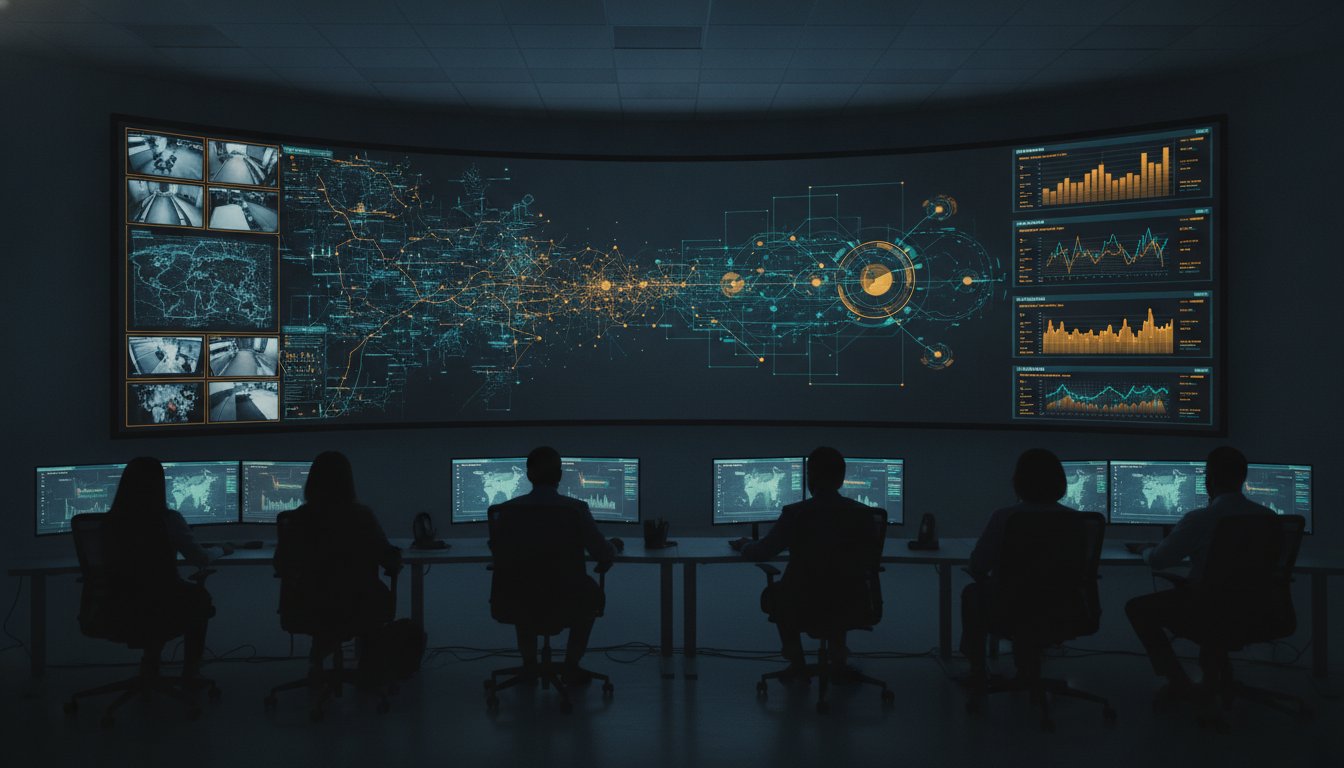
Choosing between a video wall processor vs matrix switcher feels like a binary technical decision, but focusing on hardware alone often hides the real failure point in a command center. You likely face fragmented data streams and operator cognitive overload because your current tools exist in technical silos. Most control rooms already have the screens; what they’re missing is the layer that decides what goes on them and escalates automatically when something needs attention. While a matrix switcher routes signals and a processor manipulates images, neither solves the problem of siloed application feeds or the difficulty of scaling visuals across distributed teams.
This guide clarifies the technical and operational differences between these two technologies to ensure your control room maintains total situational awareness. You’ll learn why 90% of large deployments are moving toward hybrid architectures and how to transform your hardware into a unified operating picture. We’ll preview how an operational intelligence layer acts as the central hub, integrating disparate data sources and automating the escalation of critical information when every second counts. By moving beyond simple signal routing, you can establish the technical bedrock required for high-stakes decision-making and operational readiness.
Key Takeaways
- Distinguish between the routing capabilities of a matrix switcher and the windowing power of a processor to determine which foundation your control room requires.
- Evaluate the performance trade-offs of a video wall processor vs matrix switcher, focusing on how latency and layout flexibility impact real-time situational awareness.
- Recognize why hardware-centric designs often create technical silos, leaving operators to manually sort through fragmented data streams during critical incidents.
- Shift your selection criteria from simple signal distribution to application integration, ensuring your infrastructure supports a true common operating picture.
- Learn how the vis/ability platform acts as an operational intelligence layer, automating data escalation so your team can focus on judgment rather than monitoring.
Defining the Architecture: Video Wall Processors and Matrix Switchers
Operational centers often struggle with visibility not because they lack display space, but because the underlying architecture cannot keep up with the complexity of modern data. The fundamental choice between a video wall processor vs matrix switcher dictates how your team interacts with information during a crisis. While both devices manage video signals, they serve entirely different roles in the command center ecosystem. One distributes content, while the other manipulates it to create a unified operating picture. This technical rigor isn’t exclusive to control rooms; for professional production services that demand high-performance audio, video, and lighting, you can visit LivewireAV.
The Role of the Matrix Switcher
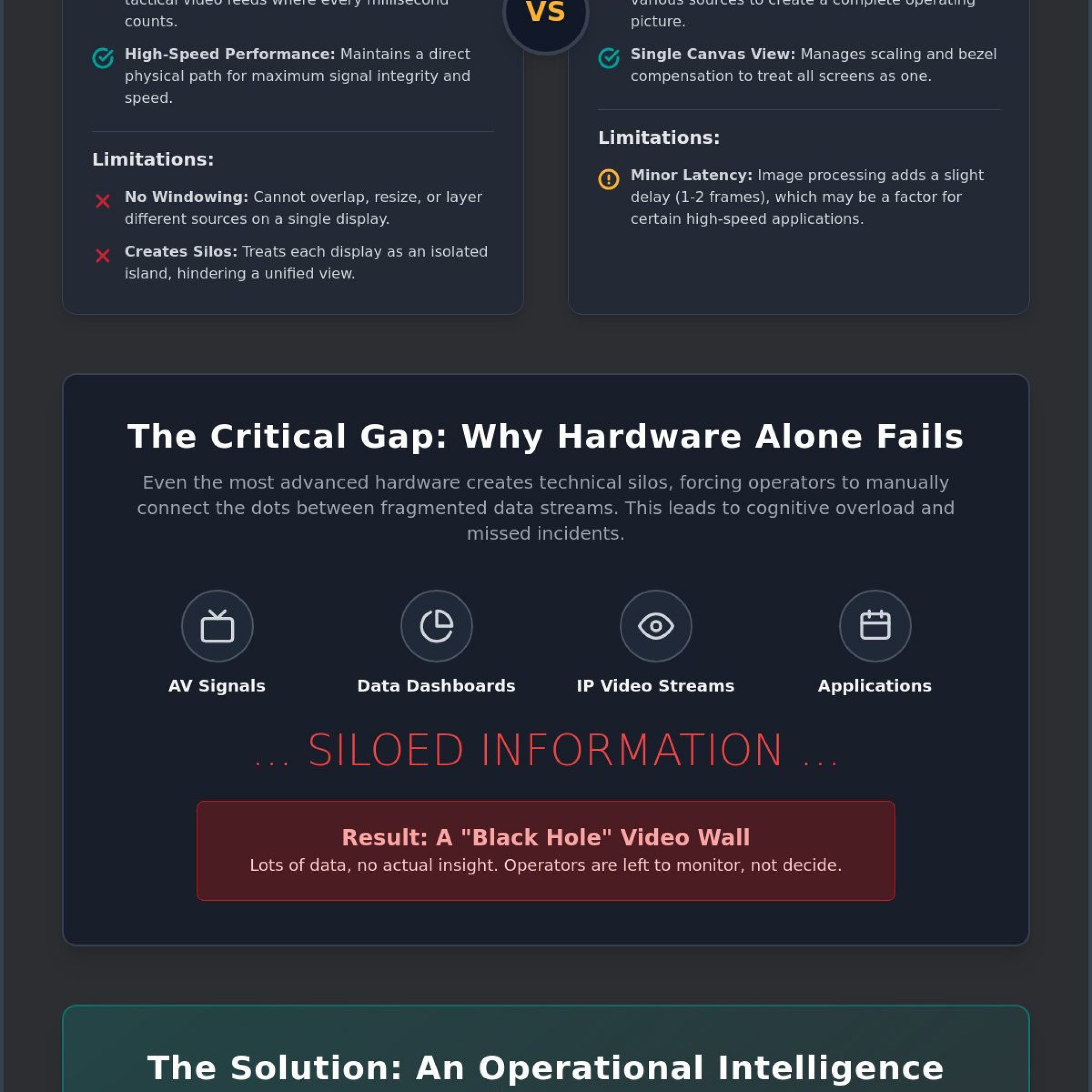
A matrix switcher functions as a high-speed router designed for “any input to any output” logic. It takes multiple raw signals and directs them to specific displays without altering the content. Its primary strength lies in low-latency performance, which is essential for real-time monitoring of tactical feeds. You use a matrix switcher when you need to send a server’s full-screen output to a specific monitor with zero delay. However, this hardware has significant limitations. It cannot overlap feeds, create custom windows, or span a single source across multiple screens. It treats each display as an isolated island, which often contributes to the technical silos that hinder rapid decision-making.
The Role of the Video Wall Processor
A video wall processor acts as a powerful computer-based engine that treats multiple display panels as a single, contiguous canvas. It uses sophisticated video wall technology to stretch, window, and layer various sources simultaneously. This capability allows an operator to view a SIEM dashboard, a live weather feed, and a high-resolution camera stream all within the same visual field. The processor manages scaling and bezel compensation, ensuring that data remains legible even when it spans across the physical gaps between monitors. This flexibility is vital for maintaining situational awareness in complex environments like a SOC or NOC.
Modern operations require these tools to interact seamlessly with both traditional AV signals and IP-based data streams. The core difference remains content manipulation versus content distribution. A switcher moves the data; a processor organizes it. Yet, even the most advanced hardware can leave teams staring at “black hole” video walls that show plenty of data but offer no actual insight. Most control rooms already have the screens. What they’re missing is the layer that decides what goes on them, and escalates automatically when something needs attention.
To move beyond simple signal routing, organizations must look toward a higher level of integration. Hardware alone cannot bridge the gap between fragmented systems and a truly collaborative environment. By implementing an operational intelligence layer like vis/ability, you transform these individual hardware components into a proactive system. This approach ensures that your video wall processor vs matrix switcher debate isn’t just about hardware specs, but about how effectively your team can act on the information they see.
Technical Comparison: Signal Routing vs. Image Processing
Analyzing a video wall processor vs matrix switcher requires a deep dive into how data moves through your infrastructure. Matrix switchers excel at raw speed. They provide near-zero latency by maintaining a direct physical path between the source and the display. This performance is vital for high-frame-rate tactical video where every millisecond matters. However, this speed comes at the cost of static delivery. You cannot resize a window or layer data streams to see the full picture. A matrix switcher is a router; it does not possess the intelligence to manipulate the pixels it carries.
Video wall processors offer the dynamic flexibility that switchers lack. They allow for complex layout changes, enabling operators to window and layer multiple sources on a single canvas. While processors may introduce a slight latency of one or two frames due to the processing overhead, the trade-off is the ability to create a unified operating picture. As the number of data sources grows, traditional matrix switchers often hit physical limits in port density. In contrast, modern software-defined processing scales more fluidly—often leveraging high-performance cartes FPGA AMD Zynq UltraScale+—especially as 90% of large deployments move toward AV-over-IP and hybrid architectures by June 2026.
Performance Benchmarks for Command Centers
Reliability in 24/7 environments is non-negotiable. Hardware-based switching offers a “set and forget” stability, but it struggles with the high-resolution requirements of modern geospatial data. 4K resolution is now the baseline specification for new control room deployments. Managing these feeds requires robust EDID and HDCP handling to prevent signal blackouts during source switching. While PC-based processing architectures provide immense power, they require professional-grade management to match the uptime of dedicated hardware. Signal integrity must be maintained across long-distance distribution, ensuring that color depth and frame rates remain consistent from the server room to the operator console.
Flexibility and Layout Management
Rapid incident response depends on the ability to reconfigure visuals instantly. Processors use “presets” to transform the entire display environment with a single command. This allows a team to pivot from routine monitoring to active crisis management in seconds. A matrix switcher, restricted to static routing, cannot provide this level of agility. Most control rooms already have the screens. What they’re missing is the layer that decides what goes on them, and escalates automatically when something needs attention.
To achieve this level of responsiveness, the hardware must be guided by a central hub. You can explore how the vis/ability platform serves as this operational intelligence layer, unifying your existing hardware into a proactive decision-support system. This integration ensures that your technical infrastructure serves the human element of the operation, rather than acting as a bottleneck to critical information flow.
The Critical Gap: Why Traditional AV Hardware Creates Operational Silos
High-stakes operations fail when technical silos prevent a unified response. In many command centers, the massive display at the front of the room becomes a “black hole” video wall. It consumes significant budget and power but offers no actual insight because the hardware cannot interpret the data it carries. Whether you utilize a video wall processor vs matrix switcher, hardware alone remains reactive. It waits for a human to tell it what to do, often at the exact moment that human is most overwhelmed by an unfolding crisis.
Fragmented data streams force operators to manually switch feeds during emergencies, creating a dangerous lag in situational awareness. When a dispatch center or EOC relies on siloed hardware, the common operating picture remains fractured. Most control rooms already have the screens. What they’re missing is the layer that decides what goes on them, and escalates automatically when something needs attention. Without this intelligence, the technical choice between a video wall processor vs matrix switcher is merely a discussion about cable management rather than operational readiness.
The Problem with Manual Content Management
Operator cognitive overload is a primary cause of missed incidents. When a team must navigate complex hardware interfaces to change a layout, they lose focus on the mission. Static feeds that never change contribute to information blindness, where the brain stops registering critical data because the visual environment is too repetitive. This fatigue increases the risk of error during high-stress events. For a deeper look at managing these challenges, consult our Strategic Guide to Mission-Critical Situational Awareness. Moving beyond manual routing is the only way to ensure that essential information reaches the right person at the right time.
Limitations of Integrated Tools
Modern agencies often use sophisticated digital evidence management systems and real-time tactical data platforms. While these tools provide valuable information, they frequently exist as another silo within the control room. They offer only a partial solution because they don’t communicate natively with your physical display infrastructure. Hardware alone fails to bridge the gap between a SIEM alert or a CAD trigger and a physical video wall layout change. You need an operational intelligence layer to synthesize these disparate feeds into a single hub. This unifying platform makes your existing tools useful for the entire team, ensuring that a critical alert in one system automatically triggers the necessary visual context on every relevant screen.
Selecting Infrastructure for Mission-Critical Visibility
Select your infrastructure based on the operational outcome rather than technical specifications. The debate between a video wall processor vs matrix switcher takes on a different character depending on whether you’re defending a global network or coordinating a local disaster response. Modern command centers must prioritize application integration over simple signal routing. This shift ensures that data from disparate sources flows into a single, intelligent hub. Your hardware and software stack must handle sensitive data streams with absolute technical reliability. It must also allow for rapid scaling across distributed teams, including those in huddle rooms or on mobile devices. Security is the bedrock of these operations. Every layer of the system must be hardened against intrusion while maintaining the fluid movement of essential information.
NOC and SOC Specific Requirements
Network Operations Centers (NOC) and Security Operations Centers (SOC) demand high-density data visualization and real-time threat intelligence. These environments require the ability to identify anomalies across thousands of nodes before they escalate into outages. A SOC and NOC control rooms environment relies on the ability to view multiple SIEM dashboards, network maps, and server logs simultaneously. Implementing a Cybersecurity Common Operating Picture allows for a proactive response to digital incursions. Traditional matrix switchers often fall short here. They lack the windowing capabilities required to synthesize complex, high-resolution data streams into a single, actionable view. Without this synthesis, operators are forced to toggle between screens, losing precious time during a breach.
EOC and Public Safety Considerations
Emergency Operations Centers (EOC) prioritize geospatial oversight and inter-agency collaboration. During a large-scale crisis, the ability to share a unified operating picture across different jurisdictions is vital for life safety. Our Public Safety solutions focus on this collaborative need, ensuring that disparate data feeds from police, fire, and EMS are unified. Mobile vis/ability is non-negotiable for field-to-command coordination. Most control rooms already have the screens. What they’re missing is the layer that decides what goes on them, and escalates automatically when something needs attention. This layer ensures that a field officer’s live mobile feed can be instantly escalated to the main video wall when specific incident thresholds are met. This capability bridges the gap between raw field data and strategic human judgment.
Effective decision-making requires more than just high-resolution displays; it requires a system that empowers individuals to act with certainty. If you’re ready to move beyond fragmented systems and siloed hardware, you can speak with our control room design experts to build a foundation for total situational awareness.
The vis/ability Layer: Turning Hardware into Operational Intelligence
The decision between a video wall processor vs matrix switcher often focuses on port counts and frame rates, but these metrics don’t capture the operational reality of a crisis. Hardware alone cannot prioritize information. It remains a passive conduit that requires constant human intervention to remain relevant. To move from reactive monitoring to proactive incident management, you need an operational intelligence layer that unifies these components into a single hub. This platform acts as the brain of the command center, ensuring that technical capabilities translate into actionable intelligence for the entire team.
Most control rooms already have the screens. What they’re missing is the layer that decides what goes on them, and escalates automatically when something needs attention. Without this orchestration, even the most expensive hardware becomes a bottleneck during high-stress operations. By integrating a central intelligence layer, you transform disparate data sources into a cohesive narrative that supports rapid, high-stakes decision-making.
Automating the Common Operating Picture
The vis/ability platform aggregates real-time data and video streams into one intuitive interface. Unlike traditional hardware that displays static feeds, this platform utilizes event-driven visualization to change the display environment based on real-world triggers. When a specific threshold is met, such as a cybersecurity breach or a public safety emergency, the system automatically escalates the relevant data to the main video wall. Automated escalation reduces the critical time between detection and decision; it removes the burden of manual layout management from the operator. This transition ensures that the most essential information is always front and center when stakes are at their highest.
Future-Proofing Your Control Room
Modern command centers are moving away from proprietary, fixed-function hardware in favor of software-defined architectures. This shift allows for greater flexibility and easier scaling as operational needs evolve. Our Commercial Off-the-Shelf (COTS) guide explains how this approach reduces long-term costs while maintaining the absolute technical reliability required for mission-critical work. By prioritizing software orchestration, you ensure your control room is not limited by physical port density or the processing constraints of a single hardware unit.
A true common operating picture must extend beyond the main display to huddle rooms and mobile devices. This level of connectivity allows leaders to maintain total situational awareness whether they’re on the floor or in transit. You can contact Activu to design a system that prioritizes essential information and empowers your team to act with certainty. Moving beyond the video wall processor vs matrix switcher debate allows you to focus on what truly matters: the clarity and safety of your operation.
Establishing a Foundation for Total Situational Awareness
Navigating the technical requirements of a video wall processor vs matrix switcher is a necessary step, but hardware alone cannot ensure operational success. While switchers offer low-latency routing and processors provide essential windowing capabilities, these tools remain passive without a central intelligence hub. You must look beyond simple signal distribution to create a system that prioritizes essential information during a crisis. True clarity comes from integrating these components into a single, unified operating picture that serves the entire team.
Most control rooms already have the screens. What they’re missing is the layer that decides what goes on them, and escalates automatically when something needs attention. Activu provides this operational intelligence layer, offering event-driven automation that significantly reduces incident response time. Our cybersecurity-hardened visualization solutions are trusted by federal defense agencies and global utility providers to maintain visibility when stakes are at their highest. You can achieve this same level of clarity and technical reliability in your own operations; for instance, you can explore Lighting Control from PREMIERE SYSTEMS DESIGN to see how high-end automation principles enhance professional and specialized environments.
Request a demo of the vis/ability platform to see how it unifies your control room architecture.
Frequently Asked Questions
What is the primary difference between a video wall processor and a matrix switcher?
A matrix switcher functions as a high-speed router, directing any input to any output without changing the content. A video wall processor acts as a manipulation engine, allowing you to stretch, window, and layer multiple sources across a single canvas. When evaluating a video wall processor vs matrix switcher, the choice depends on whether you need simple signal distribution or a unified operating picture that synthesizes disparate data feeds.
Can a matrix switcher create windows or overlays on a video wall?
Traditional matrix switchers cannot create windows or overlays. They are designed to route a full-frame signal from one source to one or more full-frame displays. If your operation requires viewing a SIEM dashboard alongside a live tactical camera feed on the same screen, you must utilize a video wall processor. This device possesses the internal processing power to scale and position multiple pixel streams simultaneously.
Why do mission-critical environments prefer video wall processors over simple switchers?
Mission-critical environments prioritize processors because they eliminate the technical silos found in static routing. Operators in a SOC or EOC need to see overlapping data streams to make rapid decisions during an incident. Most control rooms already have the screens; what they’re missing is the layer that decides what goes on them and escalates automatically when something needs attention. Processors provide the visual flexibility required for this automated escalation.
How does an operational intelligence layer like vis/ability improve hardware performance?
The vis/ability platform serves as an operational intelligence layer that unifies your hardware into a proactive system. It automates the display of essential information based on real-world triggers, such as a cybersecurity alert or a public safety emergency. By acting as a central hub, it ensures that your video wall processor vs matrix switcher infrastructure works for the team rather than requiring constant manual intervention from overwhelmed operators.
Is a hardware-based or software-based video wall processor better for 24/7 operations?
Hardware-based processors offer exceptional stability for raw video feeds, but software-defined architectures on COTS hardware provide the scalability required for modern data integration. In 24/7 environments, the move toward software-defined systems allows for easier updates and better integration with mobile devices. This approach ensures your control room isn’t limited by physical port density or proprietary hardware constraints that can hinder long-term operational readiness.
Can I integrate my existing matrix switcher into a new vis/ability platform?
You can integrate existing matrix switchers into the vis/ability platform to maximize your current infrastructure investment. The platform unifies disparate hardware, including switchers and processors, into a single collaborative interface. This integration allows your team to manage legacy AV signals alongside new IP-based data streams. It bridges the gap between fragmented systems, ensuring that your existing tools contribute to a full common operating picture.
How do these technologies handle cybersecurity and secure data feeds?
These technologies handle cybersecurity through hardened visualization solutions and secure data handling protocols. The vis/ability platform is designed to maintain the integrity of sensitive data streams in high-stakes environments like federal defense centers. It supports air-gapped networks and encrypted transmission to prevent unauthorized access. This focus on security ensures that your situational awareness tools don’t become vulnerabilities in your defensive posture.
What happens to the video wall if the processor or switcher fails?
If a processor or switcher fails, mission-critical systems rely on redundancy and automated failover protocols to maintain visibility. Professional-grade architectures often include secondary units or software-based failover that takes control instantly. This ensures that a single point of failure doesn’t result in a “black hole” video wall during a crisis. Maintaining total situational awareness requires a system built on absolute technical reliability and proactive maintenance strategies.