
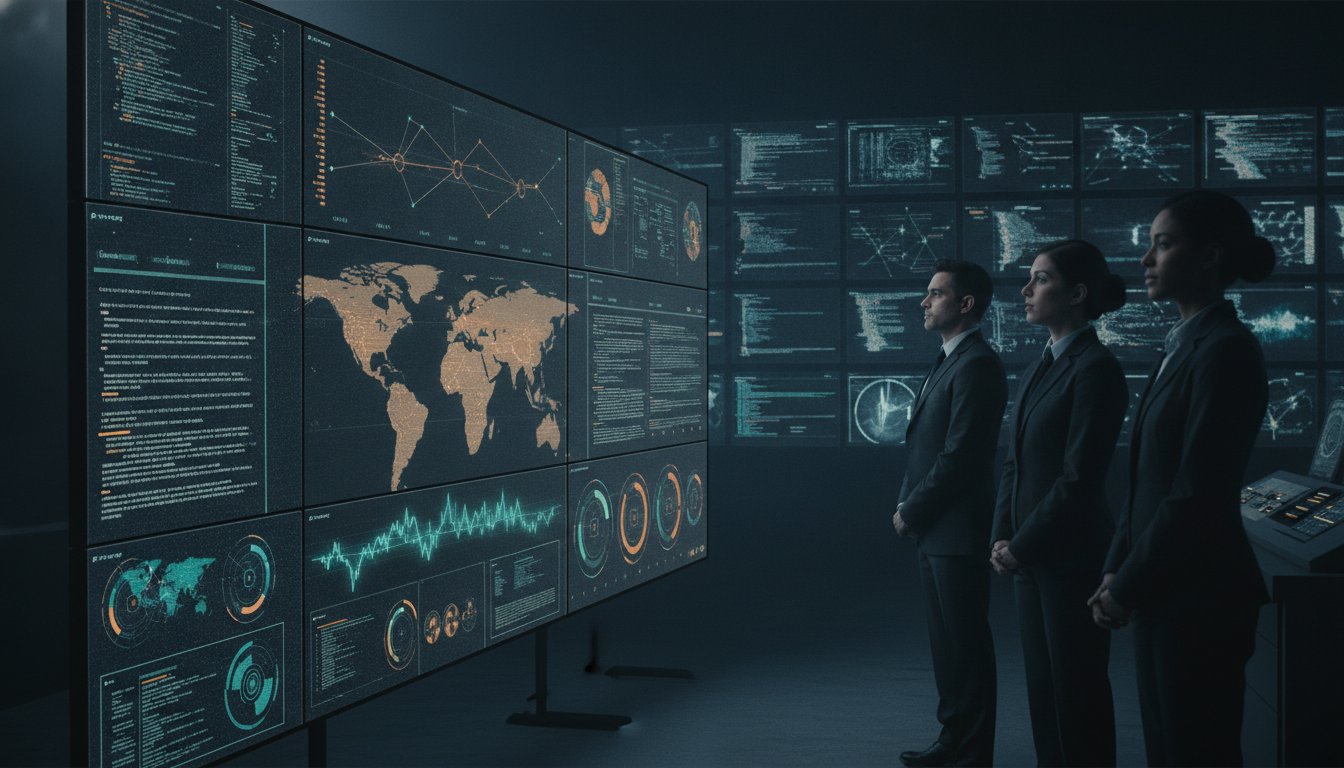
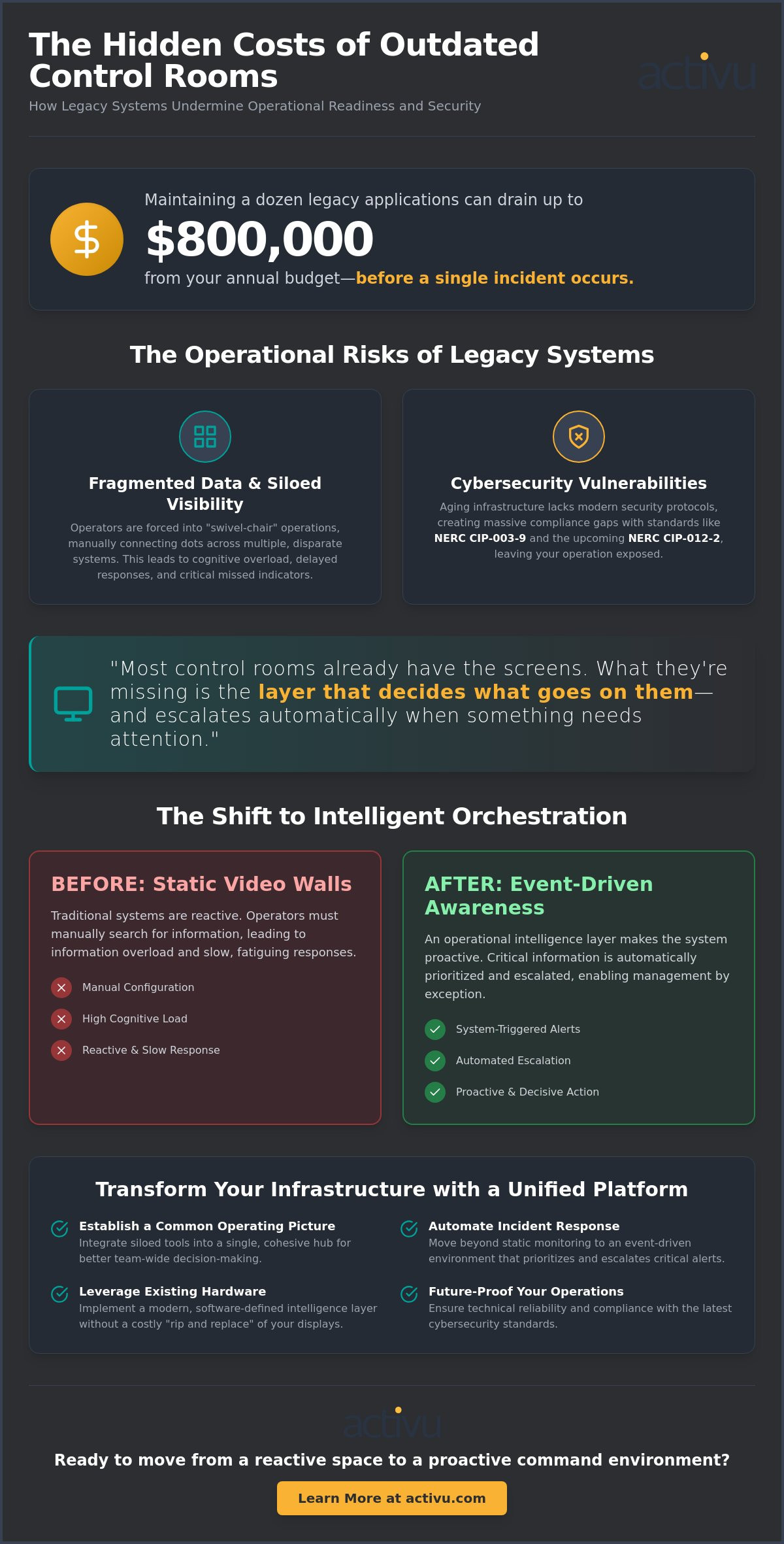
Maintaining a dozen legacy applications can drain up to $800,000 from your annual budget before a single incident even occurs. For many command centers, upgrading legacy control room systems feels like an impossible choice between a total rip and replace or continuing to manage fragmented data feeds that cause constant operator fatigue. You likely see the toll that siloed information takes on your team’s response times, especially when legacy hardware fails to meet new security standards like NERC CIP-003-9. Most control rooms already have the screens. What they’re missing is the layer that decides what goes on them, and escalates automatically when something needs attention.
This guide provides a strategic framework to transform your current infrastructure into a unified, event-driven command environment. You’ll learn how to implement an operational intelligence layer that prioritizes critical information and automates incident escalation. We will explore how to integrate existing displays with the vis/ability platform to create a seamless common operating picture. By moving beyond partial solutions that leave gaps in your oversight, you can establish a future-proof foundation that empowers your operators to act with absolute certainty and speed.
Key Takeaways
- Identify the hidden operational risks of fragmented data feeds and how they contribute to operator fatigue and delayed response times.
- Develop a phased strategy for upgrading legacy control room systems that leverages existing hardware while introducing modern, event-driven intelligence.
- Move beyond static video walls by implementing an operational intelligence layer that automatically prioritizes and escalates critical information.
- Establish a unified common operating picture that integrates siloed tools into a single, cohesive hub for better decision-making.
- Future-proof your infrastructure with software-defined environments that ensure technical reliability and compliance with the latest cybersecurity standards.
The Operational Risks of Legacy Control Room Systems
Legacy control room systems represent more than just outdated hardware. They are liabilities that compromise operational readiness during high-stakes incidents. When data feeds remain siloed, operators are forced to act as the primary integration point, manually connecting dots across multiple displays. This manual correlation leads to cognitive overload, where critical indicators are often missed amidst the noise of irrelevant alerts. Relying on fragmented visibility creates a dangerous lag between the onset of an event and the execution of a response. The cost of this delay isn’t just measured in seconds; it’s measured in the safety of assets and personnel.
To ensure the safety of assets and personnel, organizations often complement their digital systems with professional security services; for example, Palisade International LLC provides high-level protection and risk mitigation strategies that integrate with modern command center operations.
Fragmented Data and the Cost of Siloed Visibility
Operators in many command centers currently manage “swivel-chair” operations. They must constantly toggle between disparate software interfaces, such as Supervisory Control and Data Acquisition (SCADA) platforms, video management systems, and emergency dispatch tools. This lack of integration prevents a true common operating picture. Every second spent switching screens is a second lost in responding to a crisis. While tools like Axon provide essential data, they offer only a partial solution. Without a unifying layer to provide context, these individual data points remain isolated and difficult to act upon. Upgrading legacy control room systems is the only way to eliminate these gaps and ensure that information flows logically toward a decision.
Cybersecurity Vulnerabilities in Aging Infrastructure
Aging infrastructure presents a significant target for cyber threats. Many legacy systems were designed before the current era of sophisticated digital warfare and do not support modern security protocols. Implementing Single Sign-On (SSO) or advanced encryption is often impossible on hardware that is decades old. This creates massive compliance gaps, particularly with the recent enforcement of NERC CIP-003-9, which focuses on supply-chain risk and remote access. Organizations must also prepare for NERC CIP-012-2, effective July 1, 2026, which mandates stricter protection for data exchanged between control centers.
Legacy hardware simply cannot keep pace with these evolving requirements. A cybersecurity common operating picture is no longer optional; it is a requirement for maintaining operational integrity. Without a modern platform to visualize threats in real-time, your organization remains blind to vulnerabilities that could lead to catastrophic downtime. To maintain this integrity, Uptime Co. provides the specialized IT network administration and technology consulting necessary to secure aging infrastructure during a transition. Upgrading legacy control room systems must prioritize this security layer to ensure that the bedrock of your operation remains impenetrable. By centralizing visibility, you move from a reactive posture to a proactive defense strategy.
Moving Beyond Hardware: The Shift to Intelligent Orchestration
Upgrading legacy control room systems often fails when organizations prioritize physical assets over the logic that drives them. A larger video wall or higher resolution displays cannot process information; they only present it. True modernization requires an operational intelligence layer. This layer acts as the essential bridge between raw data streams and human judgment. It ensures that operators are not overwhelmed by a flood of information but are instead presented with the specific insights required to act with certainty. Intelligent orchestration transforms the control room from a reactive space into a proactive command environment.
The Limitations of Static Video Wall Systems
Without intelligent management, even the most advanced displays become little more than expensive wallpaper. Traditional systems rely on basic windowing software that requires manual configuration and constant human intervention. This approach fails to provide actual situational awareness because it remains static regardless of the operational environment. When an incident occurs, operators shouldn’t have to fumble with layouts or manually search for relevant camera feeds. For a deeper look at maximizing these assets, consult our Video Wall Strategic Guide. Simply adding more screens does not solve the problem of fragmented visibility; it often exacerbates it by increasing the cognitive load on the team.
Defining Event-Driven Situational Awareness
The transition to a modern command center involves moving from constant monitoring to management by exception. In an event-driven environment, system-triggered alerts from integrated tools dictate exactly what appears on the video wall. Event-driven awareness is the automated delivery of relevant data at the moment of need. This approach filters out the noise, allowing the team to focus exclusively on anomalies that require immediate intervention. By automating the visualization of high-priority events, organizations ensure that no critical indicator is overlooked during a crisis.
Integrating these capabilities requires a platform that can aggregate real-time data and video streams into a single, cohesive view. This strategic shift is supported by frameworks like the NIST Guide to Industrial Control Systems (ICS) Security, which emphasizes the need for visibility across complex operational technology. By implementing the vis/ability platform, organizations can transform their infrastructure into a dynamic orchestration hub. This shift ensures that the right information reaches the right person on any device, whether they’re in the command center or the field. Upgrading legacy control room systems through this lens moves the focus from hardware procurement to mission success.
A Strategic Framework for Upgrading Legacy Infrastructure
Modernizing a command center requires a methodical transition rather than a disruptive overhaul. Organizations must avoid the temptation of a total rip and replace project, which often introduces unnecessary operational downtime and technical risk. Instead, a phased approach allows for the steady integration of new intelligence while maintaining the continuity of existing operations. Successful modernization begins by entering through the pain. This means identifying the specific operational gaps, such as delayed response times or missed alerts, before considering hardware procurement. By focusing on the most critical visibility failures first, you ensure that every technical update serves a direct operational purpose.
Utilizing Commercial Off-the-Shelf (COTS) solutions is a cornerstone of this framework. COTS technology allows organizations to implement sophisticated situational awareness tools without the burden of custom coding or proprietary hardware locks. These solutions are designed for rapid deployment and ease of maintenance, ensuring that the control room remains agile as operational requirements evolve. Leveraging COTS ensures that your infrastructure stays aligned with modern cybersecurity standards while reducing the long-term total cost of ownership. It’s the most reliable way to maintain technical readiness without becoming beholden to a single hardware manufacturer.
To support this technical readiness, Terapixels Systems offers expert structural cabling and remote monitoring management, ensuring that your physical infrastructure can handle the demands of a modern, integrated command center.
For organizations requiring expert implementation of these solutions, UTD Technology Corp provides professional technology systems and integration services that ensure your foundational infrastructure is optimized for mission-critical reliability.
Auditing the Current Operational Environment
The first step in upgrading legacy control room systems is a comprehensive audit of the existing environment. You must identify where information currently gets lost. Consider the following checklist to reveal hidden blind spots:
- Are operators manually correlating data between three or more separate applications?
- Does the current application stack include siloed tools that cannot share data with the central video wall?
- Which legacy hardware components possess the processing power to support a modern operational intelligence layer?
Evaluating your application stack helps prioritize which integrations provide the most immediate value. Often, the most critical data is already present but remains inaccessible to the wider team due to a lack of a unifying platform. You don’t need to replace every piece of software to see an improvement; you simply need to make them talk to each other.
Selecting a Scalable Common Operating Picture (COP)
A robust Common Operating Picture (COP) must provide a single source of truth across the entire organization. Whether managing Public Safety incidents or monitoring grid stability in Utilities, the COP must be accessible everywhere. This includes the main command center, satellite huddle rooms, and mobile devices in the field. A vendor-neutral platform is essential here. It prevents future lock-in and ensures that your system can integrate with new technologies as they emerge. By selecting a platform that aggregates data from any source, you create a future-proof infrastructure that scales alongside your mission.
Bridging the Gap Between Data and Actionable Intelligence
Raw data alone does not prevent disaster; it only documents it. Most control rooms already have the screens. What they’re missing is the layer that decides what goes on them — and escalates automatically when something needs attention. This intelligent orchestration separates a modern command center from an aging, reactive facility. By implementing this layer, organizations move from simply observing data to executing a proactive response framework. Maintaining Operational Continuity during this shift ensures that mission-critical resilience is never compromised, even as you transition away from outdated workflows and fragmented visibility.
Application Integration: Unifying the Tech Stack
Standalone tools like Axon or various Security Information and Event Management (SIEM) platforms provide valuable data points, but they often remain siloed within their own interfaces. This fragmentation forces operators to hunt for context during a crisis, wasting precious seconds. An operational intelligence layer solves this by pulling critical alerts from these disparate tools into a single, unified view. This creates a single source of truth for the entire team, ensuring that everyone from the dispatcher to the incident commander sees the same high-priority information simultaneously. Upgrading legacy control room systems through this deep integration eliminates the manual effort of correlating data, allowing the team to focus on resolution rather than software navigation.
Extending Visibility to Mobile and Distributed Teams
Situational awareness cannot stop at the physical walls of the NOC or SOC. Modern operations require that critical insights reach stakeholders wherever they are located. Mobile tools extend the common operating picture to field personnel and remote huddle rooms, ensuring that the entire organization remains aligned during an escalating event. When a system-triggered event reaches a predefined threshold, the platform can push critical alerts to remote decision-makers instantly. This automatic escalation ensures that high-stakes information finds the person who needs to see it, regardless of their device or location. This seamless flow of intelligence empowers individuals to act with greater certainty when stakes are at their highest.
To ensure these critical mobile tools are always powered and organized in your command center or field office, check out udoq German design multiple charging station for any mobile device.
In addition to charging solutions, providing field personnel with reliable audio accessories ensures they remain connected to the common operating picture; discover Devia Canada for high-performance bluetooth headsets and mobile hardware.
Build a more resilient and responsive operation today by consulting with our control room design experts to evaluate your current infrastructure.
Implementing the vis/ability Platform as Your Command Hub
The final stage of modernization involves the transition from a collection of parts to a single, integrated engine. Upgrading legacy control room systems is ultimately about reclaiming the operator’s attention from the noise of disjointed applications. Most control rooms already have the screens. What they’re missing is the layer that decides what goes on them; and escalates automatically when something needs attention. The vis/ability platform provides this essential layer, serving as the central hub into which all other tools flow. It transforms your existing video wall from a static display into a dynamic tool for event-driven situational awareness that prioritizes the most critical information.
The vis/ability Operational Intelligence Layer
The power of vis/ability lies in its ability to aggregate real-time data from any source and present it with absolute clarity. It doesn’t replace your existing tools; it makes them more effective by ensuring their data is visible to the right people at the right time. This architecture is built to scale, supporting a single command center or a global enterprise with equal reliability. For organizations in Federal Government and Defense, the platform offers a security-first environment that integrates seamlessly with Active Directory and multi-class security protocols. This ensures that even in high-stakes, classified environments, the flow of intelligence remains secure and uninterrupted.
Our Control Room Design Services further ensure that your hardware and software are optimized as a single unit. We look beyond the screens to evaluate the ergonomics, lighting, and technical architecture that support human performance. For projects requiring high-performance structural elements, View Glazing provides window and rooflight installations that can enhance the physical workspace. This holistic approach ensures that the technology never becomes a barrier to the mission but instead acts as its primary catalyst. By aligning the physical environment with the digital intelligence layer, you create a workspace where decisions are made with speed and absolute certainty.
If your facility upgrade involves a physical office transition or relocating critical hardware to a new site, coordinating with professional services like Vision Movers can help streamline the logistics of your commercial move.
Next Steps for Control Room Modernization
Moving toward a modern command environment doesn’t require a leap of faith. We recommend a pilot-program approach to demonstrate the immediate value of the operational intelligence layer within a specific department or use case. This allows your team to experience the benefits of reduced incident response times and improved operator retention before a full-scale rollout. The shift from complexity to clarity is a strategic necessity for any organization managing critical infrastructure. It represents the move from reactive monitoring to proactive, intelligent orchestration.
When you’re ready to move beyond fragmented feeds and siloed data, the path forward is clear. You can Contact Activu today for a comprehensive situational awareness audit. Our experts will help you identify the gaps in your current infrastructure and design a roadmap for a unified, intelligent command environment that empowers your team to act when it matters most.
Achieving Operational Clarity in High-Stakes Environments
Modernizing your command center is a strategic necessity that extends far beyond hardware procurement. It requires a fundamental shift toward an event-driven architecture that prioritizes essential information and automates incident escalation. By upgrading legacy control room systems with an intelligent orchestration layer, you eliminate the fragmentation that leads to operator fatigue and missed indicators. Activu has been the bedrock of mission-critical operations since 1983, providing over 40 years of experience to the most demanding environments. Our event-driven situational awareness is trusted by the Federal Government and Defense sectors to maintain clarity during complex operations. This platform reduces cognitive load by ensuring only the most relevant data reaches your team. You don’t have to settle for the limitations of siloed data feeds or aging infrastructure. Take the first step toward a seamless common operating picture that empowers every decision-maker with absolute certainty.
Request a Situational Awareness Audit for Your Control Room to transform your operational intelligence today. Your team deserves the clarity and reliability that only a unified command environment can provide.
Frequently Asked Questions
What are the main risks of delaying a control room upgrade?
Delaying an upgrade increases the likelihood of catastrophic system failure and leaves your organization vulnerable to security breaches that can cost over $1 million to recover. Outdated systems often fail to meet new regulatory mandates like NERC CIP-003-9, which became enforceable on April 1, 2026. Additionally, the direct annual maintenance costs for 10 to 15 legacy applications can reach $800,000, draining budgets that could be better spent on modernizing infrastructure.
How can I manage multiple data feeds in a dispatch center more effectively?
Effective feed management requires an operational intelligence layer that aggregates disparate data into a single source of truth. Instead of forcing dispatchers to manually correlate information across separate screens, an integrated platform pulls critical alerts from tools like Axon or CAD systems automatically. This approach eliminates the swivel-chair effect and ensures that the most relevant data is always front and center during high-pressure incidents.
What is the difference between a video wall and an operational intelligence layer?
A video wall is the physical display hardware, while an operational intelligence layer is the logic that orchestrates what is shown. Most control rooms already have the screens. What they’re missing is the layer that decides what goes on them, and escalates automatically when something needs attention. While a video wall presents pixels, the intelligence layer provides the context and automation necessary for true situational awareness.
Can I upgrade my control room software without replacing my existing screens?
You can absolutely modernize your operations without a total hardware replacement by prioritizing the software orchestration layer. Upgrading legacy control room systems often starts with implementing a platform like vis/ability that integrates with your existing displays. This strategy allows you to leverage previous investments while introducing event-driven capabilities and automated escalation that your current hardware cannot provide on its own.
Why do operators often miss critical incidents in legacy control rooms?
Operators miss incidents primarily due to cognitive fatigue caused by monitoring too many fragmented data feeds simultaneously. When a system lacks intelligent prioritization, every alert appears with the same level of urgency, forcing humans to filter out the noise manually. This sensory overload makes it inevitable that critical indicators will be overlooked. Beyond system upgrades, maintaining personal alertness is key, which is why some operators buy glucose support supplements online to support metabolic health during complex, fast-moving events in a legacy environment.
How does an event-driven common operating picture improve situational awareness?
An event-driven common operating picture improves awareness by automating the visualization of high-priority anomalies. Instead of monitoring static screens, the system uses predefined triggers to push relevant data to the video wall only when it requires human intervention. This management by exception model ensures that the team stays focused on resolution rather than searching for information across siloed applications.
What industries benefit most from upgrading legacy control systems?
Any organization managing mission-critical infrastructure, including Public Safety, Utilities, and Defense, gains immediate value from modernization. Utilities must comply with NERC CIP-012-2 standards for data protection by July 1, 2026, making a modern common operating picture essential. Similarly, public safety agencies use these systems to unify data from body cameras, CAD, and traffic sensors into a cohesive response framework.
How do I ensure cybersecurity compliance during a control room modernization?
Compliance is achieved by implementing a platform with a security-first architecture that supports modern encryption and Active Directory integration. Legacy systems often lack the ability to support Single Sign-On or meet the rigorous requirements of NERC CIP-003-9. A modern operational intelligence layer provides a cybersecurity common operating picture, allowing you to visualize and mitigate threats across your entire network in real-time.