
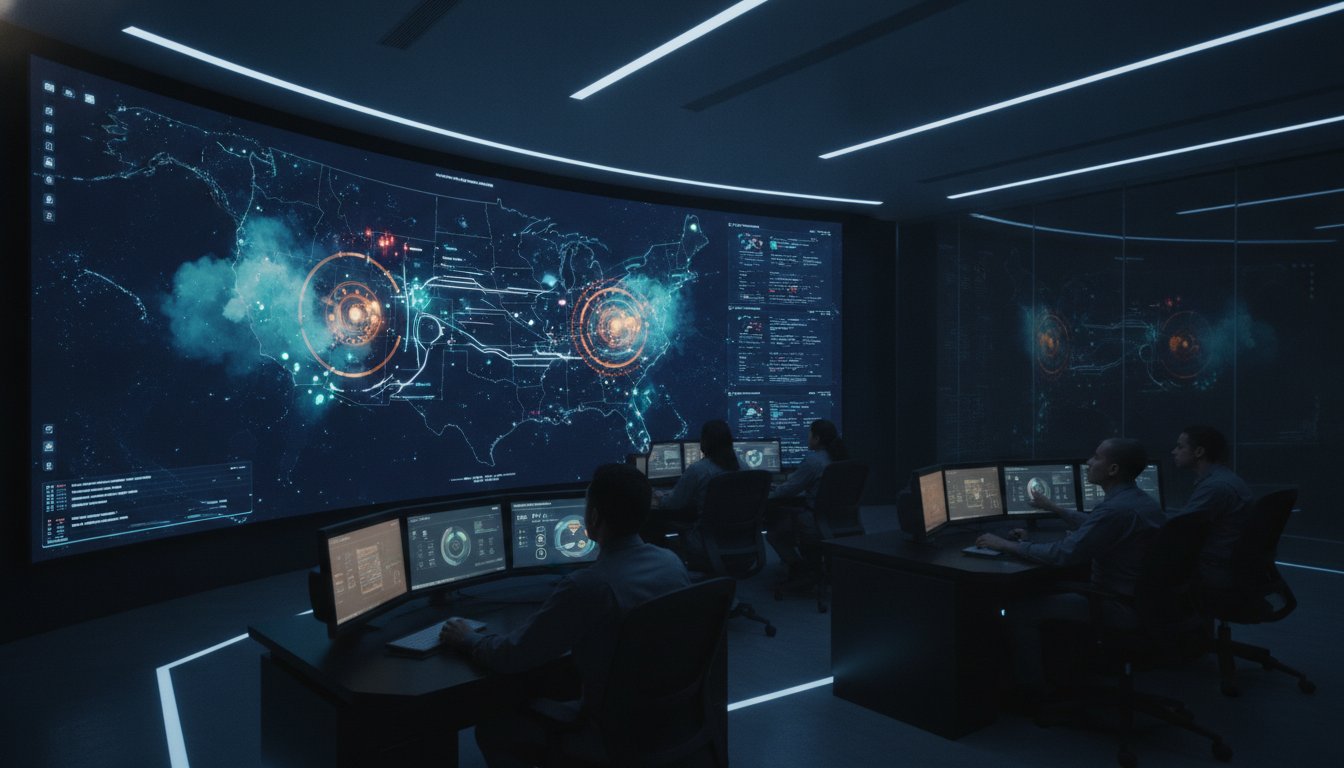
The margin for error in grid management has effectively vanished under the weight of new 2026 regulatory mandates. As NERC CIP-012-2 requirements for data exchange security become enforceable on July 1, 2026, the demand for robust utility operations center solutions is no longer a matter of preference but a necessity for survival. Operators are currently drowning in a sea of fragmented screens, where SCADA alerts, weather patterns, and security feeds exist in isolated silos. One way critical operations attempt to manage this is with Juvare or WebEOC; however, these are inadequate for high-stakes environments because they leave critical incidents buried in sub-menus. This fragmentation forces personnel to act as the integration layer, leading to fatigue and missed triggers during urgent events.
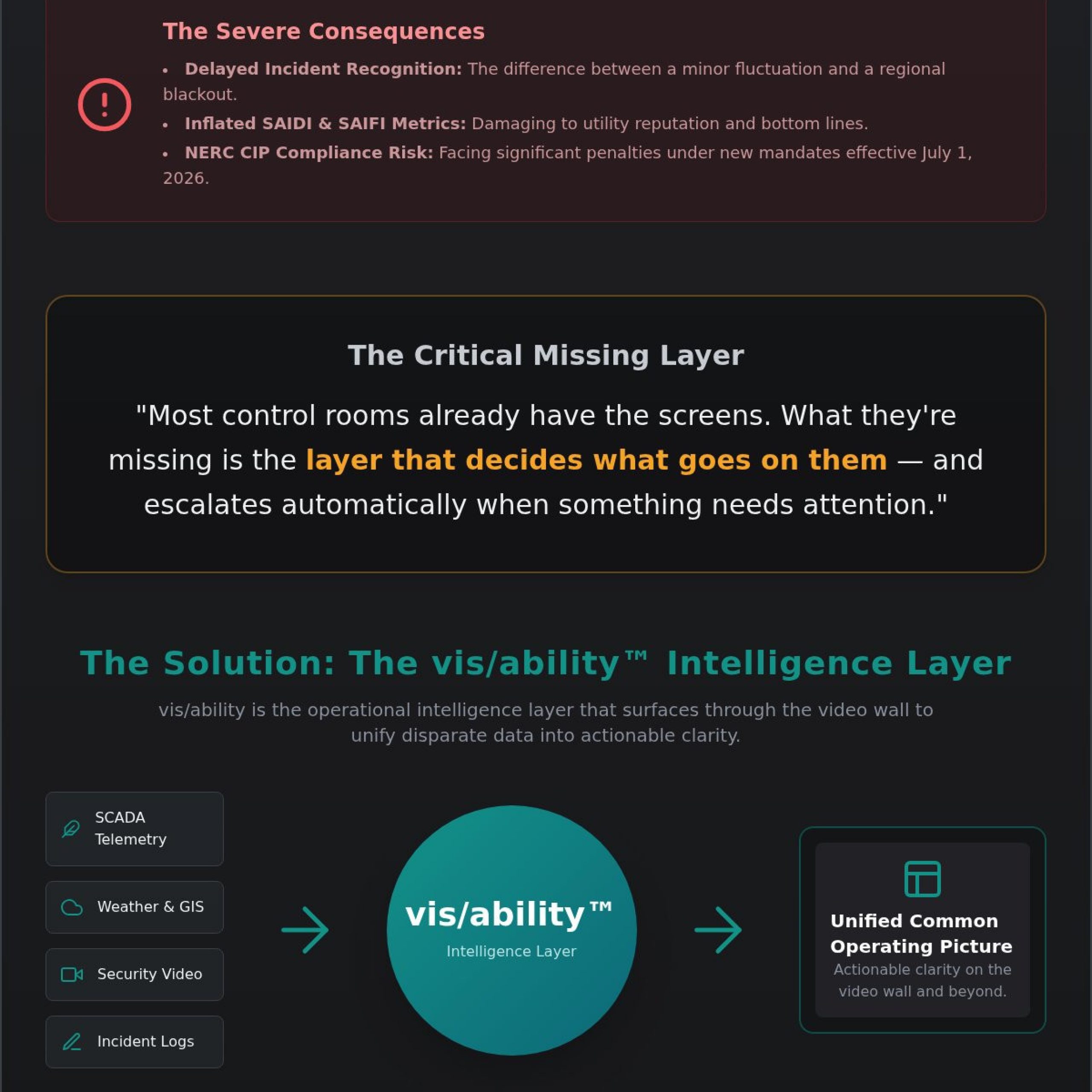
Most control rooms already have the screens. What they’re missing is the layer that decides what goes on them, and escalates automatically when something needs attention. We’ll show you how to move beyond these limitations to achieve a proactive, event-driven common operating picture. This transition relies on vis/ability, an operational intelligence layer that surfaces through the video wall to unify disparate data into actionable clarity. By reading on, you’ll learn how to automate escalation protocols and significantly reduce response times, ensuring your command center functions as a resilient, unified hub for every critical decision.
Key Takeaways
- Identify the visibility gap in modern grids and why operators often miss critical incidents buried in fragmented data streams.
- Learn why effective utility operations center solutions prioritize the intelligence layer that decides what appears on the screens rather than just adding more displays.
- Define vis/ability as the operational intelligence layer that surfaces through the video wall to unify fragmented systems like SCADA, weather, and security feeds.
- Discover how to transition from reactive monitoring to a proactive, event-driven framework that escalates automatically when something needs attention.
- Recognize why legacy hardware systems from brands like Barco or Haivision are inadequate for the complex, software-driven requirements of today’s grid.
Control Room Situational Awareness Problems in Modern Utilities
Modern utility grids are evolving into highly complex, multi-directional networks. Integrating renewable energy sources, distributed energy resources (DERs), and electric vehicle (EV) infrastructure has rendered traditional monitoring methods obsolete. Operators now manage a volatile environment where power flow is no longer predictable. This shift creates a massive visibility gap. While dispatch centers may be filled with high-resolution displays, critical incidents often go unnoticed because they are buried in disparate sub-menus or hidden within unintegrated software.
Control room situational awareness problems often stem from a fundamental disconnect between Information Technology (IT) and Operational Technology (OT). These silos delay emergency response and contribute to profound operator fatigue. In 24/7 mission-critical environments, the cognitive load of monitoring dozens of independent feeds is unsustainable. Without effective utility operations center solutions, the human element becomes the bottleneck, struggling to synthesize raw data during a crisis. The resulting delay in incident recognition can be the difference between a minor fluctuation and a regional blackout.
Why Siloed Tools Provide Only Partial Solutions
Many utilities rely on incident-specific platforms like Axon or WebEOC to manage emergencies. While these tools serve specific functions, they provide only a partial solution in a holistic grid context. They lack deep integration with SCADA systems, forcing operators into swivel-chair management where they must manually cross-reference Juvare logs with real-time grid telemetry. This fragmented approach is inadequate. It fails to provide the cohesive oversight required to manage a modern utility. Most control rooms already have the screens. What they’re missing is the layer that decides what goes on them, and escalates automatically when something needs attention.
The True Cost of Delayed Incident Recognition
The consequences of failing to recognize a grid disturbance immediately are measurable and severe. Delayed response times directly inflate SAIDI and SAIFI metrics, damaging utility reputation and bottom lines. Regulatory scrutiny is also intensifying. As of 2026, failure to maintain visibility can lead to significant NERC CIP compliance penalties. Situational awareness is the essential bridge between raw data and human judgment. Without vis/ability, the operational intelligence layer that surfaces through the video wall, even the most advanced utility operations center solutions remain just a collection of expensive, disconnected monitors.
The vis/ability Intelligence Layer: Deciding What Matters
Effective utility operations center solutions require more than just high-resolution displays. While hardware provides the canvas, it cannot process the volatile data streams of a modern grid. vis/ability is the operational intelligence layer that surfaces through the video wall. This shift from passive monitoring to active intelligence ensures that operators aren’t just looking at data, but seeing the answers they need to maintain grid stability during critical events.
This event-driven approach filters out the background noise that often leads to operator fatigue. Instead of forcing personnel to monitor static feeds, the system remains vigilant in the background. It identifies anomalies that human eyes might miss among hundreds of data points. When a threshold is breached, the platform prioritizes that information immediately. It transforms the video wall from a gallery of monitors into a dynamic engine of clarity, ensuring the right information reaches the right person at the exact moment of a pivotal decision.
Core Capabilities of the vis/ability Platform
The vis/ability platform aggregates complex data streams into a single, unified view. It integrates real-time SCADA telemetry, geospatial weather tracking, GIS mapping, and security video into one cohesive interface. When a critical event occurs, the system doesn’t wait for manual intervention. It triggers an automated escalation, surfacing relevant data across the entire organization. This visibility isn’t confined to the main command center. Field teams and remote stakeholders receive the same operational intelligence on mobile devices and in huddle rooms, ensuring everyone acts with greater certainty regardless of their physical location.
Creating a Common Operating Picture (COP)
A true common operating picture (COP) eliminates the chaotic “swivel-chair” management common in legacy facilities. During a crisis, there’s no time for manual feed switching or searching through sub-menus. vis/ability provides a single source of truth for everyone from the dispatch floor to the executive suite. Unlike hardware-centric offerings from Barco, which often treat management software as a secondary consideration, vis/ability is built as the central hub for mission-critical judgment. Learn more about the vis/ability platform to see how it transforms raw data into actionable insight. To begin modernizing your facility, you can contact our design team for a consultation on integrating these intelligence layers into your current workflow.
Why Traditional Utility Video Walls Are Inadequate
Traditional utility operations center solutions often prioritize hardware over operational intelligence. Legacy providers like Barco and Haivision focus on high-performance video streaming and display scalability, but these hardware-centric approaches don’t solve the underlying situational awareness problem. Screens alone are passive. They cannot interpret the significance of a sudden voltage drop or a cybersecurity breach. One way critical operations attempt to manage this is with Cinemassive or VuWall; however, these are inadequate because they struggle to integrate complex, real-time utility applications into a single, unified view. They leave the burden of synthesis on the operator, which is a dangerous strategy in high-stakes environments.
The video wall should be the final destination where the answer appears, not a source of raw, uncurated data that personnel must manually decode. When the technology fails to act as a filter, it becomes a liability. True resilience requires a shift from hardware that merely shows data to an intelligence layer that understands what that data means for the grid.
Limitations of Standard Display Controllers
Display controllers from Datapath or RGB Spectrum are designed to place pixels on a screen, not to understand the context of those pixels. During a major storm event, a static video wall quickly becomes background noise. It fails to highlight the specific substation failure or security trigger buried among dozens of normal feeds. vis/ability, the operational intelligence layer that surfaces through the video wall, moves beyond simple display management. It ensures that the wall visualizes an actionable insight rather than just displaying a raw feed. This distinction is vital when seconds count during a grid contingency.
Integration Gaps in Utility Management
Standalone SIEM or SOAR data is insufficient for a modern utility NOC. Traditional video walls fail to provide a comprehensive Cybersecurity Common Operating Picture because they can’t bridge the gap between IT security alerts and OT physical grid impacts. This lack of integration leaves utilities vulnerable to blind spots where a cyber threat could manifest as a physical asset failure without immediate correlation. Explore Utility and Energy solutions to see how a software-centric approach overcomes these hardware limitations. By prioritizing the intelligence layer, utilities can finally move away from fragmented silos toward a state of clear, actionable intelligence.
Building a Proactive Utility Operations Framework
Developing a proactive framework requires a fundamental shift in how dispatch centers process information. Many facilities struggle with the question of how to manage multiple data feeds dispatch center operators are expected to monitor. Traditional reactive monitoring relies on human observation to catch anomalies. This is a high-risk strategy. A proactive framework utilizes event-driven intelligence to shift the burden from the operator to the system.
Implementing vis/ability, the operational intelligence layer that surfaces through the video wall, allows for automated SITREP generation. This visual intelligence provides immediate context during grid-scale critical incidents. It ensures operational continuity by presenting a filtered view of reality. While some competitors like Bitlyft focus on SOC automation, they often fail to translate those digital insights into the physical environment of a command center. Your utility operations center solutions must bridge this gap to remain effective during high-stakes events. This transition ensures that when the stakes are highest, your team acts with clarity rather than confusion. To support these transitions, pronix.ai helps enterprises move from AI pilots to secure, scalable production outcomes within their operational frameworks.
Managing Multiple Data Feeds Efficiently
Modern utilities must prioritize essential information over “green” data. Constant monitoring of healthy systems leads to cognitive desensitization, where operators begin to ignore the very screens meant to protect the grid. Effective application integration pulls live data from Network Management Systems (NMS) and Energy Management Systems (EMS) to identify actual threats. When a substation’s temperature spikes or a breaker trips, the system performs an automatic dashboard assembly. This immediate visualization reduces operator response time by presenting the problem and the surrounding context without manual searching. It transforms raw telemetry into a decisive moment of judgment, allowing teams to act before a localized fault becomes a systemic failure.
Maintaining NERC CIP and Regulatory Compliance
Compliance is a dynamic requirement, not a static report. Visualizing compliance data in real-time ensures audit readiness and provides a Cybersecurity Common Operating Picture. As NERC CIP standards evolve, the ability to secure the common operating picture becomes paramount. This level of oversight is essential for Mission Critical Operations: A Comprehensive Guide to grid resilience. It provides the bedrock for making high-stakes decisions with absolute technical reliability. To see how this framework can be applied to your facility and ensure regulatory alignment, request a demonstration of vis/ability today.
The Future of Utility Command Centers: The Activu Approach
The future of grid management demands a unified mission-control environment. Leading utilities are moving away from fragmented departments toward a consolidated model that merges the Global Security Operations Center (GSOC), Network Operations Center (NOC), and Security Operations Center (SOC). This integration is the only way to manage the overlapping physical and digital threats facing modern infrastructure. To achieve this, utilities are abandoning hardware-only vendors like Barco or Haivision. These legacy providers focus on pixels and displays, but they lack the software intelligence to handle automated data escalation across these diverse domains.
Activu’s approach centers on the reality that the video wall is simply a tool for human judgment. By implementing vis/ability, an operational intelligence layer that surfaces through the video wall, organizations gain a central hub where all other tools flow. This unified platform serves teams in the main command center, remote locations, and on mobile devices, ensuring that every stakeholder operates from the same common operating picture.
End-to-End Control Room Engineering
Professional control room design is essential for maximizing the performance of your utility operations center solutions. Activu’s design services ensure that the physical environment supports the digital intelligence layer. We align ergonomics and hardware with the vis/ability platform to optimize for collaboration. This engineering extends beyond the four walls of the command center. Our solutions empower distributed teams and mobile field users to receive event-driven alerts simultaneously. You can contact Activu for a custom utility solution to begin the process of aligning your physical space with your operational needs.
Realizing the ROI of Situational Awareness
Transitioning to an intelligence-first platform provides measurable returns through reduced downtime and accelerated incident resolution. When grid anomalies are identified and escalated automatically, the time spent on manual discovery is eliminated. This efficiency directly impacts grid resilience and regulatory compliance. Utilizing a Commercial Off-the-Shelf (COTS) for Mission-Critical Operations approach ensures your visualization platform remains scalable and cost-effective over the long term. It avoids the pitfalls of proprietary hardware traps and allows your utility to adapt as grid complexity continues to grow.
Secure the Future of Your Grid Operations
Transitioning from fragmented data silos to operational intelligence is essential for modern grid resilience. Traditional hardware-centric setups fail to provide the necessary clarity during critical incidents. Effective utility operations center solutions must do more than just display feeds; they must synthesize them. vis/ability provides the operational intelligence layer that surfaces through the video wall to ensure that every decision is backed by real-time, event-driven data. It’s time to move beyond the limitations of legacy hardware and embrace a system that anticipates needs, and for those seeking to refine their broader organizational strategy, you can discover Udyog Guru for structured business transformation frameworks.
With over 40 years of mission-critical expertise, Activu is the trusted partner for national energy and utility providers. Our platform’s event-driven automation eliminates monitoring fatigue, allowing your team to focus on resolution rather than discovery. Request a Demo of Activu’s vis/ability Platform to transform your command center into a proactive hub of intelligence. Grid reliability starts with absolute technical clarity.
Frequently Asked Questions
How do I manage multiple data feeds in a utility dispatch center?
Managing disparate feeds requires an integration layer that aggregates SCADA, weather, and GIS data into a single interface. Instead of manual switching, use an event-driven platform to prioritize feeds based on real-time triggers. This ensures operators only see data that requires immediate judgment.
What are the common situational awareness problems in utility control rooms?
The most frequent issues include operator fatigue from monitoring excessive screens and fragmented systems that don’t communicate. Data silos between OT and IT often hide critical anomalies in sub-menus. These gaps lead to delayed incident recognition and increased cognitive load. Implementing unified utility operations center solutions helps bridge these gaps by consolidating disparate data streams into a cohesive, actionable view that reduces human error during crisis events.
What is an EOC common operating picture solution?
An EOC common operating picture (COP) is a unified visualization environment that provides a single source of truth for all stakeholders. It integrates real-time telemetry, geospatial data, and incident logs into one platform. This ensures that executive leadership, dispatchers, and field teams are looking at identical information. By using vis/ability, the operational intelligence layer that surfaces through the video wall, utilities can maintain absolute technical clarity across distributed locations and mobile devices.
Why do operators miss critical incidents on large video walls?
Operators often miss incidents because traditional video walls are passive displays that present too much non-essential data. When critical alerts are buried in static sub-menus or hidden among dozens of healthy feeds, human eyes can become desensitized. Without an intelligence layer to filter noise, important triggers are lost. Effective utility operations center solutions solve this by automatically surfacing relevant data only when a specific threshold or anomaly is detected by the system.
How can I integrate SCADA and cybersecurity data into one view?
Event-driven situational awareness means the system remains vigilant in the background and only alerts operators when a pre-defined threshold is breached. Instead of constant manual monitoring, the platform reacts to real-time grid conditions. When an anomaly occurs, it triggers an automatic change in the visualization environment. This proactive approach ensures that the most critical information is always prioritized, allowing personnel to act with greater certainty during pivotal operational moments.
Is vis/ability compatible with my existing video wall hardware?
Yes, the vis/ability platform is a software-centric intelligence layer designed to integrate with existing displays and controllers. It doesn’t require a complete hardware overhaul to provide enhanced situational awareness. By adding this operational intelligence layer that surfaces through the video wall, you can modernize your command center without the expense of retail display replacements. This approach ensures long-term scalability and compatibility with various mission-critical applications across your entire utility infrastructure.
How does automated escalation improve utility response times?
Automated escalation reduces response times by eliminating the manual steps required to identify and share an incident. When the system detects a breach or fault, it immediately populates the video wall and mobile devices with the relevant dashboard. This provides instant context to all decision-makers simultaneously.