
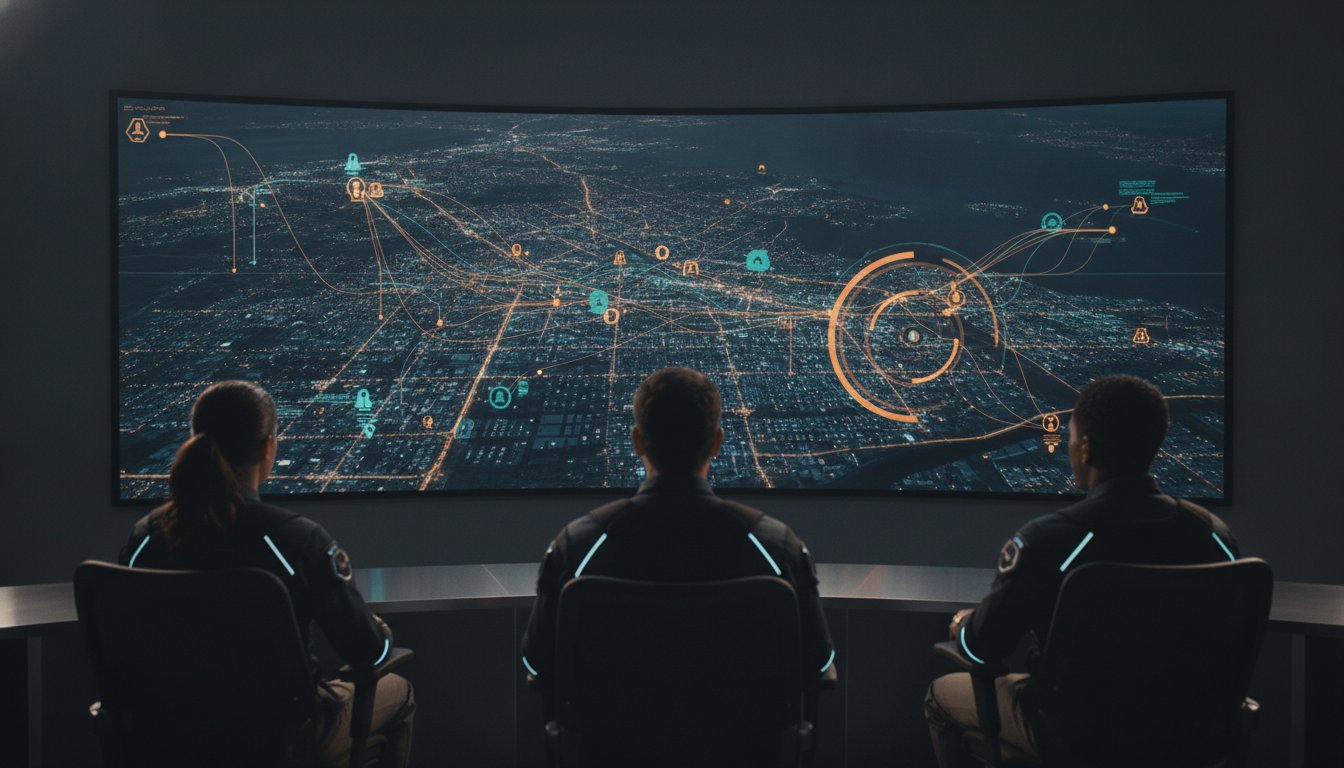
A command center wall saturated with live feeds is a liability if the person on the ground is still operating in the dark. High-stakes environments demand more than raw data; they require the immediate synthesis of information into actionable insight. When dispatchers are overwhelmed by disparate systems and field units rely on manual radio updates, response times lag and critical details vanish into silos. True situational awareness for field operators depends on a synchronized flow of intelligence that moves at the speed of the crisis.
Most control rooms already have the screens. What they’re missing is the layer that decides what goes on them, and escalates automatically when something needs attention. You likely recognize the frustration of managing tools that provide only a partial picture, leaving your team to piece together the truth during a pivotal decision. This article explores how an event-driven operational intelligence layer transforms raw data into a unified common operating picture. We will examine the shift from manual information sharing to automated, proactive oversight that empowers every operator to act with total confidence.
Key Takeaways
- Identify the primary cause of operational failure and learn how to unify fragmented data feeds into a clear perception of threats.
- Discover how an operational intelligence layer automates data delivery; it ensures the right information reaches the right person at the right time.
- Learn how to extend the common operating picture to the field through Mobile vis/ability, providing remote units with the same clarity as the command center.
- Understand how event-driven automation strengthens situational awareness for field operators by filtering out noise and prioritizing critical alerts.
- Explore how a cybersecurity common operating picture ensures the integrity of mission-critical data across your entire operation.
The Crisis of Fragmented Situational Awareness in Field Operations
Operational success in high-stakes environments depends on a clear, real-time understanding of the environment. Situational awareness for field operators is defined as the ability to perceive, understand, and project operational threats as they evolve. It’s the bedrock of safety in sectors like public safety and utilities. Without it, personnel are forced to make split-second decisions based on incomplete or outdated information. This intelligence gap doesn’t just hinder efficiency; it puts lives at risk.
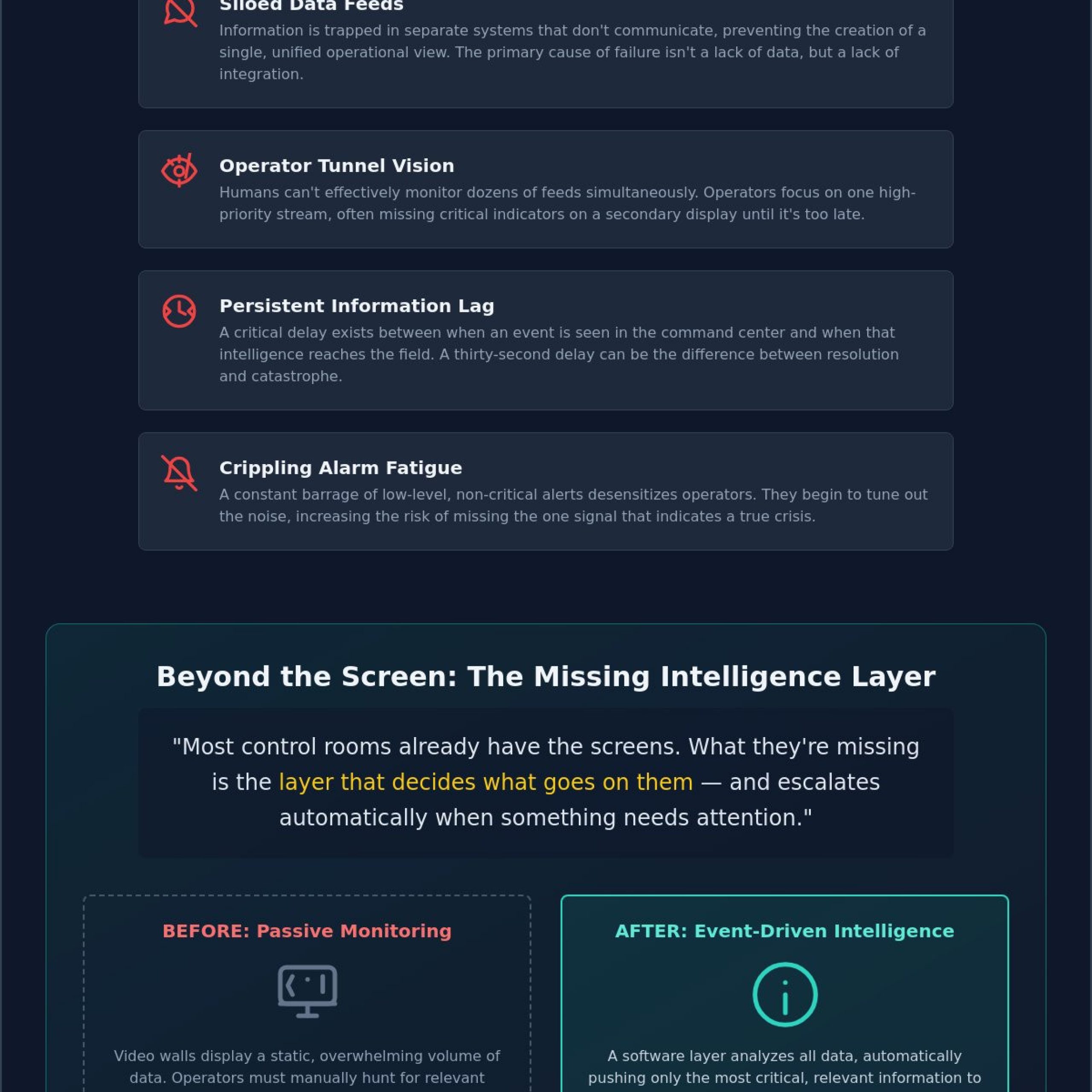
The primary cause of operational failure today is not a lack of data, but the existence of siloed data feeds. Information often stays trapped within the command center, never reaching the person on the ground who needs it most. Field operators frequently face cognitive overload as they attempt to monitor multiple unintegrated applications on mobile devices while simultaneously managing an incident. When data is fragmented, the human cost is high. In public safety and utility operations, a thirty-second delay in intelligence can be the difference between a successful resolution and a catastrophic failure.
Common Control Room Situational Awareness Problems
Many organizations believe that better ergonomics or more screens will solve their visibility issues. However, even the most well-designed room fails if data remains siloed. Operators often experience a tunnel vision effect, where they focus on a single high-priority data stream while missing critical indicators on a secondary display. This leads to a persistent information lag between headquarters and the field. Alarm fatigue remains a constant threat in mission-critical environments. When systems generate a constant barrage of low-level alerts, operators eventually tune them out, potentially missing the one signal that indicates a developing crisis.
Why Operators Miss Incidents on Traditional Video Walls
Traditional video walls are often limited by their reliance on passive monitoring. While these large-scale displays look impressive, they frequently contribute to an intelligence gap. Human operators cannot effectively track dozens of simultaneous feeds for hours at a time. In these environments, more data actually results in less awareness for active field units. The relevant information is lost in the noise of the video wall. Standard command center setups often fail to prioritize what’s essential, leaving operators to manually hunt for the data they need during the most stressful moments of an operation. This manual process is too slow for modern, fast-moving threats.
Beyond the Screen: The Need for an Operational Intelligence Layer
Traditional hardware investments often focus on the scale of the display rather than the utility of the data. Large video walls can present a massive amount of information, but without orchestration, that data remains static and unorganized. Hardware alone is insufficient for modern operations. The challenge isn’t just seeing the data; it’s ensuring the right information reaches the right person when it matters most. Effective situational awareness for field operators requires a dynamic system that prioritizes critical alerts over routine noise.
Most control rooms already have the screens. What they’re missing is the layer that decides what goes on them, and escalates automatically when something needs attention. This software-defined approach moves beyond passive monitoring toward an event-driven visualization system. A software-defined Common Operating Picture (COP) acts as the brain of the operation. It orchestrates data from various sources and ensures that the command center and field units are perfectly aligned. Without this intelligence layer, teams are left to manually navigate through a sea of information, which inevitably leads to delayed responses.
The Shortcomings of Partial Solutions
Some organizations utilize specialized platforms for managing body-worn camera feeds or digital evidence. These tools provide valuable data for specific forensic tasks, but they only offer a partial view of the total operational landscape. Relying on siloed tools that don’t communicate with each other creates a fragmented environment. When these systems remain disconnected, field operators lack the comprehensive context needed for safe and effective action. A unifying layer is necessary to bridge these gaps and make disparate data points truly actionable. You can explore how the vis/ability platform serves as this essential unifying hub, integrating these partial solutions into a single, coherent view.
How to Manage Multiple Data Feeds in a Dispatch Center
Aggregating data from Video Management Systems (VMS), Computer-Aided Dispatch (CAD), and various IoT sensors presents a significant technical hurdle. In many dispatch centers, these feeds remain isolated, forcing operators to toggle between different screens and applications. Research into a Situational Awareness Tool for Emergency Operators demonstrates that fusing these diverse sources is critical for reducing cognitive load and improving decision-making. The Operational Intelligence Layer serves as the central hub for all mission-critical data. It integrates these feeds into a unified interface, allowing the team to focus on the incident rather than the technology. This integration ensures that every team member, whether in the command center or on a mobile device, shares the same high-level intelligence.
Extending the Common Operating Picture to the Field
Extending the reach of a command center requires a shift from fixed displays to a portable, unified intelligence stream. Operational success depends on the ability to push critical data beyond the physical walls of the NOC or SOC. When situational awareness for field operators is restricted to voice-only radio traffic, the risk of miscommunication increases. Providing field teams with the same real-time intelligence as their counterparts in the command center creates a synchronized environment where every decision is based on the same set of facts.
Geospatial oversight plays a vital role in managing distributed teams. Seeing the location of assets, personnel, and incidents on a shared map allows for more precise resource allocation. This shared visibility significantly reduces radio congestion. Instead of requesting status updates or location confirmation via voice channels, field units can verify their surroundings through a visual interface. This clarity improves decision-making speed during the most intense phases of an operation. It ensures that the entire team moves with a singular purpose, guided by a common operating picture that updates as fast as the situation evolves.
Mobile vis/ability: Intelligence on the Move
The vis/ability platform extends the operational intelligence layer to huddle rooms and mobile devices. Field operators no longer need to rely on second-hand reports from dispatch. They can access live video feeds, geospatial data, and mission-critical dashboards directly on-site. This immediate access to the common operating picture ensures that the person at the scene has the same level of visibility as the strategic decision-makers at headquarters. Whether they’re on a tablet or a smartphone, the information remains clear and actionable.
EOC Common Operating Picture Solutions
Emergency Operations Centers (EOCs) often face the challenge of coordinating multi-agency responses. Integrated COPs allow diverse teams to view a single, authoritative data stream. In the public safety sector, this parity is essential. Event-driven alerts notify field supervisors of critical shifts in an incident, such as a perimeter breach or a change in environmental conditions. This proactive notification system ensures that field units remain informed without having to manually search for updates during an active response. It removes the burden of data management from the operator, allowing them to focus entirely on the mission at hand.
Event-Driven Automation: Reducing the Cognitive Load
High-stress operations often fail not because of a lack of information, but because of a failure to prioritize it. Reactive monitoring relies on the hope that a human operator will spot a critical event amidst hundreds of routine data points. This approach is unsustainable. True situational awareness for field operators requires an event-driven model that identifies anomalies and brings them to the forefront of the common operating picture. It moves the team from a state of constant scanning to a state of focused response.
Most control rooms already have the screens. What they’re missing is the layer that decides what goes on them; it escalates automatically when something needs attention. Hardware-centric setups that prioritize ergonomics over data orchestration only make it more comfortable for staff to be overwhelmed. By contrast, an operational intelligence layer filters the noise. It ensures that when a CAD alert is logged or an IoT sensor detects a breach, the entire team sees the relevant context immediately. This automation prevents the “missed incident” phenomenon common in traditional video wall environments.
The Mechanism of Automated Escalation
Automation must be precise to be effective. The vis/ability platform utilizes a structured process to ensure that intelligence reaches the field without delay. This workflow follows three critical stages:
- Step 1: Define critical triggers across integrated applications. This includes CAD alerts, cybersecurity anomalies, or specific geospatial breaches detected by IoT sensors.
- Step 2: Set rules for automatic layout changes. When a trigger is met, the video wall and mobile devices instantly shift to display the most relevant data feeds.
- Step 3: Push intelligence to the field. Data is directed to operators based on their specific role or proximity to the event, providing essential situational awareness for field operators where they need it most.
Human-Centric Design in Digital Contexts
Technical tools must empower human judgment. They shouldn’t replace it. By automating the search for information, the system allows the human operator to focus entirely on the resolution. This is where the most pivotal decisions are made. Information prioritization reduces operator fatigue by removing the burden of manual data management. It creates a calm, structured environment even when the stakes are at their highest. For more on how this integrates with broader response frameworks, review the details of our Incident Management Software. To see how automation can streamline your command center, contact our team for a consultation.
Implementing vis/ability for National Operational Excellence
The transition from fragmented data feeds to a unified operational intelligence layer represents a fundamental shift in how organizations protect assets and personnel. Activu’s vis/ability platform serves as the bedrock for mission-critical decision-making, providing a stable environment where clarity replaces complexity. By consolidating disparate systems into a single hub, the platform ensures that situational awareness for field operators remains consistent regardless of the scale of the incident. This unified approach eliminates the dangerous intelligence gaps that occur when data remains siloed in isolated departments, allowing teams to move with a shared sense of purpose.
Maintaining field-to-base integrity requires a robust cybersecurity common operating picture. As operations become increasingly networked, the threat of digital interference grows. vis/ability integrates security protocols directly into the operational flow, ensuring that the data reaching field units is both accurate and secure. This scalability allows the platform to adapt to the unique demands of various high-stakes industries, providing a reliable engine for success across local, state, and federal levels. Whether managing a single metropolitan area or a national infrastructure network, the system provides a steady, analytical perspective that remains focused when stakes are at their highest.
Industry-Specific Applications
The Future of Control Room Design
Optimizing an operation requires more than software; it requires a physical and digital environment designed for collaboration. Activu’s control room design services ensure that hardware and software are perfectly synchronized. This holistic approach creates a space where information flows naturally from the video wall to the field operator’s mobile device. We invite stakeholders to see the power of a unified operational intelligence layer in action. The era of managing multiple unintegrated feeds is over. It’s time to provide your team with the clarity they deserve. Contact Activu to bridge your situational awareness gap and secure your operational future.
Securing the Operational Future Through Intelligence
Solving the fragmented data crisis requires more than just adding displays; it requires an operational intelligence layer that bridges the gap between raw data and decisive action. By implementing event-driven automation, organizations can significantly reduce response times and eliminate the cognitive load that leads to missed incidents. Most control rooms already have the screens. What they’re missing is the layer that decides what goes on them, and escalates automatically when something needs attention. This transformation ensures that situational awareness for field operators is never compromised by siloed information or technical lag.
Leading NOCs, SOCs, and GSOCs globally rely on vis/ability to provide mission-critical reliability through a cybersecurity-first architecture. This platform doesn’t just manage data; it empowers teams to act with absolute certainty when every second counts. Your operation depends on the ability to see clearly through the noise of a crisis. Take the next step toward total operational visibility and ensure your team has the bedrock they need to succeed.
Request a Demo of the vis/ability Platform to bridge your intelligence gap today. Your team deserves the clarity and safety of a true common operating picture.
Frequently Asked Questions
What are the most common situational awareness problems in control rooms?
The most common problems involve fragmented data feeds and siloed systems that prevent a unified view of the environment. Operators often struggle with alarm fatigue, where a high volume of low-priority alerts obscures critical incidents. Most control rooms already have the screens. What they’re missing is the layer that decides what goes on them, and escalates automatically when something needs attention. This lack of orchestration leads to delayed responses and increased risk during high-stakes operations.
How can I improve situational awareness for field operators without causing data overload?
Improving situational awareness for field operators requires an event-driven approach that filters out irrelevant noise. Instead of pushing raw video feeds to mobile devices, the system should only transmit data that corresponds to a specific trigger or incident. This method ensures that personnel on the ground stay focused on their mission without being distracted by unnecessary information. Automated prioritization allows operators to maintain clarity and make better decisions under pressure.
What is an operational intelligence layer and why do I need it?
An operational intelligence layer is a software-defined platform that integrates disparate data sources into a single common operating picture. You need it because hardware-centric solutions cannot orchestrate data flow between the command center and the field. This layer acts as the brain of your operation, ensuring that VMS, CAD, and IoT data are synthesized into actionable intelligence. It provides the necessary structure to manage complex environments where split-second accuracy is non-negotiable.
How do I manage multiple data feeds in a dispatch center efficiently?
Efficient management of multiple data feeds is achieved through application integration that unifies VMS, CAD, and geospatial data into a single interface. Rather than forcing operators to toggle between disconnected applications, an integrated platform automates the visualization process. This centralized approach reduces the time spent searching for information and allows the team to focus on incident resolution. It creates a streamlined workflow that is essential for maintaining high-level operational readiness.
Can vis/ability integrate with my existing VMS and CAD systems?
Yes, the vis/ability platform is designed to integrate seamlessly with existing VMS and CAD systems to create a unified common operating picture. It functions as a central hub that makes other tools more useful for the entire team. While some organizations use standalone tools that provide only a partial solution, vis/ability fills the gaps by orchestrating these feeds. This integration ensures that your current investments contribute to a comprehensive and synchronized operational view.
Why do operators still miss incidents despite having large video walls?
Operators miss incidents on traditional video walls because they rely on passive monitoring, which is subject to human fatigue and tunnel vision. A large display without an intelligence layer often presents too much unorganized data, making it difficult to identify anomalies. When the system doesn’t prioritize essential information, critical alerts are easily overlooked. Transitioning to an event-driven visualization model ensures that the most important data is automatically highlighted, preventing incidents from going unnoticed.
Is vis/ability compatible with mobile devices for field teams?
The platform is fully compatible with mobile devices through Mobile vis/ability, extending the common operating picture to personnel in the field. Field operators can access live video, geospatial maps, and critical dashboards directly from their smartphones or tablets. This compatibility ensures that the person on the scene has the same level of intelligence as the command center. It facilitates better coordination and faster response times by providing real-time data parity across the entire organization.
What are the benefits of an event-driven common operating picture?
An event-driven common operating picture provides proactive intelligence by automatically escalating relevant data when a specific trigger is met. This reduces the cognitive load on operators and minimizes the risk of human error during high-stress periods. The primary benefit is a synchronized response where every team member is alerted to critical changes simultaneously. It transforms the command center from a reactive environment into a proactive engine of operational excellence and safety.