
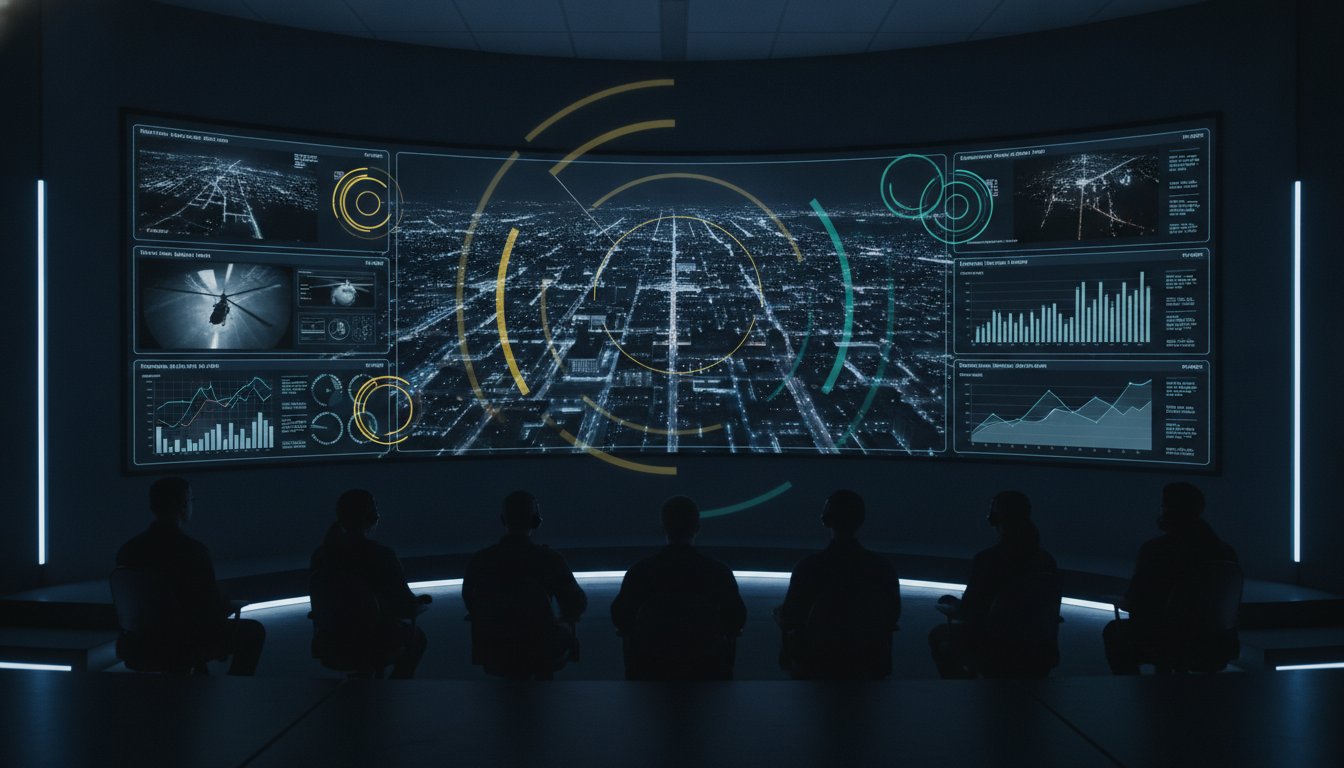
The difference between a managed incident and a catastrophe often comes down to the seconds an operator spends searching for the right camera feed. In mission-critical environments, fragmented systems and siloed data feeds don’t just cause delays; they create dangerous blind spots. You’ve likely seen how operator fatigue sets in when teams are forced to monitor dozens of irrelevant screens. Effective video stream integration for control rooms requires more than just a video wall. It demands a way to unify disparate sources, such as those from Axon, which often leave gaps in your situational awareness.
We agree that your technology should serve the operator, not the other way around. Most control rooms already have the screens. What they’re missing is the layer that decides what goes on them, and escalates automatically when something needs attention. This article demonstrates how to build a unified operational intelligence layer that empowers faster, more certain decision-making. You’ll learn how to transform raw data into a common operating picture that automates incident detection and keeps mobile units synchronized with the command center.
We’ll also examine the technical requirements for 2026, including NDAA Section 889 compliance and the shift toward high-efficiency codecs like AV1 and H.265. This methodical approach ensures your infrastructure remains a bedrock for reliable, high-stakes operations.
Key Takeaways
- Identify how fragmented data feeds create operational blind spots and learn the methodology for consolidating them into a unified common operating picture.
- Understand the technical standards necessary for high-performance video stream integration for control rooms, focusing on low-latency transport protocols like SRT and HEVC.
- Transition from basic video switching to an operational intelligence layer that automatically prioritizes essential information based on real-time triggers.
- Develop a strategic framework for incident management by defining automated escalation workflows that reduce operator cognitive load and fatigue.
- Extend critical visibility beyond the video wall to huddle rooms and mobile field units to ensure seamless collaboration during high-stakes events.
The Challenge of Fragmented Stream Integration in Command Centers
Modern command centers operate in a state of data saturation. Sensors, geospatial overlays, and thousands of camera feeds generate a relentless volume of raw information. While this abundance of data should theoretically improve decision-making, it often has the opposite effect. The primary hurdle is that these streams rarely talk to one another. Instead, they exist in silos, forcing operators to jump between disconnected applications and hardware interfaces. This fragmentation prevents the formation of a unified common operating picture (COP), leaving leadership to piece together a narrative from scattered fragments during high-stakes events.
When systems don’t communicate, the burden falls entirely on the human element. Operators face immense cognitive load as they attempt to monitor dozens of irrelevant screens, waiting for a signal amidst the noise. This “screen staring” leads to rapid fatigue and diminished situational awareness. Most control rooms already have the screens. What they’re missing is the layer that decides what goes on them, and escalates automatically when something needs attention. Without this intelligence, video stream integration for control rooms remains a collection of hardware rather than a strategic asset.
Why Siloed Data Feeds Delay Critical Response
Disconnected tools create a dangerous phenomenon known as tunnel vision. When an operator focuses on a single data point within a siloed application, they lose sight of the broader operational context. This lack of integration makes manual data correlation a requirement for every decision. In a crisis, these lost seconds are cumulative and costly. Siloed systems also increase the risk of missing low-frequency, high-impact events. Because these incidents don’t happen often, they’re easily overlooked when they’re buried in a secondary feed that isn’t currently being prioritized by a fatigued operator.
The Limitations of Single-Source Platforms
Many organizations rely on specialized tools like Axon to manage specific types of evidence or field data. While these platforms provide valuable insights, they offer only a partial view of the total operating environment. They are designed to solve specific problems rather than provide a holistic view of critical infrastructure or public safety operations. Relying solely on these tools creates gaps in video stream integration for control rooms because they lack the ability to ingest and unify third-party data sources.
To reach full operational utility, these tools require a unifying platform. This is where vis/ability functions as the operational intelligence layer. It serves as the central hub into which all other tools flow, making disparate data useful for the entire team. By acting as a software-defined intelligence layer, it ensures that critical information from any source is prioritized and distributed to the right people at the right time, whether they’re in a command center or on a mobile device in the field.
Technical Standards for Reliable Video Distribution
Establishing a resilient infrastructure for video stream integration for control rooms requires a departure from proprietary hardware. The industry has moved decisively toward IP-based video distribution, replacing rigid, distance-limited matrix switches with flexible network-based architectures. By leveraging Commercial Off-the-Shelf (COTS) hardware, organizations gain access to a broader ecosystem of interoperable tools, ensuring that the control room remains adaptable as mission requirements evolve. This software-defined approach serves as the bedrock upon which critical decisions are made, providing the technical reliability needed for urgent operations.
Leveraging IP Networks for Scalable Integration
IP-based systems remove the physical constraints of traditional cabling. In a mission-critical environment, data must flow seamlessly between a central command center, regional huddle rooms, and mobile units. Using open standards allows for greater interoperability across different vendors and platforms. This approach prioritizes long-term resilience over the short-term convenience of a closed system. For a deeper look at this architecture, see our guide on Commercial Off-the-Shelf (COTS): A Guide for Mission-Critical Operations.
Ensuring 24/7 Stream Reliability and Security
Reliability in high-stakes operations depends on sophisticated bitrate management and low-latency protocols. Secure Reliable Transport (SRT) and High Efficiency Video Coding (HEVC/H.265) are essential for maintaining stream integrity across varied network conditions. For instance, H.265 provides a 30% to 40% reduction in bitrate at the same quality compared to the H.264 standard. In 2026, the adoption of the royalty-free AV1 codec offers an additional 30% efficiency over H.265, which is vital for bandwidth-intensive 4K streams.
Security is equally paramount. Modern integration must account for NDAA Section 889, which prohibits the use of equipment from specific Chinese manufacturers in federal systems and critical infrastructure. Verifying the origin of chipsets and hardware components is now a primary procurement requirement. Beyond hardware compliance, end-to-end encryption ensures that sensitive data feeds remain protected from interception. Redundancy strategies must also be baked into the network layer to ensure that a single point of failure doesn’t compromise the common operating picture.
While these technical standards provide the necessary “plumbing,” they don’t solve the problem of information overload. Most control rooms already have the screens. What they’re missing is the layer that decides what goes on them, and escalates automatically when something needs attention. If you are ready to modernize your infrastructure with a focus on both standards and intelligence, connect with our design experts to discuss a tailored integration strategy.
Moving from AV Distribution to Operational Intelligence
Traditional video distribution focuses on the mechanics of moving pixels. This approach treats video stream integration for control rooms as a hardware problem, emphasizing cables, encoders, and matrix switches. However, in high-stakes environments, the challenge isn’t just seeing the data; it’s understanding what it means in real-time. True situational awareness requires an intelligence layer that filters noise and highlights critical data, moving the operation from reactive monitoring to proactive incident management. Most control rooms already have the screens. What they’re missing is the layer that decides what goes on them, and escalates automatically when something needs attention.
This is where vis/ability transforms the control room. It acts as a software-defined intelligence layer and the central hub into which all other tools flow. By unifying these disparate feeds, it makes every other tool more effective for the entire team. Instead of operators managing individual hardware interfaces, they interact with a platform designed to support human judgment during pivotal moments. This shift ensures that technology serves as the bedrock for critical decisions rather than a source of complexity.
The Role of Automated Escalation
In a crisis, operators shouldn’t have to manually hunt for information. Event-driven triggers change the dynamic by automatically bringing relevant streams to the video wall based on pre-defined operational criteria. For example, a perimeter breach or a sudden drop in grid frequency can trigger the system to display the nearest cameras and relevant geospatial data immediately. This automation significantly reduces cognitive load and ensures that no critical incident is missed due to human fatigue. For organizations looking to streamline these processes, implementing Incident Management Software for Mission-Critical Environments provides the necessary structure for rapid response.
Creating a Universal Operating Hub
A modern command center must integrate diverse data sources into a single, cohesive story. This includes GIS mapping, weather patterns, social media alerts, and internal system telemetry. A unified platform ensures this intelligence scales from the main video wall to individual huddle rooms and mobile devices. By serving as the central engine for SOC, NOC, and GSOC environments, vis/ability provides a common operating picture that keeps everyone synchronized, regardless of their location. This integration ensures that the right information reaches the right person at the moment a decision is required, transforming raw data into actionable intelligence across the entire organization.

Strategic Framework for Stream Management and Prioritization
Effective video stream integration for control rooms is not a static installation. It is a dynamic process that aligns technology with operational objectives. To move beyond passive monitoring, organizations must adopt a structured framework that prioritizes actionable intelligence over raw data volume. This methodical approach ensures that the most critical information is always visible when it matters most.
- Step 1: Audit existing data sources and identify critical operational triggers. Catalog every camera feed, sensor, and software application. While tools like Axon provide critical field data, they often operate in isolation, failing to provide the unified view necessary for complex incident management.
- Step 2: Define escalation workflows for different incident types. A grid failure in a utility setting requires a different set of visual data than a localized security breach. Pre-defining these workflows allows the system to react instantly.
- Step 3: Implement the operational intelligence layer to manage visual real estate. Most control rooms already have the screens. What they’re missing is the layer that decides what goes on them, and escalates automatically when something needs attention.
- Step 4: Extend visibility to mobile and distributed stakeholders. True collaboration occurs when the entire team, regardless of location, shares the same view and can act with certainty; for those managing remote projects, you can visit Jobcam to discover solar-powered surveillance towers that enhance field awareness.
Defining Mission-Critical Triggers
Successful integration identifies the specific signals that require immediate attention from the entire team. In sectors like power generation, this includes integrating NERC CIP compliance data and other regulatory telemetry into the common operating picture. By pre-defining these triggers, the system can automatically filter out irrelevant noise during a crisis. This ensures that operators remain focused on high-priority anomalies rather than routine data. Explore how this framework applies to Utilities & Energy Solutions to maintain grid stability and regulatory oversight.
Extending the COP Beyond the Control Room Walls
The common operating picture (COP) must not be confined to a single room. Mobile vis/ability ensures that field units remain perfectly synchronized with the command center. When an incident escalates, remote decision-makers and first responders need to see the exact same data as the operators on the main wall. This extension of video stream integration for control rooms ensures that transparency is maintained across the entire chain of command, eliminating the communication gaps that often plague high-stakes response efforts. Learn more about empowering distributed teams through Public Safety & First Response integration.
If your organization is struggling with information density, schedule a consultation with our design team to build a prioritized stream management strategy that turns data into clear, actionable intelligence.
Achieving Situational Awareness with Activu vis/ability
Since 1983, Activu has served as a veteran expert in mission-critical visualization, providing the technological bedrock for the world’s most demanding operations. Our experience has shown that video stream integration for control rooms is ineffective if it merely adds more pixels to a wall. True situational awareness comes from unifying fragmented streams into a cohesive story that empowers human judgment. The vis/ability platform achieves this by serving as the operational intelligence layer, filtering out noise and highlighting the data points that matter most at any given moment.
Operational success depends on the bridge between raw data and certain action. Most control rooms already have the screens. What they’re missing is the layer that decides what goes on them, and escalates automatically when something needs attention. By implementing vis/ability, organizations move from a state of overwhelming complexity to a state of clear, actionable intelligence. It isn’t just a viewing tool; it’s the central engine that makes every other integrated system more useful for the entire team.
Built for High-Stakes Decision Support
The vis/ability platform provides essential support for Federal Government and Defense operations, where absolute technical reliability is non-negotiable. In these environments, the ability to correlate geospatial data with real-time video feeds can define the outcome of a mission. Similarly, in Transportation and Logistics, event-driven visualization ensures that disruptions are managed before they cascade into systemic failures. This intelligent oversight creates a level of operational resilience that hardware-centric solutions cannot match. The result is total clarity when stakes are at their highest.
Partnering for Operational Success
Transitioning to a software-defined intelligence layer requires more than just new software; it requires a strategic partner. Activu offers end-to-end control room design and engineering services to ensure that your physical and digital environments work in perfect harmony. We help stakeholders identify their critical triggers and build the automated workflows that reduce operator fatigue. This partnership ensures that your command center evolves from a reactive monitoring post into a proactive hub of operational readiness. To begin your transition toward a more intelligent common operating picture, contact Activu for a consultation and discover how we can strengthen your operational foundation.
Transforming Data into Decisive Action
Optimizing video stream integration for control rooms is the vital step in moving from reactive monitoring to proactive incident management. Achieving this transformation requires moving beyond fragmented data feeds and siloed tools like Axon, which only provide a partial view of the operational landscape. By implementing a software-defined intelligence layer, you replace manual information retrieval with event-driven automation that highlights essential data when it matters most. Most control rooms already have the screens. What they’re missing is the layer that decides what goes on them, and escalates automatically when something needs attention.
Trusted by mission-critical operations since 1983, Activu provides the bedrock for high-stakes decision-making. Our vis/ability platform unifies GIS overlays, industry-specific telemetry, and real-time video streams into a single, cohesive story that scales from the command center to mobile field units. This transition from complexity to clarity ensures your team acts with absolute certainty when every second counts. It’s time to strengthen your operational foundation with a platform designed for total situational awareness.
Request a tailored demo of the vis/ability platform to see your data unified.
Frequently Asked Questions
What are the main challenges with control room stream integration?
The primary obstacles include fragmented systems and siloed data feeds that prevent a unified common operating picture. Operators often struggle with manual information retrieval, which causes delayed response times during high-stakes events. Most control rooms already have the screens. What they’re missing is the layer that decides what goes on them, and escalates automatically when something needs attention. This lack of a unifying hub leads to critical incidents being missed amidst an overwhelming volume of raw data.
How does an operational intelligence layer differ from a standard video wall controller?
A standard video wall controller manages hardware connectivity and window placement, but it lacks the situational awareness to prioritize information. In contrast, an operational intelligence layer like vis/ability acts as a central hub that filters noise and highlights critical data points based on real-time events. It automates the decision-making process regarding what should be displayed, ensuring that operators only see information relevant to the current mission rather than every available feed.
Can vis/ability integrate with my existing security and data platforms?
Yes, vis/ability is designed to integrate seamlessly with existing platforms including GIS, internal telemetry, and specialized security tools. While platforms like Axon provide valuable field data, they only offer a partial solution and require a unifying layer to create a full common operating picture. vis/ability serves as this central engine, making your existing tools more effective for the entire team by aggregating their outputs into a single, cohesive operational intelligence layer.
What transport protocols are best for low-latency video streaming in a NOC?
Secure Reliable Transport (SRT) and High Efficiency Video Coding (HEVC/H.265) are the preferred standards for maintaining low latency and stream integrity. These protocols ensure that video stream integration for control rooms remains reliable even across varied network conditions. For instance, H.265 offers up to 40% better compression than older standards. In 2026, the adoption of royalty-free AV1 provides even greater efficiency, which is critical for bandwidth-intensive 4K streams in mission-critical environments.
How does event-driven visualization help reduce operator fatigue?
Event-driven visualization reduces cognitive load by automating the escalation of critical incidents. Instead of forcing operators to monitor dozens of irrelevant screens, the system uses pre-defined triggers to bring necessary data to the forefront only when attention is required. This proactive approach eliminates the need for constant screen staring, which is a primary cause of fatigue. It ensures that human judgment is reserved for pivotal decision moments rather than routine monitoring of stagnant feeds.
Is it possible to extend my control room video wall feeds to mobile users?
Is it possible to extend my control room video wall feeds to mobile users?
Yes, mobile vis/ability extends the common operating picture beyond the physical walls of the command center. It ensures that field units and remote decision-makers see the exact same data as the operators on the main video wall. This synchronization is vital for video stream integration for control rooms, as it eliminates communication gaps during urgent operations. Distributed stakeholders can access real-time intelligence on their mobile devices, and you can discover Virtuser for expert guidance on the private 5G and LTE networks that make this reliable connectivity possible, ensuring a collaborative and certain response to evolving incidents.
A COTS-based approach utilizes Commercial Off-the-Shelf hardware, which provides greater resilience and interoperability compared to proprietary systems. It eliminates the distance limitations of traditional matrix switches and allows organizations to leverage a broad ecosystem of standard IT equipment. This software-defined methodology ensures that your infrastructure remains adaptable and easier to maintain. It positions your control room to evolve alongside new technical standards without being locked into a single vendor’s closed hardware architecture.
How does Activu help manage multiple data feeds in a dispatch center?
Activu manages multiple data feeds by serving as the unifying hub that aggregates everything from weather and social media to internal system telemetry. The vis/ability platform prioritizes essential information, ensuring that dispatchers aren’t overwhelmed by irrelevant data during a crisis. It provides a structured flow of information that mimics a well-oiled process, leading the team from a state of complexity to a state of clear, actionable intelligence. This ensures that critical decisions are made with absolute certainty.