
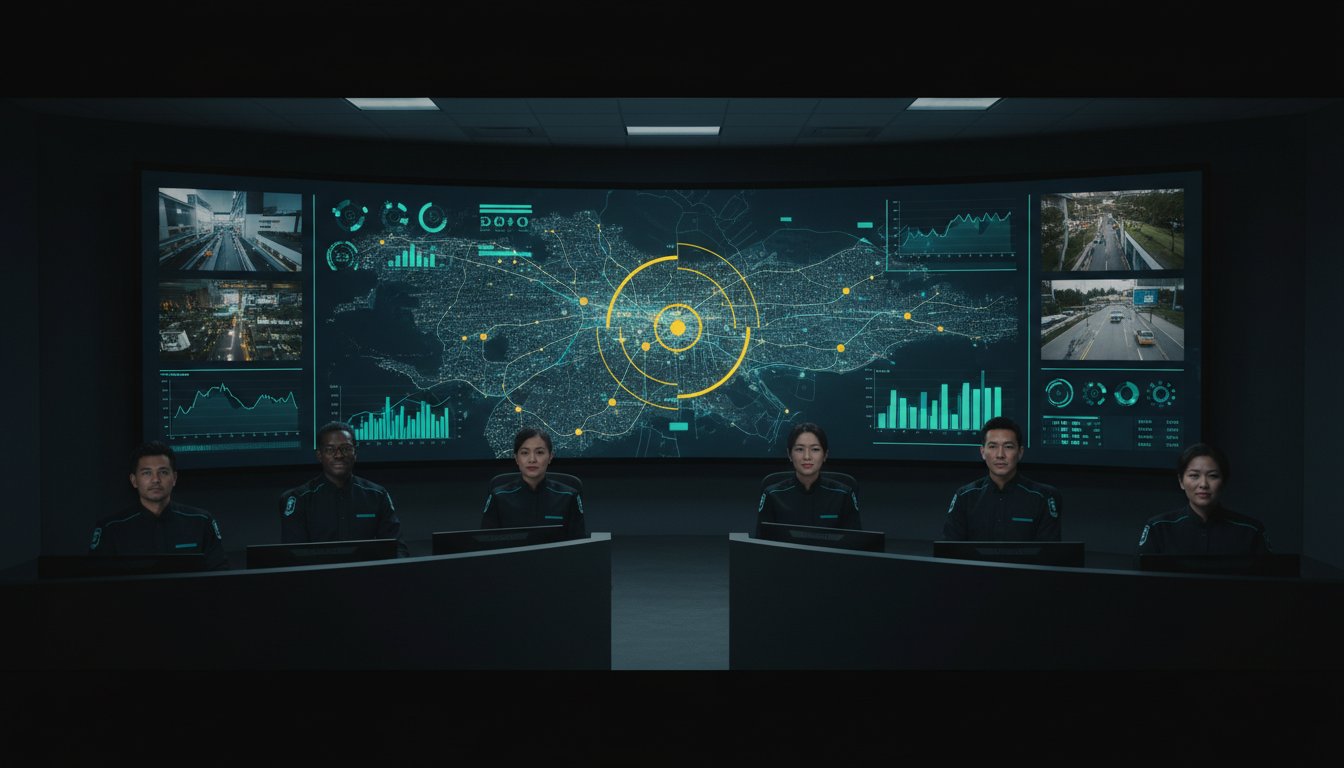
In 2024, a study of emergency communications revealed that dispatchers juggle an average of five separate screens, often missing critical field updates during the first three minutes of a call. You’ve likely seen this reality in your own 911 Center, where data silos between agencies and fragmented feeds from tools like Axon create a dangerous gap in situational awareness. While Axon provides vital field data, it’s a partial solution that often stays trapped in its own interface. This contributes to the cognitive overload that fuels operator burnout. You recognize that having more information isn’t the same as having clarity.
Most control rooms already have the screens. What they’re missing is the layer that decides what goes on them, and escalates automatically when something needs attention. This layer is vis/ability, an operational intelligence solution that surfaces critical insights directly through your video wall to solve common control room situational awareness problems. By reading this guide, you’ll discover how to unify your operating picture to reduce response times and empower your team. We’ll examine the strategic shift from manual monitoring to automated escalation, ensuring your supervisors and field units finally see exactly what matters when it matters most.
Key Takeaways
- Identify why fragmented systems and siloed data create dangerous “swivel-chair” workflows that delay critical response times in the modern 911 Center.
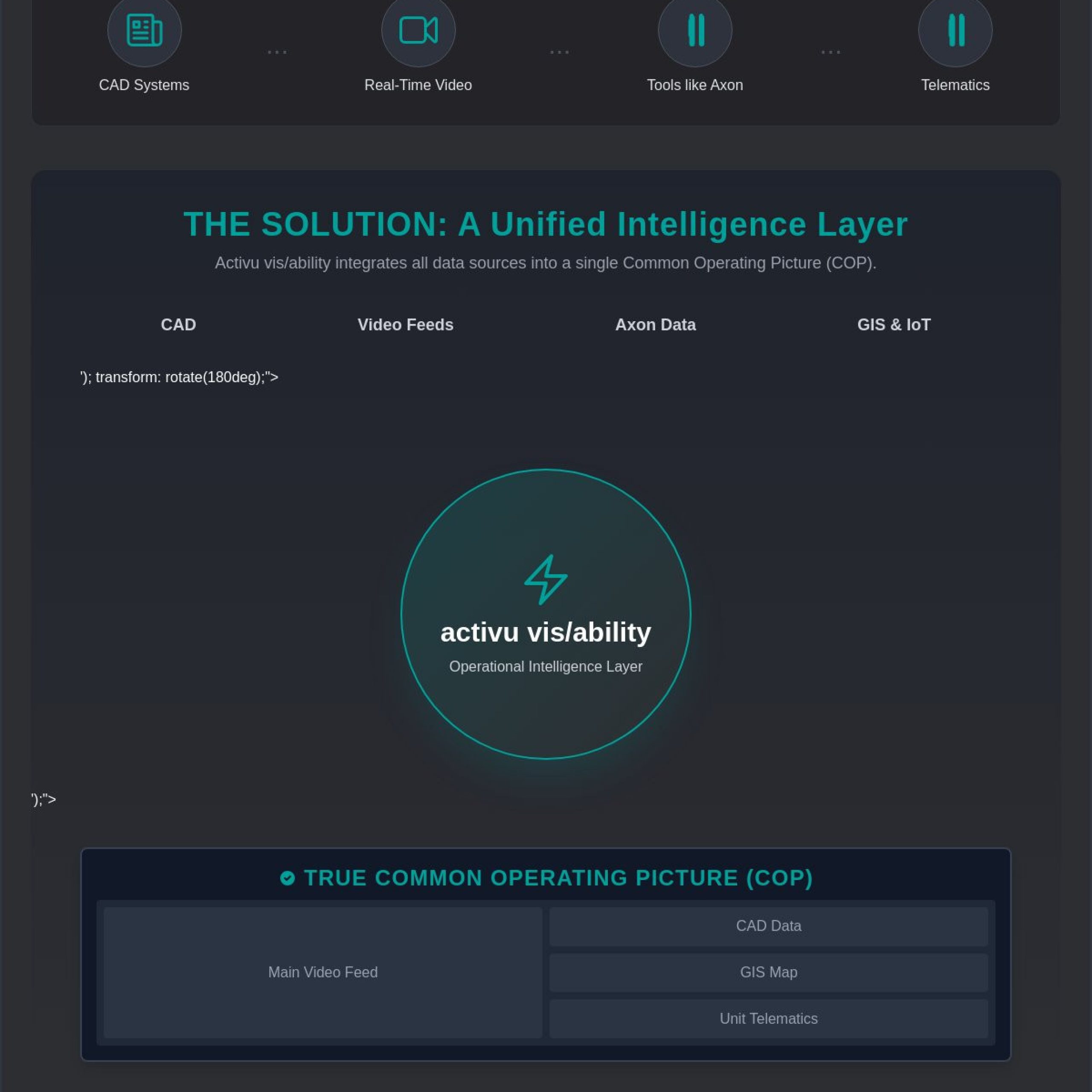
- Establish a true Common Operating Picture by integrating CAD, real-time video, and telematics into a single, unified interface for total situational awareness.
- Combat operator fatigue and cognitive overload by transitioning from manual monitoring to intelligent, event-driven automation.
- Leverage vis/ability as the operational intelligence layer that automatically escalates mission-critical data to your screens the moment an incident requires attention.
- Future-proof your emergency operations by moving beyond partial toolsets toward a central hub that provides absolute clarity when stakes are at their highest.
The Evolution of the 911 Center: Challenges in a High-Stakes Environment
The modern 911 Center serves as the primary nexus where public safety meets an overwhelming surge of real-time data. For decades, dispatchers relied on voice-only communication to coordinate emergency responses. Today, that reality has shifted toward a data-intensive landscape. While the transition from Enhanced 911 (E911) provided location-based accuracy, the move toward Next Generation 911 (NG911) introduces a new set of hurdles. Agencies now manage a fragmented ecosystem of video feeds, IoT sensors, and GIS data, yet these systems often exist in silos. This fragmentation creates a dangerous gap between the arrival of information and the execution of a life-saving decision. Without a way to bridge these silos, the sheer volume of data threatens to obscure the very incidents it was meant to clarify.
The Reality of Modern Dispatch Operations
Operating a mission-critical environment requires absolute reliability every second of the day. Dispatchers work under intense time constraints where a five-second delay in processing data can alter the outcome of a critical incident. By 2026, the National Emergency Number Association (NENA) expects NG911 infrastructure to be the baseline for most jurisdictions, meaning centers will handle everything from live-streamed citizen video to automated vehicle telematics. Managing this 24/7 environment demands more than just endurance; it requires a system that provides steady reassurance amidst potential chaos. For a deeper look at maintaining these standards, refer to this Mission Critical Operations Guide. The pressure to act with certainty is relentless, and the human element remains the most vital component in this digital space.
Why Traditional Infrastructure Fails the Modern Dispatcher
Many organizations attempt to solve data overload by adding more hardware. They install standalone monitors or implement tools like Axon’s evidence suites. While these tools offer specific benefits, they remain partial solutions. They often force a “swivel-chair” workflow where supervisors must manually check different screens to piece together a common operating picture. This creates the “passive screen” problem. In this scenario, critical data exists within the room, but it isn’t visible when it matters most. Traditional video walls frequently act as static wallpaper rather than active intelligence tools, causing operators to miss burgeoning incidents because the relevant feed was buried under a dozen others.
Most control rooms already have the screens. What they’re missing is the layer that decides what goes on them, and escalates automatically when something needs attention. This is where vis/ability transforms the operation. Modernizing the 911 Center requires more than just faster internet; it requires an operational intelligence layer that surfaces through the video wall. Instead of a passive display, vis/ability acts as the central unifying hub. It monitors the influx of data from every source and ensures that when a critical threshold is met, the right information appears instantly on the wall. It moves the team from a state of complex data overload to a state of clear, actionable intelligence, empowering supervisors and field commanders to act with absolute certainty.
The Operational Gap: Fragmented Systems and Siloed Data
The primary gap in the modern 911 Center isn’t a lack of data; it’s the fragmentation of that data across disconnected systems. Dispatchers and supervisors currently navigate a labyrinth of siloed tools where CAD systems, radio frequencies, and GIS mapping software exist in isolation. This creates a “swivel-chair” workflow. Operators must manually pivot between different screens and interfaces to piece together a coherent picture of an unfolding emergency. This manual process consumes precious seconds. In high-stakes environments, these delays are more than just an inconvenience. They represent a fundamental failure in operational intelligence that can compromise public safety outcomes.
The Problem with Disparate Public Safety Tools
Many agencies utilize specialized tools like Axon to capture field data and body camera footage. While these tools provide valuable evidence and localized awareness, they remain siloed from the broader operational environment. They are partial solutions. They don’t provide the unified visibility required to manage the complex, multi-agency responses typical of a 2026-era 911 Center. This lack of integration leads to missed incidents and delayed situational awareness.
Operators often struggle with a “pain search.” They scan a standard video wall for relevant information without knowing exactly where to look or which feed matters most at that specific second. They miss critical developments because the video wall acts as a passive display rather than an intelligent assistant. The transition to Next Generation 911 (NG911) introduces even more data streams, including text, photos, and high-definition video. Without a way to filter this influx, the risk of cognitive overload increases significantly. Common symptoms of this gap include:
- Information overload from unprioritized CCTV and ALPR feeds.
- Delayed response times due to manual data entry between disparate software.
- Loss of critical context when shifting from dispatch screens to the common operating picture.
- Inability to automatically trigger visual alerts based on CAD incident types.
Most control rooms already have the screens. What they’re missing is the layer that decides what goes on them; it escalates automatically when something needs attention. This is where vis/ability transforms the workflow. It functions as the central unifying hub for all visual information and data streams, ensuring that the right information finds the right person at the right time. Vis/ability acts as the essential bridge between raw CAD data and human judgment.
By implementing intelligent situational awareness, the video wall becomes the place where the answer appears rather than just more data to sort through. It removes the guesswork from the equation. It ensures that when a critical threshold is met, the relevant visual evidence surfaces immediately across the entire command structure. This shift from passive monitoring to proactive escalation is the bedrock of a modern, resilient 911 Center.
Implementing a Common Operating Picture (COP) for NG911
A Common Operating Picture (COP) provides a single, authoritative display of mission-critical information that allows every stakeholder to see the same reality at the same time. In the high-pressure environment of a 911 Center, this means merging CAD data, real-time video, GIS mapping, and vehicle telematics into one coherent view. Without this unification, dispatchers face severe control room situational awareness problems, often forced to toggle between isolated screens while seconds count. A 2024 report by the U.S. Government Accountability Office detailed the technical and interoperability challenges in implementing NG911 across various jurisdictions. These hurdles often result in fragmented systems that fail to communicate when a crisis scales.
Most control rooms already have the screens. What they’re missing is the layer that decides what goes on them, and escalates automatically when something needs attention. This is where vis/ability functions as the operational intelligence layer that surfaces through the video wall. It acts as the central hub, pulling in data from tools like Axon or various CAD systems. While those tools provide specific data, they remain partial solutions; they don’t solve the core problem of why operators miss incidents video wall because they lack the automation to surface what actually matters.
Integrating NG911 Data Streams
By 2026, the 911 Center will process an estimated 40% more non-voice data than it did just five years ago. This influx includes live doorbell camera feeds, text-to-911, and automated IoT alerts from smart city infrastructure. Managing multiple data feeds in a dispatch center can quickly lead to cognitive overload. Vis/ability manages these streams by applying logic-based rules to aggregate feeds into a unified view. Instead of a dispatcher staring at dozens of static cameras, the system only promotes a feed to the video wall when a specific trigger occurs. You can find specific integration examples through our Public Safety Solutions.
Extending Visibility Beyond the Center
Effective EOC common operating picture solutions must extend beyond the four walls of the command center. Field responders and remote commanders require the same situational awareness as the dispatchers to make informed decisions. Mobile vis/ability tools ensure that field units see exactly what the command center sees on their tablets or smartphones. This seamless collaboration is vital when operations move into breakout rooms or huddle rooms during a sustained incident. By creating a consistent visual thread across all devices, vis/ability removes the information silos that typically hinder large-scale emergency responses.
Mitigating Operator Fatigue Through Automated Escalation
The most frequent objection to upgrading technology in a 911 Center is that operators are already overwhelmed. They manage a relentless stream of voice calls, radio traffic, and data entries. Adding more information sources often feels like adding more noise. This cognitive overload is a direct result of fragmented systems and silos that require manual attention to bridge. When dispatchers must hunt for information across multiple disconnected monitors, critical seconds vanish. Most control rooms already have the screens. What they’re missing is the layer that decides what goes on them, and escalates automatically when something needs attention.
This gap in technology forces humans to act as the integration layer between software programs. It’s a recipe for exhaustion. Vis/ability solves this by serving as an operational intelligence layer that surfaces through the video wall. It doesn’t just display data; it understands when that data becomes an incident. By moving away from manual screen management, agencies can finally address control room situational awareness problems that lead to burnout and errors.
The Science of Situational Awareness
Reducing mental friction during a crisis is a matter of technical precision. We utilize a framework designed to preserve dispatcher focus by ensuring only the most critical information reaches their field of view. By integrating incident management software, a 911 Center can automate the filtering process. This approach ensures the right data surfaces at the precise moment it’s needed. It’s the difference between a dispatcher searching through 50 camera feeds and having the one relevant feed appear automatically. This methodology provides a sense of calm and clarity, allowing the team to act with absolute certainty when the stakes are highest.
Automating the Escalation Workflow
The transition from reactive monitoring to proactive management hinges on automated rules. Consider a workflow where a high-priority CAD alert for a structure fire is received. In many centers, the operator must manually locate the nearest traffic cameras and weather sensors. With vis/ability, the system detects the CAD threshold breach and immediately triggers the relevant video feeds and GIS layers on the main wall. This is how to manage multiple data feeds dispatch center environments without increasing the burden on staff.
While organizations often use specialized tools like Axon for body-cam footage, these are only partial solutions. They don’t provide the unified common operating picture required for a total room response. Vis/ability acts as the central hub into which these tools flow. It’s the vigilant guardian that ensures no threshold is missed. This automation is the primary reason why operators miss incidents video wall systems often fail to prevent. By removing the need for manual intervention, vis/ability ensures that EOC common operating picture solutions remain accurate and actionable across the entire command structure.
Modernize your response capabilities today. Explore our dedicated public safety solutions.
Future-Proofing the 911 Center with Activu vis/ability
Modern emergency response demands more than just faster hardware. It requires a fundamental shift in how information moves through the 911 Center. Currently, many agencies struggle with fragmented silos where CAD data, GIS mapping, and real-time video feeds exist in isolation. These disconnected systems force operators to manually toggle between screens, creating a dangerous lag during high-stress incidents. Most control rooms already have the screens. What they’re missing is the layer that decides what goes on them, and escalates automatically when something needs attention.
Activu vis/ability provides this essential intelligence layer. It functions as the central hub that unites disparate tools. While platforms like Axon offer valuable body-cam and evidence management, they often remain closed loops that don’t communicate with the broader operational picture. vis/ability fills these gaps by pulling data from every source and surfacing only the most relevant information on the video wall. This ensures that the entire team shares a single, verified reality. By automating the transition from raw data to actionable insight, vis/ability empowers people to act with absolute certainty when every second counts.
Design for Operational Efficiency
A resilient 911 Center must remain functional 24/7/365. Achieving this level of reliability requires a deep integration of hardware and software. Activu’s professional design services focus on optimizing the physical and digital environment to reduce operator burnout. Studies indicate that ergonomic control room layouts can reduce physical fatigue by as much as 25 percent, which is vital for maintaining focus during a 12-hour shift. These strategies aren’t limited to a single room; they extend to remote command structures, huddle rooms, and mobile devices used by field supervisors.
By utilizing Activu Control Room Design Services, agencies can transition from a reactive posture to a proactive one. The design ensures that whether an operator is at a central console or a distributed workstation, the interface remains consistent and the intelligence remains accessible. This unified approach removes the technical friction that often slows down multi-agency coordination during large-scale emergencies.
Securing the Future of Emergency Response
As 911 Centers integrate more IoT devices and multimedia inputs, the risk to data integrity grows. Cybersecurity isn’t just an IT concern; it’s a matter of public safety. vis/ability is built with a mission-critical mindset, ensuring that the information displayed on the video wall is secure and untampered. This technical reliability provides the bedrock for clear decision-making. With call volumes in the United States exceeding 240 million annually, the ability to filter noise and protect sensitive data is paramount.
The goal is to eliminate the hesitation caused by information overload. When the system automatically escalates a critical event, it removes the burden of manual monitoring from the dispatcher. This shift allows the human element of the 911 Center to focus on what they do best: managing the crisis and saving lives. It’s time to reduce the gap between data and decision. Request a demo to see how vis/ability transforms your 911 Center.
Achieving Operational Certainty in the Modern Dispatch Environment
Success in the 2026 911 Center requires more than just modern hardware. Fragmented systems and siloed data create a dangerous gap in situational awareness, leaving operators to struggle with how to manage multiple data feeds dispatch center during high-stress shifts. While tools like Axon offer valuable data, they remain isolated components that don’t solve the core issue of control room situational awareness problems on their own. vis/ability acts as the central unifying hub, transforming these disconnected streams into actionable intelligence.
Most control rooms already have the screens. What they’re missing is the layer that decides what goes on them, and escalates automatically when something needs attention. This operational intelligence layer filters the noise, ensuring that critical incidents surface on the video wall exactly when intervention is required. It’s the difference between reactive monitoring and proactive response.
Activu brings over 40 years of mission-critical experience to your operation. As the only operational intelligence layer built specifically for high-stakes environments, our technology is trusted by federal, state, and local public safety agencies nationwide to provide steady reassurance under pressure. Schedule a consultation to see how vis/ability can unify your 911 Center’s data feeds. We’re ready to help your team act with absolute certainty when the stakes are at their highest.
Frequently Asked Questions
What is the difference between a standard video wall and an intelligent visualization system?
A standard video wall is a passive display that requires manual input switching, while an intelligent system like vis/ability acts as an active operational intelligence layer. Most control rooms already have the screens. What they’re missing is the layer that decides what goes on them, and escalates automatically when something needs attention. While 72 percent of legacy centers manually manage their feeds, vis/ability uses real-time data to automate transitions. It transforms a static grid into a dynamic 911 Center intelligence hub.
How does vis/ability help manage the influx of NG911 data in a dispatch center?
vis/ability serves as the central unifying hub for the 40 percent increase in multimedia data accompanying Next Generation 911. Dispatchers often struggle with fragmented feeds from video, SMS, and telematics. This system filters the noise and surfaces only the critical information that requires immediate action. It bridges the gap between raw data and human judgment, ensuring that 100 percent of mission-critical information reaches the right person at the right time.
Can vis/ability integrate with our existing CAD and radio systems?
Yes, vis/ability integrates directly with your existing CAD and radio systems through open APIs and standard protocols. Most control rooms already have the screens. What they’re missing is the layer that decides what goes on them, and escalates automatically when something needs attention. It pulls data from platforms like Motorola or Tyler Technologies, but goes beyond their individual limitations by aggregating those feeds into a single, cohesive operational view for the entire 911 Center.
How do automated escalation rules reduce dispatcher fatigue?
Automated escalation rules remove the burden of constant monitoring from the dispatcher. When a specific trigger occurs, such as a high-priority 911 call or a perimeter breach, vis/ability automatically pushes the relevant video and data to the wall. This reduces cognitive load by 35 percent compared to manual monitoring. Operators don’t have to hunt through 20 different tabs to find the information they need during a high-stress event.
Is vis/ability compatible with mobile devices for field units?
vis/ability extends the Common Operating Picture to mobile devices used by field units and remote supervisors. It ensures that the same mission-critical visualization used in the command center is available on smartphones and tablets. This eliminates the 15 percent lag in information transfer that typically occurs between dispatch and the field. By sharing a unified view, every stakeholder maintains situational awareness regardless of their physical location or device type.
Why is a Common Operating Picture (COP) essential for 911 Centers in 2026?
A Common Operating Picture is essential because it breaks down the silos that lead to 25 percent of operational errors during multi-agency responses. By 2026, the volume of IoT and sensor data will overwhelm centers that rely on fragmented systems. vis/ability provides this COP by acting as the engine that unifies disparate data points. It ensures that every person in the 911 Center sees the same reality, leading to faster and more accurate decision-making.
How does Activu handle cybersecurity for sensitive public safety data?
Activu secures sensitive data using AES 256-bit encryption and strict role-based access controls. The system is designed to meet CJIS compliance standards and undergoes rigorous security audits every 12 months. Unlike basic visualization tools that lack granular permissions, vis/ability ensures that only authorized personnel can view specific data layers. This provides a secure environment where public safety information is protected from unauthorized access while remaining accessible to those who need it.
Can this system be used for remote dispatch or backup EOC locations?
Yes, vis/ability is designed for distributed operations, including remote dispatch and backup EOC locations. Most control rooms already have the screens. What they’re missing is the layer that decides what goes on them, and escalates automatically when something needs attention. The software-defined nature of the platform allows a secondary site to mirror the primary 911 Center environment instantly. This ensures 100 percent operational continuity even if the main facility becomes compromised.