
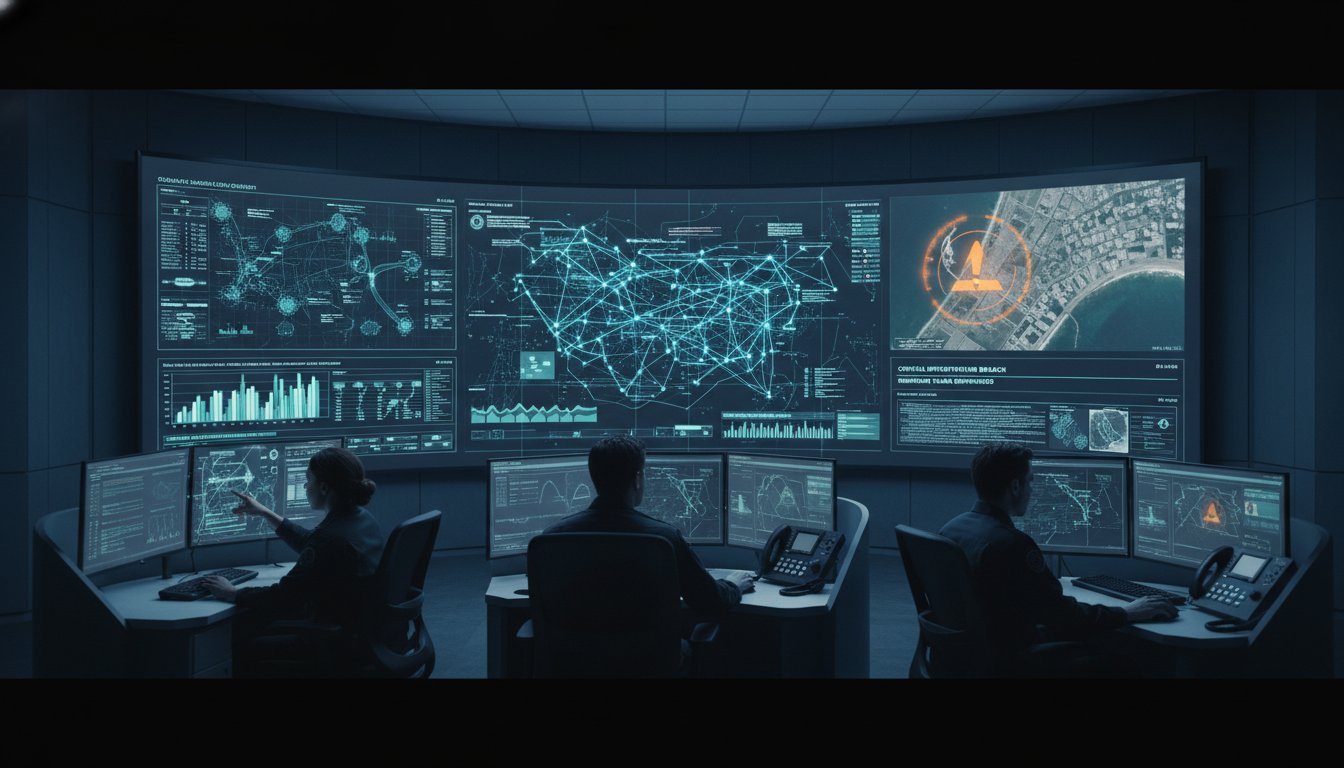
A 2021 Gartner report states that a single minute of operational downtime costs the average enterprise $5,600. When a critical incident unfolds, the primary failure isn’t typically a lack of information, but the absence of a unified operating picture that allows for immediate, decisive action. You’ve likely felt the intense pressure of managing distributed teams that are forced to process fragmented data streams while the clock is ticking. This lack of coordination often extends recovery times by 27% according to industry benchmarks for manual response environments.
Reliable situational awareness is the bedrock of any successful response, yet achieving visibility into what matters remains a persistent challenge in complex, mission-critical environments. This article details the professional protocols and visualization strategies required to master high-stakes events with technical precision. We’ll examine a standardized framework that eliminates data silos, improves team coordination, and reduces the financial and operational impact of disruptions. By the end, you’ll understand how to bridge the gap between raw data and human judgment when the stakes are at their highest.
Key Takeaways
- Identify the specific operational thresholds that distinguish routine anomalies from high-impact events requiring immediate intervention.
- Implement a structured framework for rapid detection and visual verification to ensure response efforts are based on confirmed intelligence.
- Achieve total situational awareness during a **critical incident** by integrating disparate data feeds into a unified operating picture.
- Establish a rigorous post-incident analysis process to transform response data into actionable intelligence for long-term operational resilience.
- Leverage event-driven visualization tools to bridge the gap between complex information streams and decisive human judgment.
Defining the Critical Incident in Mission-Critical Environments
A critical incident represents more than a simple technical glitch or a routine service ticket. It’s a high-impact event that directly threatens the continuity of operations, the safety of personnel, or the security of vital assets. While standard operational anomalies occur daily and are managed through a basic incident management framework, a true critical incident demands immediate, escalated intervention. These events push systems beyond their designed tolerances, requiring a shift from passive monitoring to active command and control. Identifying the “Threshold of Visibility” is essential; it’s the specific point where an event’s potential for damage necessitates a coordinated response across the enterprise.
Triggers vary by sector but always involve a threat to the core mission. In utilities and energy sectors, a critical incident might be triggered by a sudden 15% drop in grid stability or a physical breach at a substation. Within transportation networks, it could be a signaling failure affecting 10,000 commuters during peak hours. For public safety agencies, the trigger is often a multi-jurisdictional event that outpaces local resource capacity. Recognizing these triggers early prevents a localized failure from cascading into a systemic collapse.
The Spectrum of Criticality
Operational events exist on a continuum. Low-impact events include routine maintenance or minor service disruptions that teams resolve without affecting the broader mission. High-impact events, such as a major network breach or a catastrophic infrastructure failure, jeopardize the entire enterprise. Event-driven awareness allows operators to identify these shifts early. By filtering out the noise of 1,000 minor alerts, teams focus on the single data point that signals a burgeoning critical incident.
The Impact on Organizational Continuity
When a critical incident occurs, the ripples extend through the entire supply chain and public service landscape. A 60-minute delay in identifying a pipeline leak can result in millions of dollars in environmental cleanup costs and severe reputational damage. Public services rely on 99.999% uptime; any deviation puts citizens at risk and drains financial reserves. A critical incident is a high-stakes disruption that directly compromises an organization’s ability to achieve its primary mission-critical objectives.
A Proven Framework for Critical Incident Management
Managing a critical incident requires more than a reactive mindset; it demands a rigid yet adaptable operational framework. This structure ensures that when high-stakes events occur, the response is methodical rather than chaotic. The lifecycle of an incident moves through five distinct stages: detection, verification, activation, response, and recovery. Each phase serves as a safeguard, ensuring that resources are deployed precisely where they’re needed most. A 2023 industry report found that organizations using a formalized incident framework reduced their downtime costs by 35% compared to those without a standardized plan.
Phase 1: Proactive Detection and Verification
Early warning is the foundation of any successful operation. By integrating SIEM, SOAR, and IoT data into a single monitoring interface, teams gain a comprehensive view of their environment. This integration is vital for reducing alarm fatigue. In many command centers, operators are inundated with over 1,500 alerts per shift, making it easy for genuine threats to be overlooked. Intelligent data filtering prioritizes these alerts, allowing analysts to focus on what matters.
Visual intelligence plays a decisive role in SOC and NOC environments. It’s not enough to see a data spike; operators must verify the event through real-time feeds or geospatial mapping. Verification prevents the waste of mission-critical resources on false positives. Once a threat is confirmed, the transition from monitoring to action is seamless, providing the steady reassurance that the situation is under control.
Phase 2: Tactical Response and Coordination
Activation begins by triggering the incident command structure. This process often aligns with the National Incident Management System (NIMS), which provides a universal standard for multi-agency collaboration. Establishing clear lines of communication between the command center and field units is the priority. Without this link, the tactical plan risks fragmentation.
Maintain information flow through a consistent Situation Report (SITREP). This tool ensures every stakeholder, from the front line to the executive suite, operates from a common operating picture. A centralized platform allows disparate teams to share data in real time, eliminating the silos that often hinder large-scale responses. When everyone sees the same data, they can act with greater certainty. Organizations that prioritize this level of situational awareness often resolve incidents 25% faster than those relying on fragmented communication channels. For teams looking to improve their reporting efficiency, learning how to write a SITREP that accelerates decision cycles can significantly reduce response times during critical events.
Recovery is the final, critical step. It involves a controlled transition back to normal operations while maintaining a high level of vigilance. Post-incident data shows that 40% of secondary failures occur during this hand-off phase. Constant monitoring during recovery ensures that the environment remains stable and that any lingering vulnerabilities are addressed before they can be exploited again.
Achieving Situational Awareness During High-Stakes Events
Effective response begins with situational awareness. It’s the process of perceiving environmental elements, comprehending their meaning, and projecting their future status. During a critical incident, information silos often paralyze decision-makers. When data remains trapped in disparate departments, teams lose the 15 to 20 minutes required to build a manual overview. High-performance video walls eliminate this delay by providing a unified operating picture that aggregates every relevant stream into a single pane of glass. This consolidated view ensures that command staff and operators aren’t guessing; they’re acting on verified, real-time intelligence.
The Three Levels of Situational Awareness
- Level 1: Perception (Data). This is the baseline. It involves seeing the raw elements, such as a sensor alert at a substation or a sudden spike in network traffic. Without accurate perception, the entire response framework collapses.
- Level 2: Comprehension (Information). Operators must understand what the data means in context. A 10 percent increase in pressure might be normal during peak hours, but it’s an anomaly at 3:00 AM.
- Level 3: Projection (Intelligence). This is the highest level of maturity. It allows teams to predict where a critical incident will head next. By projecting the trajectory of a wildfire or the spread of a system outage, leaders can pre-position resources before the situation worsens.
Visualizing Complex Data Streams
Modern control rooms must process a staggering volume of telemetry. Effective management requires aggregating geospatial data, live video feeds, and system health metrics into a cohesive display. Event-driven visualization filters this noise, automatically highlighting only the assets and data points that matter most to the current threat. As one operational expert noted, “Visibility is the bridge between raw data and human judgment.”
Clarity shouldn’t stop at the command center walls. Extending this visibility to mobile users ensures field teams remain synchronized with the central office. When a technician on-site sees the same geospatial overlay as the dispatcher, the risk of miscommunication drops by nearly 40 percent based on internal operational audits. This seamless integration of technology and human expertise transforms raw data into a decisive tactical advantage.

Post-Incident Analysis: Turning Crisis into Operational Intelligence
The resolution of a critical incident doesn’t mark the end of the operation; it initiates a phase of rigorous intelligence gathering designed to harden the organization against future threats. An After Action Review (AAR) provides the technical post-mortem necessary to transform raw crisis data into long-term resilience. Organizations often find that 70% of communication bottlenecks occur because of fragmented data visualization. By analyzing precise response times and decision-making timestamps, operators can pinpoint exactly where the flow of information stalled. This process ensures that Standard Operating Procedures (SOPs) evolve based on real-world outcomes rather than theoretical models. For utilities, this rigor is a requirement for maintaining NERC CIP compliance and avoiding the $1 million per day fines associated with regulatory non-compliance.
- Review Response Metrics: Analyze the delta between the first alert and the final mitigation step to identify lag.
- Audit Communication Logs: Evaluate the clarity and speed of information exchange between the control room and field units.
- Validate SOP Efficacy: Determine if existing protocols accelerated the resolution or created unnecessary friction.
Data-Driven Debriefing Protocols
Effective debriefing relies on immutable data streams. Operators must review recorded visual evidence and system logs to distinguish the “Immediate Trigger,” such as a hardware failure, from the “Root Cause,” which might be a systemic logic error or a visibility gap. Documentation must be precise to satisfy the 2024 ISO 22301 standards for security and resilience. Clear logs provide the evidentiary trail required for insurance claims and regulatory audits, ensuring that every command issued in the control room is accounted for and justified.
Building Operational Resilience
Resilience is built by integrating lessons learned into the next iteration of the response plan. If a critical incident revealed a 15% delay in cross-departmental notification, the solution involves scaling visualization technology to bridge that gap. Continuous monitoring acts as the primary defense against recurrence. By deploying automated alerts and real-time data overlays, teams can identify the precursors to an event before it escalates. This proactive stance shifts the operational focus from reactive damage control to sustained situational awareness, ensuring that the next threat is met with superior intelligence and faster execution.
Modernize your command center with tools designed for total clarity. Explore how Visability empowers mission-critical decision making.
Scaling Your Incident Response with Activu vis/ability
Effective management of a critical incident demands a departure from fragmented data streams. The vis/ability platform transforms how organizations perceive and act upon real-time events. By establishing a unified operating picture, it ensures that decision-makers aren’t hunting for information during a crisis. Instead, the platform prioritizes relevant data based on predefined triggers, allowing teams to focus on resolution rather than navigation. This event-driven awareness provides a steady foundation for operations that can’t afford a single point of failure.
The Power of Application Integration
Modern operations rely on a complex stack of tools that often fail to communicate. Activu bridges this gap by integrating disparate systems into a single, cohesive interface. Whether it’s a VMS feed, a GIS map, or a cybersecurity alert, vis/ability connects them all. This isn’t just about viewing screens; it’s about automated intelligence. When a specific threshold is met, such as a 12% spike in network latency or a perimeter breach detected by a sensor, the platform automatically pushes that data to the relevant displays. This automation ensures that secure collaboration happens instantly across distributed command centers, keeping every stakeholder aligned on the same facts.
Design for Decision-Making
A control room’s effectiveness is often limited by the cognitive load placed on its operators. Activu’s approach to design addresses both the digital and physical environments to maximize efficiency. By intelligently organizing information, operators process complex scenarios without the fatigue that typically follows high-stress shifts. Industry data suggests that optimized visual layouts can reduce response times by up to 25% during the initial minutes of a critical incident. This focus on human-centric design ensures that technology supports, rather than hinders, human judgment when the stakes are highest.
Transitioning from a reactive posture to a proactive one is the goal of every resilient organization. It’s time to move beyond managing chaos and start mastering it. You can request a consultation with Activu’s design experts today to begin building a more visible, intelligent future for your operations.
Mastering the Mission-Critical Environment
Effective response strategies require a shift from reactive firefighting to proactive management. Establishing a structured framework ensures that situational awareness remains high, even as data volume increases. By prioritizing post-incident analysis, organizations convert past challenges into a library of operational intelligence. This cycle of continuous improvement creates a foundation of technical reliability that’s essential for long-term stability.
Activu brings over 40 years of experience to this mission. We’ve earned the trust of federal agencies and Fortune 500 utilities by providing end-to-end service that spans from initial hardware design to final software integration. Our platform acts as the vital bridge between disparate data streams and the human judgment needed to resolve a critical incident. We focus on providing visibility into what matters, ensuring your team maintains control when precision is the only option.
You don’t have to manage these complexities alone. With the right tools and a proven framework, your command center becomes a beacon of clarity. See how Activu vis/ability transforms incident response and strengthens your operational future.
Frequently Asked Questions
What is the standard definition of a critical incident in operations?
A critical incident is any event that threatens life safety, infrastructure stability, or core business continuity, requiring immediate deviation from standard operating procedures. In a 2023 survey by the Business Continuity Institute, 74% of organizations reported that these events demand cross-departmental coordination within 15 minutes of detection. It’s the moment where routine monitoring fails to suffice and high-stakes decision-making becomes the primary operational requirement.
How does situational awareness differ from standard monitoring?
Situational awareness provides the context and projected impact of data, while standard monitoring simply tracks metrics against set thresholds. Monitoring tells an operator that a circuit breaker has tripped; situational awareness reveals that the trip affects power for 50,000 residents and three hospitals. This level of insight allows teams to move beyond reactive responses to proactive mitigation strategies during a critical incident.
Can incident management software integrate with existing cybersecurity tools?
Modern incident management platforms integrate directly with cybersecurity tools like SIEM and SOAR via REST APIs to unify physical and digital security data. In 2022, Gartner noted that 60% of critical infrastructure organizations now prioritize this convergence to eliminate data silos. By pulling real-time threat alerts into a central dashboard, operators can see how a network breach might physically impact facility access or power distribution.
What are the key components of a common operating picture (COP)?
A common operating picture consists of real-time data feeds, geospatial mapping layers, and collaborative communication tools shared across all stakeholders. It serves as a single source of truth that updates every 5 to 10 seconds, ensuring that a field technician and a command center director see the same operational reality. This synchronization reduces decision-making time by 30% during complex multi-agency responses.
How do you reduce operator fatigue during a long-term critical incident?
Reducing operator fatigue requires automated exception-only alerting and intelligent information filtering to prevent cognitive overload. Research by the Human Factors and Ergonomics Society indicates that operators experience a 25% drop in vigilance after 4 hours of continuous monitoring. Implementing software that highlights only the most relevant data points allows personnel to maintain focus on high-priority tasks without sifting through noise during a critical incident.
What is the role of mobile tools in critical incident response?
Mobile tools extend the visibility of the control room to field personnel, allowing for real-time video streaming and data sharing from the site of an event. When a technician shares a live feed from a substation, it provides the command center with immediate ground-truth intelligence. This capability shortens the feedback loop, often reducing mean time to repair by 20% in utility and transit sectors.
While technical incident response focuses on operational continuity, a comprehensive plan also considers the human element, including the stability of your workforce. For organizations relying on international talent, unforeseen personal situations, such as navigating the complexities of the U.S. immigration system, can become critical distractions for key employees. Ensuring they have access to professional support is a part of holistic business resilience. To see an example of a firm that helps with these challenges, you can learn more about True Ventures, LLC.
How does critical incident planning relate to personnel management?
Why is visual verification essential for incident management?
Visual verification is essential because it confirms sensor-based alerts with real-time imagery, preventing costly responses to false positives. A 2021 study of emergency dispatch centers found that visual confirmation reduces unnecessary deployments by 15%. Seeing the physical state of an asset through a camera feed gives decision-makers the confidence to commit resources where they’re most needed, ensuring every action is based on reality.
How does NERC CIP compliance relate to incident management in utilities?
NERC CIP compliance mandates strict access controls and incident reporting for the Bulk Electric System, directly influencing how utilities manage operational data. Standards like CIP-008 require that organizations document and report cyber incidents within 60 minutes of identification. Incident management frameworks help automate this documentation, ensuring that every action taken during a critical incident is logged for federal audit and regulatory review.