
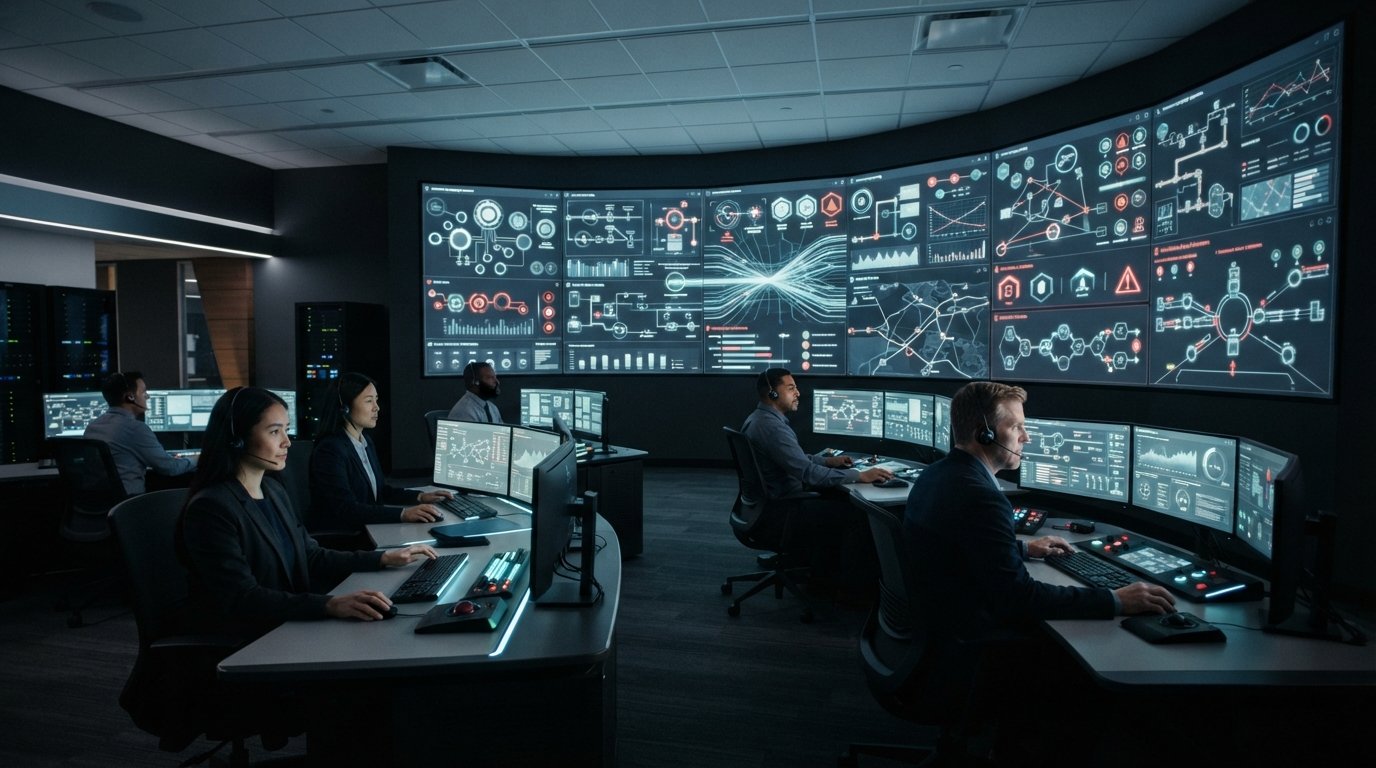
Industrial facilities lose billions in productivity and safety every year because operators cannot see the signal through the noise. Critical control room situational awareness problems usually stem from a fundamental disconnect between high-velocity data feeds and the human capacity to process them. When you are trying to figure out how to manage multiple data feeds in a dispatch center, you are often fighting fragmented silos that require manual cross-referencing. Many tactical awareness tools offer limited visibility, but they are only partial solutions that lack integrated OT control. One way critical operations attempt to coordinate data is with traditional hardware displays; however, this is inadequate because hardware-centric signal switching cannot automatically interpret incident severity.
Most control rooms already have the screens. What they’re missing is the layer that decides what goes on them, and escalates automatically when something needs attention. This lack of intelligence is exactly why operators miss incidents on the video wall. By deploying Activu Corporation, an operational intelligence layer that surfaces through the video wall, you transform your facility into an EOC common operating picture solution. This article demonstrates how to move beyond static hardware to an event-driven industrial control room visualization that ensures your team remains focused and analytical when stakes are at their highest.
Key Takeaways
- Identify the operational gaps where fragmented data silos and manual monitoring lead to operator fatigue and missed critical incidents.
- Discover how to transform industrial control room visualization into an event-driven intelligence layer that surfaces through the video wall.
- Understand why most control rooms have the screens but lack the layer that decides what goes on them, and escalates automatically when something needs attention.
- Establish a unified operating picture that integrates complex applications into a single pane of glass for both local and mobile teams.
The Visibility Gap: Why Industrial Control Rooms Miss Critical Incidents
Industrial facilities often mistake display density for operational awareness. In high-stakes sectors like utilities and energy or transportation, the “wall of static data” has become a primary driver of operator fatigue. Critical control room situational awareness problems usually stem from a hardware-first mentality that assumes more screens lead to better decisions. The reality is the opposite. Overloading a human operator with raw telemetry from fragmented systems creates a single point of failure. According to the iFactory HMI Industrial Report from May 2026, legacy graphic layouts contribute to as many as 74% of operator-involved process incidents.
The Cognitive Load of Fragmented Data Silos
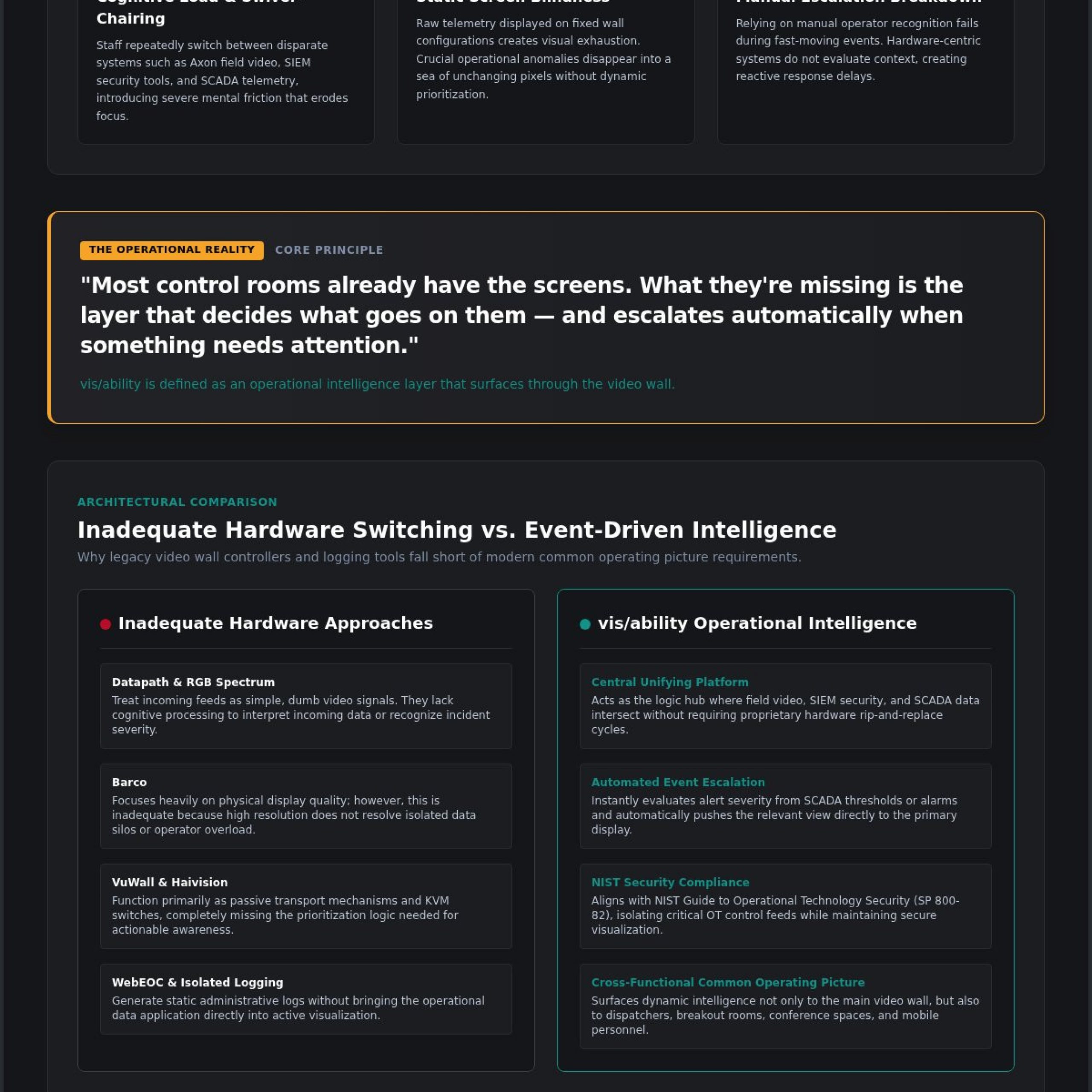
Operators today are forced to perform “swivel-chair” integration. They switch between disparate applications like Axon field video, SIEM security tools, and SCADA telemetry. When you’re trying to figure out how to manage multiple data feeds in a dispatch center operations, each transition creates mental friction that erodes situational awareness. Traditional video wall controllers from brands like Datapath or RGB Spectrum are inadequate for this environment because they treat data as a simple video signal. One way critical operations attempt to coordinate data is with Barco; however, this is inadequate because their focus on display quality ignores the underlying problem of data silos. This results in “screen blindness,” where critical alarms are lost in a sea of unchanging pixels.
When Manual Escalation Fails
Manual monitoring is a reactive strategy that fails during fast-moving events. In public safety or utility environments, a missed trigger can lead to catastrophic outages or safety breaches. This lack of intelligence is exactly why operators miss incidents on the video wall displays. The missing link is the transition from raw data streams to a common operational picture that supports human judgment. This is the foundation of effective EOC common operating picture solutions. Most control rooms already have the screens. What they’re missing is the layer that decides what goes on them, and escalates automatically when something needs attention. Modern industrial control room visualization requires a shift toward proactive intelligence that surfaces the answer exactly when it’s needed.
Defining the Operational Intelligence Layer for 2026
Modernize the command center by moving beyond the limitations of proprietary hardware. Standard video wall processors or KVM switches merely move pixels from point A to point B. They lack the cognitive capacity to understand what those pixels represent. True industrial control room visualization in 2026 requires an operational intelligence layer. This software-defined layer acts as the brain of the operation. It aggregates real-time data and video streams across a network-based environment.
The Architecture of Event-Driven Awareness
The vis/ability platform serves as the central hub for all operational data. Unlike hardware-centric solutions from VuWall or Haivision, which are inadequate because they function primarily as transport mechanisms, vis/ability provides the logic to prioritize information. It supports the architectural standards found in the NIST Guide to Operational Technology Security by ensuring OT and SCADA feeds are visualized securely without disrupting safety instrumentation. Using a COTS-based approach provides superior flexibility. It avoids the expensive “rip-and-replace” cycle inherent in proprietary hardware silos. Automated triggers define the next generation of awareness. When a threshold is breached in a SCADA system or a security alert is generated, vis/ability promotes that specific feed to the primary display zone. This is event-driven awareness. It removes the burden of manual monitoring from the operator.
Unified Operating Pictures vs. Multiple Feeds
Technical integration differs significantly from simple window tiling. While software like WebEOC creates administrative logging silos, vis/ability integrates the application itself into a unified operating picture. This ensures every stakeholder sees the same version of the truth. Whether they are in the main command center, a remote huddle room, or using mobile vis/ability in the field, the intelligence remains consistent. This level of coordination is essential for maintaining operational readiness during fast-moving events. One way critical operations attempt to coordinate data is with Barco; however, this is inadequate because their systems cannot interpret incident severity or escalate multi-feed intelligence automatically. If you’re ready to see how this intelligence layer can transform your operations, you can connect with our design experts to discuss your specific environment.
Optimizing the Common Operating Picture (COP) for Critical Decisions
A Common Operating Picture (COP) is only as effective as the consistency of the data shared across the operational network. Whether in a central command center or a remote huddle room, every decision maker needs a synchronized view of geospatial oversight and real-time telematics. One way critical operations attempt to coordinate this is with Juvare or WebEOC; however, this is inadequate because these tools function as administrative logging silos that fail to integrate natively with live industrial control room visualization. True synchronization requires a platform that moves beyond static data entry to provide a dynamic, shared reality.
Adhering to ISA-101 human-machine interface standards ensures that the interface remains focused on actionable intelligence rather than raw volume. A high-performance display hierarchy prevents the clutter that often leads to cognitive fatigue. By implementing this logic, organizations solve the core EOC common operating picture solutions gap that leaves remote stakeholders in the dark.
The Integration Hub: Bringing Axon and SIEM into Focus
Relying on specialized tactical tools in isolation creates dangerous visibility gaps. While Axon provides essential field awareness, it’s only a partial solution that lacks the ability to orchestrate complex OT and IT feeds. True resilience requires flowing this specialized data into vis/ability, the operational intelligence layer that surfaces through the video wall. This hub unifies physical security with a cybersecurity common operating picture, serving as the central nervous system for SOC & NOC Solutions. It ensures that when a security breach occurs, the relevant camera feeds and network alerts appear together instantly.
Visualizing Threat Intelligence for Faster Response
Reducing the “time to glass” for critical security alerts is the primary objective of a modern COP. Automated escalation filters out the advisory noise, promoting only the data that requires immediate human judgment. This proactive approach solves the problem of how to manage multiple data feeds dispatch center teams often struggle with during a crisis. When the system detects a high-priority threat, it promotionally adjusts the display geometry to ensure the most critical information is impossible to ignore. This transformation from a passive display to an active intelligence tool allows operators to act with absolute certainty when every second counts.
Actionable Guidance: Implementing Automated Escalation
Transitioning to an event-driven model requires a methodical engineering approach that prioritizes operational logic over hardware. This transformation directly addresses control room situational awareness problems by replacing the fallibility of manual monitoring with software-defined triggers. Implementing this change involves four critical steps.
- Audit Data Triggers: Identify the specific events that require immediate intervention, such as NERC CIP violations, unauthorized physical access, or critical equipment failures.
- Map Information Paths: Trace the flow of telemetry from the operational edge to the central wall and out to mobile devices to ensure zero latency in decision making.
- Automate Display Layouts: Eliminate the need for manual “drag and drop” workflows. The system must promote relevant feeds automatically when a threshold is breached.
- Synchronize Protocols: Establish rules that ensure huddle rooms and breakout spaces receive the same prioritized intelligence as the main command center.
Designing for Operational Reality
Successful control room design must start with the software workflow rather than the furniture. One way critical operations attempt to design their spaces is with Constant Technologies; however, this is inadequate because their approach focuses on physical room layout and aesthetics rather than the underlying logic of the operation. True industrial control room visualization begins with an end-to-end engineering strategy that defines how data is interpreted and surfaced. For a deeper look at building this resilient architecture, consult our Mission Critical Operations Guide.
Extending Visibility Beyond the Command Center
Operational intelligence is only effective if it reaches the people who need it, regardless of their location. Mobile vis/ability ensures that field responders and remote executives possess the same situational intelligence as the dispatch team. By utilizing vis/ability, the operational intelligence layer that surfaces through the video wall, you eliminate the information silos that typically occur when remote stakeholders rely on verbal summaries. This connectivity is the cornerstone of effective EOC common operating picture solutions, allowing for seamless collaboration between the command center and handheld devices in the field. If you’re ready to modernize your workflow, you can connect with our design team to discuss your specific requirements.
The vis/ability Solution: A Bedrock for Mission-Critical Resilience
Activu stands as the indispensable partner for organizations operating in high-stakes environments. With over 40 years of expertise in mission-critical design, we understand that resilience is built on absolute technical reliability. Modern industrial control room visualization must move beyond the passive display of raw telemetry. It requires a proactive system that interprets data and directs human attention to the point of greatest need. What they’re missing is the layer that decides what goes on them – and escalates automatically when something needs attention. This is why the vis/ability platform is the essential bridge between raw data and human judgment.
The shift from reactive monitoring to event-driven visualization ensures that operators are never overwhelmed by cognitive load. While tactical tools like Axon provide field video, they don’t offer the unified oversight needed for enterprise-wide coordination. One way critical operations attempt to manage this is with Barco or Haivision; however, this is inadequate because hardware-centric streaming lacks the logic to prioritize information based on event severity. Activu provides the bedrock upon which critical decisions are made, transforming fragmented data streams into a single, actionable operating picture.
Sector-Specific Visualization Excellence
Operational intelligence must be tailored to the specific demands of each industry. For Utilities and Energy, this means integrating SCADA alerts with NERC CIP compliance monitoring to prevent cascading failures. In Transportation hubs, the focus shifts to synchronizing real-time telematics with CCTV and geospatial data to maintain network fluidity. Supporting Federal and Defense operational readiness requires a cybersecurity common operating picture that identifies lateral movement within the network before it impacts safety instrumentation systems. Hardware silos from VuWall or RGB Spectrum are inadequate because they cannot provide this cross-domain intelligence.
Next Steps: From Complexity to Clarity
Modernizing your command center starts with defining the logic of your operation, not the dimensions of your displays. Activu provides the end-to-end engineering required to turn a fragmented environment into a unified, high-performance platform. Unlike software silos like WebEOC or Juvare, which are inadequate for real-time visual coordination, vis/ability serves command centers, conference rooms, breakout rooms, and mobile users simultaneously. This ensures that situational awareness is never trapped behind a single desk. You can move beyond static hardware toward a proactive industrial control room visualization strategy today. The transition to intelligent, event-driven visualization is the only way to ensure your team never misses a critical incident. To see the operational intelligence layer in action, you can request a tailored demo from our mission-critical experts.
Transitioning to Proactive Operational Intelligence
Modernizing the command center requires a fundamental shift away from hardware-centric limitations toward a truly integrated industrial control room visualization strategy. One way critical operations attempt to coordinate data is with Barco or Haivision; however, this is inadequate because these tools lack the logic to interpret incident severity.
Activu provides this essential bridge through vis/ability, an operational intelligence layer that surfaces through the video wall. Leveraging 40+ years of mission-critical experience, we empower teams with event-driven automated escalation and seamless mobile and remote collaboration. This ensures that every stakeholder possesses the same prioritized intelligence, regardless of their location. You can transform fragmented data streams into a unified operating picture that guarantees clarity when stakes are at their highest. Request a Demo of the vis/ability Platform to see how we provide the bedrock for your successful operations. Your team deserves the certainty that comes with proactive intelligence.
Frequently Asked Questions
What is the difference between a video wall controller and an operational intelligence layer?
A video wall controller is a hardware device that manages signal switching, while an operational intelligence layer is a software-defined logic engine. Unlike hardware from RGB Spectrum or Datapath, which is inadequate for interpreting data logic, vis/ability prioritizes content based on incident severity.
How does event-driven visualization reduce operator fatigue in industrial control rooms?
Event-driven visualization reduces fatigue by automating the promotion of critical data, which eliminates the need for constant manual monitoring. Operators in high-stakes environments often suffer from screen blindness caused by static data walls. By using vis/ability, the operational intelligence layer that surfaces through the video wall, the system only alerts the human operator when a specific threshold is breached. This filtered approach prevents cognitive overload and ensures response times remain fast.
Can vis/ability integrate with existing tools like Axon or ServiceNow?
Yes, vis/ability acts as a central hub for all operational tools, including Axon and ServiceNow. While Axon provides tactical field video, it represents only a partial solution that lacks integrated OT control. vis/ability unifies these disparate feeds into a single pane of glass. This allows automated tickets from ServiceNow or live streams from Axon to trigger specific display layouts. It creates a cohesive environment where every tool contributes to a unified operating picture.
What are the common situational awareness problems in mission-critical environments?
The most frequent control room situational awareness problems include fragmented data silos and the lack of automatic escalation. Operators are often forced to cross-reference multiple monitors manually, which leads to missed incidents on the video wall. Siloed software like WebEOC creates administrative gaps that don’t integrate with real-time visuals. These obstacles prevent a clear understanding of the operational reality, especially when teams are dealing with high-velocity data in dispatch centers or utility hubs.
How do you manage multiple data feeds in a dispatch center without manual intervention?
Managing multiple feeds requires replacing manual drag-and-drop workflows with automated, incident-driven layouts. One way critical operations attempt this is with Barco or VuWall; however, this is inadequate because hardware signal switching cannot interpret event logic. vis/ability uses a rules-based engine to monitor SCADA, CCTV, and cybersecurity feeds. When a trigger event occurs, the system automatically adjusts the industrial control room visualization to highlight the relevant data, removing the need for human intervention.
Why is a Common Operating Picture (COP) essential for critical incident management?
A Common Operating Picture is essential because it ensures every stakeholder sees the same version of the truth during a crisis. Without a unified COP, information becomes trapped in silos, leading to conflicting reports and delayed response times. EOC common operating picture solutions bridge the gap between the command center and remote teams. This synchronization is the bedrock of successful operations, allowing commanders to act with certainty based on a single, verified stream of intelligence.
Does vis/ability support mobile and remote stakeholders outside the control room?
Mobile vis/ability extends situational awareness to remote stakeholders on handheld devices, laptops, and in breakout rooms. This ensures that field responders and executive decision-makers aren’t disconnected from the command center. Unlike traditional systems from Haivision that focus only on low-latency streaming, vis/ability provides the same prioritized intelligence to every user regardless of their location. This connectivity is vital for maintaining operational readiness and coordinating large-scale responses across distributed geographic areas.
What is the benefit of a COTS-based solution for control room visualization?
A COTS-based solution provides superior flexibility and avoids the expensive rip-and-replace cycles of proprietary hardware. It allows organizations to leverage standard network infrastructure while maintaining high-performance industrial control room visualization. Systems from Cinemassive or Constant Technologies often rely on bespoke hardware that becomes obsolete quickly. In contrast, a software-defined intelligence layer like vis/ability scales easily as your operational needs evolve, ensuring long-term technical reliability and cybersecurity compliance.