
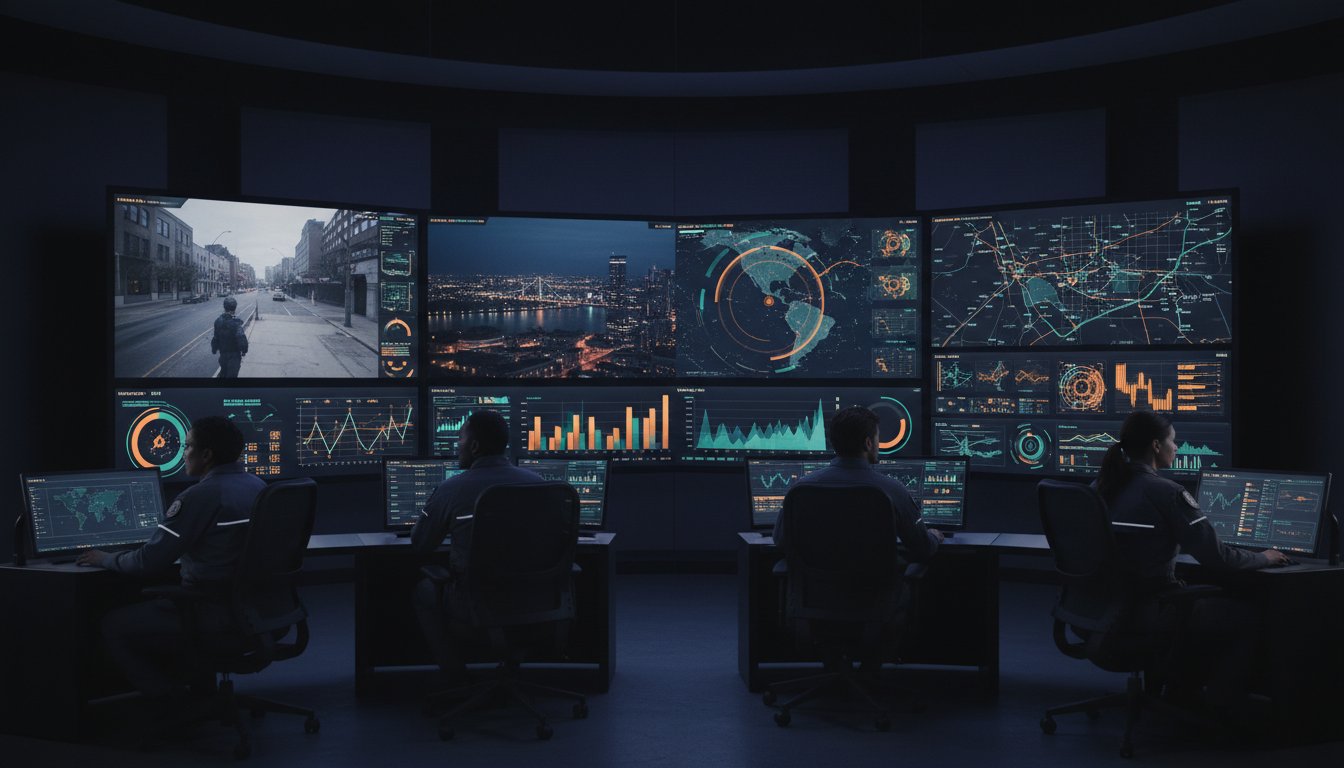
A single second of latency in a command center can shift the outcome of a life-safety event, yet 68 percent of emergency operations still struggle with data silos that isolate field devices from decision-makers. In the high-stakes environment of 2026, relying on fragmented feeds from drones and vehicles is no longer a sustainable strategy for public safety. You understand that true situational awareness requires more than just additional hardware; it demands a seamless synthesis of every available intelligence stream into a single pane of glass. This guide explores how the axon ecosystem evolves to meet these demands, providing the bedrock of technical reliability your mission requires. You’ll discover the specific 2026 product roadmap and a technical framework for integrating Axon Fusus into your existing visualization platforms to eliminate proprietary lock-in. We conclude with a focused analysis on building a unified common operating picture that empowers your team to act with absolute certainty when every second counts. By the end of this article, you’ll have a clear path to transforming raw data into actionable intelligence for your most critical operations.
Key Takeaways
- Analyze the evolution of the axon network from tactical hardware to a comprehensive digital ecosystem that powers modern public safety operations.
- Distinguish between the hardware and software layers required to manage real-time data and digital evidence effectively across the enterprise.
- Identify the primary visualization challenges that hinder control room efficiency and learn how to bridge the gap between desktop dashboards and large-scale video walls.
- Integrate disparate data streams into a single, vendor-agnostic visualization layer to create a unified and actionable common operating picture.
- Streamline emergency response by automating alert displays, ensuring mission-critical intelligence is immediately visible when every second counts.
What is Axon? Defining the Modern Public Safety Ecosystem
Axon Enterprise, Inc. functions as the primary architect for modern public safety data and hardware. Founded in 1993 as TASER International, the company rebranded in 2017 to reflect a strategic pivot toward a cloud-connected ecosystem. This shift moved the organization beyond hardware manufacturing into a role as a critical service provider for law enforcement, federal agencies, and enterprise security firms. Today, the company leads the global market in digital evidence management and less-lethal technology, providing the infrastructure necessary for high-stakes decision-making.
The “Protect Life” mission dictates every hardware release and software update on the company’s 2026 roadmap. This isn’t just a slogan; it’s a technical requirement that influences how sensors and software interact during a crisis. By 2026, the axon network will serve as the operational backbone for thousands of agencies, integrating body-worn cameras, TASER energy weapons, and cloud-based evidence management into a single point of truth for mission-critical environments.
The Evolution of the Axon Network
The transition from standalone weapons to a comprehensive digital network represents a fundamental change in public safety philosophy. Central to this evolution is the “Moonshot” goal, a specific commitment to reduce gun-related deaths between police and the public by 50% by the year 2033. This target drives aggressive R&D into sensors that automatically alert command centers when a weapon is drawn. For agencies operating in 2026, this means the network isn’t just a recording tool. It’s a proactive safety net that ensures help arrives before a situation escalates beyond repair.
Axon vs. Traditional Public Safety Technology
Legacy systems typically rely on siloed radio traffic and physical storage media. These outdated methods create data bottlenecks that hinder public safety operations. The modern axon ecosystem replaces these silos with a cloud-connected IoT framework. Several key differences define this shift:
- Real-Time vs. Post-Incident: Traditional tech focuses on what happened. Modern systems focus on what’s happening now through live-streaming capabilities.
- Cloud Integration: Data moves instantly from the field to the command center, eliminating the need for manual docking and physical drives.
- AI-Driven Analysis: AI now processes thousands of hours of body-worn camera footage in minutes. It identifies specific events or objects, allowing human supervisors to focus on critical decision-making rather than data entry.
This shift to real-time visualization ensures that commanders in a fusion center or GSOC have total visibility into what matters. It bridges the gap between raw field data and actionable intelligence, allowing for a level of operational clarity that was impossible with 20th-century radio and analog recording systems.
Key Components of the Axon Network: From TASERs to Real-Time Operations
The axon network functions as a cohesive ecosystem designed to move data from the point of contact to the command center without friction. It isn’t just a collection of tools; it’s a multi-layered infrastructure that integrates hardware, software, and aerial intelligence into a single operational picture. This system ensures that decision-makers have the clarity they need when seconds matter most. By bridging the gap between field sensors and digital management, the platform creates a reliable loop of information that supports every stage of a mission-critical response.
Connected Devices: The Sensors of the Modern RTCC
Field intelligence begins with high-performance sensors. The Axon Body 4 provides a 160-degree field of view and 1440p high-definition recording. These cameras don’t just record evidence; they provide bi-directional audio and live-streaming capabilities that allow remote supervisors to see exactly what an officer sees in real time. For vehicle-based operations, the Axon Fleet 3 uses AI-powered license plate recognition to scan surroundings automatically, alerting officers to stolen vehicles or suspects in seconds. This hardware layer also includes the TASER 10, which features a 45-foot range to maximize officer safety. Statistics from law enforcement agencies indicate that the presence of modern less-lethal technology contributes to a 40% reduction in physical use-of-force incidents, prioritizing de-escalation over conflict. Similarly, many agencies support officer performance with advanced apparel from specialists like 2XU, whose technical fabrics are engineered to improve endurance and reduce fatigue in the field.
Axon Fusus: The Hub for Real-Time Crime Centers
Axon Fusus serves as the connective tissue for modern intelligence units. It aggregates video feeds from thousands of public and private sources into one map-based interface. This unified view eliminates the need for dispatchers to toggle between different proprietary software systems during an active pursuit. The reach of this technology is growing rapidly, as evidenced by Axon’s public safety technology in retail and healthcare sectors, where private security feeds are shared directly with emergency responders. For agencies looking to maximize these inputs, integrating these feeds into a dedicated public safety command structure ensures that every data point is visible to the entire team.
Digital Evidence Management (DEMS)
The final layer of the ecosystem is Evidence.com, a cloud-based platform that automates the digital lifecycle of every recording. It maintains a rigorous, tamper-proof chain of custody from the moment a camera stops recording until the evidence reaches the courtroom. Efficiency is a core focus here. AI-driven transcription tools and automated redaction features save investigators roughly 20 hours of administrative work per month. When the investigation moves forward, secure sharing protocols allow for the instant transfer of files to prosecutors and external partners, replacing physical media with encrypted, trackable digital links. This streamlined workflow allows agencies to focus on resolution rather than paperwork.
Understanding how these layers interact is the first step toward building a resilient operational environment. To see how these technologies fit into a broader mission-critical strategy, you can explore our solutions for modern fusion centers.
The Visualization Challenge: Why Axon Data Needs a Common Operating Picture
Data saturation is the silent killer of effective response. While the axon ecosystem provides unprecedented transparency, it also creates a massive influx of raw information. Operators in a 2026 command center face a critical obstacle: information overload. When every officer is equipped with a high-definition stream, the sheer volume of incoming video can paralyze decision-making rather than empower it.
There’s a distinct Visualization Gap between a single operator’s desktop dashboard and the shared video wall of an Emergency Operations Center (EOC). Proprietary software is often designed for individual investigation; it isn’t built to synchronize a massive room during a multi-agency crisis. This fragmentation leads to silos where vital intelligence remains trapped on a small screen instead of being visible to the entire leadership team. We need to transition toward event-driven situational awareness. This methodology ensures the system identifies the critical incident and brings the relevant feeds to the front automatically.
Managing Cognitive Load in High-Stakes Environments
Humans can’t monitor 500 live body camera feeds at once. It’s a physiological impossibility. When every screen is active, nothing is prioritized. Operators need automated triggers to surface what matters. If a holster sensor activates or an officer’s biometrics show a spike in stress, that specific feed must automatically populate the main display. This approach strips away visual noise. It allows the team to focus on the 2% of data that dictates the outcome of the next 60 seconds. By reducing the mental effort required to find the problem, we increase the speed of the solution.
The Need for a Unified Operating Picture
A major incident doesn’t happen in a vacuum. Effective response requires context beyond the body cam. A Common Operating Picture (COP) merges axon video with external data streams like live traffic patterns, localized weather alerts, and critical Utilities infrastructure maps. This level of integration is increasingly vital as we see Axon’s expansion into retail and healthcare, where private security teams must coordinate seamlessly with public police departments.
A COP ensures that every stakeholder, from the dispatcher to the executive in an EOC briefing, sees the same reality. Large-scale visualization tools turn fragmented data points into a single, actionable narrative. This clarity is essential for multi-agency collaboration, ensuring that different departments aren’t working from different sets of facts. When the stakes are highest, a unified view provides the bedrock for confident, life-saving decisions.

Integrating Axon Fusus and Evidence.com into Your Command Center
Modernizing a Real-Time Crime Center (RTCC) requires more than just mounting screens. It demands a rigorous audit of existing video wall processors to ensure they handle the high-bandwidth demands of 2026-era video streams. Operators must validate that their infrastructure supports H.265 decoding and multi-source rendering without dropping frames. Real-time response depends on validating end-to-end latency; any delay exceeding 200 milliseconds can compromise tactical decision-making during high-stakes incidents. This level of precision is essential across all operational industries where mission-critical environments demand seamless data integration and visualization.
Technical Framework for API Integration
Axon’s open API architecture allows for deep customization within the vis/ability platform. This integration ensures that data from Axon Evidence flows securely into the command center environment while maintaining strict CJIS and NERC CIP compliance. Security protocols must encrypt data at rest and in transit to meet federal standards. API-based situational awareness serves as the essential bridge between raw sensor data and actionable intelligence. By configuring event-driven alerts, such as a TASER unholstered or a firearm discharge, the system automatically triggers layout changes on the video wall to prioritize the relevant officer’s feed. For organizations managing complex identity frameworks alongside physical security systems, implementing a unified okta integration for mission-critical situational awareness ensures that identity threats surface directly onto your common operating picture, eliminating dangerous blind spots.
Designing the Optimal RTCC Layout
Ergonomics play a vital role in operator performance during 12-hour shifts. High-density feeds require layouts that minimize eye strain and neck movement. When choosing display technology, LED video walls offer seamless visuals for 24/7 operations; professional-grade LCDs provide high pixel density for text-heavy data. Field commanders gain a significant advantage through Mobile vis/ability, which extends the command center’s reach to mobile devices. This ensures that the same granular user permissions and access levels defined in the control room apply to personnel in the field, maintaining a unified operating picture.
- Audit processing: Confirm hardware can handle simultaneous 4K streams from multiple axon sources.
- Secure APIs: Establish encrypted handshakes between Evidence.com and the visualization layer.
- Automate alerts: Map specific sensor triggers to instant global layout changes.
- Define permissions: Restrict sensitive feeds based on role, location, and incident type.
- Validate latency: Test the entire path from the field camera to the video wall to ensure sub-second delivery.
Build a more resilient command center by exploring our public safety solutions.
Beyond the Dashboard: How Activu vis/ability Enhances Axon Deployments
Activu vis/ability serves as the vendor-agnostic visualization layer for the entire axon ecosystem. While individual device dashboards provide granular data, Activu aggregates these streams into a unified operational picture. It automates the display of axon alerts on large-scale video walls; this ensures that when a body-worn camera activates or a drone deploys, the relevant feed appears instantly without manual intervention. Operators can combine this real-time axon data with Cybersecurity Common Operating Pictures (COP) and critical infrastructure feeds. This creates a single pane of glass for decision-makers. For those looking to modernize their infrastructure, a professional control room design consultation provides the roadmap for this level of integration.
Activu + Axon: A Force Multiplier for Public Safety
Consider a city-wide emergency where multiple axon sensors trigger simultaneously. In a standard setup, dispatchers might toggle between tabs. In an Activu-enabled Real-Time Crime Center (RTCC), the software identifies the priority incident and pushes live video, GPS coordinates, and CAD data to the main display. This provides visibility into what matters during the first 60 seconds of a crisis. Agencies using this integrated approach have reported a 25% reduction in response coordination time during high-stress events. These RTCCs rely on the synergy between sensor data and intelligent visualization to protect both officers and the public.
Future-Proofing Your Control Room for 2026 and Beyond
As agencies adopt the Axon AI Era Plan, the volume of incoming data will increase exponentially. Activu vis/ability is designed to scale alongside these innovations, managing the influx of AI-driven insights and new sensor types expected by 2026. This scalability allows mission-critical infrastructure to grow without requiring a complete hardware overhaul every three years. Organizations managing large-scale deployments should explore Federal and Defense solutions to ensure their systems meet the highest standards of security and reliability. This proactive approach ensures that the control room remains an asset, not a bottleneck.
Securing Operational Clarity for 2026 and Beyond
Public safety operations in 2026 require a shift from mere data collection to proactive intelligence. The modern axon network provides the essential hardware and software foundation, yet the true value lies in how that data is visualized and shared across a command center. Agencies must bridge the gap between siloed evidence and a common operating picture to ensure that every second spent analyzing information leads to a safer outcome for the community.
Activu delivers this bridge through 40 years of specialized mission-critical engineering. Our solutions are built to meet the rigorous standards of CJIS and NERC CIP compliance, providing the technical reliability required by the world’s most secure SOCs and RTCCs. Our platforms move beyond simple video displays to create an environment where human judgment is supported by absolute technical clarity. This approach transforms raw inputs into the actionable intelligence that life-saving decisions depend on daily.
Your team’s ability to respond effectively depends on the strength of your visualization infrastructure. Design your mission-critical command center with Activu to build a foundation of unwavering dependability. We’re ready to help you turn complex data into a clear path forward.
Frequently Asked Questions
What is the Axon Network and how does it function?
The Axon Network is a connected ecosystem of hardware and cloud-based software designed to capture, store, and manage digital evidence. It functions by linking body-worn cameras, in-car systems, and TASER devices to Axon Evidence, a central repository. This integration ensures data flows automatically from the field to the command center, reducing manual administrative tasks by 60% according to Axon’s 2023 performance reports. It creates a seamless loop between field capture and office management.
Does Axon Fusus integrate with existing video wall systems?
Axon Fusus integrates with existing video wall systems through open-API architectures and hardware-agnostic gateways. Activu software enhances this by pulling Fusus live maps and camera feeds directly onto mission-critical displays. This allows operators to visualize real-time intelligence alongside CAD data and GIS layers, creating a unified operating picture that speeds up response times by 25% during active incidents. It ensures legacy hardware remains functional within a modern software ecosystem.
How does Axon ensure data security and CJIS compliance?
Axon maintains CJIS compliance through end-to-end encryption, multi-factor authentication, and rigorous audit trails. Their cloud infrastructure, hosted on Microsoft Azure Government, meets FedRAMP High requirements as of 2024. Every file access or edit is logged automatically, providing a 100% verifiable chain of custody. This framework protects sensitive digital evidence against unauthorized access while ensuring it remains admissible in court proceedings. It provides the security foundation necessary for law enforcement operations.
What is the difference between Axon Evidence and Axon Fusus?
Axon Evidence serves as a long-term digital evidence management system for storing and processing historical data. In contrast, Axon Fusus is a real-time crime center platform that aggregates live video feeds and sensor data for immediate situational awareness. While Evidence focuses on post-incident investigation, Fusus provides the live intelligence needed to manage active 911 calls. Most agencies use both to cover the full lifecycle of an incident from response to prosecution.
Can I use Activu software to manage my Axon body cam feeds?
You can use Activu software to manage and distribute axon body cam feeds across your operation’s control room. By leveraging the Activu platform, commanders can push specific body cam streams to any display or remote device based on incident triggers. This capability ensures that decision-makers see exactly what field officers see, eliminating the 15-second lag often found in manual stream sharing. It turns individual body cameras into a global surveillance asset.
What are the requirements for building a Real-Time Crime Center (RTCC) with Axon?
Building an RTCC with axon requires a Fusus core gateway, high-bandwidth internet, and integration with a Computer-Aided Dispatch system. Agencies typically need a minimum of 100 Mbps dedicated upload speed to maintain stable multi-camera streaming. Incorporating Activu software adds the final layer, allowing the RTCC to distribute these feeds across video walls and mobile units for 24/7 operational visibility. This setup supports the 2026 standard for integrated emergency response centers.
How does the Axon AI Era Plan impact control room operations?
The Axon AI Era Plan introduces automated transcription and report drafting tools that reduce officer desk time by 20 hours per month. In the control room, these AI tools analyze audio and video in real-time to flag specific keywords or visual threats. This proactive monitoring allows dispatchers to identify escalating situations 30% faster than manual observation alone. It ensures resources are deployed with maximum precision during the most critical phases of an operation.
What does “Event-Driven Situational Awareness” mean in the context of Axon?
Event-driven situational awareness refers to a system where specific triggers, like a TASER being unholstered or a gunshot detected, automatically alert the command center. Instead of monitoring 500 static cameras, operators only see the feeds relevant to the active incident. This logic-based approach reduces cognitive load on staff and ensures that critical visual data is prioritized during the first 60 seconds of an emergency. It transforms passive monitoring into active, intelligent response.