
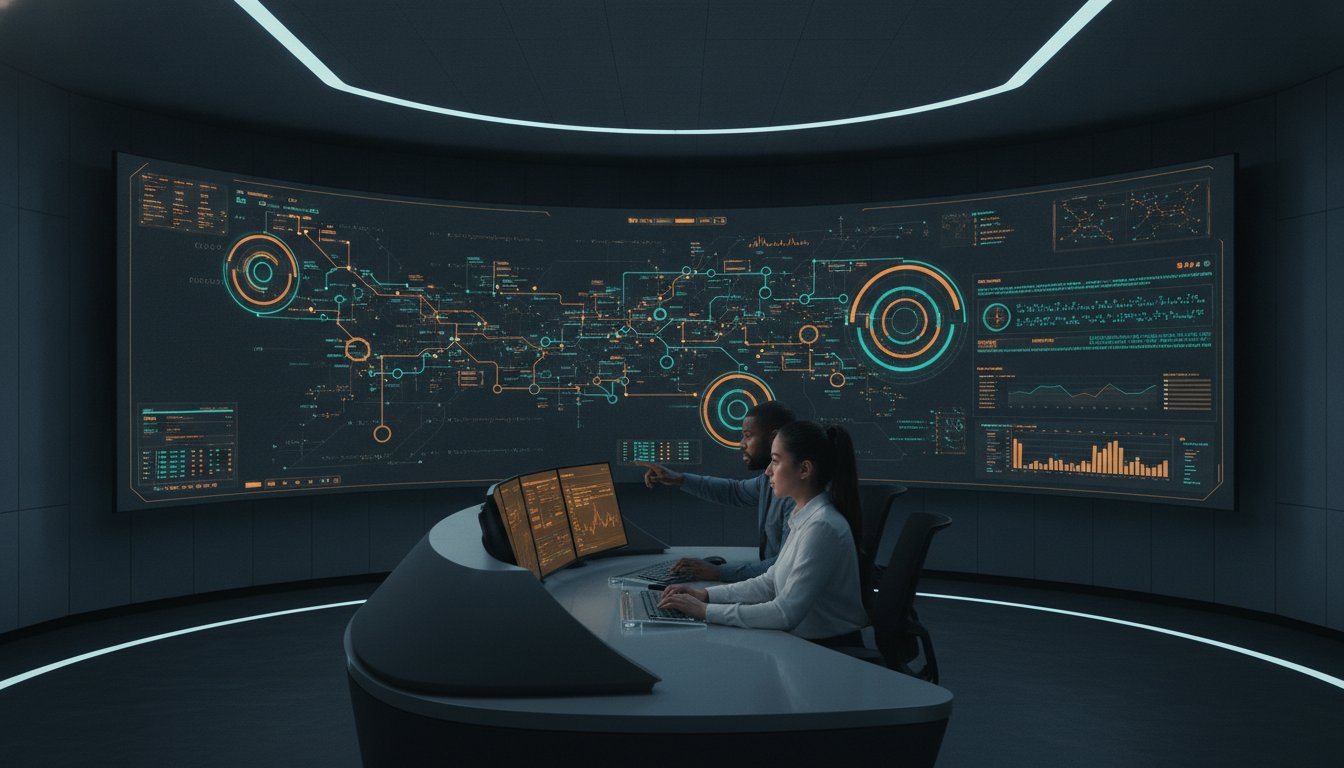
A wall of monitors is no longer a reliable indicator of operational control. In many cases, it’s a symptom of information overload that obscures the very crises it’s meant to reveal. Operators in high-stakes environments feel the weight of this daily as they manage a Network Operations Center (NOC) where disparate monitoring tools create persistent silos. The resulting “wall of alarms” often leads to fatigue rather than focus. It’s nearly impossible to share real-time insights with remote stakeholders or mobile teams when critical data remains trapped behind a physical desk.
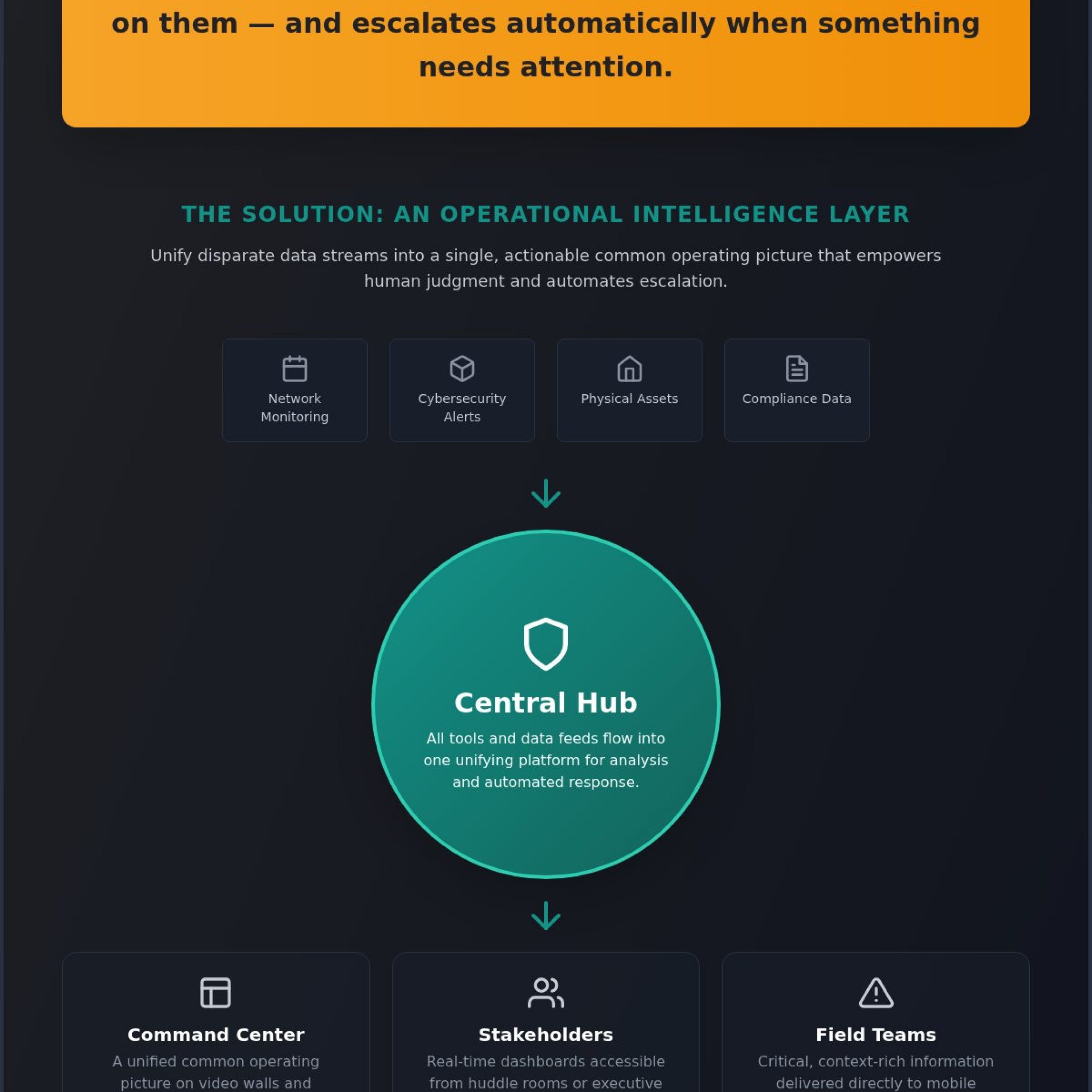
Most control rooms already have the screens. What they’re missing is the layer that decides what goes on them, and escalates automatically when something needs attention. This article explores how to transform these fragmented data streams into actionable intelligence within mission-critical environments. You’ll learn to move beyond simple monitoring toward a unified common operating picture that empowers human judgment. We will examine the transition to an operational intelligence layer that automates escalation and ensures seamless collaboration between your command center and field teams.
Key Takeaways
- Redefine the Network Operations Center (NOC) as an active central nervous system for organizational resilience. You’ll learn to distinguish between basic IT monitoring and the high-stakes requirements of a true mission-critical environment.
- Address the psychological impact of alarm fatigue by shifting focus from hardware-centric designs to software-defined visualization. This approach helps operators identify essential information without being overwhelmed by a “wall of alarms.”
- Understand why individual specialized tools only offer a partial solution when used in isolation. Discover how to bridge these information silos to create a unified common operating picture for remote stakeholders and field teams.
- Learn how to add the operational intelligence layer that decides what appears on your screens and escalates automatically when attention is required. This transition ensures that your technology serves as the essential bridge between raw data and human judgment.
What is a Network Operations Center? Beyond the Desk
A Network Operations Center (NOC) serves as the central nervous system for organizational uptime and resilience. While standard IT monitoring often focuses on basic server health and network pings, a mission-critical NOC operates with a much higher degree of urgency. It’s the bedrock of operational readiness, ensuring that complex, distributed infrastructures remain functional under extreme pressure. The core mission has shifted. It’s no longer enough to react to a red light on a dashboard; modern teams require total situational awareness to anticipate disruptions before they cascade into system-wide failures. This environment demands more than just a desk and a computer; it requires a sophisticated integration of human expertise and advanced visualization technology.
This evolution marks a transition from reactive monitoring to proactive, event-driven intelligence. Most control rooms already have the screens. What they’re missing is the layer that decides what goes on them, and escalates automatically when something needs attention. Without this intelligence, operators are left drowning in data, struggling to identify the signal within the noise of thousands of disparate alerts. A modern NOC must filter this noise to empower human judgment at the exact moment a decision is required.
The Core Functions of a Modern NOC
A high-performance NOC manages three primary pillars of operational health to maintain continuity across the enterprise:
- Real-time monitoring: Oversight of network health, cybersecurity posture, and physical assets simultaneously.
- Incident management: Rapid response coordination during critical events to minimize downtime.
- Compliance tracking: Rigorous reporting for industries like utilities and energy.
These sectors rely on the NOC to maintain NERC CIP standards and other mandatory safety protocols. The NOC acts as the command hub, directing field teams and informing stakeholders when a critical event occurs. By centralizing these functions, organizations move from a fragmented response to a structured, authoritative operation.
NOC vs. SOC: Understanding the Intersection
The distinction between the NOC and the Security Operations Center (SOC) is becoming increasingly blurred. While the NOC focuses on availability and performance, the SOC prioritizes security and threat mitigation. These two entities must share a common operating picture to be effective. We see a growing trend toward Fusion Centers where these roles converge to eliminate information silos. Effective cross-functional data visualization is the only way to ensure that a security breach in the SOC is immediately understood as an availability risk in the NOC. By integrating these views into a single operational intelligence layer, organizations achieve a level of visibility that standard, isolated tools cannot provide. This convergence allows for a more unified response, where security threats and performance issues are managed through a single, authoritative lens.
The Anatomy of a High-Performance NOC Environment
A high-performance Network Operations Center (NOC) is more than a collection of hardware. It acts as a centralized location to monitor and manage networks, requiring a deep integration of physical infrastructure and software intelligence. Historically, organizations focused on physical assets like screens, desks, and cabling. Today, the priority has shifted toward software-defined visualization. This shift ensures that the environment scales with the organization’s data needs rather than being limited by fixed hardware configurations.
Operational efficiency depends on how well these components harmonize. Expert control room design services are essential to optimize operator workflows by considering sightlines, ergonomics, and the logical flow of information. Application integration serves as the bedrock of this environment. Without it, the operations center remains a collection of disconnected tools that increase cognitive load rather than reducing it. If you’re looking to enhance your current setup, consider how integrated platforms can unify your existing assets.
Video Wall Systems: The Collective View
Video walls act as the anchor for team-wide situational awareness. They provide the shared reality necessary for rapid, coordinated decision-making during a crisis. However, the industry is moving away from static monitor walls that simply mirror desktop screens. Modern systems use intelligent, dynamic displays to present data based on the severity of the event. This allows the entire team to see exactly what matters at the moment a decision is required. This level of visibility is crucial for maintaining operational readiness across large-scale infrastructures.
The Operational Intelligence Layer
Most control rooms already have the screens. What they’re missing is the layer that decides what goes on them, and escalates automatically when something needs attention. The vis/ability platform serves as this operational intelligence layer. It aggregates disparate data streams into a single, manageable interface. This is the central hub where network health, geospatial data, and security alerts converge.
Event-driven automation ensures that only relevant information reaches the wall. When a threshold is crossed, the system triggers a visual alert, creating a Cybersecurity Common Operating Picture. This allows the NOC to maintain visibility over the entire digital and physical landscape without forcing operators to manually hunt for incidents across dozens of separate dashboards. The result is a steady state of clarity, even during complex operations.
Why Operators Miss Incidents: Solving Cognitive Overload
The data deluge is the single greatest threat to operational continuity in the modern command center. When operators are buried under a constant stream of alerts, the critical signal is often lost. This phenomenon, known as alarm fatigue, creates a dangerous environment where high-stakes incidents are overlooked. Human judgment is the most valuable asset in any Network Operations Center (NOC), yet it’s frequently paralyzed by the sheer volume of fragmented monitoring screens. Most control rooms already have the screens. What they’re missing is the layer that decides what goes on them, and escalates automatically when something needs attention. Technology should serve as a filter, not a source of additional noise. Its primary purpose is to empower operators to act with certainty when stakes are at their highest.
The Fragmented System Problem
Response times suffer when operators must toggle between 10 or more separate applications to verify a single incident. This fragmentation leads to siloed data, where the crucial clues of a developing crisis remain hidden across disconnected tools. In a high-pressure environment, cognitive load is the total mental effort required to navigate these interfaces, and its increase leads to a direct spike in Mean Time to Repair (MTTR). Adhering to rigorous standards, such as those implemented by top-tier Network Operations Centers, requires a more integrated approach to data oversight. When information is scattered, the bedrock of critical decision-making is compromised.
Automated Escalation and Event-Driven Alerts
The vis/ability platform addresses these gaps by functioning as an operational intelligence layer. It filters out the background noise and only presents data on the video wall when specific, pre-defined thresholds are met. This event-driven approach ensures that the team remains focused on the mission rather than the maintenance of the tools. By automating the delivery of essential information, the system reinforces operational continuity. Reactive systems require constant manual oversight, which inevitably leads to missed incidents. A proactive intelligence layer ensures that the right information reaches the right person at the exact moment a decision is required. This clarity remains the quiet, powerful engine behind successful operations.
Integrating Critical Tools for a Unified Operating Picture
Modern operations rely on a diverse stack of third-party tools, from SIEM platforms for threat detection to telematics and specialized video management systems. While these applications provide essential data, they offer a fragmented view when viewed in isolation. Operators often find themselves manually piecing together information from separate dashboards; a process that delays critical decision-making during urgent events. A true common operating picture (COP) requires a unifying layer that aggregates these disparate streams into a single, authoritative interface. This level of application integration is the primary driver for modernizing legacy systems and ensuring the Network Operations Center (NOC) meets current mission-critical demands. Without a central hub, the team remains trapped in silos, unable to see how a network failure might impact physical security or field safety.
Most control rooms already have the screens. What they’re missing is the layer that decides what goes on them, and escalates automatically when something needs attention. Adding this intelligence transforms the Network Operations Center (NOC) from a room of monitors into a proactive engine of organizational resilience. It ensures that the most vital information is always prioritized, allowing leaders to act with absolute certainty when the mission is on the line.
Bridging the Gap Between Field and Command
Extending visibility beyond the physical walls of the command center is vital for modern response coordination. Field teams in the transportation and public safety sectors often operate with less information than the dispatch center, leading to dangerous gaps in situational awareness. Mobile vis/ability solves this by delivering the same real-time data to smartphones and tablets that appears on the main video wall. This ensures that every stakeholder, regardless of location, acts on the same intelligence. When a field technician or first responder can see the exact geospatial data and live feeds as the commander, the speed of effective action increases and the margin for error disappears. Agencies can’t afford to operate with disconnected teams when lives or infrastructure are at risk.
The Role of COTS in Modern Operations
Speed and reliability are non-negotiable in high-stakes environments. Utilizing Commercial Off-the-Shelf (COTS) solutions allows organizations to deploy advanced capabilities faster than custom-coded alternatives. vis/ability acts as the COTS-based integration hub that satisfies bespoke mission-critical needs without the long lead times of traditional development. In federal and defense environments, these solutions must also meet stringent security requirements to protect sensitive operational data while remaining flexible enough to integrate with legacy assets. By leveraging a proven platform, organizations maintain a position of leadership while ensuring their infrastructure remains secure. This approach transforms the operations center into a future-proof strategic asset that evolves with the organization’s needs. To see how this integration unifies your specific toolset, contact the team at Activu Corporation for a demonstration.
Future-Proofing the NOC: vis/ability as the Strategic Hub
A modern Network Operations Center (NOC) must evolve from a reactive cost center into a strategic value-driver for the entire organization. When data complexity increases, the ability to maintain operational readiness depends on having a platform that scales alongside that complexity. Raw data is useless without context. The vis/ability platform transforms these fragmented streams into the bedrock of critical decision-making. By centralizing intelligence, leaders move from a state of constant firefighting to a state of clear, actionable insight. This transition ensures that the organization remains resilient even as the volume of monitoring points grows exponentially.
Most control rooms already have the screens. What they’re missing is the layer that decides what goes on them, and escalates automatically when something needs attention. This intelligence layer is what separates a standard monitoring room from a high-performance command operation. It provides a steady flow of essential information to the people who need it most, exactly when they need it. It’s the quiet, powerful engine that allows teams to act with absolute certainty when stakes are highest.
Scalability Across Distributed Teams
Operational intelligence cannot be confined to a single physical room. The modern operational intelligence layer must support huddle rooms, remote stakeholders, and mobile field teams simultaneously. This distributed visibility is a core requirement in federal government and defense operations, where mission success depends on a shared common operating picture across vast distances. vis/ability provides this unifying hub, ensuring that the platform grows with your data rather than becoming a bottleneck. Whether the team is in a central command center or a remote huddle room, they act on the same authoritative data.
Next Steps for Operations Leaders
Migrating from a reactive NOC to a proactive situational awareness hub requires a methodical approach. Leaders should evaluate their current environment for specific gaps in visibility and response coordination. Consider this checklist for your next operational review:
- Identify where silos exist between monitoring tools and field teams.
- Analyze the frequency of operator burnout due to alarm fatigue.
- Assess the speed of information delivery to remote stakeholders during a crisis.
- Determine if your current video wall provides dynamic, event-driven insights or just static feeds.
Shifting toward event-driven workflows is the most effective way to reduce cognitive load and prevent burnout. It empowers your team to focus on the mission instead of the noise. If your current setup lacks this automated intelligence, it’s time to modernize your infrastructure. We invite you to contact Activu Corporation for a custom control room assessment. Our experts will help you move your Network Operations Center (NOC) from a state of complexity to a state of absolute clarity.
Establishing Operational Resilience in a Data-Driven Era
Operational success in high-stakes environments depends on the ability to filter noise and focus on essential intelligence. We’ve explored how the modern Network Operations Center (NOC) must transition from a room of disconnected screens to a unified, event-driven hub. Organizations achieve this by integrating disparate data streams into a single operational intelligence layer. This ensures that critical incidents are escalated automatically, allowing teams to act with absolute certainty rather than reacting to a “wall of alarms.”
Activu has pioneered control room visualization since 1983. Trusted by Global 500 companies and federal agencies, our solutions provide the bedrock upon which critical decisions are made. Most control rooms already have the screens. What they’re missing is the layer that decides what goes on them, and escalates automatically when something needs attention. See how vis/ability unifies your NOC operations to reduce response times and empower your human operators. The path from complexity to clarity starts with a single, integrated vision. Your team is ready to lead with confidence.
Frequently Asked Questions
What is the difference between a NOC and a SOC?
A NOC focuses on maintaining network availability and performance, while a SOC prioritizes identifying and mitigating security threats. Both entities must collaborate through a shared operational intelligence layer to ensure organizational resilience. Most control rooms already have the screens. What they’re missing is the layer that decides what goes on them, and escalates automatically when something needs attention. This shared view prevents silos between uptime management and cyber defense.
How does a common operating picture improve NOC efficiency?
A common operating picture unifies disparate data streams into a single source of truth for the entire team. This eliminates the need for operators to manually correlate information from multiple dashboards. By providing a synchronized view across command centers and remote stakeholders, a COP accelerates decision-making during critical events. It ensures that everyone acts on the same intelligence. This synchronization directly reduces incident response times in high-stakes environments.
Why is situational awareness critical for network operations?
Situational awareness allows leaders to understand the full context of an incident before making pivotal decisions. In a Network Operations Center (NOC), this means seeing how a localized failure impacts the broader infrastructure. Without it, operators remain reactive and blind to cascading risks. Total visibility transforms raw data into the bedrock of critical decision-making. This ensures that every action taken is supported by comprehensive, real-time insights that empower human judgment.
Can vis/ability integrate with my existing monitoring tools?
vis/ability integrates with third-party tools such as SIEM platforms, VMS, and telematics through advanced application integration. While specialized monitoring tools provide essential data, they often offer a fragmented view when used in isolation. vis/ability acts as the central hub that unifies these streams. It ensures that data from all your existing monitoring tools flows into a single, proactive operational intelligence layer. This platform makes your current tools more useful for the entire team.
How do I reduce operator fatigue in a 24/7 control room?
Reducing operator fatigue requires shifting from manual monitoring to event-driven situational awareness. Instead of staring at a “wall of alarms,” operators only receive alerts when specific thresholds are met. This approach filters out background noise and prevents cognitive overload. By automating the escalation of critical incidents, you ensure that the team remains focused and analytical when stakes are at their highest. This methodical process leads to clearer decisions and safer operations.
What are the benefits of a software-defined video wall in a NOC?
Software-defined video walls provide a dynamic and scalable alternative to traditional hardware-centric setups. They allow for the intelligent distribution of content across multiple displays, huddle rooms, and mobile devices. This flexibility ensures that the most vital information is always prioritized based on the current operational state. Unlike static displays, a software-defined approach evolves with your organization’s data complexity. It maintains clarity during urgent missions by putting the right data in front of the right people.
How does mobile vis/ability help field technicians?
Mobile vis/ability extends the command center’s common operating picture directly to field technicians on their mobile devices. This ensures that field teams see the exact same data and live feeds as the command center staff. By bridging the gap between the command center and the field, you eliminate communication delays. This ensures that every stakeholder acts with greater certainty. Real-time collaboration is essential for maintaining safety and operational efficiency in distributed infrastructures.
What role does a NOC play in NERC CIP compliance?
A NOC provides the continuous monitoring and incident documentation required for NERC CIP and other regulatory compliances. It ensures that all access and performance events are tracked and reported in real-time. By utilizing an operational intelligence layer, utilities can demonstrate strict adherence to security protocols while maintaining operational readiness. This centralized oversight is the quiet, powerful engine that keeps critical infrastructure organizations compliant and resilient against potential threats or equipment failures.