
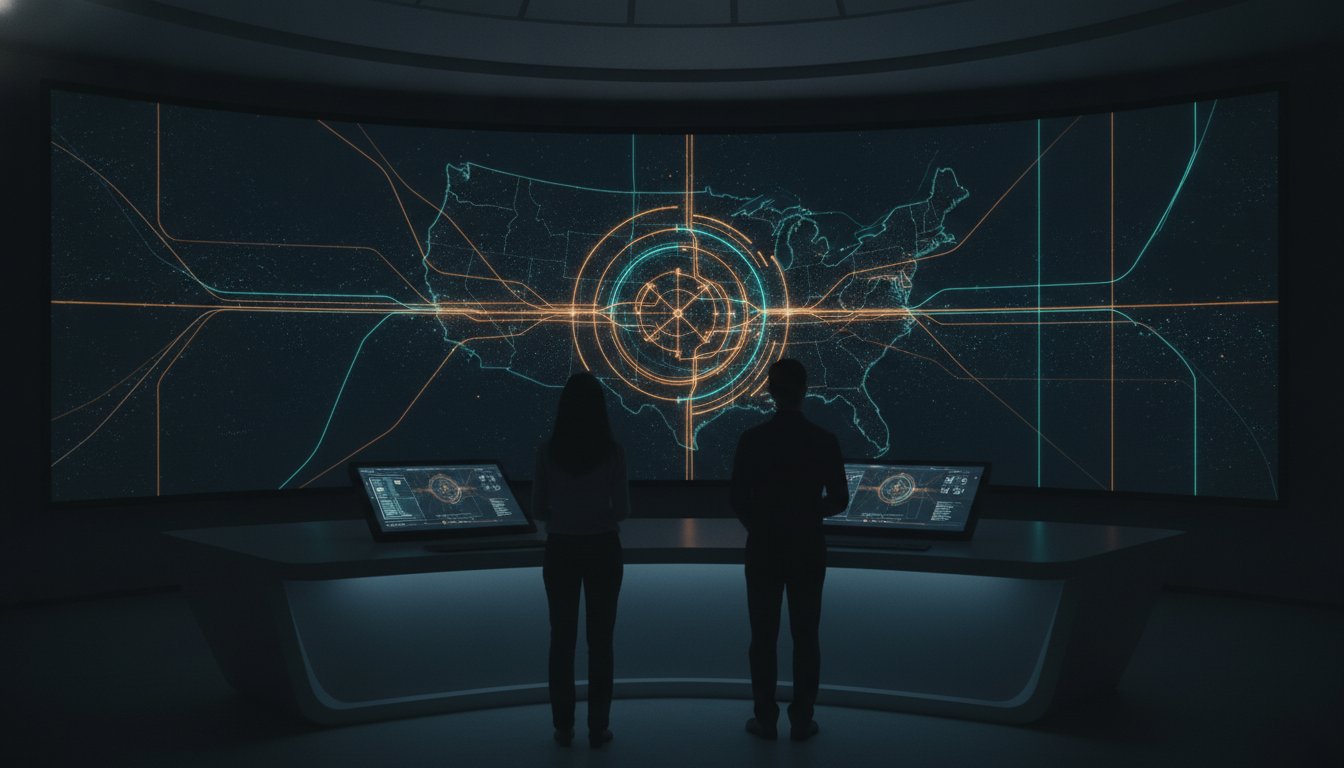
In high-stakes environments, the most dangerous moments occur in the gaps between fragmented applications. Operators often find themselves buried under a flood of disconnected data, forced to manually correlate information from siloed systems while critical seconds tick away. This constant switching between disparate tools creates significant cognitive overload, leading to missed incidents and delayed response times. When situational awareness is trapped within individual workstations, collaboration with remote teams or field units becomes nearly impossible, leaving the entire operation reactive rather than proactive.
Managing these complexities requires more than just high-resolution hardware. Most control rooms already have the screens. What they’re missing is the layer that decides what goes on them, and escalates automatically when something needs attention. Implementing a truly intelligent control room video wall transforms these static displays into a unified common operating picture. In this article, you’ll discover how to move beyond simple pixel management to an automated, event-driven situational awareness hub. We’ll explore the methodology behind the operational intelligence layer and how seamless integration between the NOC and field units ensures clarity when stakes are at their highest.
Key Takeaways
- Identify the operational risks of fragmented data feeds and why traditional monitoring often results in missed incidents.
- Learn how the operational intelligence layer transforms a standard control room video wall into an automated, event-driven hub.
- Discover the methodology for integrating disparate applications into a single, unified common operating picture for seamless collaboration.
- Understand how intelligent design and automated data escalation reduce operator fatigue and cognitive overload during high-stakes events.
- Explore the transition from reactive monitoring to proactive situational awareness that extends visibility to mobile and remote teams.
Control Room Situational Awareness Problems in High-Stakes Environments
High-stakes operations demand absolute precision. Yet, many command centers operate behind a veil of fragmented data. A massive control room video wall is often treated as a gallery of static windows rather than a dynamic asset. This creates a hidden operational cost where critical indicators are buried under a “wall of noise.” When screens are simply mirrors of individual workstations, the collective team loses the ability to see the bigger picture. This fragmentation doesn’t just slow things down; it creates blind spots that can lead to catastrophic failures during urgent operations.
Achieving high-level situational awareness requires more than just seeing feeds. It requires comprehension and the ability to project how a situation will evolve. When systems are siloed, operators spend more time managing windows than managing the mission. The gap between having data and having intelligence is where most errors occur. Without a way to prioritize essential information, the sheer volume of incoming signals becomes a liability rather than an advantage. It’s the difference between looking at a map and knowing exactly where the fire is spreading.
Why Operators Miss Incidents on Traditional Video Walls
Operators face significant psychological limits in 24/7 environments. Cognitive overload happens when the volume of visual information exceeds the brain’s processing capacity. It’s a common misconception that more screens lead to better awareness. In reality, too much unfiltered data causes fatigue and distraction. In high-stress events, the requirement to manually switch content or search for the right camera feed is a primary failure point. If an operator has to decide what to look at while an incident is unfolding, they’ve already lost valuable seconds. This is why control room situational awareness problems often persist despite significant hardware investments. Humans aren’t built to monitor dozens of static feeds for hours; they’re built to respond to meaningful change.
The Problem with Fragmented Operational Data
“Swivel-chair” operations, where staff must physically move between workstations or toggle between applications, delay critical response times. Organizations using platforms like Axon or specific SIEM tools often find they only provide a partial view of the operational landscape. While these tools are capable in their specific domains, they lack the unifying layer needed to create a full common operating picture. Conflicting data streams across different departments can lead to confusion during a crisis. A visual-only approach fails because it lacks actionable context. For instance, a security feed without integrated sensor data is just a picture, not intelligence. This fragmentation is a major reason why operators miss incidents video wall configurations are supposed to prevent, especially in complex SOC and NOC environments.
The Operational Intelligence Layer: Beyond the Video Wall Display
A control room video wall is frequently viewed as a hardware destination. This perspective limits the system’s utility to simple pixel management. True operational intelligence requires a shift from viewing displays as static monitors to treating them as a dynamic, intelligent interface. Most control rooms already have the screens. What they’re missing is the layer that decides what goes on them, and escalates automatically when something needs attention. This layer acts as the bridge between raw data streams and the human judgment required to act upon them.
By implementing an operational intelligence layer, organizations move beyond reactive monitoring. Instead of an operator manually searching for a specific camera or dashboard, the system uses real-world triggers to surface the most critical information. This approach prioritizes essential data, ensuring that when stakes are highest, the team isn’t digging through menus or switching inputs. It creates a state of calm clarity amidst potential complexity, allowing decision-makers to focus on the mission rather than the technology.
Event-Driven vs. Manual Visualization
Manual visualization relies on the operator to know what to look for and where to find it. In a crisis, this dependency is a significant vulnerability. Event-driven visualization reverses this flow. It automates the escalation of critical data based on predefined triggers, such as a sensor alert or a cybersecurity breach. This reduces the need for constant, manual interaction with the wall. Human factors in control room design emphasize that reducing cognitive load is essential for maintaining performance. When the system handles the “what” and “where” of data display, operators can focus entirely on the response. This transition from manual searching to automated awareness is the hallmark of a high-performance operation.
The Role of vis/ability as a Unifying Hub
The vis/ability platform serves as the bedrock of the modern command center. It functions as the central hub into which all other tools flow. While specialized applications like Axon or SIEM platforms provide valuable data, they often operate in isolation, offering only a partial solution. vis/ability unifies these disparate feeds into a single, cohesive operating picture. It makes existing tools more useful by ensuring their output is visible to the entire team, regardless of location. This visibility extends beyond the main command center to huddle rooms and mobile devices, ensuring that field units and remote stakeholders share the same real-time intelligence. Organizations can integrate their existing tools into vis/ability to create a more resilient operating environment. This connectivity empowers every individual to act with greater certainty, transforming the control room video wall from a display into a proactive mission engine.
Integrating Data Feeds for a Unified Common Operating Picture
Managing multiple data feeds in a dispatch center presents a logistical hurdle that often results in information silos. When an incident occurs, operators cannot afford to hunt for data across separate windows. A control room video wall serves its highest purpose by acting as a single pane of glass that unifies real-time video, geospatial data, and sensor feeds. This integration is essential for multi-agency collaboration, where different units must view the same reality to act in unison. Data visualization for situational awareness makes complex data legible for rapid response, ensuring that critical indicators are immediately recognizable during a crisis.
Linking field operations to the central command ensures seamless reporting and transparency. When raw telematics are integrated with strategic oversight, the entire team gains a proactive advantage. This connectivity allows for the immediate sharing of situational intelligence, ensuring that field units and remote stakeholders are aligned with the command center’s objectives. By centralizing these feeds, organizations eliminate the confusion caused by conflicting data streams and ensure that every decision is based on a complete, verified dataset.
The Shortcomings of Fragmented Tools like Axon
Fragmented tools like Axon or various SIEM platforms provide valuable data points, yet they often offer only a partial solution for total situational awareness. Relying on siloed platforms for mission-critical decisions is dangerous because it forces operators to mentally correlate data from different sources under pressure. vis/ability fills the gaps left by standard incident management software by acting as the unifying hub. It pulls data from these fragmented tools and presents it within the context of the larger operation, ensuring no detail is overlooked.
EOC Common Operating Picture Solutions
Emergency Operations Centers (EOCs) require a unique level of strategic oversight. Customizing the operating picture for an EOC involves bridging the gap between raw telematics and high-level decision-making. By linking field operations directly to the central command, teams achieve seamless reporting and transparency. This connectivity ensures that field units share their local perspective while receiving critical updates from the center. You can learn more about Public Safety solutions that specifically address these integration challenges. The result is a proactive environment where raw data feeds are transformed into actionable intelligence, allowing teams to maintain control when the situation is most volatile.

Designing the Control Room for Maximum Operational Efficiency
High-performance operations require more than high-resolution displays. They require end-to-end engineering that accounts for the human element in high-stakes environments. A control room video wall is only effective if operators can interact with it without physical or mental strain during a crisis. This synergy between hardware and the operational intelligence layer ensures the system works for the team. It transforms a collection of monitors into a structured tool for operational readiness and technical integration. To support this readiness, Spycon Security Ltd. provides professional physical security and fire safety services across the UK, offering a model for ensuring the command center environment remains secure and resilient.
Reducing operator fatigue is a primary goal of intelligent design. Lighting must be calibrated to prevent glare on the control room video wall, while viewing angles must allow every team member to see critical data from their specific console position. Modern mission-critical console furniture allows for height adjustments and optimal equipment placement, which are vital for maintaining alertness during 24/7 shifts. In the context of a 24/7 SOC, cognitive load is the total amount of mental effort required for an operator to perceive, process, and act upon the streams of data presented across their visual field. By designing the visual field to prioritize essential information, we ensure that operators remain focused on the mission during pivotal moments. This proactive design reduces the risk of missed incidents and ensures the most relevant information is always front and center. To further empower your technical teams in these high-stakes environments, you can discover Insoft Services for professional IT training and cybersecurity consultancy.
Professional design services are necessary to optimize the workflow of a complex command center. Coordinating hardware placement with software integration ensures maximum visibility and seamless communication between different operational roles. Reliability must be baked into the architecture, using redundant systems and robust software that maintains absolute uptime. Unlike consumer-grade setups, mission-critical environments require a specialized approach that values results over rhetoric and precision over personality. You can explore our Control Room Design services to see how we align physical environments with operational intelligence. This holistic approach builds the bedrock upon which critical decisions are made, ensuring your team acts with certainty when it matters most. To ensure your facility is prepared for future demands, contact our design team for a consultation on your next upgrade.
Implementing vis/ability: The Future of Mission-Critical Operations
Modernizing command operations involves moving toward proactive situational awareness. Implementing the vis/ability platform provides this operational intelligence layer. It empowers teams to act with greater certainty by ensuring the control room video wall functions as a proactive decision-making engine rather than a passive display of unorganized data.
Scalability remains a critical requirement for expanding operations. As data volumes grow, the platform must accommodate distributed teams and complex integrations. vis/ability acts as a unifying hub that makes every other tool more effective. It removes the friction of manual data correlation, allowing technical experts and strategic decision-makers to focus on high-level analysis when stakes are highest. This methodical approach to information prioritization creates a sense of calm clarity, even in the middle of a high-stress incident.
Mobile vis/ability and Collaboration Beyond the Wall
Operational intelligence must extend beyond the physical boundaries of the command center. Field units and remote stakeholders require the same real-time intelligence as the operators at the main control room video wall. vis/ability facilitates this by extending the common operating picture to mobile devices. This ensures seamless data sharing between the NOC and field units, allowing for immediate reporting and verification. You can see how vis/ability works for distributed teams to understand how it connects central command to the front lines. This connectivity ensures that every individual has the visibility needed to act with absolute confidence.
Building Operational Continuity and Resilience
Unified visualization serves as the cornerstone of disaster recovery and long-term operational resilience. When a primary site is compromised, maintaining a common operating picture across secondary locations or mobile units is vital. This resilience centers on the human element within a digital context. Technical tools empower individuals to act with greater certainty by providing the right information at the right time. For a deeper look at protecting your infrastructure, read about Ensuring Mission-Critical Resilience. The future of high-stakes operations depends on this level of technical reliability and strategic foresight. If you’re ready to transform your facility into an automated, event-driven situational awareness hub, contact Activu to bridge the gap in your control room and start your infrastructure upgrade today.
Advancing Toward Proactive Command and Control
High-stakes environments require more than just a large-scale control room video wall. They require a shift toward automated, event-driven situational awareness that transforms raw data into actionable intelligence. By integrating disparate applications into a single, unified common operating picture, your organization can eliminate information silos and ensure that critical data is escalated precisely when it’s needed. This transition from reactive monitoring to proactive oversight is the bedrock of mission-critical resilience.
Federal, defense, and public safety agencies trust these solutions to maintain clarity during pivotal moments. Whether you’re managing a local NOC or a global security operation, mobile integration ensures that your field units and central command remain perfectly aligned. It’s time to move beyond the screen and focus on the intelligence that drives your mission. Take the first step toward operational certainty. Request a demo of the vis/ability platform today to see how we automate the prioritization of essential information. Your team deserves a hub that provides clarity when complexity is at its highest.
Frequently Asked Questions
What is a control room video wall and how does it differ from standard displays?
A control room video wall is a high-performance visualization system engineered for 24/7 mission-critical environments. Unlike standard displays or consumer-grade hardware, these systems offer industrial reliability and the ability to aggregate complex data from multiple sources simultaneously. They provide a centralized workspace where entire teams share a common operating picture. This ensures that every operator has visibility into the same real-time intelligence, which is vital for maintaining coordination during high-stakes events.
How do you manage multiple data feeds in a dispatch center?
Managing multiple feeds in a dispatch center requires a unifying operational intelligence layer to aggregate disparate data streams into a single interface. Instead of forcing operators to manually switch between applications, the system should use event-driven triggers to surface relevant video and sensor data. This approach reduces cognitive load by automating the prioritization of essential information. It ensures that the most critical signals are highlighted, allowing the team to respond with speed and accuracy.
What are common EOC common operating picture solutions?
Effective solutions for an Emergency Operations Center (EOC) involve integrated visualization platforms that bridge the gap between raw field telematics and strategic oversight. These systems facilitate multi-agency collaboration by providing a unified view of an unfolding incident. A robust solution must extend this visibility beyond the main command center to remote stakeholders and mobile units. This ensures that field personnel and decision-makers stay aligned, regardless of their physical location or the complexity of the crisis.
Why do operators miss critical incidents on a video wall?
Operators miss incidents because of cognitive overload and the “wall of noise” effect created by static, unfiltered displays. Humans have psychological limits when monitoring dozens of feeds simultaneously over long shifts. Without this automation, critical data is easily buried under a flood of non-essential information during high-stress operations.
What is the role of an operational intelligence layer in a SOC?
In a Security Operations Center (SOC), the operational intelligence layer acts as a central hub that unifies disparate security tools into a proactive visualization environment. This layer automates the escalation of threat data based on real-world triggers, allowing analysts to focus on response rather than data collection. It transforms the control room video wall from a passive monitor into a dynamic decision-support tool. This ensures the most significant security indicators are always visible to the entire team.
How can I reduce operator fatigue in a 24/7 mission-critical environment?
Reducing fatigue requires a combination of ergonomic design and intelligent data prioritization. Professional design services optimize lighting, resolution, and viewing angles to minimize physical strain. On the software side, automating content escalation ensures operators aren’t mentally exhausted by manually searching through feeds. By prioritizing essential information and reducing the mental effort required to find data, organizations can maintain high performance and alertness during 24/7 mission-critical shifts.
Can I integrate my existing SIEM or Axon tools into a new video wall system?
You can integrate these tools, but it’s important to recognize that specialized platforms like Axon or SIEM tools often only provide a partial solution. Integrating them into a control room video wall via a unifying platform allows you to correlate their data with other operational streams. This creates a full common operating picture that makes your existing tools more useful for the entire team, whether they are in the command center or on mobile devices.
What is the benefit of a cybersecurity common operating picture?
A cybersecurity common operating picture provides a centralized, real-time view of network health and security posture. This unified perspective allows security teams to monitor threats and coordinate incident responses with greater certainty. By visualizing complex data in an operational context, decision-makers can identify patterns and respond to threats before they compromise mission-critical infrastructure. This visibility is the bedrock upon which organizations build long-term resilience and maintain absolute technical reliability.