
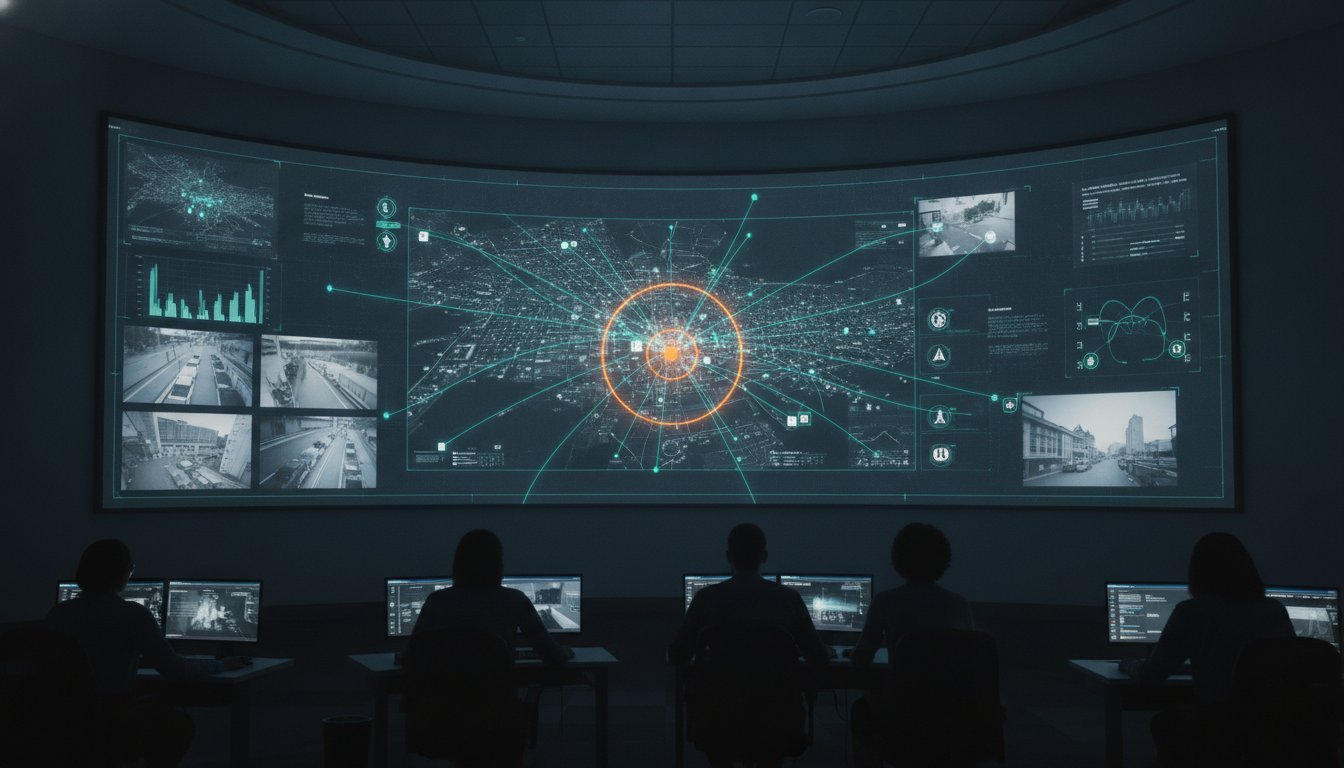
Your operators are likely drowning in data while starving for intelligence. In high-stakes environments, the gap between receiving a CAD alert and seeing the relevant CCTV feed can mean the difference between a controlled response and a crisis. You see the stress in the command center as teams manually toggle between GIS maps and siloed sensor data, struggling to maintain a common operating picture for public safety. This fragmentation doesn’t just cause cognitive overload; it creates dangerous information silos between the room and field units.
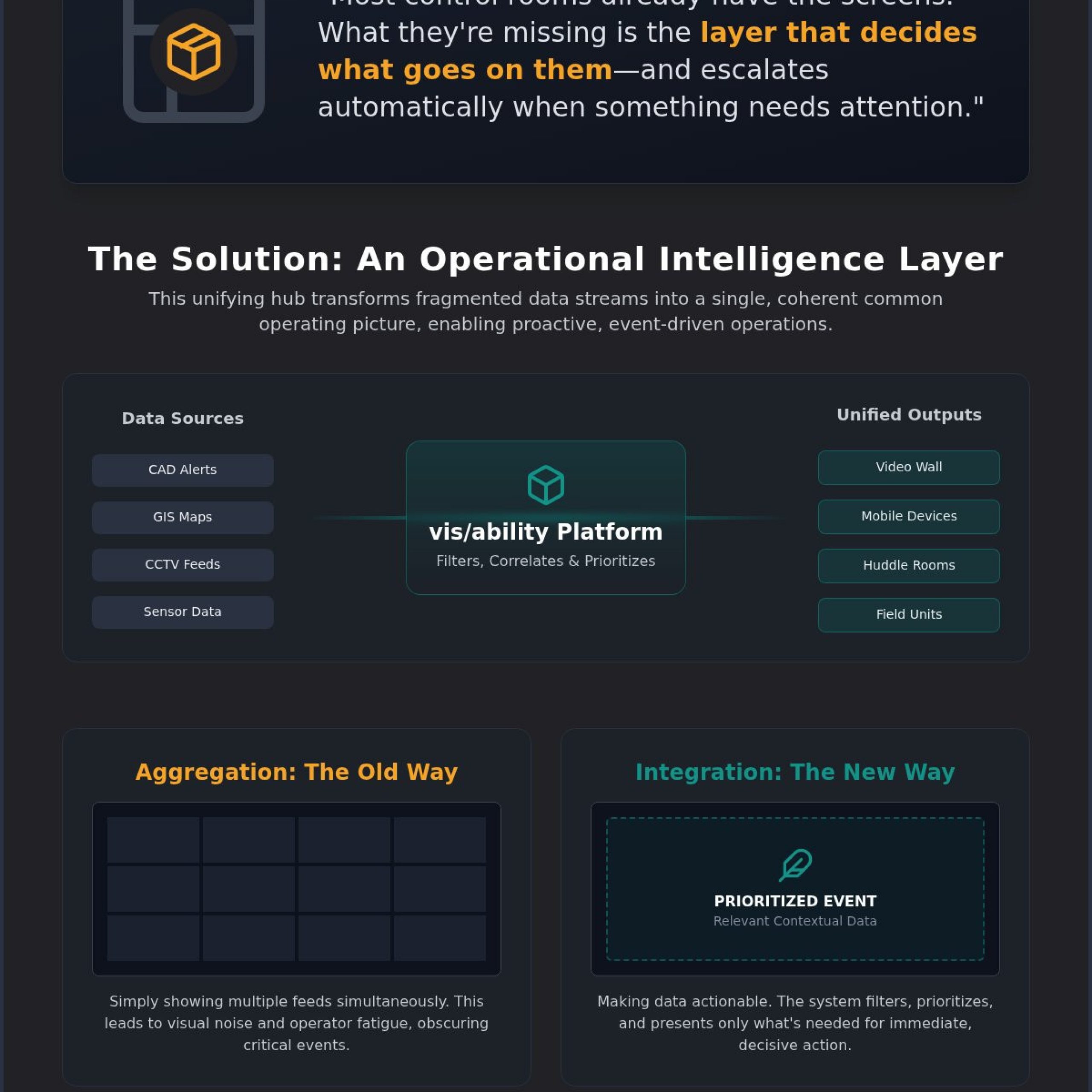
Establishing true situational awareness requires moving beyond these disconnected tools. Most control rooms already have the screens. What they’re missing is the layer that decides what goes on them, and escalates automatically when something needs attention. We’ll explore how to transform these fragmented streams into a unified, automated operational intelligence layer using vis/ability. You’ll learn why partial solutions like Axon or standalone dispatch software require this unifying hub to provide the clarity and certainty required for mission-critical decision-making.
Key Takeaways
- Identify why traditional video walls fail to prevent missed incidents and how an operational intelligence layer solves operator cognitive overload.
- Define the technical requirements for a modern common operating picture for public safety that unifies CAD, GIS, and sensor data into a single view.
- Learn why point solutions provide only a partial view of the field and require a central hub to ensure every team member has actionable data.
- Transition from reactive monitoring to event-driven operations by implementing automated triggers that prioritize information based on incident severity.
- Extend situational awareness beyond the command center to mobile devices and huddle rooms for seamless collaboration during urgent responses.
The Crisis of Fragmented Situational Awareness in Public Safety
Modern public safety operations rely on a massive influx of real-time data, yet many command centers struggle to maintain a clear Common Operating Picture (COP). A true common operating picture for public safety is not merely a static map or a collection of video feeds; it’s a dynamic intelligence layer that filters, prioritizes, and presents critical information at the exact moment it’s needed. Without this layer, operators face a paradox: they have more visibility than ever, yet they miss more incidents. The sheer volume of incoming data from CAD, GIS, and License Plate Recognition (LPR) systems often creates a fog of information that obscures the very emergencies it’s meant to highlight.
The Hidden Cost of System Fragmentation
System fragmentation creates operational friction that delays life-saving decisions. When an operator must toggle between separate software applications to verify an incident, they lose precious seconds. This manual process is prone to error; transcribing data between silos like CAD and GIS increases the risk of misinformation. There’s also a persistent gap between high-fidelity field data, such as body-worn cameras or drones, and the command center. Without a unified hub, these assets remain isolated, forcing supervisors to make decisions based on incomplete or outdated snapshots rather than a live, integrated reality.
Why Traditional Video Walls are Not Enough
Investment in hardware often outpaces investment in the intelligence required to manage it. Large-scale displays are frequently treated as the solution, yet “more pixels” rarely translates to “more intelligence.” Most control rooms already have the screens. What they’re missing is the layer that decides what goes on them, and escalates automatically when something needs attention.
A video wall without an underlying software layer is just a passive display. It requires constant human monitoring, which is unsustainable during high-stress events. Relying on an operator to spot a specific anomaly across dozens of feeds is a recipe for failure. To achieve a resilient common operating picture for public safety, agencies must shift their focus from hardware to a unifying software layer that manages the flow of information across every screen and mobile device in the network. This approach ensures that the most critical data always takes center stage, allowing human judgment to focus on response rather than data navigation.
Defining the Operational Intelligence Layer
The concept of a common operating picture for public safety is evolving. It’s no longer sufficient to have a static map or a wall of cameras. Agencies now require an operational intelligence layer that acts as a proactive filter for incoming data. This layer doesn’t just display information; it manages the flow of intelligence to ensure that the right people see the right data at the exact moment it’s required. By moving from reactive monitoring to event-driven operations, command centers can eliminate the delays inherent in manual data processing.
This intelligence layer serves as the bedrock for mission-critical decision-making. It bridges the gap between raw, unorganized data and the human judgment required to act upon it. When technology handles the heavy lifting of data correlation, leaders can focus on strategy and safety rather than technical troubleshooting. It creates a state of clear, actionable intelligence that remains steady even as a situation scales in complexity.
Aggregation vs. Integration: The vis/ability Approach
Many agencies believe they have a COP because they aggregate data. However, aggregation is simply the act of showing multiple feeds simultaneously, which often leads to visual noise. Integration is the process of making that data actionable. The vis/ability platform serves as the unifying hub for all public safety tools, transforming disparate streams into a coherent narrative. It filters out the non-essential, ensuring that operators aren’t distracted by routine data when a critical incident occurs. This operational intelligence layer makes every other tool in the center more effective by providing the necessary context for immediate action.
Human-Centric Design in High-Stakes Environments
Precision in technology must be matched by a focus on the human element. In high-stakes environments, operator fatigue is a significant risk. A lean, logical cadence of information reduces cognitive load, allowing personnel to remain focused and analytical when stakes are at their highest. The interface must project steady reassurance, providing a feeling of calm amidst potential complexity. By mirroring the structured flow of a command operation, the system becomes a trusted partner rather than another source of stress. This reliable framework ensures that even during the most urgent operations, the path to a certain decision is clear and unobstructed. Discover how the vis/ability platform unifies your operation to empower your team with greater certainty.
Why Point Solutions Fall Short of a True COP
Public safety agencies often invest heavily in specialized platforms like Axon or specific Computer-Aided Dispatch (CAD) systems. While these tools excel at their intended functions, they often operate as islands of information. A specialized tool in the dispatch office doesn’t necessarily help the emergency manager in a huddle room or a field commander on a mobile device. This fragmentation prevents the formation of a unified common operating picture for public safety. A true COP isn’t a single application; it’s the intelligence layer that sits above every individual tool to synthesize a complete operational reality for the entire team.
The Problem with Software-Specific Silos
Axon is widely used for evidence management and body-worn camera data. It provides critical post-incident data and some real-time feeds, but it isn’t designed to be the central coordination hub for an entire city’s infrastructure. Similarly, CAD systems provide the tactical “who and where” of a response but often lack the comprehensive geospatial oversight required to see how an incident affects surrounding utilities or transportation networks. Relying on these closed ecosystems during a multi-agency response creates dangerous blind spots. Information that should be shared across departments remains locked within a specific vendor’s interface, forcing operators to manually bridge the gap between screens.
Bridging Gaps Between Legacy and Modern Systems
The challenge for many agencies is integrating existing legacy hardware with modern, data-rich software. Success doesn’t require a total “rip and replace” of current infrastructure. Instead, it requires a platform capable of ingesting data from disparate Commercial Off-the-Shelf (COTS) solutions. You can learn more about this approach in Activu’s COTS guide. By using a unifying software layer, you can keep your trusted legacy tools while gaining the visibility of modern systems.
Most control rooms already have the screens. What they’re missing is the layer that decides what goes on them, and escalates automatically when something needs attention. By implementing the vis/ability platform, agencies can transform these isolated point solutions into a cohesive common operating picture for public safety. This unifying layer ensures that no matter what software a specific department uses, the entire organization operates from a single, verified source of truth. It turns individual data points into collective intelligence, empowering everyone from the dispatch center to the field to act with greater certainty.
Engineering Automated Escalation into Your Workflow
Manual monitoring is a significant bottleneck in modern command centers. Operators shouldn’t spend their shifts scanning rows of static video feeds, waiting for a visual cue that may never come. Instead, the system should tell the operator when to look. This shift to event-driven situational awareness ensures that response times are dictated by the speed of the data, not the stamina of the human monitor. By engineering automated escalation into the workflow, agencies can maintain a consistent common operating picture for public safety even during large-scale, multi-faceted crises.
Triggers act as the catalyst for this operational change. When a specific threshold is met, the operational intelligence layer automatically reconfigures the environment. This might mean shifting the video wall layout to highlight a specific quadrant or pushing a high-priority alert to every mobile unit in a geofenced area. This mechanism ensures that critical data finds the person who needs it, regardless of their location. It removes the need for manual escalation, allowing the team to focus entirely on the tactical response.
Setting Event-Driven Triggers
Dynamic triggers allow the system to respond to environmental changes without human intervention. Common examples include ShotSpotter alerts, geofence breaches by unauthorized vehicles, or sudden spikes in 911 calls from a specific neighborhood. The vis/ability platform ingests these signals and automatically prioritizes the relevant feeds on the main display. Most control rooms already have the screens. What they’re missing is the layer that decides what goes on them, and escalates automatically when something needs attention. Event-driven intelligence is the essential bridge between raw data and decisive action.
The Role of SITREPs and Real-Time Reporting
A true COP does more than just show the present; it documents the progression of an incident. Traditionally, creating a Situation Report (SITREP) was a manual, time-consuming task that distracted supervisors from the mission. Modern incident management software automates this process by logging every alert, camera view, and team communication into a chronological record. This automation ensures operational continuity during shift changes and provides a verified audit trail for post-incident analysis. By maintaining a constant, automated update cycle, the common operating picture for public safety remains accurate and actionable for every stakeholder. To see how these automated workflows can secure your operation, contact our mission-critical experts today.
Unifying Public Safety with Activu vis/ability
Activu vis/ability serves as the quiet, powerful engine behind successful public safety operations. It transforms the command center from a reactive environment into a proactive intelligence hub by acting as the central operational intelligence layer. By serving as the hub for all incoming data, the platform ensures that every stakeholder operates with the same high-fidelity intelligence, regardless of their physical location. It unifies the command center, huddle rooms, and mobile devices into a single, cohesive ecosystem that remains focused and analytical when stakes are at their highest.
Operational readiness also requires a comprehensive view of digital threats. Integrating a cybersecurity common operating picture within the same interface allows agencies to monitor both physical and network security simultaneously. This unified approach eliminates the need for separate monitoring stations, reducing the risk that a digital breach could compromise physical response efforts. It provides a feeling of calm and clarity, ensuring that the bedrock of your operation remains secure from all angles.
Mobile vis/ability: Extending the COP to the Field
True situational awareness requires bi-directional data flow between the command center and units on the ground. Field officers must access the same common operating picture for public safety as the dispatch team to maintain tactical alignment. Mobile vis/ability extends the intelligence layer to handheld devices, allowing responders to view live video feeds, GIS updates, and critical alerts in real time. This extension ensures that the individuals acting on the front lines have the same technical precision as those in the command center. You can discover more about these integrated Public Safety solutions to bridge the gap between your center and the field.
Future-Proofing the Real-Time Crime Center (RTCC)
Designing a Real-Time Crime Center (RTCC) requires a focus on scalability and event-driven logic. As data sources like drones and IoT sensors proliferate, the RTCC must evolve from a passive monitoring room into an active intelligence hub. Most control rooms already have the screens. What they’re missing is the layer that decides what goes on them, and escalates automatically when something needs attention. Activu provides the necessary Control Room Design Services to help agencies build environments that prioritize essential information over visual noise. This strategic approach ensures long-term mission-critical resilience, positioning the brand as the indispensable partner for agencies that value precision and results over rhetoric. This steady, reliable framework provides the clarity required to act with absolute certainty during every pivotal decision.
Securing Operational Readiness through Intelligent Integration
Public safety agencies can’t afford to let critical information remain trapped in silos. Achieving a resilient common operating picture for public safety requires a shift from passive observation to an active, event-driven intelligence layer. By automating the transition from a raw alert to a verified visual cue, your team can focus on the strategic decisions that protect the community. This approach eliminates cognitive overload and ensures that every stakeholder, from the dispatcher to the field officer, operates from a single source of truth.
Most control rooms already have the screens. What they’re missing is the layer that decides what goes on them, and escalates automatically when something needs attention. vis/ability provides this essential foundation through seamless integration with Axon and legacy CAD systems, a capability trusted by Federal and Defense agencies. It’s time to transform your fragmented data streams into a unified engine for operational success.
Request a vis/ability Demo for Your Command Center and empower your team with the technical precision required for mission-critical certainty.
Frequently Asked Questions
What is the difference between a video wall and a common operating picture?
A video wall is a physical display surface, whereas a common operating picture is the integrated intelligence layer providing situational awareness. Most control rooms already have the screens. What they’re missing is the layer that decides what goes on them, and escalates automatically when something needs attention. The COP unifies disparate feeds into a single, actionable view for the entire team, transforming passive pixels into a proactive operational engine.
How does a COP improve response times for emergency services?
A COP decreases response times by automating the discovery and prioritization of critical incidents. By filtering out non-essential data, it ensures that operators see the most relevant information immediately. This eliminates the need for manual data correlation between siloed systems like CAD and CCTV. It allows dispatchers and field units to act with greater speed and certainty during the most volatile minutes of a crisis.
Can vis/ability integrate with our existing CAD and CCTV systems?
Yes, vis/ability is an open operational intelligence layer that integrates with existing CAD, CCTV, and GIS systems. It serves as a central hub into which all other tools flow, making them more useful for the entire team. This approach allows agencies to leverage their current technical investments while bridging the gap between legacy hardware and modern data streams. It ensures that your existing tools work together seamlessly.
What are the key components of a common operating picture for public safety?
The essential components of a common operating picture for public safety include real-time data integration, geospatial oversight, and event-driven automation. It must ingest feeds from CAD, LPR, and video sensors while providing a unified view across command centers and mobile devices. A robust COP also includes automated reporting and SITREP features. These elements maintain an accurate audit trail and ensure that every stakeholder operates from a verified source of truth.
How does event-driven situational awareness reduce operator fatigue?
Event-driven situational awareness reduces fatigue by shifting the operator’s role from passive monitoring to active response. Instead of scanning dozens of static feeds, operators are only alerted when a specific trigger occurs. This might include a ShotSpotter alarm or a geofence breach. This lean, logical cadence of information prevents cognitive overload. It keeps the team focused on high-stakes tasks rather than the exhaustion of routine data management.
Is it possible to extend the common operating picture to mobile users in the field?
Extending the COP to the field is a core capability of the vis/ability platform. Mobile vis/ability allows field officers to access the same real-time intelligence layer as the command center on their handheld devices. This bi-directional data flow ensures tactical alignment between the command center and the ground. It allows responders to view live video and GIS updates while they are in transit or on the scene, increasing overall safety.
What is the role of a cybersecurity common operating picture in public safety?
A cybersecurity common operating picture monitors the health and security of the network infrastructure within the same interface as physical security feeds. This unified view ensures that a digital threat doesn’t compromise critical response capabilities. By maintaining visibility over both physical and digital domains, agencies protect their data integrity. It ensures operational continuity and provides a feeling of calm and clarity when stakes are at their highest.
Why do operators often miss critical incidents even with a video wall?
Operators miss incidents because of cognitive overload caused by fragmented systems and manual data processing. Having massive screens doesn’t equate to having intelligence. Without an automated layer to prioritize essential information, critical cues are easily lost in a sea of visual noise. A true common operating picture for public safety solves this by highlighting only what requires immediate human judgment, ensuring that pivotal moments are never overlooked.