
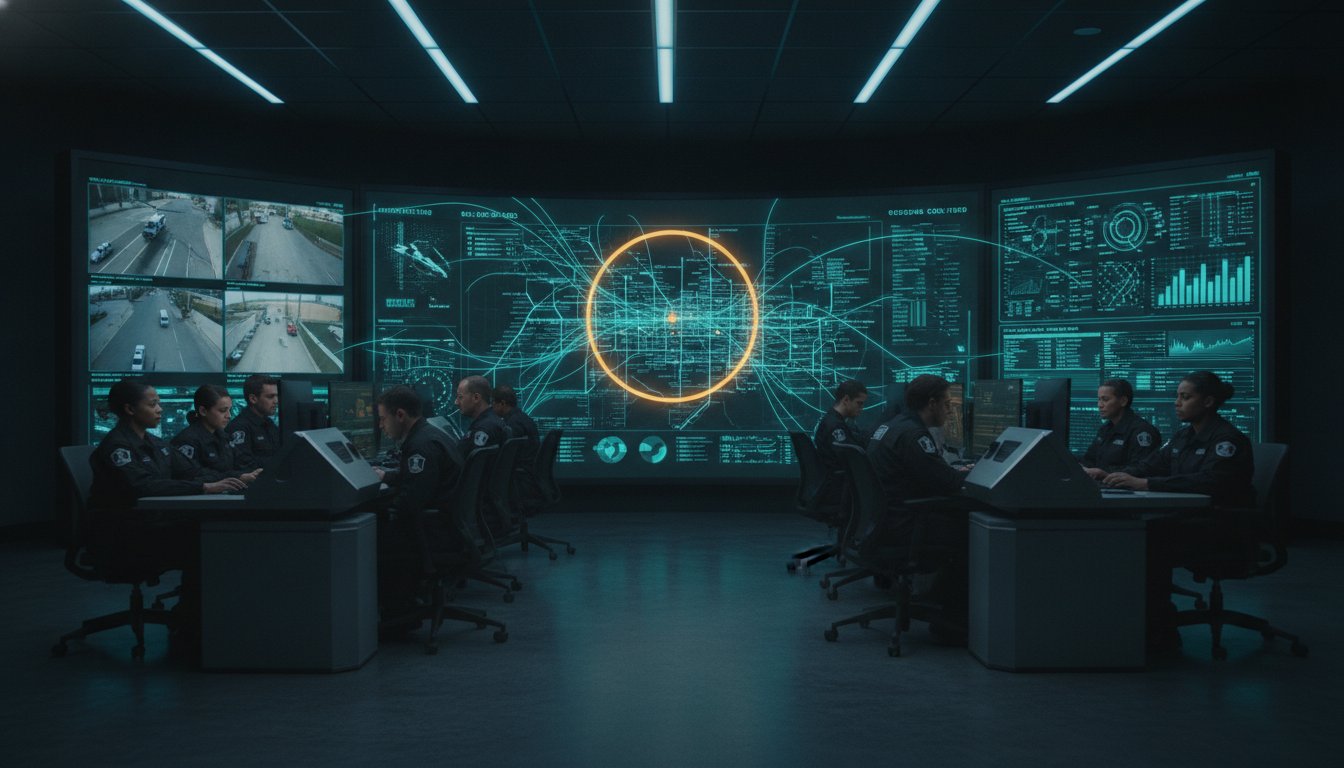
What if the abundance of data in your command center is actually the greatest threat to your operational success? In high-stakes environments, information is often trapped in fragmented silos, leaving operators to struggle with cognitive overload while trying to manually correlate disparate feeds. This lack of coordination between control rooms and field teams creates dangerous gaps where critical incidents can be missed entirely. Most control rooms already have the screens. What they’re missing is the layer that decides what goes on them, and escalates automatically when something needs attention.
We recognize that true resilience requires a shift in how information is prioritized. This article explores how a collaborative situational awareness application transforms these fragmented streams into actionable intelligence. You will discover how a unified operational intelligence layer creates a common operating picture that reduces response times and empowers your team to act with absolute certainty when every second counts.
Key Takeaways
- Identify the operational gaps caused by fragmented data silos and learn why a surplus of screens often leads to decreased situational awareness.
- Discover how a collaborative situational awareness application acts as the intelligence layer that decides what appears on your screens and escalates critical events automatically.
- Transition from reactive monitoring to proactive operations by utilizing event-driven intelligence to reduce the time between detection and response.
- Extend your common operating picture beyond the command center to ensure seamless coordination between the NOC, EOC, and mobile field teams.
- Establish a unified operational intelligence hub that empowers your team to act with absolute certainty during critical incidents.
The Crisis of Fragmented Data: Why Traditional Control Rooms Fail
Modern command centers often mistake visibility for awareness. While many organizations invest heavily in expansive video walls, the mere presence of data doesn’t guarantee a successful response. Operators often face a “Wall of Data” where Video Management Systems (VMS), Computer-Aided Dispatch (CAD), and cyber threat intelligence streams compete for limited cognitive bandwidth. Without a collaborative situational awareness application, these tools remain isolated, forcing personnel to manually correlate events during high-stress scenarios. This fragmentation prevents the formation of a true Common Operating Picture (COP), leaving teams to act on incomplete or outdated information.
Most control rooms already have the screens. What they’re missing is the layer that decides what goes on them, and escalates automatically when something needs attention. When an incident occurs, the sheer volume of incoming alerts can bury the most critical signals. This creates a dangerous environment where expensive infrastructure fails to prevent missed incidents because the relevant data wasn’t prioritized or visualized at the right moment.
The Reality of Operator Fatigue
Human attention spans are not designed for the rigors of 24/7 monitoring. In high-stakes security and utility sectors, the transition from routine observation to emergency response is jarring. Passive monitoring often leads to a state where operators “see” the screens but fail to perceive the anomalies hidden within them. The signal-to-noise ratio in modern NOCs is often so skewed that critical alerts are buried under a mountain of routine status updates. This cognitive overload directly impacts operational readiness, as fatigued staff are significantly more likely to overlook the subtle indicators of a burgeoning crisis.
Why Disparate Systems Stall Incident Response
Every second spent switching between standalone applications is a second lost in the response cycle. When a supervisor has to toggle between a VMS for visual confirmation and a CAD system for resource deployment, the friction creates delays. Achieving true Situational awareness requires more than just seeing data; it requires understanding the context and projecting future states across the entire enterprise.
Siloed data doesn’t just slow down individuals; it prevents cross-departmental collaboration. When the control room can’t share a unified view with field teams or other stakeholders, coordination breaks down. This lack of integration compromises Operational Continuity and leaves the organization vulnerable to cascading failures during large-scale events. A central intelligence hub is necessary to bridge these gaps, ensuring that every participant in the mission-critical chain is working from the same intelligence.
What is a Collaborative Situational Awareness Application?
Commanders frequently manage complex environments where every sensor, camera, and database operates in a vacuum. This lack of orchestration requires manual effort to connect the dots during a rapidly evolving threat, leading to critical delays. When information stays trapped within individual software windows, the team loses the ability to coordinate effectively. Most control rooms already have the screens. What they’re missing is the layer that decides what goes on them, and escalates automatically when something needs attention.
A collaborative situational awareness application serves as this missing layer, orchestrating the flow of information across the entire enterprise. It enables an active, event-driven model where the system alerts the team to anomalies in real time. By serving as a central hub, it unifies disparate tools like VMS, CAD, and IoT sensors into a single, coherent interface. This ensures that every team member, regardless of their physical location, sees the same prioritized data at the same moment. This clarity is essential for maintaining control during incidents where fragmented information could lead to catastrophic delays.
The Operational Intelligence Layer
At its core, vis/ability functions as the operational intelligence layer that bridges the gap between raw data and human judgment. It integrates with Commercial Off-the-Shelf (COTS) hardware and specialized software to make those tools more effective for the collective mission. This methodology aligns with a systems approach to situational awareness, which prioritizes the synthesis of information over simple collection. By consolidating these feeds into a unified platform, vis/ability provides the bedrock upon which critical decisions are made, ensuring that no vital detail is lost in a siloed application.
Key Features of a Collaborative Platform
A robust collaborative situational awareness application provides several mission-critical capabilities that traditional video wall managers lack. These features are designed to enhance the speed and accuracy of your response:
- Real-time Data Aggregation: It ingests and correlates diverse data streams, including live video, geospatial GIS layers, and cyber threat feeds, to provide a comprehensive view of the operational landscape.
- Shared Workspaces: It facilitates distributed decision-making by allowing teams in the command center, huddle rooms, and field to interact with the same data simultaneously.
- Automated Escalation Protocols: The system identifies critical triggers and automatically pushes relevant data from an operator’s desk to the main video wall or mobile devices, ensuring immediate visibility for leadership.
This level of integration transforms your command center into a proactive engine of safety and efficiency. To see how these layers work in practice, you can explore the capabilities of the vis/ability platform to better understand how it supports high-stakes decision-making.
Beyond Dashboards: The Power of Event-Driven Intelligence
Monitoring a mission-critical environment through static dashboards often fails when complexity peaks. Manual scanning for anomalies is inherently prone to human error and delay. True operational resilience requires a shift toward event-driven intelligence, where the system acts as an active participant in the response strategy. By integrating disparate data streams into a “system of systems,” information moves at the speed of the incident itself. Operational success depends on an intelligence layer that filters and prioritizes data before it reaches the operator.
Most control rooms already have the screens. What they’re missing is the layer that decides what goes on them, and escalates automatically when something needs attention. This intelligence layer acts as the filter between raw data and decisive action. It ensures that when a critical threshold is met, the right information is presented to the right people without requiring a manual search. Situational awareness in mission-critical operations is defined by the ability to make safe, informed choices under pressure, which is only possible when technology handles the burden of data discovery.
Automating the Escalation Workflow
Event-driven triggers transform how a command center functions. Instead of an operator manually searching for a camera feed after an alarm sounds, the system executes pre-configured response layouts based on the specific type of threat. When a perimeter sensor is breached, the system immediately displays the relevant video feeds, geospatial maps, and contact protocols on the main video wall. This automation reduces the time between detection and action by removing the friction of manual navigation. Automated escalation preserves operator focus for high-level judgment, allowing them to manage the crisis rather than the software. By standardizing these responses, you eliminate the variability of human performance during high-stress shifts.
Integrating Specialized Tools into a Unified View
Organizations often rely on specialized tools like VMS for video, SIEM for cybersecurity, or standalone platforms for incident logging. While these tools are effective for their specific niches, they only provide a partial solution and require a unifying layer to create a full common operating picture. Standalone applications create data silos that prevent a holistic understanding of an event. For example, knowing a door was forced open provides value, but seeing that event alongside a simultaneous cyber-attack alert provides the context needed for a coordinated response.
The vis/ability Platform serves as this essential hub, speaking to every application in your stack to ensure total visibility. It bridges the gap between specialized software and the collective needs of the team. This integration allows for a seamless flow of intelligence, ensuring that your collaborative situational awareness application makes every other tool in your arsenal more effective. When your tools work in concert, your team can act with a level of certainty that siloed systems simply cannot provide.

Distributed Awareness: Connecting the NOC, EOC, and the Field
Traditional command centers often function as information fortresses, where critical intelligence is trapped within the four walls of the control room. This isolation creates a dangerous disconnect between strategic decision-makers and the tactical personnel who must execute those decisions in the field. To achieve true resilience, organizations must adopt a collaborative situational awareness application that extends its reach to any device, anywhere. Most control rooms already have the screens. What they’re missing is the layer that decides what goes on them, and escalates automatically when something needs attention. By deploying an operational intelligence layer, you ensure that a consistent Common Operating Picture (COP) is maintained across the Network Operations Center (NOC), the Emergency Operations Center (EOC), and mobile teams.
This distributed approach breaks down the barriers that typically lead to coordination failures during a crisis. When stakeholders in a huddle room or remote executives can access the same live data feeds as the dispatchers, the entire organization moves with a unified purpose. This transparency doesn’t just improve speed; it enhances the accuracy of every decision made at the edge of the operation. By centralizing disparate data into a single hub, you provide a bedrock of reliability that supports the human element of the mission.
Extending Visibility to the Field
Mobile vis/ability transforms field personnel from passive recipients of orders into active contributors of real-time intelligence. When a first responder or utility technician captures live video or geospatial data, that information flows directly back to the central command hub. This bidirectional exchange requires low-latency streaming to ensure that field-level decisions are based on the same reality seen by supervisors. Our Public Safety solutions demonstrate how this connectivity accelerates incident resolution by providing responders with the visual context they need to act safely. This extension of visibility ensures that the operational intelligence layer serves as the unifying platform for the entire mission-critical team.
Multi-Agency and Multi-Site Collaboration
Large-scale incidents rarely respect jurisdictional or geographic boundaries. Managing situational awareness across dispersed teams requires a platform that can synchronize data between local EOCs and federal or state partners. This level of coordination is the cornerstone of Mission Critical Operations, where the ability to share a secure, unified view prevents the duplication of efforts and conflicting responses. Whether the collaboration happens in a formal huddle room or through a remote stakeholder’s mobile device, the integrity of the information must remain absolute. Maintaining high operational security is paramount when sharing intelligence nationally, ensuring that only authorized participants have access to the common operating picture.
If you’re ready to bridge the gap between your command center and your field operations, contact our team today to learn how vis/ability can unify your distributed teams.
Implementing vis/ability: Your Operational Intelligence Hub
Implementing vis/ability transforms your command center from a collection of monitors into a proactive intelligence hub. Activu positions the vis/ability platform as the bedrock for mission-critical decisions, ensuring that clarity replaces confusion during a crisis. By transitioning from fragmented silos to a unified operating environment, your team gains the ability to see and act on threats before they escalate. Most control rooms already have the screens. What they’re missing is the layer that decides what goes on them, and escalates automatically when something needs attention. This collaborative situational awareness application empowers individuals to act with greater certainty, reinforcing the human element within a digital context; to see how other organizations support individual empowerment, visit Amplify Ability.
We understand that technology is only as effective as the people who use it. By providing a steady stream of reliable, prioritized data, vis/ability removes the guesswork that often leads to hesitation. This operational intelligence layer serves as the quiet, powerful engine behind your success, allowing your experts to focus on strategy rather than data management. When every second counts, having a trusted partner and a dependable platform ensures that your operation remains resilient against any challenge.
The Activu Approach to Control Room Design
Effective control room design requires a balance between high-performance hardware and a sophisticated software intelligence layer. We design environments that maximize operational efficiency while actively reducing operator fatigue. By prioritizing essential information, we ensure that your video wall serves as a strategic asset rather than a source of distraction. Our SOC/NOC/GSOC solutions integrate these principles to create spaces where intelligence flows seamlessly. This holistic approach ensures that your infrastructure supports the cognitive needs of your operators during long shifts and high-stakes incidents.
Building Your Common Operating Picture
The first step in achieving total visibility is identifying the specific pain points and data gaps within your current environment. We work with your team to configure automated escalations that mirror your unique mission-critical needs. This process ensures that your collaborative situational awareness application is finely tuned to the rhythms of your operation. Whether you’re managing a power grid or a city-wide emergency response, the goal remains the same: a unified common operating picture that leaves nothing to chance. You can contact Activu to bridge your situational awareness gaps and request a mission-specific visualization assessment today.
Achieving Operational Clarity in High-Stakes Environments
Fragmented data and operator fatigue don’t have to be the baseline for your command center. By implementing a collaborative situational awareness application, you replace reactive monitoring with a proactive intelligence layer that unifies your entire software stack. Most control rooms already have the screens. What they’re missing is the layer that decides what goes on them, and escalates automatically when something needs attention. This transformation ensures that every team member, from the NOC to the field, operates with a single, synchronized reality.
Trusted by Global 500 companies and federal agencies, vis/ability reduces cognitive overload through automated escalation. It offers seamless integration with Milestone and major SIEM or SOAR platforms, making your existing tools more effective. This system of systems provides the bedrock upon which critical decisions are made with absolute certainty. Take the next step in securing your mission-critical resilience. Request a Demo of the vis/ability Operational Intelligence Platform to see how unified intelligence can safeguard your operations. Your team deserves the clarity required to act decisively when every second counts.
Frequently Asked Questions
What is a collaborative situational awareness application?
A collaborative situational awareness application is an intelligence layer that unifies disparate data streams into a single interface for real-time coordination. It ensures that everyone, from the command center to the field, operates from the same prioritized information. Most control rooms already have the screens. What they’re missing is the layer that decides what goes on them, and escalates automatically when something needs attention.
How does vis/ability differ from standard incident management software?
Standard incident management software typically focuses on data entry and historical logging. In contrast, vis/ability acts as an operational intelligence layer that prioritizes real-time visualization and automated event triggers. While some organizations use standalone logging tools, they often lack the active visualization required to manage a crisis as it unfolds. This shift from passive records to active awareness is what defines a truly resilient command center.
Can this platform integrate with our existing VMS and CAD systems?
Yes, vis/ability is built for deep application integration with existing VMS, CAD, and SIEM or SOAR platforms. It serves as a central hub that ingests data from these disparate systems to create a unified common operating picture. This integration ensures that your current investments in specialized tools become more valuable to the entire team, ensuring that every data point contributes to a collective response.
How does a collaborative SA application help with NERC CIP compliance for utilities?
It enhances NERC CIP compliance by providing a Cybersecurity Common Operating Picture that monitors both physical and digital assets. By consolidating alerts from perimeter sensors and network monitoring tools, it ensures that utility operators maintain the visibility required for regulatory oversight. This centralized view streamlines the documentation of incident response and security monitoring, providing a clear audit trail for compliance officers.
What is the role of mobile users in a common operating picture?
Mobile users are critical nodes that provide real-time field data back to the command center through low-latency streaming. They contribute live video and geospatial updates while receiving the same prioritized intelligence as the NOC. This bidirectional flow ensures that field teams act with the same level of certainty as leadership, breaking down the traditional walls between the control room and the tactical edge.
Why do operators often miss critical incidents on standard video walls?
Operators often miss incidents because of cognitive overload caused by a “Wall of Data.” When information is trapped in fragmented silos, critical signals are buried under routine activity. A collaborative situational awareness application solves this by automatically prioritizing and escalating relevant data, ensuring that the sheer volume of screens becomes an asset rather than a liability that obscures emerging threats.
How does event-driven visualization reduce response times?
Event-driven visualization reduces response times by eliminating the need for manual data discovery. When a pre-configured trigger occurs, the system automatically pushes the relevant camera feeds and geospatial maps to the video wall. This immediate display allows operators to focus on high-level judgment instead of navigating through software menus, ensuring that the time between detection and action is as short as possible.
Is vis/ability a COTS solution or a custom build?
vis/ability is a COTS platform specifically engineered for mission-critical environments. It provides the reliability and support of a commercial product while allowing for extensive configuration to meet specific operational needs. This approach ensures that organizations can deploy a proven solution without the risks associated with entirely custom software builds, offering a stable foundation for long-term operational continuity.