
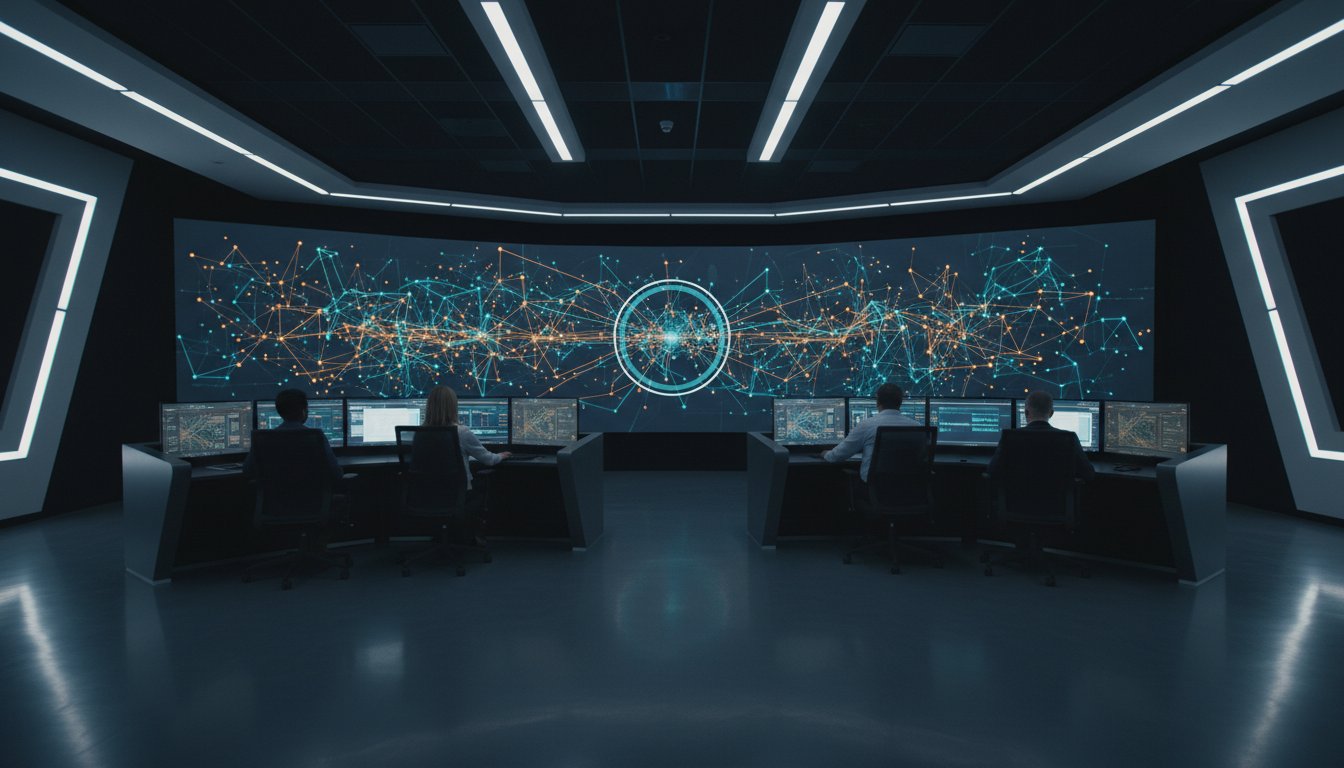
The traditional promise of a single pane of glass for security monitoring has become a source of operational paralysis rather than a solution for clarity. While IT teams can waste up to 40% of their time switching between disconnected monitoring tools, the pressure to respond has never been higher. With the Cybersecurity Incident Reporting for Critical Infrastructure Act (CIRCIA) finalizing rules in May 2026, your organization now faces mandatory 72 hour reporting windows for significant incidents. You know that fragmented data silos and manual correlation are the primary drivers of high MTTR, leaving your operators overwhelmed by cognitive load during a crisis.
Most control rooms already have the screens. What they’re missing is the layer that decides what goes on them; and escalates automatically when something needs attention. This article demonstrates how to transition from passive monitoring to an event-driven common operating picture that empowers decisive action. You’ll learn how the vis/ability platform serves as an operational intelligence layer, integrating tools like IBM QRadar or Microsoft Sentinel into a unified platform. This approach ensures your command center and mobile field units maintain absolute situational awareness when seconds matter most.
Key Takeaways
- Eliminate the cognitive overload caused by the “swivel-chair” effect by identifying where fragmented data silos create critical visibility gaps.
- Establish a true single pane of glass for security monitoring that differentiates between standard IT logs and the situational awareness required for mission-critical operations.
- Understand why more screens often lead to less clarity unless an intelligent layer manages visual priority and automates escalation based on real-time events.
- Audit your existing security platforms to transition from passive monitoring to a proactive, event-driven posture that empowers your team to act with certainty.
- Unify your operational environment by using the vis/ability platform as the central hub for collaboration between the control room and mobile field units.
The Fragmentation Crisis in Modern Security Operations
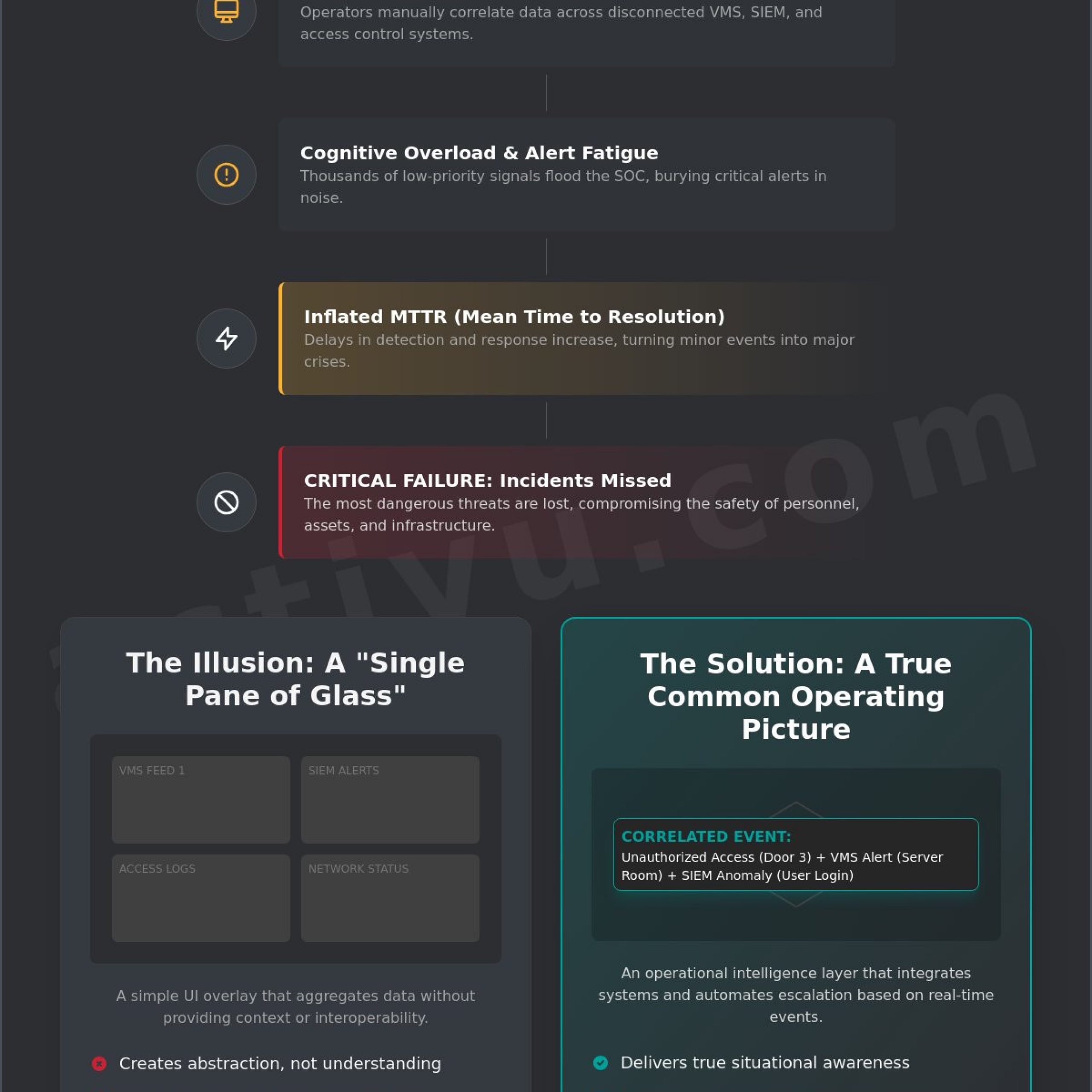
Operators in Global Security Operations Centers (GSOCs) and Fusion Centers face a relentless stream of data that often exceeds human processing limits. They frequently find themselves trapped in the “swivel-chair” effect, physically turning from one workstation to another to correlate information across disconnected Video Management Systems (VMS), Security Information and Event Management (SIEM) platforms, and access control interfaces. This fragmentation creates a dangerous visibility gap. When a high-stakes incident occurs, the critical data points are often buried in separate silos, forcing human operators to perform manual mental gymnastics to understand the threat. Most control rooms already have the screens. What they’re missing is the layer that decides what goes on them; and escalates automatically when something needs attention. Relying on static monitors is a primary reason why operators miss incidents, as the human brain isn’t wired to maintain peak vigilance over dozens of unchanging video feeds for an entire shift.
The Hidden Cost of Tool Sprawl
Enterprise security environments now manage an average of 75 different tools. While each serves a specific purpose, this sprawl leads to fragmented situational awareness. The result is chronic alert fatigue. When thousands of low-priority signals flood the room, the one signal that indicates a perimeter breach or a cyber-physical threat is easily lost. This noise directly inflates the Mean Time to Resolution (MTTR). In mission-critical sectors like utilities or defense, a delay of even 120 seconds can mean the difference between a contained event and a catastrophic failure of infrastructure. Managing these disparate systems manually isn’t just inefficient; it’s a liability that compromises the safety of personnel and assets.
The Failure of Traditional Dashboarding
Many organizations attempt to solve this by seeking a single pane of glass for security monitoring. However, a simple UI overlay that merely displays multiple feeds on one screen doesn’t fix the underlying problem of system interoperability. It aggregates data without providing context. Organizations using tools like Axon often realize these platforms only offer a partial view of the operational landscape. While they capture valuable forensic evidence, they lack the unifying layer needed to create a full common operating picture. True operational intelligence requires more than just data collection. It requires a platform that understands the relationship between a badge swipe in the lobby and a server room temperature spike, automatically bringing that correlation to the forefront before the operator even has to look for it.
Defining the Single Pane of Glass for Mission-Critical Security
In high-stakes environments, a single pane of glass for security monitoring is much more than a software dashboard. It’s a centralized platform that integrates real-time video, sensor data, and digital alerts into a unified interface designed for immediate action. There’s a fundamental difference between IT monitoring and operational monitoring. IT monitoring typically focuses on backend logs and network metrics to ensure system health. Operational monitoring, however, prioritizes situational awareness and physical security. It’s the difference between knowing a server is down and knowing that an unauthorized individual has entered a restricted substation. To manage these overlapping threats, organizations are moving toward a Cybersecurity Common Operating Picture (COP). This approach uses a specialized incident management software framework to ensure that every data point serves the mission of the entire team.
Core Components of a Security COP
A true common operating picture requires the deep integration of VMS, SIEM, and SOAR platforms into a single visualization layer. Many organizations find that their data collection is robust, but their ability to see that data in context is lacking. Following a methodical approach for SIEM implementation is a critical first step, but the data must eventually be visualized alongside real-time geospatial information. By incorporating telematics and field asset tracking, dispatchers can see the exact location of responders in relation to a threat. Unified alerting systems then remove the burden of manual correlation from the operator, ensuring that critical signals are never missed because they were buried in a secondary menu.
Beyond Static Dashboards
True security monitoring must be event-driven rather than passive. A rotating carousel of camera feeds or a wall of static graphs often creates abstraction instead of understanding. Most control rooms already have the screens. What they’re missing is the layer that decides what goes on them; and escalates automatically when something needs attention. This operational intelligence layer acts as the vital bridge between raw data and human judgment. It ensures that when a critical trigger occurs, the relevant data is pushed to the forefront of the video wall and to the mobile devices of field units simultaneously. This creates a single source of truth that allows for seamless collaboration during a crisis. If you’re ready to move beyond static views, you can learn more about the vis/ability platform and how it serves as this unifying hub.
Why Most Security Dashboards Create Abstraction Instead of Understanding
Expanding the number of monitors in a command center often backfires. When operators are surrounded by dozens of screens displaying raw data, the sheer volume of information creates a wall of abstraction. This prevents them from seeing the actual threat. Most control rooms already have the screens. What they’re missing is the layer that decides what goes on them; and escalates automatically when something needs attention. Without an intelligent layer to manage visual priority, the video wall risks becoming a high-priced distraction rather than a strategic asset. The goal of a single pane of glass for security monitoring isn’t to show everything at once, but to reduce “time to glass” for the alerts that truly matter.
The Gap Between Data and Decision
Identifying the “first signal” of a complex incident is the hardest part of any operation. Is a door alarm a simple malfunction or the start of a coordinated breach? Raw data alone cannot answer that. The vis/ability platform serves as the central hub where all other tools flow, providing the necessary context to make that distinction. This empowers operators to act with certainty. When the system automatically correlates a cyber-alert with a physical camera feed, it removes the need for second-guessing. This shift toward automated visualization is a key factor in achieving greater financial efficiency and operational effectiveness, as teams spend less time hunting for data and more time resolving threats.
Shortcomings of Partial Solutions
Some organizations rely on specialized tools like Axon or Juvare. While these platforms are useful for their specific niches, they only provide a narrow slice of the operating picture. They lack the cross-platform integration required for a unified response across an entire enterprise. Relying on these tools in isolation leaves gaps that can be exploited during a high-stakes event. It’s a common misconception that purchasing video wall hardware is the same as implementing a situational awareness solution. Hardware is just the canvas. The operational intelligence layer is the engine that makes that hardware useful for the entire command center team, ensuring that the right information reaches the right person at the exact moment it’s needed.
Transitioning to Event-Driven Intelligence and Automated Escalation
Transitioning from a state of passive monitoring to proactive response requires a methodical shift in how your command center handles information. Most control rooms already have the screens. What they’re missing is the layer that decides what goes on them; and escalates automatically when something needs attention. A true single pane of glass for security monitoring only becomes functional when it’s built on a foundation of event-driven intelligence. With the May 2026 CIRCIA reporting rules requiring 72 hour notification for significant cyber incidents, manual workflows are no longer viable for maintaining compliance or security.
The path to high-stakes situational awareness follows a specific four step process:
- Step 1: Audit existing data silos to identify critical “trigger events” across SIEM, VMS, and access control platforms.
- Step 2: Implement an operational intelligence layer, such as vis/ability, to ingest and correlate these triggers in real time.
- Step 3: Define escalation workflows that automatically change the video wall layout or notify mobile users when specific thresholds are met.
- Step 4: Extend the common operating picture to distributed teams and huddle rooms to ensure a collaborative response.
Executing these steps ensures that your organization achieves operational continuity, allowing for mission-critical resilience even during complex, multi-vector threats.
The Power of Automated Workflow Escalation
Automated escalation removes the burden of constant vigilance from the operator. When vis/ability detects a critical alert, it can automatically transition a minor notification into a full-screen incident view based on pre-defined logic. This process significantly reduces human error by ensuring that the system, not a fatigued operator, decides what is mission-critical at any given moment. Event-driven visualization is the proactive shift from reactive monitoring. This automation is the engine that drives a 70% faster incident response time, as identified in recent SOAR integration studies.
Extending Visibility to the Field
Responders outside the SOC are often the most vulnerable when data is siloed. Mobile vis/ability ensures that field units maintain the same common operating picture as the central command center. This isn’t a one-way stream; field data, including mobile video feeds and GPS coordinates, flows back into the central hub to complete the situational picture for everyone involved. Seamless collaboration across different device types is essential during a crisis. If you are ready to eliminate the gaps in your current monitoring posture, you can request a demonstration of the vis/ability platform to see how it unifies your entire operation.
Unifying Your Security Posture with the vis/ability Platform
The vis/ability platform serves as the bedrock for organizations that cannot afford a lapse in situational awareness. While many software providers offer centralized visibility into data sources, they often fail to address the physical and operational reality of the command center. A true single pane of glass for security monitoring must bridge the gap between digital alerts and the human operators tasked with managing them. Most control rooms already have the screens. What they’re missing is the layer that decides what goes on them; and escalates automatically when something needs attention. By acting as this unifying layer, vis/ability ensures that your existing investments in SIEM, VMS, and incident management tools become more effective for the entire team.
This platform is specifically engineered to integrate with the complex, high-stakes infrastructures found in utilities, transportation, and public safety. In these environments, data overload is a constant threat to operational continuity. vis/ability filters the noise, allowing your team to move from a state of complex data overload to a state of clear, actionable intelligence. It provides the absolute technical reliability required when life-saving or infrastructure-critical decisions are made.
Control Room Design and Engineering
The Activu Advantage: Visibility into What Matters
The core of the Activu advantage is the purposeful shift from simple monitoring to true situational awareness. Monitoring is often passive; situational awareness is the foundation of decisive action. Our platform acts as the quiet, powerful engine that provides calm and clarity amidst the potential chaos of a security breach or physical threat. It empowers your people to act with greater certainty when the stakes are at their highest. This focus on the human element within the digital space is what defines our mission-oriented approach. If you are ready to transform your fragmented data into a unified, event-driven operating picture, you can request a demo to see the operational intelligence layer in action.
Achieving Operational Clarity in High-Stakes Environments
High-stakes security environments demand more than the simple collection of data. True resilience is built on the ability to transition from passive monitoring to proactive, event-driven action. Achieving a functional single pane of glass for security monitoring requires a shift away from fragmented silos and toward a unified operational intelligence layer. This transition eliminates cognitive overload and ensures that critical alerts are never lost in the noise of a 24/7 GSOC.
Most control rooms already have the screens. What they’re missing is the layer that decides what goes on them; and escalates automatically when something needs attention. Since its founding in 1983, Activu has provided technical reliability to federal agencies, global utilities, and major transportation hubs. Our platform reduces incident response time through automated escalation logic, turning raw data into the certainty required for mission-critical judgment. See how vis/ability unifies your security operations. Request a Demo today. Your team deserves the clarity that comes from seeing exactly what matters when every second counts.
Frequently Asked Questions
What is a single pane of glass for security monitoring?
A single pane of glass for security monitoring is a centralized visualization platform that integrates disparate data feeds, such as VMS, SIEM, and access control, into one interface. It provides the context required for mission-critical decision making rather than just aggregating raw data. By unifying these systems, it bridges the gap between digital alerts and human judgment during high-stakes incidents.
How does a single pane of glass reduce operator fatigue?
It reduces cognitive overload by eliminating the need for operators to manually correlate alerts across disconnected systems. Research shows IT teams can waste up to 40% of their time switching between different monitoring tools. A unified view allows operators to maintain focus on the threat itself rather than the mechanics of the software they’re using.
Can vis/ability integrate with my existing SIEM and VMS platforms?
Yes, vis/ability is designed as an operational intelligence layer that serves as a central hub for your existing tools. It seamlessly integrates with platforms like IBM QRadar, Splunk, and various VMS solutions to create a unified stream of data. This allows your team to leverage current investments while gaining a more complete common operating picture.
What is the difference between a dashboard and a common operating picture?
A dashboard typically provides a static or aggregated view of data points for a single user. In contrast, a common operating picture is a dynamic, shared environment that ensures the entire team sees the same critical information simultaneously. Most control rooms already have the screens. What they’re missing is the layer that decides what goes on them; and escalates automatically when something needs attention.
Why do security operations centers need event-driven visualization?
Event-driven visualization is necessary to meet the 72 hour reporting requirements mandated by the Cybersecurity Incident Reporting for Critical Infrastructure Act (CIRCIA), which is finalized in May 2026. It ensures that the most critical threats are automatically prioritized on the video wall. This proactive approach prevents analysts from getting lost in the 85% of alerts that are often non-critical noise.
How does mobile vis/ability extend situational awareness to the field?
Mobile vis/ability allows field units to access the same real-time data and video feeds available in the command center. This bi-directional flow ensures that responders can contribute GPS data and mobile video back to the central hub. It creates a seamless link between the control room and the tactical environment, ensuring everyone acts with the same intelligence.
What are the common pitfalls when implementing a single pane of glass?
The most common pitfall is focusing on hardware or static dashboards rather than the underlying intelligence layer. Organizations often purchase video wall systems without the software needed to automate visualization. Partial solutions like Axon or Juvare may provide a slice of the picture, but they require a unifying layer to be truly useful for an entire mission-critical team.
How does Activu help with NERC CIP or other regulatory compliance?
Activu provides the automated escalation and real-time visibility required to satisfy the strict reporting timelines of NERC CIP and the Digital Operational Resilience Act (DORA), which takes full effect in January 2026. By serving as an operational intelligence layer, it creates a definitive audit trail of how an incident was detected and resolved. This level of technical reliability is essential for maintaining compliance in critical infrastructure sectors.