
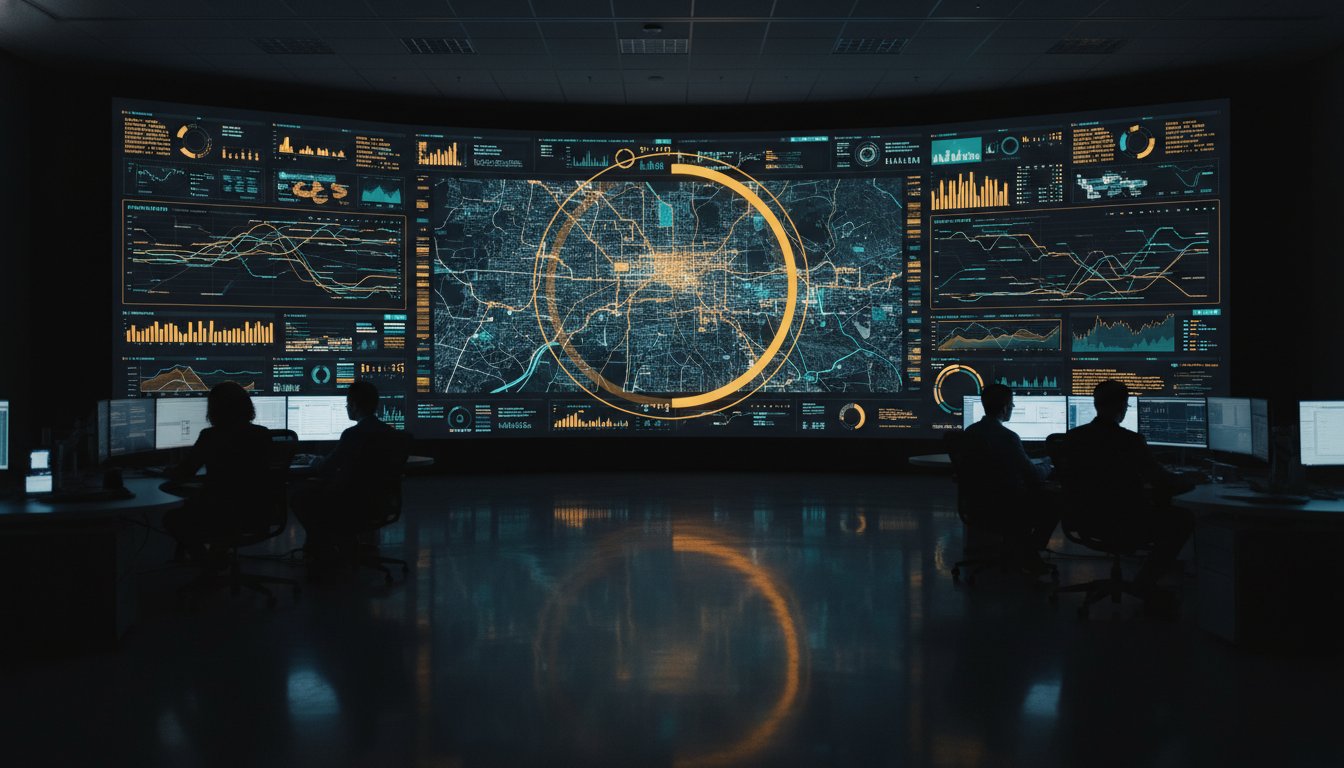
A staggering 29% of employees would consider leaving their roles if forced to work fully in person; yet for mission-critical operations, the distance between a remote specialist and the command center often creates a dangerous information gap. When an incident occurs, operators frequently struggle with fatigue from monitoring disconnected screens while field data remains trapped in siloed apps. Most control rooms already have the screens. What they’re missing is the layer that decides what goes on them, and escalates automatically when something needs attention. Utilizing a specialized distributed team collaboration platform is no longer optional for high-stakes environments where every second counts.
You understand that standard communication tools are built for general discussion; they aren’t designed for the split-second execution required in an emergency operations center. This guide demonstrates how to implement an operational intelligence layer that unifies your fragmented data into a single, actionable situational awareness hub. We’ll examine how to bridge the gap between fragmented point solutions and your central display. By the end, you’ll see how vis/ability ensures your team achieves a unified operating picture that reduces cognitive load and accelerates incident response times across your entire organization.
Key Takeaways
- Identify how fragmented data streams and siloed communication tools contribute to operator fatigue and delayed response times during mission-critical events.
- Learn how a distributed team collaboration platform provides the essential link between headquarters and remote personnel to maintain a unified operating picture.
- Discover the function of an operational intelligence layer that manages your visual environment and automatically escalates critical data when attention is required.
- Understand why specialized tools like Axon only offer partial visibility and how to integrate them into a central hub for comprehensive situational awareness.
- Explore strategies for extending real-time visibility from the command center video wall to mobile devices, empowering field teams to act with absolute certainty.
The Hidden Cost of Fragmented Distributed Team Collaboration
In high-stakes environments, a distributed team collaboration platform isn’t just a tool for messaging; it’s the nervous system of your entire operation. When a utility grid fails or a security breach occurs, the distance between a remote specialist and the command center can create a dangerous information vacuum. Most control rooms already have the screens. What they’re missing is the layer that decides what goes on them, and escalates automatically when something needs attention. Without this intelligence, operators are left to navigate a sea of raw data without a compass, leading to fatigue and missed indicators of critical failure.
Visibility into what matters is the only metric that determines operational success. In many organizations, however, this visibility is obscured by fragmented systems and siloed data streams. Operators often monitor between 10 and 20 disconnected screens, a practice that increases cognitive load and slows response times. This fragmentation is more than an inconvenience; it’s a structural risk. Relying on partial solutions means you’re only seeing a sliver of the truth at any given moment. To achieve true situational awareness, teams must ground their workflows in the principles of Computer-supported cooperative work (CSCW), ensuring that technology actually facilitates human judgment rather than complicating it.
The Gap Between the NOC and the Field
The disconnect between a central Network Operations Center and mobile field technicians is where critical visibility often dies. When a technician at a remote substation sees a physical fault that hasn’t yet triggered a digital alarm, that information must reach the command center instantly. Currently, 29% of workers in the first quarter of 2026 prefer hybrid or remote roles, meaning your experts are rarely in the same room. Without a unified operating picture, these distributed teams waste precious minutes switching between disparate applications to find a single source of truth. This friction doesn’t just delay repairs; it compromises the safety of personnel on the front lines.
Why “Office” Tools Fail Mission-Critical Standards
General workplace tools like Slack or Teams are designed for asynchronous discussion, not real-time operational execution. They lack the specialized visualization capabilities required to manage high-resolution video feeds, geospatial data, and live telemetry simultaneously. While some organizations use platforms like Axon for specific video needs, these tools only provide a partial solution and require an operational intelligence layer to become truly useful. High-stakes decisions can’t rely on consumer-grade latency or “AI-first” productivity features that prioritize chat clutter over emergency alerts. You need a dedicated hub that turns fragmented inputs into a steady, reliable stream of actionable intelligence.
Why Standard Platforms are Only Partial Solutions for Operations
Most organizations believe that increasing the number of monitors in a command center directly improves situational awareness. This is a common misconception that often leads to visual clutter rather than clarity. Most control rooms already have the screens. What they’re missing is the layer that decides what goes on them, and escalates automatically when something needs attention. A true distributed team collaboration platform must do more than just facilitate a video call or a chat thread; it must curate the visual environment based on the urgency of the unfolding event.
While organizations frequently utilize specialized tools like Axon for digital evidence or Okta for identity management, these platforms have a narrow focus. They are excellent at their specific functions, but they operate in isolation. When a critical incident occurs, an operator is forced to manually correlate a SIEM alert with a VMS camera feed while simultaneously updating a remote team. This manual correlation is where errors happen and response times lag. With the global team collaboration software market projected to reach $33.49 billion in 2026, the sheer volume of available tools has actually made integration more difficult, not easier. Information overload occurs when these tools fail to filter for relevance, buried under the weight of raw, unprioritized data.
The Partial Solution Trap
Specialized systems such as Security Information and Event Management (SIEM) or Video Management Systems (VMS) often create new digital silos. They provide deep technical data, but that data is rarely accessible to everyone who needs it in real time. This fragmentation requires a unifying layer that makes existing tools useful for the entire team, regardless of their location. Without this, your high-value software investments remain trapped within departmental boundaries. For a deeper look at how to manage these complex workflows, you can explore Incident Management Software for Mission-Critical Environments.
Decision-Ready Intelligence vs. Raw Data
Seeing data is not the same as understanding a situation. Raw data is noise until it’s filtered through the lens of operational priority. Effective leadership in mission-critical environments depends on the ability to distill complex, multi-source inputs into clear, actionable directives. The operational intelligence layer acts as the central hub for mission-critical decisions, ensuring that human judgment is supported by the most relevant digital inputs. This approach moves the team away from simply “monitoring” and toward active, informed execution. If you are looking to refine your command center’s efficiency, you might consider how specialized control room design can further enhance this intelligence layer.
Framework for a Distributed Operational Collaboration Platform
A robust distributed team collaboration platform is built on three pillars: reliability, scalability, and visibility. In a mission-critical environment, these aren’t just features; they’re the foundation of operational continuity. A successful operation follows a clear Problem-Solution-Impact cadence. You identify a high-level operational challenge, apply a precise technological methodology, and achieve a definitive state of clarity. Most control rooms already have the screens. What they’re missing is the layer that decides what goes on them, and escalates automatically when something needs attention. By moving away from manual monitoring, organizations can establish a proactive posture that remains steady even during a crisis.
Situational awareness is the bedrock of this framework. It requires more than just a shared chat room; it demands a common operating picture that stays synchronized across every device in the network. When your platform is engineered for high-stakes environments, it acts as a vigilant guardian, ensuring that the right information reaches the right person at the moment of the critical decision. This architectural approach humanizes the digital space, empowering your personnel to act with greater certainty when stakes are at their highest.
Requirement 1: Real-Time Data Aggregation
Operational work requires the seamless integration of complex applications and live video streams. A platform that only supports a few specific tools creates new silos rather than breaking them. To be effective, the system must be application-agnostic, pulling data from SCADA, GIS, and VMS feeds simultaneously without high latency. This flexibility is often achieved by leveraging Commercial Off-the-Shelf (COTS) solutions, which allow for rapid deployment and absolute technical reliability. When every second is a factor in public safety or infrastructure stability, the ability to aggregate disparate data into a single view is the difference between a controlled response and chaos.
Requirement 2: Event-Driven Escalation
Manual monitoring is a primary cause of operator fatigue in 24/7 environments. Research indicates that after only 20 minutes of watching a video wall, operators can miss a significant percentage of incidents due to cognitive overload. A sophisticated distributed team collaboration platform solves this by implementing event-driven visualization. Instead of staring at static feeds, the system only shows what matters, when it matters. When a sensor triggers an alarm or a threshold is crossed, the relevant data is automatically pushed to the forefront. This automation ensures constant visibility into what matters, allowing your team to focus their human judgment on solving the problem rather than finding it. This transition from reactive monitoring to proactive intelligence is what sustains mission-critical operations under pressure.

Bridging the Gap: From Video Walls to Mobile Devices
The physical video wall serves as the central thematic anchor for any command center. It provides the high-level perspective required to manage complex infrastructure and public assets. However, the mission doesn’t stop at the walls of the NOC. Most control rooms already have the screens. What they’re missing is the layer that decides what goes on them, and escalates automatically when something needs attention. A true distributed team collaboration platform ensures that this same intelligence is available to every stakeholder, whether they are standing in front of a 40-foot display or holding a mobile device in a remote substation.
Extending this visibility to mobile users is often where standard software fails. While office-centric tools are suitable for basic communication, they lack the technical depth to stream secure, low-latency geospatial data or high-resolution live video to the field. For personnel in public safety or utilities, having access to the exact same situational awareness as the dispatcher is a matter of safety and efficiency. This bridge allows field technicians to see the real-time telemetry that triggered an alert, rather than relying on verbal descriptions over a radio or a text-based chat app that can’t handle mission-critical data feeds.
Mobile vis/ability for Field Operators
Field operators require more than a “lite” version of the command center’s data. They need a secure portal into the operational intelligence layer that maintains technical detail on smaller screens. By utilizing mobile vis/ability, teams can ensure that critical information available at headquarters is accessible on a smartphone or tablet with zero loss in situational context. This capability is vital during incident response, where the first person on the scene must be as informed as the commander. For more on how to optimize these visual systems, see The Video Wall: A Strategic Guide.
Collaborative Decision-Making in Huddle Rooms
Incident management often requires small, specialized groups to conduct breakout sessions. A distributed team collaboration platform facilitates this by moving critical data from the main wall to secondary collaboration spaces or huddle rooms instantly. This prevents the primary command center from becoming overcrowded while ensuring that the breakout team remains connected to the live data stream. The vis/ability platform acts as the unifying bridge, allowing these teams to collaborate on specific subsets of data without losing sight of the broader unified operating picture. This structured approach ensures that every decision, regardless of where it’s made, is based on a single source of truth. To see how this connectivity can transform your operations, contact our design team for a custom operational assessment.
Implementing vis/ability: The Operational Intelligence Layer
Implementing a distributed team collaboration platform involves more than simply adding new software to your stack. It is the final step in a purposeful transition from fragmented monitoring to unified situational awareness. vis/ability serves as the quiet, powerful engine that drives this transition. It acts as the operational intelligence layer that empowers your team to act with absolute certainty when the stakes are at their highest. Most control rooms already have the screens. What they’re missing is the layer that decides what goes on them, and escalates automatically when something needs attention.
Our onboarding process is methodical and steady. It begins with comprehensive control room design services where our experts analyze your specific operational challenges. We don’t just provide a tool; we build a foundation for decision-ready intelligence. This ensures that the deployment phase results in a seamless integration with your current VMS, SCADA, and geospatial systems. By the time the platform is live, your team will have moved away from the fatigue of manual monitoring toward a state of event-driven clarity. This logical progression creates a sense of trust, leading your staff from a state of data overload to actionable intelligence.
Tailored for Your Industry
Operational needs vary significantly across different sectors. In Transportation, the platform manages the flow of real-time transit data to ensure passenger safety and infrastructure reliability. Within Federal Defense, the priority shifts to secure, low-latency intelligence sharing across global networks. The vis/ability platform is engineered to scale alongside your organization, whether you are managing a localized Security Operations Center (SOC) or a national-level Emergency Operations Center (EOC). For those seeking a detailed blueprint for resilience, our comprehensive guide on Mission Critical Operations provides the necessary technical framework.
Take Control of Your Operational Picture
Achieving a unified operating picture is the logical conclusion for any mission-critical organization. It replaces the noise of raw data with the signal of actionable intelligence. This shift provides a sense of steady reassurance, knowing that your technology is a reliable partner in the decision-making process. Moving from reactive chaos to proactive clarity ensures that your operators remain focused on high-level judgment rather than technical troubleshooting. When your distributed team collaboration platform is properly integrated, the human element is empowered to act with greater certainty. To see how this operational intelligence layer can transform your command center, contact Activu for a tailored demonstration. We are ready to help you take full control of your operational environment.
Unify Your Command and Control Environment
Operational success in high-stakes environments depends on your ability to bridge the gap between raw data and human judgment. We’ve explored how fragmented tools create silos that delay response times and increase operator fatigue. Most control rooms already have the screens. What they’re missing is the layer that decides what goes on them, and escalates automatically when something needs attention. By implementing a dedicated distributed team collaboration platform, you transform your video wall from a passive display into an active intelligence hub that reaches every mobile operator in the field.
Activu is trusted by 1,000+ control rooms globally to provide this essential operational intelligence layer. Our solutions offer seamless integration with existing COTS and legacy systems, backed by 24/7 mission-critical support to ensure your uptime is never compromised. Transitioning from reactive monitoring to proactive situational awareness is the only way to maintain resilience in an increasingly complex digital landscape. You can take full control of your operating picture today.
See how vis/ability unifies your distributed team and provides the clarity your mission demands.
Frequently Asked Questions
What is a distributed team collaboration platform for mission-critical use?
It is a specialized system that unifies real-time data, video feeds, and communication across physically separated teams to ensure a common operating picture during high-stakes events. Unlike standard office software, it handles high-bandwidth telemetry and live geospatial feeds with technical precision. Most control rooms already have the screens. What they’re missing is the layer that decides what goes on them, and escalates automatically when something needs attention.
How does vis/ability differ from standard tools like Microsoft Teams or Zoom?
vis/ability is an operational intelligence layer designed for execution, whereas office tools are built for asynchronous discussion. While 79% of workers globally used digital collaboration tools in 2021, most of these platforms lack the ability to visualize SCADA data or live VMS feeds in real time. vis/ability prioritizes event-driven awareness over chat clutter, ensuring that operators focus on the critical decision at hand rather than scrolling through message history.
Can I integrate my existing SCADA or VMS feeds into the collaboration platform?
Yes, the platform is application-agnostic and designed to ingest feeds from diverse sources including SCADA, VMS, GIS, and IoT sensors. This integration eliminates the need for operators to switch between 10 or more disconnected applications during an incident. By centralizing these feeds, the system provides a unified operating picture that ensures all team members see the same technical detail simultaneously across the entire network.
How does an event-driven platform reduce operator fatigue?
An event-driven platform reduces fatigue by automating the selection of visual data, showing only what matters when it matters. Research shows operators can miss a significant percentage of incidents after just 20 minutes of monitoring static video walls. The system uses pre-defined triggers to push relevant alerts and camera feeds to the forefront, allowing operators to transition from constant manual surveillance to proactive, informed response.
Is the collaboration platform secure for government and defense use?
The platform is engineered to meet the stringent security requirements of federal and defense operations. It supports secure, low-latency data transmission across distributed networks and integrates with identity management systems. This ensures that sensitive situational awareness data remains protected while still being accessible to authorized personnel in the command center or the field. It provides a reliable foundation for cybersecurity common operating pictures and emergency management.
What happens to field communications if the central control room loses power?
The distributed architecture ensures that field communications and data access remain functional even if a central hub experiences a localized failure. Because the operational intelligence layer is decentralized, remote teams can continue to access critical data and collaborate through mobile devices or secondary huddle rooms. This redundancy is a core requirement for mission-critical environments where downtime can compromise public safety or infrastructure stability.
Does the platform support mobile devices for field technicians?
Yes, the platform provides full mobile support, allowing field technicians to access the same high-resolution data as the command center. This mobile functionality ensures that personnel on the scene have the technical context needed to act with certainty. It bridges the gap between headquarters and the front lines, ensuring that every stakeholder remains synchronized throughout the lifecycle of an incident without losing technical detail.
How does situational awareness improve incident response times?
Improved situational awareness accelerates incident response by reducing the time spent searching for and correlating fragmented data. When a distributed team collaboration platform provides a single source of truth, teams can identify problems and execute solutions 30% faster than they could using siloed tools. This clarity minimizes the cognitive load on operators, allowing them to focus entirely on life-saving or infrastructure-critical decisions when every second counts.