
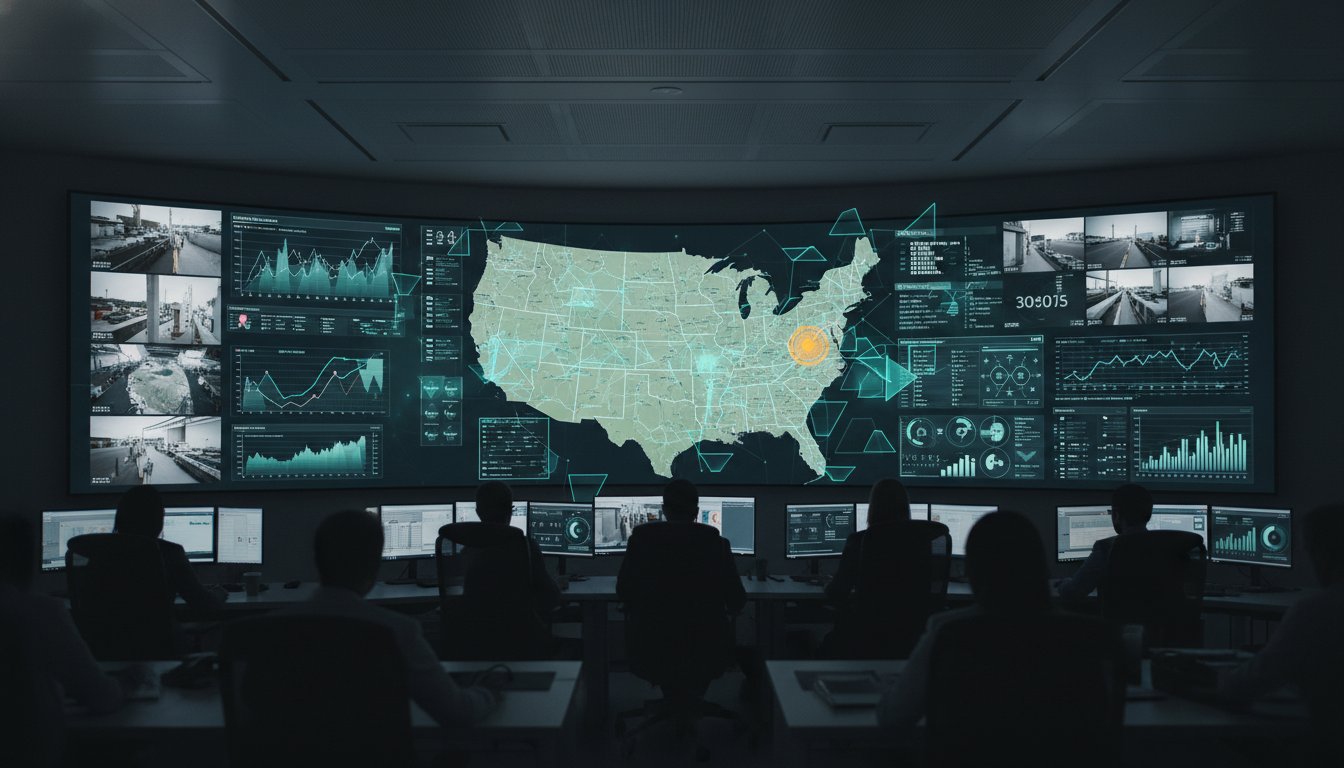
What if the primary obstacle to your command center’s success isn’t a lack of data, but the very screens meant to display it? In high-stakes environments, operators often struggle with cognitive overload while navigating fragmented feeds from VMS, SIEM, and IoT sensors. Deploying a software defined video wall over IP addresses these inefficiencies by integrating siloed systems into a single, manageable stream. Most control rooms already have the screens. What they’re missing is the layer that decides what goes on them; it’s the intelligence that escalates automatically when something needs attention.
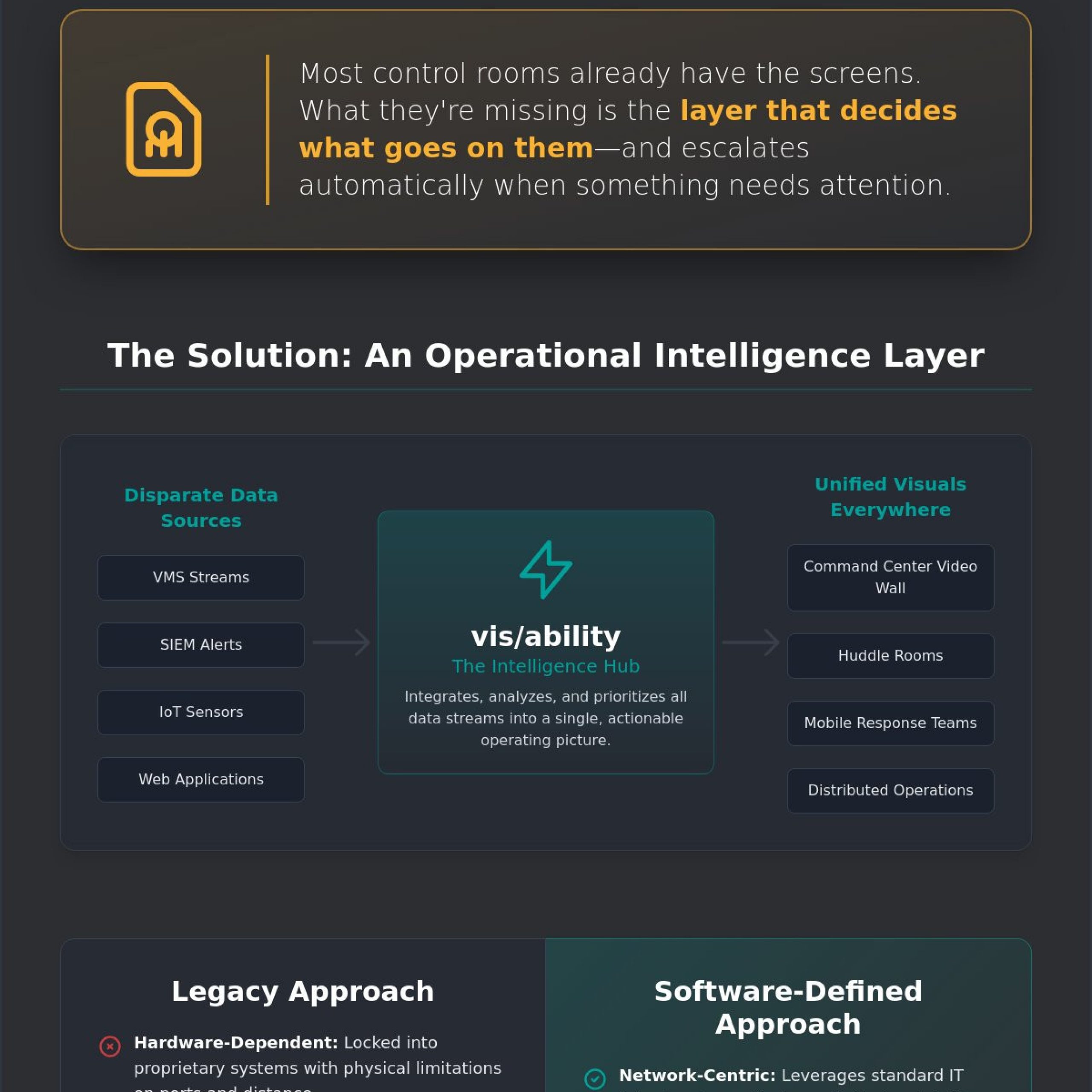
This article demonstrates how shifting to a software-defined architecture transforms your display from a passive monitor into an active operational intelligence layer. By using the vis/ability platform as your central hub, you can eliminate the delays caused by manual escalations and proprietary hardware constraints. We’ll explore how this unified approach creates a common operating picture that extends beyond the command center to huddle rooms and mobile teams, ensuring that critical information reaches the right people at the exact moment it’s needed.
Key Takeaways
- Break the cycle of proprietary hardware lock-in by transitioning to a network-centric visualization architecture.
- Understand the technical shift to a software defined video wall over IP that leverages standard IT infrastructure to ensure low-latency data delivery.
- Recognize that while most rooms have the screens, they often lack the layer that decides what appears and escalates automatically when attention is required.
- Solve data fragmentation by integrating disparate tools like VMS and SIEM into a single, actionable Common Operating Picture.
- Enable seamless collaboration by using vis/ability as the central hub that connects the command center with mobile responders and huddle rooms.
Beyond the Screen: Why Traditional Video Walls Fail in High-Stakes Environments
Traditional command centers often fall into the hardware trap. This cycle begins with the installation of proprietary video processors and miles of rigid, point-to-point cabling. These systems create a static environment where the technology dictates the workflow rather than supporting the mission. A software defined video wall over IP breaks this cycle by shifting the focus to a network-centric visualization architecture. By decoupling content management from physical infrastructure, organizations gain the agility to scale and adapt without a total hardware refresh. This approach ensures that your visualization system remains an asset rather than a legacy burden.
The operational reality in many centers is one of fragmented data. When VMS, SIEM, and IoT feeds live in separate silos, incident response times suffer. Operators must manually toggle between screens and applications, a process that introduces friction at the exact moment clarity is required. Moving to a software-defined model allows these disparate streams to converge into a single, fluid environment. Most control rooms already have the screens. What they’re missing is the layer that decides what goes on them, and escalates automatically when something needs attention.
The Crisis of Operator Cognitive Overload
In a high-pressure NOC or SOC, the sheer volume of incoming data can be overwhelming. When every stream is displayed with equal visual weight, critical signals are easily buried within a wall of noise. This cognitive overload is a leading cause of missed incidents. If an operator is staring at thirty routine camera feeds, they may not notice a subtle security breach or a fluctuating utility metric until it’s too late. Mission-critical operations require a system that actively filters and prioritizes information, ensuring that the most vital data is always the most visible.
Limitations of Traditional AV-over-IP
Some organizations utilize platforms like Userful to distribute content across IP networks. While these tools successfully move pixels from one point to another, they often fail to address the operator’s cognitive burden. Simply routing any source to any screen isn’t enough in a crisis. Without an intelligent logic layer, the responsibility for content orchestration remains purely manual. Furthermore, non-specialized visualization tools often lack the hardened security protocols necessary for sensitive environments. True operational readiness demands more than just signal distribution; it requires intelligent orchestration that empowers human judgment through automated clarity.
The Architecture of a Software-Defined Video Wall over IP
Modernizing a mission-critical command center requires moving away from the physical constraints of traditional matrix switchers. In legacy environments, scaling meant purchasing expensive, proprietary expansion chassis and running miles of rigid cabling. A software defined video wall over IP replaces this static hardware with standard 10Gb or 1Gb network infrastructure. This shift allows the network to act as the backbone for all data transport, removing the distance and port-count limitations inherent in hardware-based systems. You no longer need to worry about whether your switcher has enough physical inputs for a new data stream; you simply connect the source to the network and the software manages the routing logic.
The software controller acts as the intelligence center for this architecture. It manages bandwidth and latency across the network to ensure that high-resolution video and real-time data feeds remain perfectly synchronized. Because the system is software-driven, it is inherently platform-agnostic. It can ingest and display web applications, VMS streams, and dynamic dashboards without requiring specialized converters or capture cards. This flexibility allows teams to integrate any source into their workflow instantly. Unlike some basic API-driven tools that only offer simple integrations, a true software-defined approach provides deep control over how information is prioritized and displayed based on operational urgency.
Centralized Management for Distributed Operations
Mission-critical operations often extend across multiple global locations, from primary command centers to remote satellite offices. Managing these sites individually creates operational silos and slows response times. The vis/ability Platform provides a single interface to oversee all distributed displays and sources. Browser-based control allows authorized users to maintain situational awareness from any location, whether they are in a primary center or a remote huddle room. This centralized oversight ensures that the entire organization operates from a unified perspective, facilitating faster decision-making when every second counts.
Security and Resilience in Mission-Critical Networks
Reliability is non-negotiable in sectors like energy and defense. Software-defined layers must adhere to strict standards such as NERC CIP compliance to protect against external threats and ensure operational continuity. By integrating security data directly into the visualization layer, organizations can maintain a Cybersecurity Common Operating Picture. This ensures that network health and potential vulnerabilities are visible alongside physical security feeds. IP-based systems also offer superior resilience through automated failover and redundancy, ensuring that the visualization layer remains active even if a single node or network path fails. If you are looking to modernize your infrastructure, you can speak with an expert about designing a resilient, software-driven architecture.
Transitioning from Passive Displays to an Operational Intelligence Layer
Most control rooms already have the screens. What they’re missing is the layer that decides what goes on them, and escalates automatically when something needs attention. This distinction defines the shift from a traditional, static setup to a software defined video wall over IP. In a legacy environment, the video wall is a passive recipient of data. It requires an operator to manually identify a problem, find the correct source, and push it to the screen. This manual process is slow and prone to error. An operational intelligence layer changes this dynamic by making the visualization system an active participant in the mission.
When you move beyond simple monitoring, you reduce the time-to-truth. During a crisis, the speed at which an operator understands the reality of a situation determines the success of the response. By integrating Incident Management Software directly into the visualization workflow, the system transitions from displaying pixels to managing the actual event. The software recognizes the urgency of incoming data and ensures that the most critical information is presented without human intervention. This ensures that the team is always focused on the highest priority task.
The Role of Automation in Situational Awareness
Automation transforms situational awareness from a reactive habit into a proactive strategy. A software-defined system can monitor external data thresholds and trigger immediate layout changes. Consider a utility NOC responding to a sudden grid failure. Instead of an operator searching for the right geospatial data, the software detects the fault and automatically populates the video wall with the affected substation’s live feed, repair crew locations, and incoming weather alerts. This level of automation empowers operators to act with certainty rather than spending vital minutes observing routine data streams.
Passive Wall vs. Intelligent Hub
A passive wall is simply a collection of monitors that requires constant human management. An intelligent hub, powered by vis/ability, serves as a decision-support engine. Manual visualization workflows are inherently limited by the operator’s ability to process multiple data feeds simultaneously. By prioritizing essential information and removing the background noise, an intelligent hub significantly reduces human error. This evolution ensures that your command center remains a lean, focused environment where technology acts as the bridge between raw data and decisive action. It is the engine that keeps your operation moving forward when the stakes are at their highest.
Solving Data Fragmentation: Integrating Siloed Systems into a Unified COP
Data fragmentation remains a primary obstacle in modern command environments. When an operator is forced to toggle between Computer-Aided Dispatch (CAD) systems, SIEM alerts, and geospatial tracking, critical response windows narrow. This friction is a logic problem rather than a hardware limitation. A software defined video wall over IP addresses this by aggregating these disparate streams into a single, cohesive environment. It ensures that data isn’t just present, but contextually linked to the current operational mission. Most control rooms already have the screens. What they’re missing is the layer that decides what goes on them, and escalates automatically when something needs attention.
Unlike basic capture-and-display tools that treat every feed as a standalone pixel source, a software-defined layer understands the relationship between different datasets. It bridges the gap between raw information and human judgment. By removing the need to manually bridge silos, you allow your team to focus on the mission at hand. This architecture creates a stable foundation where information flows naturally to those who need it most, regardless of the source platform or the original data format.
The Limitations of Partial Solutions
Standalone platforms for field evidence or dispatch provide vital data, yet they often function as partial solutions. They lack the architectural breadth to integrate building management systems or enterprise-level cybersecurity alerts simultaneously. This leads to tool fatigue, where operators are forced to manage a growing number of independent interfaces. A unifying platform removes this burden by pulling the most relevant data from these partial tools and presenting it within the broader operational context. It transforms a collection of individual tools into a synchronized intelligence engine that serves the entire team.
Building a Unified Operating Picture
Constructing a true Common Operating Picture (COP) involves more than side-by-side windows. It requires the seamless mapping of VMS, BMS, and cybersecurity feeds into a synchronized view. This level of integration is essential for Public Safety solutions, where cross-agency collaboration depends on shared visibility. When every stakeholder sees the same data at the same time, response times decrease and safety increases. By consolidating these streams, the software allows agencies to create customized layouts that reflect the specific needs of an active incident.
This intelligence layer must also reach mobile users in the field, ensuring that situational awareness is not confined to the walls of the command center. This dynamic capability ensures that the common operating picture is never static; it evolves as the mission parameters change. If your team is struggling with siloed data, contact our design team to learn how to build a unified operating picture that scales with your mission.
vis/ability: Unifying Your Command Center with Event-Driven Intelligence
vis/ability serves as the definitive operational intelligence layer that makes every other tool in your stack more useful. While some organizations attempt to manage their displays with generic software, these systems often lack the critical event-driven logic required for high-stakes environments. A software defined video wall over IP powered by vis/ability doesn’t just show data; it interprets it within the context of your specific mission. Most control rooms already have the screens. What they’re missing is the layer that decides what goes on them — and escalates automatically when something needs attention. This intelligence ensures your team remains ahead of the incident rather than reacting to it.
Event-Driven Escalation in Action
vis/ability functions as a vigilant guardian for 24/7 mission-critical operations. It recognizes critical triggers within your data streams, such as a localized security breach or a fluctuating infrastructure metric, and updates video walls across your entire enterprise instantly. This automated escalation ensures that synchronized information reaches command centers and huddle rooms simultaneously. By removing the human delay in identifying and sharing alerts, the system maintains a common operating picture for every stakeholder. It empowers your team to act with greater certainty, knowing the most vital information is always front and center.
Future-Proofing Your Operations
Adopting a COTS-based approach provides long-term operational resilience. Unlike proprietary hardware that requires expensive refreshes, a software-defined system evolves alongside new data sources and emerging security threats. Regular software updates ensure that your visualization layer remains a leader in technical integration and operational readiness. This flexibility allows your organization to scale without the constraints of legacy infrastructure. To see how this intelligence layer can transform your specific operational reality, contact Activu for a tailored demonstration.
Securing the Future of Your Mission-Critical Operations
Transitioning from rigid hardware to a software defined video wall over IP is a vital step toward operational resilience. This shift ensures that fragmented data silos no longer dictate your response time, allowing for a truly unified common operating picture. By prioritizing essential information, your team can move past cognitive overload and focus entirely on the mission at hand. This evolution transforms your display from a passive background element into an active participant in your success.
Activu supports these high-stakes environments with over 40 years of expertise, providing NERC CIP compliant visualization and patented event-driven automation. This technology serves as a vigilant guardian, offering absolute technical reliability when every second counts. Most control rooms already have the screens. What they’re missing is the layer that decides what goes on them, and escalates automatically when something needs attention.
Request a Demo of the vis/ability Operational Intelligence Layer to discover how we can bring clarity to your most complex operations. It is time to provide your operators with the bedrock of certainty they deserve and ensure your command center is prepared for any challenge.
Frequently Asked Questions
What is a software-defined video wall over IP?
A software-defined video wall over IP is a network-centric visualization architecture that replaces proprietary hardware processors with standard IT infrastructure. It utilizes software to manage the distribution and orchestration of content across a network. This approach decouples the intelligence of the system from the physical displays, allowing for greater scalability and flexibility in mission-critical environments.
How does software-defined visualization improve situational awareness?
This technology improves situational awareness by transforming a passive wall of monitors into an active intelligence layer. It aggregates data from disparate sources like VMS, SIEM, and IoT sensors into a single, cohesive view. By prioritizing essential information and filtering out routine noise, the system ensures that operators can identify and respond to critical incidents with absolute certainty.
Can I use my existing displays with software-defined video wall software?
Yes, you can typically utilize your current display infrastructure. Most control rooms already have the screens. What they’re missing is the layer that decides what goes on them; and escalates automatically when something needs attention. Because the intelligence layer is platform-agnostic, it integrates with standard commercial-off-the-shelf displays, protecting your existing hardware investments while modernizing your operational capabilities.
What is the difference between AV-over-IP and a software-defined intelligence layer?
AV-over-IP refers to the transport mechanism used to move audio and video signals across a network. In contrast, a software defined video wall over IP adds a logic layer on top of that transport. While standard AV-over-IP simply routes pixels from point A to point B, an intelligence layer automates content orchestration based on real-time operational events and urgency.
How does an intelligence layer reduce operator fatigue in a SOC or NOC?
An intelligence layer reduces cognitive load by ensuring that operators aren’t overwhelmed by a wall of noise. In high-stakes environments, staring at dozens of routine camera feeds leads to missed signals. The software acts as a guardian, only escalating critical alerts and relevant data to the forefront. This focused approach allows the team to remain analytical and calm when stakes are at their highest.
Is software-defined video wall software secure for government or utility use?
The vis/ability platform is specifically designed for high-security environments, including those requiring NERC CIP compliance. It provides a Cybersecurity Common Operating Picture that allows teams to monitor network health and potential threats alongside physical security feeds. This integrated security model ensures that the visualization layer remains a bedrock of reliability for sensitive government and utility operations.
How do event-driven alerts work on a mission-critical video wall?
Event-driven alerts function through patented automation that monitors external data thresholds. When a specific trigger occurs, such as a security breach or a grid failure, the software recognizes the urgency and updates the video wall layout instantly. This automated escalation removes the need for manual intervention, ensuring that the entire team has immediate visibility into the incident as it unfolds.
What are the integration requirements for a common operating picture?
Creating a common operating picture requires a platform that can ingest diverse data streams without proprietary constraints. The system must be able to integrate web applications, VMS feeds, and geospatial dashboards into a single interface. True integration also demands that this unified view is accessible not just in the command center, but also in huddle rooms and by mobile teams in the field.