
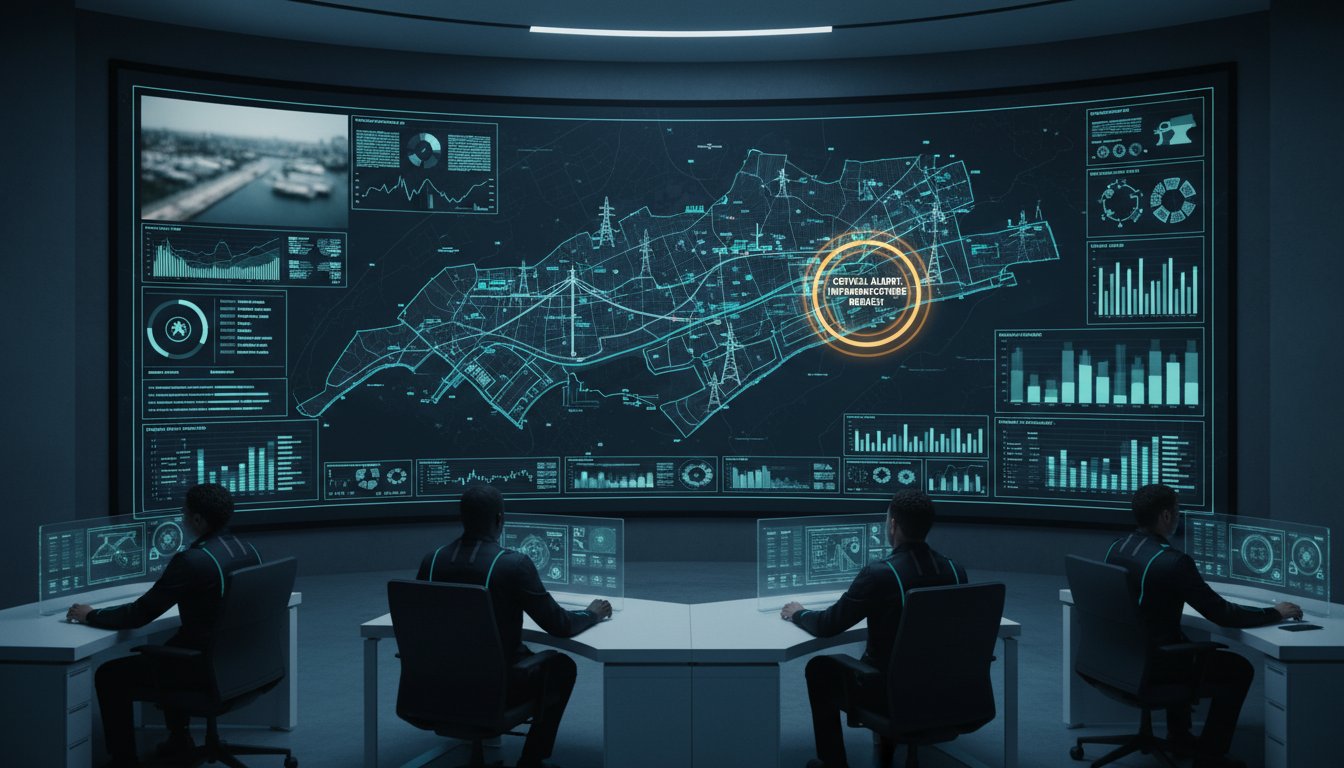
A 2023 analysis of emergency operations found that operators miss up to 40% of critical incidents when they’re forced to monitor more than four disconnected video feeds at once. Fragmented systems and information silos between field units and the command center create a dangerous gap where critical details disappear. This data overload is the primary driver of control room situational awareness problems. Most control rooms already have the screens. What they’re missing is the layer that decides what goes on them, and escalates automatically when something needs attention. Building a modern RTIC requires moving beyond these silos to create a truly unified environment.
You can transform this fragmented reality into a decisive advantage. This guide explains how to manage multiple data feeds in a dispatch center by implementing vis/ability, an operational intelligence layer that surfaces critical insights through your video wall. While many existing data collection tools provide valuable information, they often represent only partial solutions. We’ll show you how to integrate these feeds into a central hub that automates the escalation of critical events across command centers and mobile devices. You’ll discover the roadmap to EOC common operating picture solutions that deliver measurable improvements in response times and officer safety for 2026.
Key Takeaways
- Define the evolution of the RTIC into a proactive intelligence hub that prioritizes immediate situational awareness over fragmented data collection.
- Analyze the operational risks of siloed information and learn how to bridge the critical gaps between dispatch, video sensors, and field reports.
- Understand how vis/ability functions as the essential operational intelligence layer that manages your screens and surfaces the right answers during mission-critical events.
- Develop a robust framework for automatic escalation to ensure that high-priority triggers are instantly communicated to the necessary personnel across all devices.
What is an RTIC? Defining the Real Time Intelligence Center
The Real Time Intelligence Center, or RTIC, represents a fundamental shift in how public safety agencies and critical infrastructure operators manage information. While many organizations are familiar with the What is a Real-Time Intelligence Center? definition as a hub for monitoring crime, the modern RTIC goes further. It’s the proactive evolution of the traditional Real Time Crime Center (RTCC). Instead of simply reacting to 911 calls after they occur, an RTIC aggregates massive streams of data to provide immediate situational awareness to field units before they even arrive on the scene.
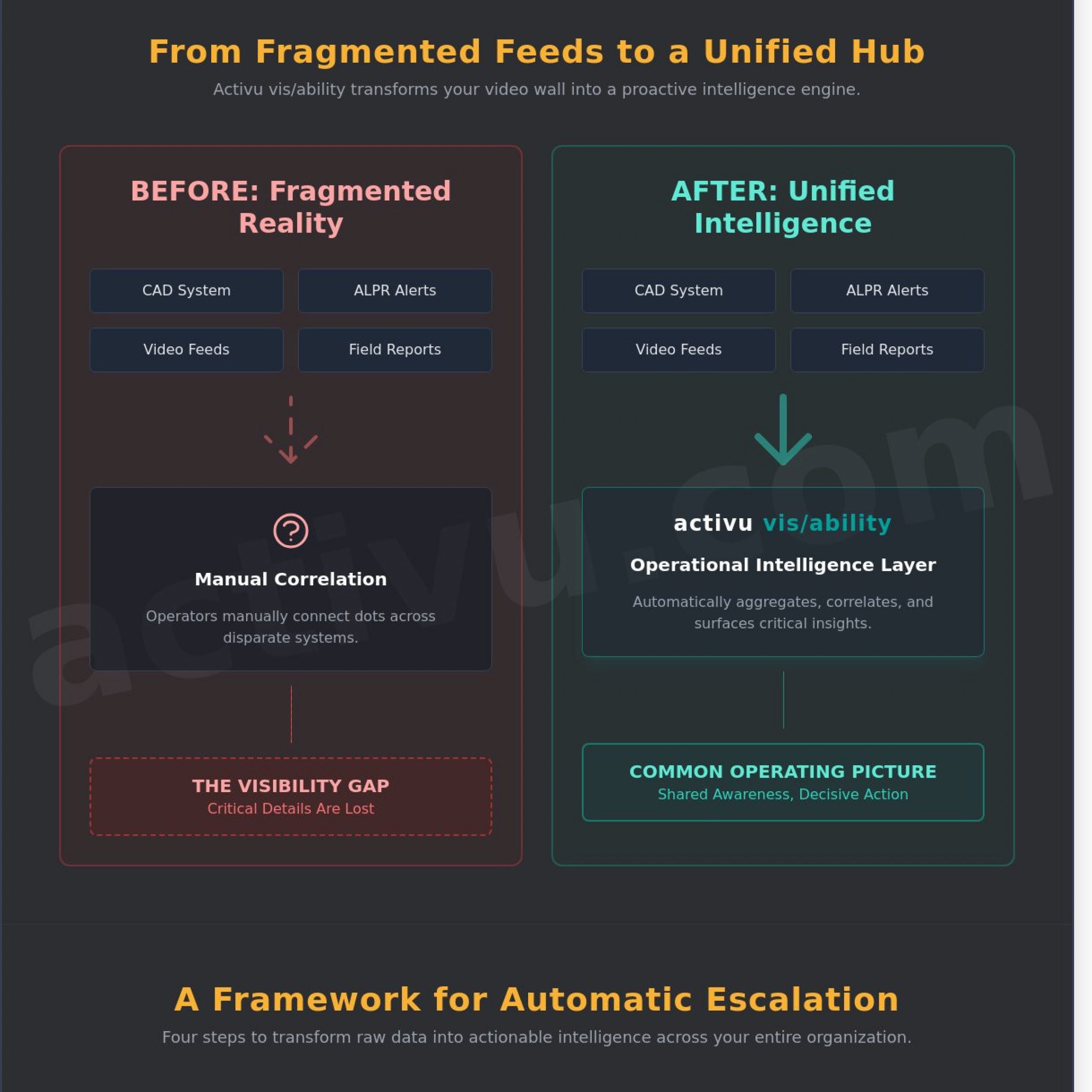
The primary challenge facing these centers is a significant gap in operational workflow. Most agencies struggle with fragmented systems where Computer Aided Dispatch (CAD), license plate readers, and video feeds exist in silos. This fragmentation forces operators to manually correlate data during high-stress events, which is the leading reason why operators miss incidents on the video wall. Research from 2023 indicates that data volume in municipal command centers has increased by 40% annually, yet the number of personnel to monitor it remains stagnant. Most control rooms already have the screens. What they’re missing is the layer that decides what goes on them, and escalates automatically when something needs attention.
This is where vis/ability becomes essential. It serves as the operational intelligence layer that surfaces critical insights through the video wall, transforming a room full of monitors into a unified engine for decision-making. By automating the delivery of relevant data, it ensures that the team sees what matters most without manual intervention.
RTIC vs. RTCC: Understanding the Shift to Intelligence
The transition from an RTCC to an RTIC is defined by a move from reactive monitoring to proactive intelligence. Traditional crime centers often focus on post-incident investigation or watching live feeds during a known pursuit. An RTIC uses data-driven models and multi-agency collaboration to identify threats before they escalate. Simply adding more screens doesn’t create a smarter center; it often just increases the cognitive load on staff. A truly intelligent center focuses on how to manage multiple data feeds in a dispatch center without overwhelming the human element. It creates a environment where collaboration between police, fire, and emergency management is seamless and automated.
The Core Components of an RTIC Infrastructure
A robust RTIC relies on several data inputs, including CAD, Records Management Systems (RMS), Automated License Plate Recognition (ALPR), and live video. Many organizations utilize Axon products to capture and store this data. However, these tools are only partial solutions. Without a unifying hub, these feeds remain isolated and require manual effort to view together. To solve control room situational awareness problems, these inputs must flow into a single platform. Furthermore, protecting this data requires a Cybersecurity Common Operating Picture to ensure the integrity of the critical infrastructure. When these components are unified by vis/ability, the RTIC becomes a reliable EOC common operating picture solution that empowers acton at every level.
The Visibility Gap: Why Fragmented Data Feeds Cripple Operations
Operational silos represent the single greatest threat to modern RTIC effectiveness. In many municipal command centers, CAD data, LPR alerts, and live video streams exist on separate networks that don’t communicate. This fragmentation forces operators to perform mental gymnastics during high-pressure events. When a 911 call triggers a response, the operator must manually log into a VMS, locate the nearest camera, and cross-reference a map. This “swivel-chair” workflow, often requiring navigation between 12 different software applications to find one answer, creates a dangerous lag in intelligence delivery.
Cognitive overload isn’t just a fatigue issue; it’s a structural failure. Human brains aren’t wired to process dozens of competing data streams simultaneously. Most control rooms already have the screens. What they’re missing is the layer that decides what goes on them, and escalates automatically when something needs attention.
The Cost of Manual Correlation in High-Stakes Moments
Searching for a specific camera feed during an active pursuit can take an operator 45 to 90 seconds. In a high-speed chase, a vehicle can travel over a mile in that time. Fragmented systems, like Axon Evidence or standalone VMS platforms, offer valuable data but remain partial solutions because they don’t unify the operational picture. These delays hinder mission critical operations by keeping field units in the dark. True resilience requires an RTIC that bridges these gaps, turning raw data into actionable intelligence through vis/ability, the operational intelligence layer that surfaces through the video wall.
Why Operators Miss Incidents: The Limits of Passive Monitoring
The “wall of glass” fallacy suggests that more monitors lead to better security. Industry research shows that after just 20 minutes of monitoring static video, an operator’s attention level drops by over 95%. This makes passive monitoring a liability. To solve control room situational awareness problems, agencies must move toward event-driven visualization. Instead of staring at 500 static feeds, vis/ability ensures the video wall only displays the relevant camera when a sensor or CAD alert triggers it. This shift is the only way to manage multiple data feeds dispatch center staff face and provides the foundation for effective EOC common operating picture solutions. It directly addresses the primary reason operators miss incidents, a critical issue that video wall monitoring is intended to prevent.
To see how this intelligence layer integrates into your existing workflow, you can explore our specialized solutions for public safety.
Transforming the Video Wall into an Operational Intelligence Hub
RTIC environments often struggle with a fundamental gap: fragmented systems that force operators to manually toggle between siloed applications while critical incidents unfold. When seconds dictate the outcome of a public safety response, searching through dozens of browser tabs or disconnected monitor feeds is a failure state. Most control rooms already have the screens. What they’re missing is the layer that decides what goes on them, and escalates automatically when something needs attention.
This is where vis/ability functions as the operational intelligence layer. It moves the video wall beyond its traditional role as a simple display of camera feeds. Instead, the wall becomes the place where the answer appears. By unifying disparate data sources including real-time video, geospatial maps, social media monitors, and environmental sensors, vis/ability creates a single, cohesive view. It uses event-driven situational awareness to filter out the noise. While some organizations attempt to use standard video management systems for this purpose, those platforms often lack the automatic escalation capabilities required to move from data collection to active intelligence.
Integrating vis/ability with Existing Public Safety Tools
In a modern RTIC, vis/ability acts as the central hub for mission-critical tools like Computer-Aided Dispatch (CAD) and gunshot detection systems. When a sensor detects a discharge, vis/ability doesn’t wait for an operator to find the nearest camera. It uses geographic and temporal triggers to automatically surface relevant data on the video wall. This automation can reduce the time spent on manual data retrieval by 40 percent during the first two minutes of an incident. To ensure total operational continuity, this visibility extends to mobile devices, allowing field commanders to see the exact same intelligence as the command center staff.
The Role of Application Integration in the RTIC
Seamless application integration is the only way to eliminate the burden of manual data entry. While tools like Axon provide essential body-worn footage, they are only partial solutions; they lack the ability to aggregate the broader environmental data needed for a full agency response. vis/ability fills this gap by creating a Common Operating Picture (COP) that updates in real-time across the entire organization. This ensures that every stakeholder, from the dispatcher to the chief, sees the same truth. This level of integration supports public safety by replacing fragmented guesses with actionable, unified intelligence that empowers teams to act with absolute certainty.
Building an Effective RTIC: A Framework for Automatic Escalation
Operational silos and fragmented data feeds represent the primary failure points in modern command centers. When agencies rely on manual processes to monitor dozens of camera feeds and sensor alerts, critical details inevitably slip through the cracks. This gap in awareness creates a dangerous lag between the moment an incident occurs and the moment a response is coordinated. Most control rooms already have the screens; what they’re missing is the layer that decides what goes on them and escalates automatically when something needs attention.
Establishing a robust RTIC requires a four step framework focused on intelligence rather than just video monitoring:
- Step 1: Identify Critical Triggers. Define high priority events such as a ShotSpotter alert, a specific 911 call type, or an ALPR hit on a stolen vehicle.
- Step 2: Define the Escalation Path. Determine exactly who needs to see the data. This might include a supervisor’s desktop, a tactical unit’s mobile device, or the primary video wall.
- Step 3: Automate Visual Layouts. Program the system to instantly change the visual configuration of the control room when a trigger occurs, removing the need for manual window dragging.
- Step 4: Establish Collaboration Protocols. Create a seamless workflow between the RTIC, dispatchers, and field units to ensure everyone views the same unified operating picture.
Designing for Situational Awareness, Not Just Display
Effective control room design prioritizes operator ergonomics and cognitive focus over sheer screen real estate. Operators shouldn’t struggle to manage multiple data feeds; instead, the vis/ability platform acts as an operational intelligence layer that surfaces through the video wall to filter out noise. Use breakout rooms and huddle rooms for deep dive incident management, allowing the main floor to maintain a broad common operating picture while specialized teams handle tactical details without cluttering the primary display.
Reducing Response Times through Automated Intelligence
Automation eliminates the human delay that often plagues the first 60 seconds of an incident. For example, a panic button trigger can instantly pull up the 5 nearest cameras and broadcast them to every relevant screen. This ensures public safety teams act with certainty during large scale events. By removing the manual steps of searching for feeds, vis/ability empowers personnel to focus on decision making rather than technical navigation, ensuring mission critical resilience when stakes are highest.
Stop missing critical incidents due to data overload and fragmented systems. Contact Activu to bridge the gap in your operations.
Implementing Activu vis/ability as Your RTIC Central Hub
Municipal agencies often struggle with fragmented systems that don’t communicate. When dispatch centers manage multiple data feeds across disparate platforms, critical information remains trapped in silos. While tools like Axon provide valuable video evidence, they often function as partial solutions that don’t offer a unified view for the entire team. This fragmentation is the primary cause of control room situational awareness problems. Operators become overwhelmed by raw data, which leads to delayed response times and missed incidents.
Most control rooms already have the screens. What they’re missing is the layer that decides what goes on them, and escalates automatically when something needs attention. Activu vis/ability functions as this essential operational intelligence layer. It doesn’t just display video; it filters through the noise to surface relevant data exactly when it’s needed. By the time information reaches the video wall, it’s no longer just data. It’s the answer your team needs to act. This transformation turns a reactive monitoring station into a proactive RTIC.
Why Mission-Critical Environments Trust Activu
Activu brings over 40 years of expertise to the most demanding environments, including extensive work in federal government and defense. Our platform is built for the rigors of 24/7/365 operations where downtime isn’t an option. Security is a baseline requirement, not an afterthought. The vis/ability platform scales effortlessly, supporting everything from small municipal RTICs to sprawling state-level fusion centers. It provides a consistent common operating picture across command centers, remote setups, conference rooms, and mobile devices, ensuring every stakeholder has visibility into what matters.
Next Steps: Planning Your RTIC Evolution
Building a more effective center starts with identifying your current visibility gaps. Audit your workflow to see where manual processes slow down your team. If your staff is manually searching for feeds during an active event, you’ve identified why operators miss incidents video wall. Automation should handle the heavy lifting of data aggregation so humans can focus on decision-making. We invite you to see the platform in action to experience the event-driven difference. Moving from a state of data overload to one of clear, actionable intelligence is a deliberate process. When you’re ready to bridge the gap between raw data and decisive action, our team is prepared to help.
Take the next step in your operational evolution:
- Identify where automation can replace manual monitoring.
- Consolidate disparate feeds into a single intelligence layer.
- Contact Activu to design your Real Time Intelligence Center.
Securing the Future of Real-Time Operations
Relying on fragmented data feeds from CAD, RMS, and VMS platforms makes it difficult to manage multiple data feeds in a dispatch center. While these tools provide raw information, they don’t solve the control room situational awareness problems that lead to missed incidents. Most control rooms already have the screens. What they’re missing is the layer that decides what goes on them, and escalates automatically when something needs attention. Activu vis/ability fills this gap by serving as the operational intelligence layer that surfaces through the video wall to transform raw data into actionable clarity.
By automating incident escalation, this platform significantly reduces cognitive load for personnel in high-stakes environments. It’s a proven solution currently utilized by the federal government and top-tier public safety agencies to maintain a common operating picture. Whether you’re managing a command center or searching for EOC common operating picture solutions, your operation requires more than just more monitors; it needs a system that prioritizes what matters most in real time. You can bridge the gap between information overload and decisive action today.
Schedule a demo of the vis/ability platform to see how your RTIC can work smarter.
Frequently Asked Questions
What is the difference between an RTIC and an RTCC?
An RTIC serves as a proactive intelligence hub while an RTCC typically focuses on immediate tactical response to active crimes. While both use real-time data, an RTIC incorporates 360 degree datasets including infrastructure sensors and social media feeds to prevent incidents before they occur. Most agencies find that 70% of their data remains siloed in separate departments. vis/ability solves this by acting as the central intelligence layer that unifies these disparate streams into a single common operating picture.
How does an RTIC handle data from different agencies?
Data from multiple agencies is unified through vis/ability, which acts as a vendor-neutral integration hub for your RTIC. Most control rooms already have the screens. What they’re missing is the layer that decides what goes on them; it escalates automatically when something needs attention. By creating a unified stream, the center ensures that 100% of relevant cross-agency alerts reach the right personnel without manual searching or logging into multiple separate portals.
Can vis/ability integrate with our existing CAD and video management systems?
vis/ability integrates directly with your existing CAD and VMS platforms through standardized APIs and secure data connectors. While systems like Axon provide valuable body-cam footage, they’re only a partial solution that lacks the ability to aggregate external data sources. vis/ability fills this gap by pulling feeds from CAD, VMS, and ALPR systems into a single view. It ensures your existing investments become part of a cohesive intelligence strategy rather than remaining isolated tools.
Why do operators miss incidents even with a large video wall?
Operators miss incidents because of cognitive overload; research shows that after 20 minutes of monitoring video, an operator misses up to 95% of significant activity. This is one of the primary control room situational awareness problems in modern centers. vis/ability addresses this by monitoring the data in the background. It only pushes critical footage to the video wall when a specific trigger occurs, ensuring that human attention isn’t wasted on empty screens.
What does ‘event-driven situational awareness’ actually mean for a dispatcher?
For a dispatcher, event-driven situational awareness means the system automatically surfaces the exact camera feeds and maps needed the moment a 911 call is placed. You don’t have to manually search for the nearest camera or look up floor plans. This eliminates the gap of fragmented systems that typically slows down response times. The answer appears on the wall exactly when it’s needed, allowing the dispatcher to focus on the caller instead of the software.
Is it possible to extend RTIC visibility to officers in the field?
Yes, vis/ability extends RTIC visibility beyond the command center to mobile devices, tablets, and remote laptops. Whether an officer is in a patrol car or a supervisor is in a huddle room, they see the same real-time intelligence. This solves the problem of information silos that often occur during large-scale events. By 2024, mobile integration has become a requirement for 85% of new emergency operation center deployments to ensure seamless communication across all units.
How does an RTIC improve officer safety during high-risk calls?
An RTIC improves safety by providing officers with visual intelligence about a scene before they arrive on-site. In 2023, data showed that pre-arrival intelligence significantly reduced the risk of ambush and unexpected hazards. vis/ability automatically pushes building layouts and live video to responding units. It bridges the gap between the dispatcher’s data and the officer’s reality, ensuring no one walks into a high-risk situation without seeing the full picture first.
What are the common mistakes when designing a new Real Time Intelligence Center?
The most common mistake is prioritizing hardware over the software logic that manages the data flow. Many organizations spend 90% of their budget on high-end displays but fail to implement an intelligence layer to manage them. Most control rooms already have the screens. What they’re missing is the layer that decides what goes on them; it escalates automatically when something needs attention. Without vis/ability, a new center is just a room full of expensive, distracting televisions.