
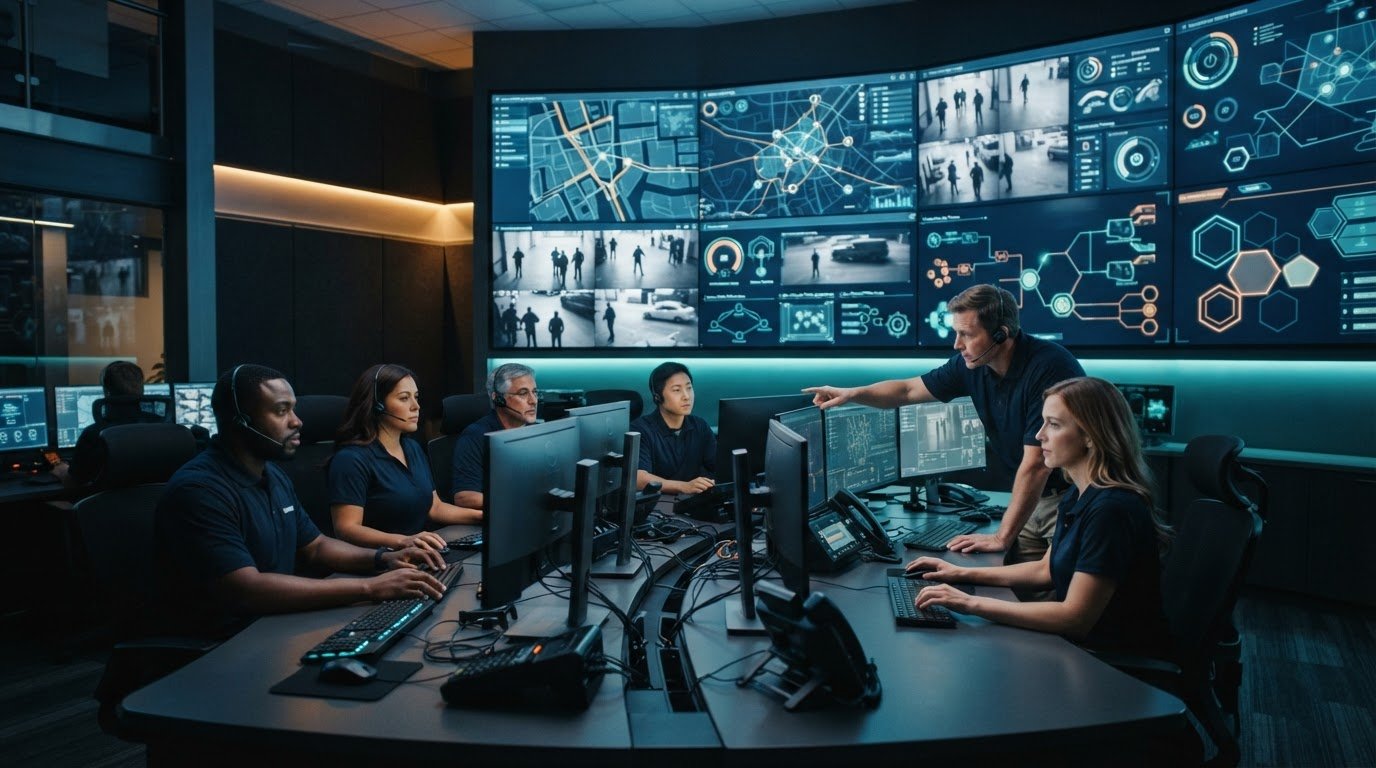
A SOC can respond to physical threats more effectively when camera, access-control, and operational technology (OT) events enter the same workflow as cyber alerts. Integrating physical security systems into a SOC means connecting these signals to systems such as SIEM and giving operators the context and escalation paths they need to act. Clear ownership helps coordinate monitoring, investigation, and response.
Disconnected feeds and separate procedures can leave operators piecing together an incident as it unfolds. The goal is not simply to collect more data, but to surface relevant information and link it to a defined response. This article explains how physical security events fit into SOC workflows, where SIEM and managed detection and response (MDR) can help, and which integration requirements and responsibilities teams should address. A unified operating picture helps people assess what is happening and determine who acts next.
Key Takeaways
- Bring camera and access-control events into SOC workflows with enough context for operators to assess incidents and determine the response.
- Account for operational technology signals alongside physical security events to improve awareness of activity affecting facilities and operations.
- Assign clear ownership across security, IT, facilities, and operations for system health, maintenance, escalation, and response procedures.
- Define how physical security events flow into SIEM and MDR processes, including the handoffs between monitoring, investigation, and response.
- Use a unified operating picture to help teams focus on relevant information and coordinate decisions across locations.
Electronic monitoring through cameras and access control
Electronic monitoring brings camera feeds, access events, and alarms together so SOC operators can assess activity across a facility. Connecting these systems can link an observed event to a location, door, or credential.
Camera and Access Control Monitoring
Camera and access control monitoring pairs video with records of who entered an area and when. PTZ security cameras can provide 360-degree views, while panoramic IP cameras can capture 360-degree views around the clock. Low-latency cameras deliver footage with minimal delay, helping operators review relevant scenes while events unfold.
For example, an unauthorized-entry alert at a restricted door can direct an operator to the corresponding camera view. Access governance should define who approves credentials, which areas each credential can access, and how promptly teams revoke access after a role change or departure. Regular reviews can identify outdated credentials and access exceptions.
Surveillance and Access Control Integration
Surveillance and access-control integration links camera views with door events, alarms, and locations. For modern entryways requiring physical barriers and speed gates, firms like Links Integrated Systems deploy advanced access control systems designed to interface with centralized monitoring tools. When a reader reports an invalid credential, the SOC workflow can surface the event alongside nearby video for review. This gives operators a clearer basis for deciding whether to escalate, contact on-site staff, or document an expected access issue.
Connect CCTV, access-control systems, and alarms when they support defined monitoring and response needs. This integration frequently extends to perimeter boundaries and loading bays; for organizations managing physical vehicle access and perimeter security posts via bollardsecure.co.uk, linking physical barriers to central monitoring ensures cohesive site protection. A unified physical security platform can combine products from one or multiple vendors. Map each device to consistent site, building, and door labels, so an alert from a loading entrance is clearly associated with its camera.
Analytics and Sensor Connections
Analytics and sensors add context to access events by identifying patterns or changes around a controlled area. For example, a door-held-open alert paired with a camera view can help an operator distinguish a delivery from an access exception. Organizations can also connect a unified platform to building systems or IIoT sensors when those signals support a clear security workflow.
Set alert conditions around operational priorities, such as after-hours entry to a restricted room. Route each alert with its location, timestamp, source device, and associated video. This keeps monitoring focused on actionable events rather than sending every sensor reading to operators.
Privacy and Compliance for Monitoring Data
In the United States, requirements depend on the data and the organization’s obligations. HIPAA requires covered entities to implement physical safeguards for facilities that house protected health information. PCI DSS requires physical access to cardholder data environments to be restricted and monitored.
At a healthcare facility, connect camera and access records to the relevant protected area and document who can review them. For a cardholder data environment, retain clear access-monitoring records and review exceptions. Limit access to monitoring data by role, and document the purpose, ownership, and handling procedures for each connected system.
Physical security systems and operational technology
A SOC needs context from both facility security and operational technology (OT). Connect signals that help personnel assess threats to assets, understand operational impact, and coordinate a response across security operations.
Connecting Physical Security and OT
Physical security systems monitor access and activity around facilities, while OT supports the systems and processes that keep operations running. Connecting relevant events helps SOC personnel understand whether an intrusion or alarm affects a sensitive asset or operational area. For example, an access alert near a control room can be reviewed alongside relevant building-system or IIoT sensor data.
Choose connections based on risk and response value. A useful integration plan identifies critical areas, the systems that serve them, and the personnel who interpret each alert. It also defines what information reaches the SOC and how operators notify facilities or OT staff when an event may affect operations.
Why System Silos Matter
When physical security, building systems, and OT operate in silos, personnel may have to reconcile separate alerts during an incident. Consolidating information from independent systems can slow response and investigations while increasing operator overload. A unified platform can connect products from multiple vendors, but every connection should have a clear purpose and owner.
Integration also creates operational dependencies. A broken connection can affect other connections, while additional links can complicate upgrades and maintenance. Different vendors may require separate training, servers, and upkeep. Document dependencies and test critical event paths to identify where a failure could interrupt monitoring or response.
Investment and SOC Roles
A Brivo survey identified integrating physical security systems as the number-one physical security initiative among surveyed security professionals. That priority reflects a practical challenge: teams need existing systems to share useful information without overlooking maintenance, training, or operational impact.
Define responsibilities before implementation. SOC operators monitor and assess incoming events; physical security personnel manage access policies and device issues; facilities and OT teams explain how alerts affect site operations. IT teams can coordinate network and application dependencies. These planning roles complement, rather than replace, documented local procedures.
Historical incidents show why facilities and operations belong in the same risk picture. In 2013, a sniper attack on Pacific Gas & Electric’s Metcalf Substation damaged 17 of its 21 power transformers. The example underscores the value of identifying critical assets, linking relevant security information, and establishing escalation paths across teams.
For teams planning how information should flow across security and operations, SOC and control room integration can help frame the common operating picture.
Healthcare systems may be disparate and difficult to connect, while budget constraints can make SOC integration challenging without replacing existing technology.
Closed platforms can lock organizations into one vendor. Connections can also add to upgrade and maintenance costs and make both more complex.
Security integration requirements and RACI responsibilities
Standards and protocols such as ONVIF, OSDP, and PSIA can support interoperability between physical security components. Their practical value depends on whether connected devices and systems exchange the event data the SOC needs.
Measure effectiveness through operational outcomes: event delivery, detection, acknowledgment, escalation, and documented resolution. Compare these stages across incident records to identify where handoffs or system connections delay action.
Define ownership with a RACI model
A RACI matrix assigns each integration task a responsible, accountable, consulted, or informed role. For example, the SOC may monitor an access-control alert while facilities investigates a door fault and IT maintains the network connection. Name one accountable owner for each component and process, including credential changes, device health, escalation rules, and procedure reviews.
Map ownership before implementation. List each connected system, its operational owner, its data recipient, and the person authorized to approve changes. If a camera feed stops reaching the monitoring center, the matrix should show who detects the failure, who restores the connection, and who informs operators.
Build response procedures around events
Real-time monitoring depends on useful event context. A SOC workflow should identify the source, location, time, priority, and next action for each alert. For example, an access-control alarm at a restricted entrance can prompt an operator to review associated surveillance, record the assessment, and escalate according to the site’s incident procedure.
Document every handoff in a standard operating procedure. Specify how operators distinguish an alarm from a confirmed threat, which team receives an escalation, and how responders record closure. Healthcare SOCs should establish and regularly review emergency procedures to support preparedness and timely action.
Use scenario exercises to test the process. Simulate a failed access-control connection or an intrusion alert, then record whether the event reaches the center, the assigned role acknowledges it, and the correct team receives the escalation. Update procedures if a test reveals unclear ownership.
Measure performance and maintain controls
Track the time between event generation, SOC receipt, operator acknowledgment, escalation, and resolution. Review each stage separately: fast alert delivery does not show whether the right personnel acted. Compare incident records over time and investigate recurring delays, missed notifications, or incomplete documentation.
Organizations should demonstrate compliance through documented, actively maintained controls, not hardware installation alone. Assign owners to scheduled maintenance, test event paths, and retain records of exceptions and corrective actions. Include business input in physical security planning because access-control changes can affect daily operations.
Clear workflows matter most at the handoff between detection and action. SOC and control room workflows can help teams align operational information with the decisions personnel need to make.

Integrating physical security technology with SIEM and MDR
Connecting physical security events to SIEM and MDR workflows gives SOC teams a shared process for monitoring, investigation, and escalation. The integration should preserve useful event context while limiting access to connected systems.
What SOC Integration Involves
Integrating physical security systems into a SOC means routing selected events from cameras, access control, alarms, and operational technology into security workflows. SIEM can correlate these events with IT activity, while MDR processes can support detection, investigation, and response. For example, a door alarm and a related network alert can prompt a joint review instead of separate investigations.
Useful event records carry consistent timestamps, locations, device identifiers, and severity. Map those fields before connecting sources. Otherwise, an access event from one building may appear under a different site label in the SIEM, complicating correlation and incident review.
Planning and Implementation Steps
Plan integration around operational priorities, system dependencies, and accountable owners. Start with an inventory of relevant devices and legacy systems, then select event types that warrant SOC attention. Software can connect with independent legacy systems, potentially avoiding investment in new infrastructure. Open architecture can also support customized connections to existing devices and systems.
- Identify critical assets, systems, and event scenarios for inclusion.
- Map data fields, access permissions, network paths, and ownership.
- Define SIEM correlation rules and MDR handoffs for each alert type.
- Test event delivery, operator procedures, and system-health reporting.
- Document configuration, maintenance, and change responsibilities.
For example, a forced-door alert can be correlated with nearby camera activity and relevant network events. Set the workflow so operators know which team investigates each signal and who records the outcome.
Cybersecurity Risks and Risk Reduction
Connecting control systems can expand the paths attackers may target. Weak credentials, excessive permissions, or unmonitored interfaces can expose connected devices or interrupt security operations. Siloed systems can also leave teams without a complete incident picture, allowing an intruder to leave with stolen data before security personnel coordinate a response.
Reduce exposure by limiting system permissions to defined roles, separating connected networks where appropriate, and monitoring access to integration services. Maintain an inventory of interfaces and assign owners to review device configuration and system health. Test failure scenarios, including a disconnected camera feed or delayed access event, so operators can follow a documented fallback process.
SIEM correlation and SOAR automation can support consistent handling, but each automated action needs a defined trigger and owner. Collaboration among technology partners can support reporting, device configuration, health monitoring, and smoother upgrades. Track event delivery and escalation records to identify where the integration or response process needs adjustment.
Integrating physical and information security
Physical and information security intersect when an incident crosses both a facility boundary and a network boundary. SOC teams need a shared view of relevant signals, clear internal policies, and an agreed process for coordinating decisions. Without those connections, fragmented systems can leave operators comparing separate screens as a situation develops.
Coordinate feeds across the dispatch center
Dispatch teams often work across camera views, access events, alarms, and other operational applications. The challenge of managing multiple data feeds in a dispatch center is deciding which information belongs together and what deserves attention. A useful operating picture groups related events by location and incident rather than forcing staff to search each system independently.
For example, an alarm at a facility entrance may be more significant when viewed alongside a relevant network alert. Shared labels and internal procedures help teams recognize the relationship and route the issue to the right personnel. Keep each feed’s purpose clear so the dispatch center presents actionable context instead of another stream of unrelated data.
Shape an EOC common operating picture
An EOC common operating picture should help decision-makers understand how an event affects response priorities across teams. Physical security alerts, cybersecurity information, and operational updates can contribute when they clarify the same developing situation. The goal is to give each role the context it needs without obscuring decisions that require coordination.
Set policies for which events cross team boundaries and who owns the next action. For instance, an access issue that affects a response location may require both security review and operational coordination. Shared location names, incident labels, and escalation procedures help teams align their understanding across rooms and departments.
Integration also requires governance. Assign internal owners for data access, event interpretation, and policy changes. Review connected workflows when infrastructure or response responsibilities change. Keep integrated systems aligned with applicable compliance requirements and standards, and document how teams use information to coordinate action.
When application connections need to support a shared operational picture, application integration can align information from separate tools with the decisions teams need to make.
Large organizations and government entities commonly organize security across network and data security, electronic monitoring, and physical security. Physical security and cybersecurity integration was once impossible or cost-prohibitive, but that is no longer the case. Bringing these disciplines together in a SOC supports a comprehensive defense strategy against threats from multiple vectors. Centralized SOC management improves coordination and communication across security teams, connecting these distinct areas within a shared operation.
Many applications and devices can connect to an alarm monitoring integration system. An integrated physical security platform links independent security solutions from various vendors using an SDK or API. These approaches provide a basis for connecting monitoring and physical security with cybersecurity in the SOC. The aim is coordinated security across an organization’s network and data security, electronic monitoring, and physical security functions.
Activu Corporation: Video Wall Systems
Activu Corporation helps SOC teams bring fragmented information into a shared operational picture through application integration and event-driven situational awareness. Its vis/ability Platform aggregates real-time data and video streams, giving operators a centralized view of connected tools and information.
Most control rooms already have the screens. What they’re missing is the layer that decides what goes on them – and escalates automatically when something needs attention. With vis/ability, the video wall becomes the place where relevant information appears to support operator decisions. Teams can use the platform across command centers, remote locations, conference rooms, breakout rooms, huddle rooms, and mobile devices.
For a clearer view of how these capabilities fit your SOC operations, contact Activu Corporation.
Set the Next Integration Priority
Use your next planning cycle to identify the operational gap that most affects decision-making. It may be an event without a clear escalation path, a handoff between security teams, or information isolated from related activity. Define the desired outcome first, then align system connections, response ownership, and review procedures with that priority.
A practical approach to integrating physical security systems into a SOC starts with an operational priority. Activu Corporation’s Video Wall Systems, vis/ability Platform, and Event-Driven Situational Awareness bring relevant operational information into view to support human decision-making. Contact Activu Corporation to discuss how these capabilities can fit your control room workflows and integration objectives.
Contact Activu Corporation to discuss integration and move your planning forward with a clear operational priority.
Frequently Asked Questions
How do you integrate video surveillance and access control with a SIEM or SOC platform?
Connect selected video and access events through supported interfaces, then map their fields into the receiving platform. During testing, trigger a badge event and verify that the SIEM displays the correct site, door, and associated camera reference. Check timestamp alignment and duplicate alerts as well. This validation helps operators distinguish a developing event from repeated notifications or unrelated activity.
What staffing, training, and operating procedures does a SOC need to monitor physical security alerts?
Assign trained personnel to assess alerts, consult site-specific procedures, and coordinate with physical security or facilities responders. Training should use realistic scenarios, such as an access alert during a shift handoff, so operators practice preserving context and clearly transferring ownership. Keep current escalation contacts and decision authority accessible in the operating procedure. Review lessons from exercises and incidents, then update the workflow when roles or systems change.
How much does it cost to integrate physical security systems into a SOC?
Integration cost depends on the systems involved, interface requirements, data handling, security controls, testing, and the scope of operational workflows. Connecting an existing camera and access-control environment may require different work than coordinating multiple sites and legacy platforms. The project price depends on the case and is provided after a quote request. To scope the work, document the systems, desired event flows, and operational requirements.
What standards and protocols support physical security system integration, such as ONVIF, OSDP, and PSIA?
ONVIF, OSDP, and PSIA can support interoperability between physical security components. Their value depends on whether connected systems exchange the event data the SOC needs.