
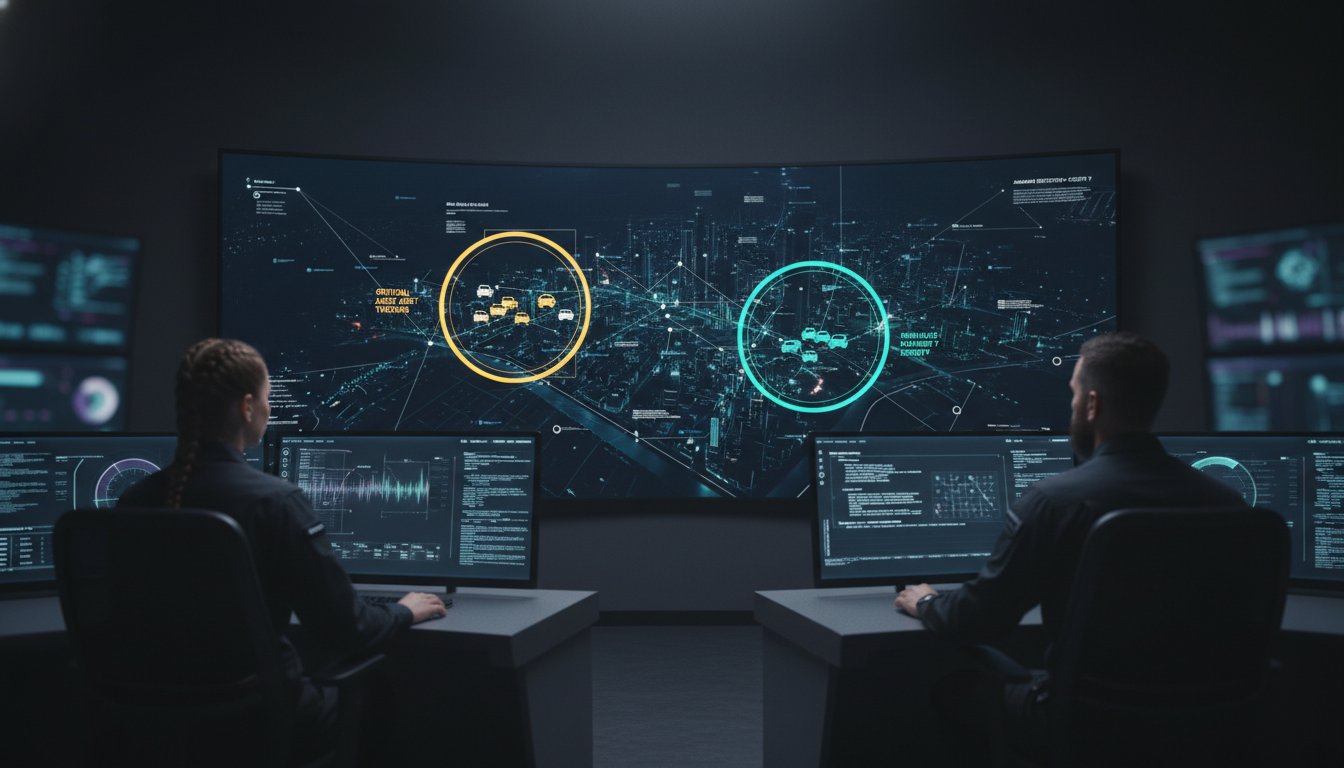
A 2026 survey on AI Cognitive Fatigue found that 14% of operators report symptoms of “brain fry,” a condition that correlates with a 39% increase in major error rates. In mission-critical environments, these statistics translate into missed incidents and delayed responses that can compromise safety. Effective human factors engineering for command centers addresses these risks by solving the cognitive overload caused by fragmented data streams and 24/7 shift fatigue. You’ve likely seen the impact firsthand, where operators struggle to maintain a clear sense of the operational landscape despite having access to more information than ever before.
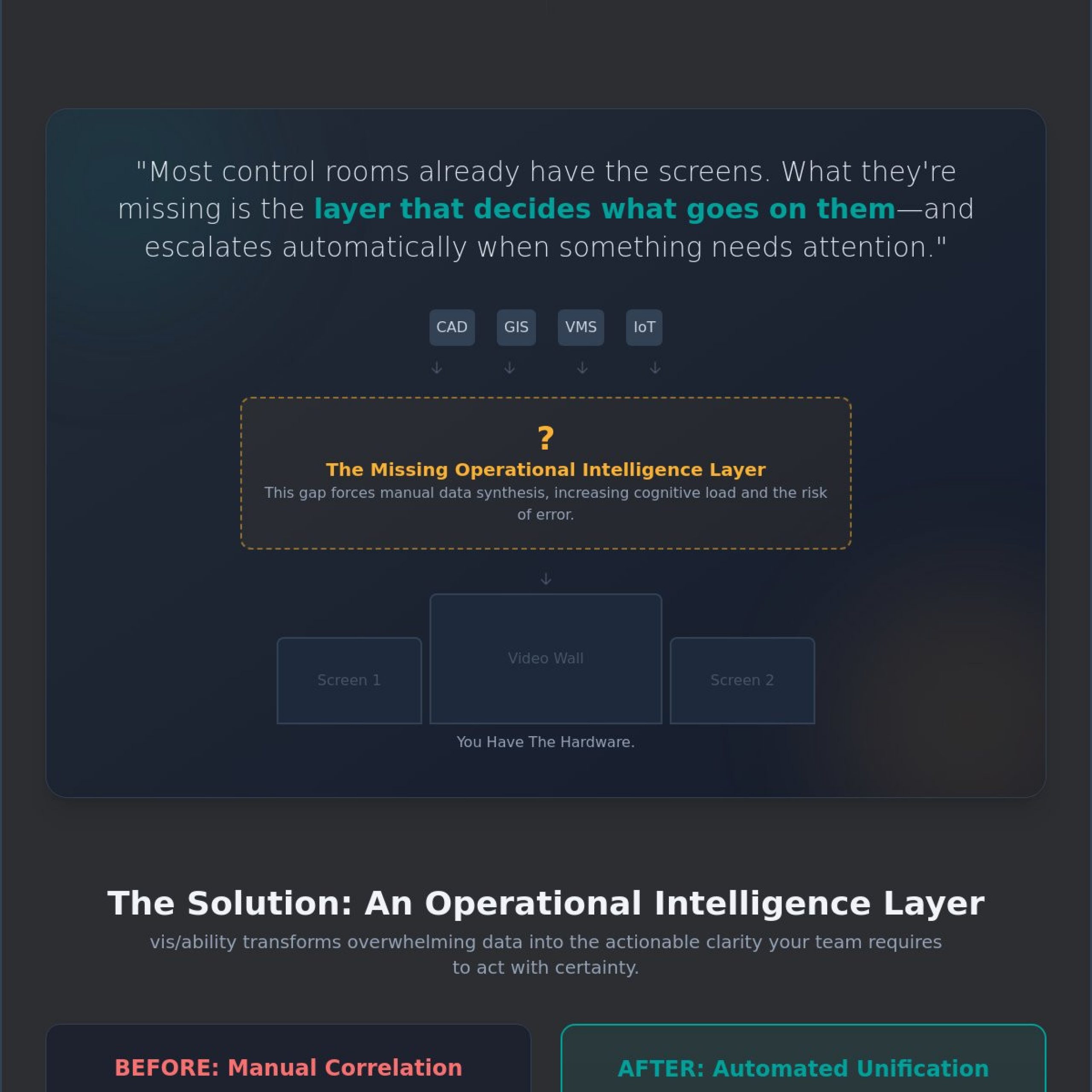
Most control rooms already have the screens. What they’re missing is the layer that decides what goes on them, and escalates automatically when something needs attention. By aligning your technological infrastructure with the hard limits of human biology, you can move beyond simple hardware toward a system that actively supports decision-making. This article demonstrates how to optimize performance to accelerate response times and reduce operator error. We will explore how an operational intelligence layer creates a unified operating picture, transforming overwhelming data into the actionable clarity your team requires to act with absolute certainty.
Key Takeaways
- Move beyond basic ergonomics to understand how human factors engineering for command centers serves as the foundation for technical reliability in high-stakes environments.
- Identify the specific symptoms of cognitive overload and screen fatigue to prevent operator error during critical 24/7 operations.
- Align physical control room sightlines with a digital information hierarchy, ensuring the most critical data remains the primary focus.
- Accelerate incident response by implementing automated escalation paths that remove the burden of constant manual scanning from your team.
- Establish a unified operating picture by integrating siloed tools into a central operational intelligence layer that empowers decisive action.
Beyond Ergonomics: The Role of Human Factors Engineering in Mission-Critical Environments
Human factors engineering for command centers is the rigorous science of designing systems that align with human capabilities and psychological limitations. It goes far beyond the height of a desk or the lumbar support of a chair. In high-stakes operations, HFE serves as the absolute bedrock of technical reliability. It ensures that when a crisis hits, the operator remains a capable decision-maker rather than a cognitive bottleneck. The field of human factors and ergonomics focuses on optimizing human well-being and overall system performance. In a modern command center, this means shifting the focus from physical comfort to cognitive systems engineering. If the interface is cluttered or the data is fragmented, the system has failed fundamentally. True operational readiness requires a design that respects the human mind’s processing limits.
The Evolution of Command Center Design
Early command centers relied on analog dials and radio chatter. Today, operators face a digital saturation of high-definition video feeds, IoT sensors, and real-time geospatial data. This evolution created a paradox. While we have more data, we often have less visibility. Adding more screens does not solve the problem. It frequently exacerbates cognitive overload. The human-computer interface is now a mission-critical component that determines whether a critical signal is seen or ignored. Without an intelligent digital layer, the sheer volume of information becomes a liability rather than an asset.
Why ISO 11064 Standards are Only the Starting Point
Organizations often look to ISO 11064 to guide their control room design. These standards provide essential requirements for layout and physical environment. However, physical compliance does not guarantee mental clarity. An operator can sit in a perfectly designed room and still miss a critical incident because the digital environment is chaotic. Most control rooms already have the screens. What they’re missing is the layer that decides what goes on them, and escalates automatically when something needs attention. This missing layer is the vis/ability operational intelligence platform, which unifies disparate tools into a single, manageable interface.
When human factors engineering for command centers is neglected, the results are measurable and often catastrophic. Fragmented situational awareness leads to missed cues and delayed reactions. Research indicates that cognitive overload results in massive productivity losses across industries. In mission-critical contexts, however, the cost is measured in response seconds and operational failure. Poorly engineered systems force operators to manually bridge the gap between siloed data streams like CAD, GIS, and video management software. This manual synthesis increases the likelihood of critical errors during high-stress events. Precision in design is the only way to ensure that your team maintains control when the stakes are at their highest.
Managing Cognitive Overload and Operator Fatigue
Human working memory is a finite resource. In a high-pressure dispatch or security operations center, an operator’s ability to process incoming data is often pushed to its breaking point. Scientific research into cognitive load suggests that when the volume of information exceeds an individual’s processing capacity, performance doesn’t just plateau; it collapses. Applying human factors engineering best practices is the only way to ensure that critical signals aren’t lost in a sea of digital noise. Without a structured approach to information management, operators suffer from symptoms of mental exhaustion, leading to a measurable increase in major error rates and response delays.
The Psychology of Situational Awareness
Situational awareness consists of three distinct stages: perception, comprehension, and projection. Siloed data streams often break this chain at the comprehension stage. An operator might perceive a red icon on a map, but without the context of a live video feed or a sensor reading, they cannot comprehend the severity of the threat. This fragmentation prevents them from projecting future states or anticipating how an incident will evolve. A unified operating picture is required to keep these three stages intact, allowing the team to move from raw data to decisive action without hesitation.
Mitigating the Risk of Human Error
High-pressure environments are breeding grounds for slips, lapses, and mistakes. A slip occurs when an operator knows the correct action but executes it incorrectly due to fatigue. A mistake is a deeper failure of judgment caused by incomplete information. HFE-driven design acts as a safety net, filtering out irrelevant noise so the operator only interacts with essential data. By automating the identification of relevant information, you reduce the likelihood of human failure at the moment of a pivotal decision.
Most control rooms already have the screens. What they’re missing is the layer that decides what goes on them, and escalates automatically when something needs attention. This operational intelligence layer transforms a collection of disparate tools into a single, cohesive platform. By implementing a system that respects human cognitive limits, you empower your operators to maintain clarity and act with absolute certainty when every second counts.
Integrating Physical Design with Digital Situational Awareness
Physical sightlines are a staple of control room design, yet they remain ineffective if they don’t correspond to a digital information hierarchy. Effective human factors engineering for command centers requires that the physical layout mirrors the priority of the data being displayed. Operators must be able to transition seamlessly between their granular desktop tasks and the high-level geospatial oversight provided by a shared video wall. Physical strain or the need to mentally translate data between different displays indicates a breakdown in operational readiness. Software acts as the connective tissue that binds the physical space, ensuring the right information appears in the right location at the precise moment it’s needed.
A Common Operating Picture (COP) serves as the vital bridge between the centralized command center and personnel in the field. While many organizations utilize specialized tools for video evidence or incident logging, these platforms often provide only a partial solution. They function as siloed applications that require a unifying layer to create a full common operating picture. Without this technical integration, operators are forced to toggle between screens, losing precious seconds during a crisis. True situational awareness is achieved only when these disparate inputs are fused into a single version of the truth that is accessible to all stakeholders.
From Video Walls to Unified Operating Pictures
A video wall without an underlying logic layer is merely a collection of pixels. Standard Commercial Off-the-Shelf (COTS) solutions often lack the specialized customization required for mission-critical human factors engineering. These systems might display data, but they don’t understand the specific context of your operation. Most control rooms already have the screens. What they’re missing is the layer that decides what goes on them, and escalates automatically when something needs attention. This intelligent layer ensures that the video wall remains a tool for clarity rather than a source of distraction.
Collaboration Across Distributed Teams
Mission success depends on the ability to move data instantaneously from the command center to huddle rooms and mobile devices. Effective HFE principles must apply to every interface, whether it’s a 20-foot video wall or a field technician’s tablet. When a crisis escalates, your team cannot afford the friction of fragmented communication. The vis/ability platform provides the unifying framework that makes your existing tools useful for the entire team. By maintaining a single version of the truth across all devices, you empower individuals to act with greater certainty and coordination.
Actionable Principles for Reducing Incident Response Times
Reducing incident response times requires a shift from passive monitoring to active, event-driven awareness. Human factors engineering for command centers must prioritize the delivery of essential information at the moment of impact. When an operator is forced to scan dozens of static feeds, their mean time to detect an incident increases significantly. By implementing automated escalation paths, the system takes over the burden of constant surveillance. This allows the human in the loop to focus entirely on remediation rather than discovery. Every second saved in the assessment phase is a second gained for decisive action.
Standardizing the visualization of Situation Reports (SITREPs) is another critical principle. During high-stress handoffs between shifts or departments, fragmented notes and verbal briefings can lead to lapses in situational awareness. A standardized, digital SITREP ensures that everyone, from the command floor to the field, sees the same data in the same context. Furthermore, the user interface must be optimized for the physical reality of the room. High-contrast designs and reduced blue-light emissions help maintain operator vigilance during long shifts in low-light environments, preventing the fatigue that often leads to missed signals.
Designing for Event-Driven Intelligence
Event-driven visualization changes the fundamental nature of the command center. Instead of a fixed grid of cameras or dashboards, the layout should adapt dynamically based on predefined thresholds. For instance, if a perimeter sensor is triggered, the relevant video feed and access control logs should automatically populate the primary viewing area. This smart filtering drastically reduces the cognitive friction involved in situational assessment. Proactive, software-led awareness ensures that critical alerts are never buried under routine data, allowing teams to act before a situation escalates into a catastrophe.
Establishing the Common Operating Picture
A robust common operating picture integrates SIEM, SOAR, and geospatial data into a single, navigable interface. This unification is essential for visualizing threat intelligence across diverse operational sectors. By fusing disparate data streams, you remove the need for operators to toggle between siloed applications. This integration creates a safety net for human judgment, ensuring that the most relevant data is always front and center.
Most control rooms already have the screens. What they’re missing is the layer that decides what goes on them, and escalates automatically when something needs attention. The vis/ability platform acts as this operational intelligence layer, transforming your existing hardware into a proactive response engine. By removing the manual labor of data synthesis, you provide your operators with the clarity needed to maintain control when stakes are at their highest. If you’re ready to modernize your response capabilities, contact our design experts to discuss your specific operational requirements.
vis/ability: The Operational Intelligence Layer for Human Performance
The vis/ability platform serves as the essential foundation for high-stakes decision-making, empowering operators to act with absolute certainty. While previous sections detailed the risks of cognitive overload and the necessity of human factors engineering for command centers, vis/ability provides the technical solution to these challenges. Most control rooms already have the screens. What they’re missing is the layer that decides what goes on them, and escalates automatically when something needs attention. Activu Corporation designed this platform to be the central hub for SOC, NOC, and GSOC environments, ensuring that technology remains a force multiplier rather than a source of distraction.
Many organizations rely on specialized tools for evidence management or incident reporting. While these systems are useful, they provide only a partial solution to the problem of situational awareness. They often function as isolated data streams that require manual monitoring and synthesis. vis/ability fills these critical gaps by functioning as a unifying operational intelligence layer. It integrates these disparate tools into a single, cohesive platform, creating the full common operating picture required for mission success. By automating the prioritization of essential information, it ensures that your team stays focused on the mission instead of managing the software.
The Unified Operating Picture in Action
In practice, vis/ability aggregates real-time data from every corner of your operation into a single, intuitive interface. This unified operating picture extends beyond the command floor, providing a mobile extension for public safety teams or utilities technicians in the field. When an incident occurs, event-driven alerts trigger automatic layout changes across all connected devices. This removes the need for manual oversight, ensuring that every stakeholder sees the same critical data simultaneously. This level of coordination is the ultimate goal of human factors engineering for command centers, as it aligns digital tools with the human need for clarity and speed.
Exit Toward Operational Clarity
The journey from cognitive overload to streamlined intelligence begins with a shift in perspective. Command center failure is rarely a hardware problem; it’s a cognitive prioritization problem. By implementing an operational intelligence layer, you transform your facility into a proactive environment where technology serves the human. This approach reduces fatigue, accelerates response times, and eliminates the siloes that lead to operator error. Activu Corporation invites you to see how this platform can bring calm and clarity to your most complex operations. Contact Activu Corporation for a custom design consultation to begin building the bedrock of your next successful operation.
Modernizing the Command Center for Peak Human Performance
Operational readiness depends on the seamless fusion of human judgment and technical precision. We have explored how effective human factors engineering for command centers moves beyond physical furniture to solve the systemic risk of cognitive overload. By prioritizing essential information and automating escalation paths, organizations can significantly reduce incident response times and operator fatigue. Most control rooms already have the screens. What they’re missing is the layer that decides what goes on them; and escalates automatically when something needs attention.
As pioneers in event-driven situational awareness since 1983, Activu provides the bedrock for high-stakes operations. Our industry-leading cybersecurity common operating picture is trusted by Federal Government and Defense agencies to maintain clarity when stakes are at their highest. You can transform your fragmented data streams into a single, actionable intelligence layer that empowers your team to act with absolute certainty. Take the first step toward a more resilient and efficient operation today. We invite you to Request a Demo of the vis/ability Platform to see how our operational intelligence layer can redefine your command center performance. Your team deserves a system that works as hard as they do to protect what matters most.
Frequently Asked Questions
What is the primary goal of human factors engineering in a command center?
The primary goal is to optimize the interaction between human operators and technical systems to ensure mission success. By applying human factors engineering for command centers, designers reduce the risk of human error during high-stakes operations. This discipline focuses on making complex information intuitive and manageable. It ensures that operators maintain high levels of situational awareness without reaching a point of mental exhaustion or system failure.
How does cognitive overload affect incident response times?
Cognitive overload increases response times by creating a bottleneck in the operator’s decision-making process. When the volume of incoming data exceeds an individual’s processing capacity, the time required to perceive and comprehend a threat grows significantly. This delay in the assessment phase directly translates to slower remediation. It allows minor incidents to escalate into major operational catastrophes because the operator cannot act with the necessary speed.
What are the ISO 11064 standards for control room design?
ISO 11064 is a multi-part international standard that defines the ergonomic requirements for the design of control centers. It covers everything from the physical layout of the room and workstation dimensions to environmental factors like lighting and acoustics. While these standards provide a necessary foundation for physical safety, they don’t fully address the modern challenges of digital data saturation. Operators need more than a compliant desk to maintain mental clarity.
Can software help reduce operator fatigue in 24/7 environments?
What is the difference between physical ergonomics and cognitive ergonomics?
Physical ergonomics focuses on the human body’s interaction with equipment, while cognitive ergonomics addresses mental processes like memory and perception. Effective human factors engineering for command centers must integrate both disciplines to be successful. While a comfortable chair prevents physical strain, cognitive ergonomics ensures that the digital interface doesn’t overwhelm the operator’s brain during a high-pressure crisis. This dual approach is essential for maintaining long-term operational readiness and reliability.
Why do operators miss incidents on large video walls?
Operators miss incidents because of the vigilance decrement and the lack of automated prioritization. On a large video wall filled with static data, the human brain naturally begins to filter out repetitive visual stimuli. Without an intelligent layer to highlight anomalies or change layouts based on real-time events, critical signals become indistinguishable from background noise. This leads to delayed detections that can compromise the safety and success of the entire mission.
How do you implement a common operating picture using HFE principles?
Implementing a common operating picture requires the integration of siloed data streams into a single, unified interface. You must design this interface to reflect a clear information hierarchy that aligns with the mission’s priorities. By fusing data from sources like GIS, video management, and threat intelligence, you provide the entire team with a single version of the truth. This ensures that every stakeholder, whether in the center or the field, acts with absolute certainty.
What role does automation play in human-centric command center design?
Automation acts as a cognitive safety net by handling routine data processing and filtering. In a human-centric design, automation doesn’t replace the operator; instead, it empowers them by presenting only the most relevant information. This keeps the human in the loop focused on critical judgment and strategy. The software manages the heavy lifting of data synthesis and event detection, ensuring that the operator is never buried under irrelevant data during a pivotal decision.