
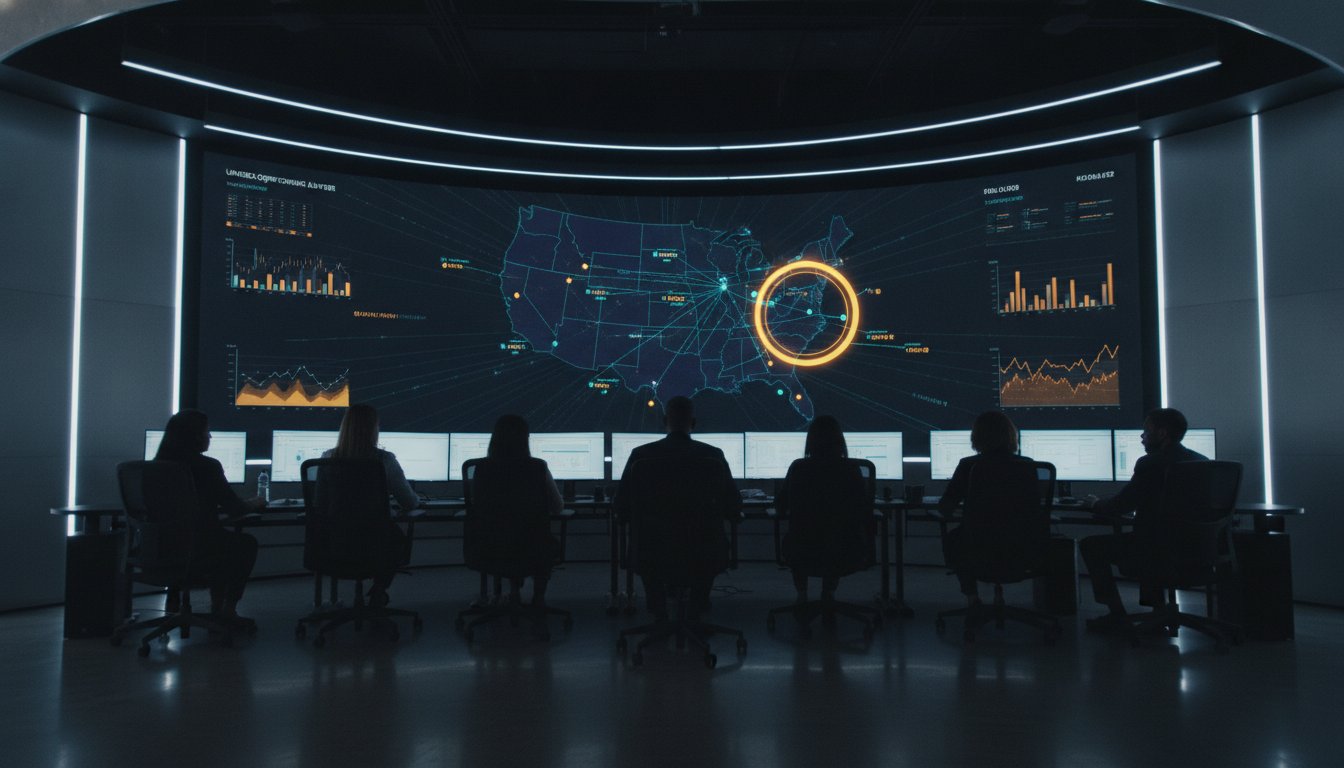
How much critical data is currently hiding in plain sight on your video wall while your operators struggle to prioritize a dozen competing alerts? You likely recognize the strain of information overload, where siloed data sources and disconnected screens create gaps that lead to missed incidents. Even with powerful tools like Axon in place, you’re often left with a partial view of the field. Most control rooms already have the screens. What they’re missing is the layer that decides what goes on them, and escalates automatically when something needs attention. Modern GSOC technology provides this clarity by filtering noise and ensuring that only essential information reaches the decision-makers during high-stakes operations.
As the global GSOC market reaches USD 49.43 billion in 2026, you require a centralized operational intelligence layer, vis/ability, that transforms raw data into actionable situational awareness. This article details how to shift your command center from a reactive environment into a proactive hub of intelligence. We’ll explore integration strategies that automate escalation, reduce operator fatigue, and enable seamless collaboration between headquarters and mobile field teams. You’ll learn to build a foundation where technical tools empower your team to act with absolute certainty when the stakes are at their highest.
Key Takeaways
- Shift from reactive monitoring to a proactive intelligence model that streamlines decision-making during high-stakes operations.
- Recognize why point solutions provide only a partial view and how a unifying operational intelligence layer creates a complete common operating picture.
- Leverage event-driven GSOC technology to automate alert escalation and ensure that critical incidents are never lost in a sea of data.
- Reduce operator fatigue by prioritizing essential information and using human-centric visualization to manage complex data feeds.
- Coordinate responses across distributed teams by integrating mobile vis/ability into your centralized command and control infrastructure.
The Evolution of GSOC Technology: From Monitoring to Intelligence
GSOC technology represents the integrated ecosystem of hardware and software that enables comprehensive situational awareness on a global scale. In the past, command centers functioned primarily as passive monitoring stations where operators watched endless loops of CCTV footage. This model has become obsolete. Today’s high-stakes environments demand a transition to data-integrated command centers that can process vast streams of digital intelligence. As organizations scale, they often encounter a complexity gap where the sheer volume of incoming data outpaces the human ability to analyze it. This influx of information, without proper filtering, leads to diminished clarity rather than improved safety. The operational intelligence layer has emerged as the bedrock of modern response, serving as the essential bridge between raw data and human judgment.
The Role of Global Security Operations Centers Today
A modern Security Operations Center (SOC) acts as the central nervous system for enterprise-wide threat detection and response. It’s the foundation of operational readiness, providing the real-time insights required to manage a rapidly shifting threat landscape. For organizations maintaining a national or global footprint, a centralized GSOC ensures that:
- Protocols remain consistent across all locations.
- Responses are coordinated across every time zone.
- Operational continuity is maintained during local disruptions.
Utilizing advanced GSOC technology, these centers proactively provide the intelligence needed to protect assets before a crisis escalates. Success in these environments depends on moving beyond simple visibility toward actionable, intelligence-driven operations that empower individuals to act with greater certainty.
Why Traditional Point Solutions Create Information Silos
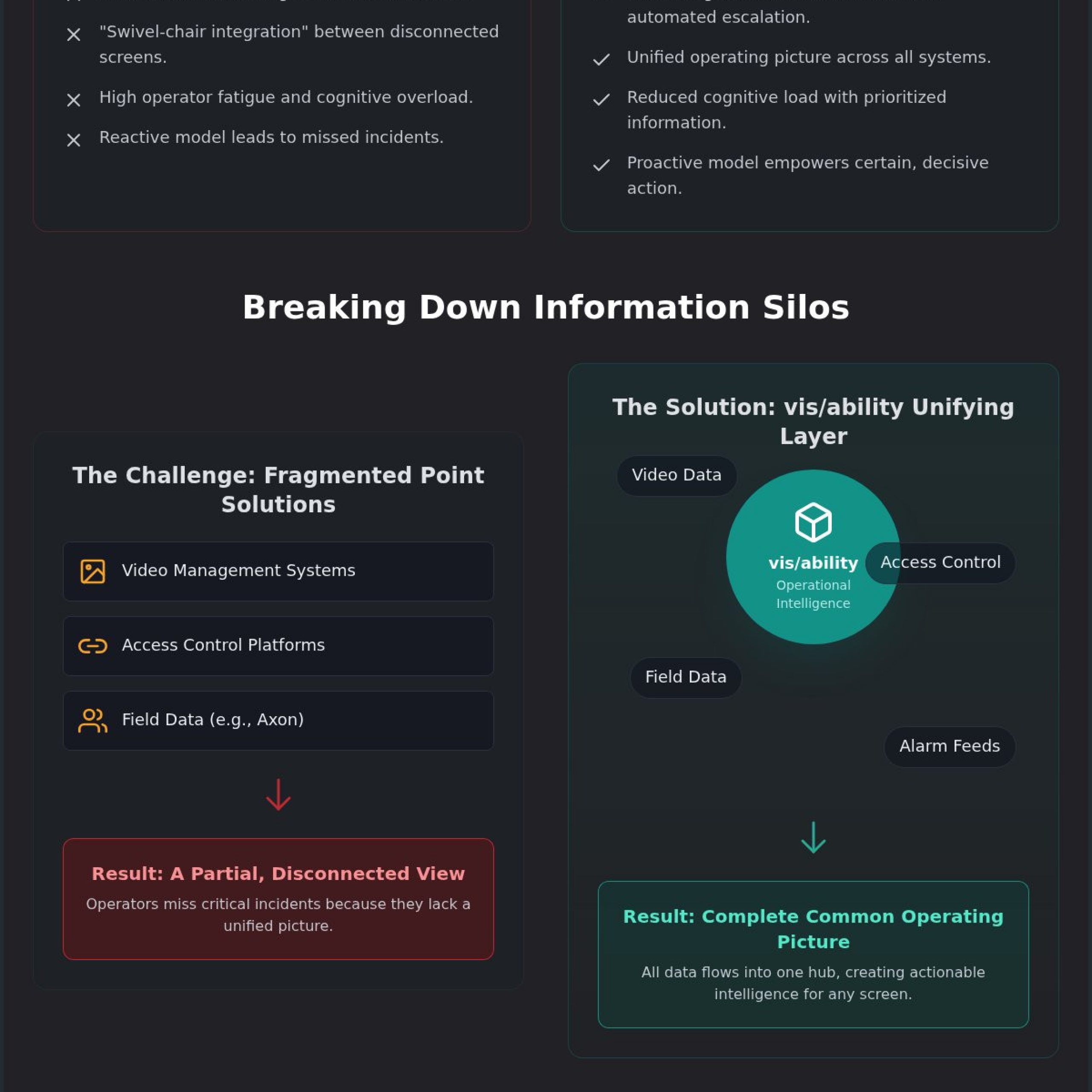
Many organizations attempt to solve control room situational awareness problems by stacking individual point solutions. While tools like Video Management Systems or access control platforms provide deep visibility into specific areas, they remain narrow in scope. Some teams use platforms like Axon to manage field data, but these only provide a partial solution and require a unifying layer to create a full common operating picture. This fragmentation leads to swivel-chair integration, where operators must manually correlate data between disconnected screens. Such a manual process is the primary reason why operators miss incidents video wall alerts should have highlighted. Most control rooms already have the screens. What they’re missing is the layer that decides what goes on them, and escalates automatically when something needs attention. By implementing vis/ability as your operational intelligence layer, you create a central hub where all other tools flow, ensuring clarity when stakes are at their highest.
Core Components of a High-Performance GSOC Tech Stack
A high-performance GSOC technology stack is defined by its ability to synthesize disparate data into a single, cohesive narrative. This ecosystem relies on four essential pillars: visualization systems, integration platforms, secure communication protocols, and cyber-physical integration. While hardware provides the physical visibility, the software engine determines the speed and accuracy of the response. Integrating digital threat data with physical security oversight creates a comprehensive shield for the enterprise, moving beyond simple video monitoring toward a state of total operational readiness. Secure communication protocols form the backbone of this stack, ensuring the reliable transport of sensitive data across distributed networks. Without robust encryption and low-latency delivery, even the most advanced data feeds become a liability during an active incident.
Advanced Video Wall Systems and Control Room Design
Modern video walls serve as the visual anchor for a common operating picture. High-performance processing is required to manage 24/7 environments without latency. It’s not enough to simply display feeds. The system must offer layout flexibility that adapts to the specific needs of an unfolding crisis. Expert control room design services ensure that hardware and software are optimized for collaboration. This allow operators to share critical insights across the room or across the globe instantly, maintaining operational stability when seconds count. Proper design reduces physical strain and ensures that the most vital information is always within the primary field of view.
Data Aggregation and Real-Time Application Integration
Effective GSOC technology must integrate complex applications like Geographic Information Systems (GIS), Computer-Aided Dispatch (CAD), and Security Information and Event Management (SIEM) into a unified interface. Some organizations rely on point solutions like Axon to manage field data. While these tools serve a purpose, they only provide a partial solution and require a unifying layer to create a full common operating picture. Fragmented data leads to hesitation, and in a mission-critical environment, hesitation is a risk you cannot afford.
This is where the operational intelligence layer becomes vital. Most control rooms already have the screens. What they’re missing is the layer that decides what goes on them, and escalates automatically when something needs attention. By utilizing the vis/ability platform, teams can filter noise from signal through event-driven situational awareness. This ensures that when a critical threshold is met, the relevant data is pushed to the video wall and mobile users simultaneously. This seamless data flow bridges the gap between the command center and the field. It ensures every team member operates from the same set of facts, regardless of their physical location.
The Operational Intelligence Layer: Deciding What Matters
The effectiveness of GSOC technology isn’t measured by the number of data sources it collects, but by how it filters that data into actionable intelligence. Many organizations rely on specialized point solutions, such as Axon for field evidence or SIEMs for network security. While these tools provide deep insights within their specific domains, they remain isolated from the broader operational context. They offer a partial solution that requires a unifying layer to create a full common operating picture. Without this layer, operators are forced to manually correlate information during a crisis, which increases the likelihood of human error and slows response times. Most control rooms already have the screens. What they’re missing is the layer that decides what goes on them, and escalates automatically when something needs attention.
This is the role of the operational intelligence layer. By positioning vis/ability as the central hub of your command center, you transform fragmented systems into a single, cohesive engine for decision-making. This shift moves your team away from reactive monitoring and toward a state of proactive readiness.
Moving from Point Solutions to a Unified Platform
Specialized tools are designed for specific tasks, but they often fail to communicate with one another during high-velocity incidents. This lack of interoperability forces stakeholders to toggle between different interfaces, losing precious seconds as they try to build a mental map of the situation. A unified platform like vis/ability integrates these disparate tools, making them useful for the entire team. Whether you are a security director at headquarters or a technician in a huddle room, you access the same consolidated dashboard. This bridge between raw data and human judgment ensures that every decision is based on verified, real-time intelligence rather than fragmented reports. It provides a level of clarity that point solutions simply cannot achieve on their own.
Automating Escalation and Workflow Intelligence
The transition from reactive monitoring to a proactive model requires event-driven intelligence. Instead of expecting operators to spot every anomaly across dozens of screens, the system should identify critical thresholds and act accordingly. When a SIEM detects a breach or a CAD system logs a high-priority call, the vis/ability platform can trigger automatic layout changes on the video wall. This immediate visual escalation ensures the right information reaches the right person at the right time. This level of situational awareness extends beyond the physical walls of the GSOC. Through mobile vis/ability, field teams receive the same critical updates on their devices, allowing for seamless collaboration across distributed environments. This automated workflow reduces cognitive load and allows your team to focus on resolution rather than information gathering.
Designing for the Human Element: Reducing Cognitive Overload
The human element is the most vulnerable link in any command center. When you analyze why operators miss incidents video wall displays were meant to capture, the answer is almost always cognitive overload. Monitoring dozens of high-definition streams for hours leads to a measurable decline in vigilance. GSOC technology must account for these biological limitations by prioritizing information rather than simply presenting it. Most control rooms already have the screens. What they’re missing is the layer that decides what goes on them, and escalates automatically when something needs attention. By implementing an event-driven visualization strategy, you ensure that operators only engage with data that requires a human decision, preserving their mental energy for high-stakes problem solving.
Mitigating Operator Fatigue in Mission-Critical Environments
Alarm fatigue occurs when a system generates more alerts than a human can process. In mission-critical environments, this results in critical signals being ignored as noise. Intelligent software layers like vis/ability mitigate this by filtering incoming data against predefined operational rules. Modern GSOC technology must do more than collect data; it must protect the operator’s ability to process it. Only when a specific threshold is crossed does the system escalate the information to the primary display. This human-centric approach sustains 24/7 operational readiness by keeping the focus on essential tasks. Intuitive interface design further supports this by presenting complex data in a logical, easily digestible format. This reduces the time required to interpret a situation, which directly improves decision-making speed during multi-agency responses.
Collaboration Across Distributed and Mobile Teams
Operational intelligence shouldn’t be confined to the physical command center. Extending the common operating picture to mobile vis/ability tools allows field personnel to operate with the same clarity as headquarters staff. When a regional center or a remote stakeholder can view the exact same visual intelligence as the GSOC, organizational silos begin to break down. This shared perspective is vital during high-velocity incidents where coordination between headquarters and mobile teams is the difference between success and failure. Seamless collaboration ensures that every participant, regardless of location, acts with greater certainty. You can optimize your control room for human performance by integrating the vis/ability platform as your central hub.
Implementing vis/ability for National Operational Resilience
National-scale industries require a level of operational resilience that transcends local monitoring. For sectors like energy, transportation, and defense, the ability to maintain continuity during large-scale disruptions depends on a centralized hub that can scale instantly. Utilizing a COTS-based approach for your GSOC technology ensures that your infrastructure remains flexible and vendor-neutral, avoiding the pitfalls of proprietary systems that cannot adapt to evolving threats. vis/ability serves as this central hub, closing the gap between fragmented data streams and definitive, actionable intelligence. By establishing a unified operational intelligence layer, organizations can ensure that their response strategies are consistent, verifiable, and resilient enough to withstand national-level crises.
Achieving a Cybersecurity Common Operating Picture
Modern threats are rarely confined to either the physical or digital realm. A truly resilient operation requires a Cybersecurity Common Operating Picture that visualizes network health alongside physical security oversight. Most control rooms already have the screens. What they’re missing is the layer that decides what goes on them, and escalates automatically when something needs attention. By integrating SIEM and SOAR data into the broader situational awareness framework, operators can see a cyber-attack unfolding in real-time on the same interface used for perimeter security. This unified view allows for a coordinated incident response where IT and physical security teams operate from a single set of facts. It eliminates the delay caused by siloed departments and ensures that network vulnerabilities don’t become physical security breaches.
Future-Proofing the GSOC for 2026 and Beyond
As the global GSOC market is projected to reach USD 49.43 billion by 2026, the demand for open architecture has never been higher. Organizations must move away from rigid systems that cannot integrate new technologies as they emerge. Point solutions like Axon provide essential data from the field, but they only provide a partial solution and require a unifying layer to create a full common operating picture. Ensuring operational continuity requires event-driven technology that can ingest data from GIS, CAD, and emerging AI analytics platforms seamlessly.
For organizations in utilities, transportation, and defense, the next step in upgrading their operational intelligence layer is moving toward a platform that prioritizes essential information. This transition ensures that your command center remains a proactive engine of intelligence rather than a reactive monitoring station. You can begin this transformation by contacting our experts to discuss a tailored integration strategy for your mission-critical environment. Building this foundation today ensures you are prepared for the complexities of tomorrow’s threat landscape.
Elevating Operational Readiness for the Modern Threat Landscape
Building a resilient command center requires more than just high-performance displays. It demands a sophisticated software layer that unifies fragmented data into a single, actionable operating picture. Modern GSOC technology must evolve to manage the complexity of converged cyber and physical threats. Most control rooms already have the screens. What they’re missing is the layer that decides what goes on them, and escalates automatically when something needs attention.
Activu brings over 40 years of experience in mission-critical visualization to this challenge. Trusted by federal agencies and Fortune 500 companies, our solutions establish a Cybersecurity Common Operating Picture that ensures total visibility across your enterprise. By prioritizing essential information, you empower your team to act with absolute certainty when stakes are at their highest. Take the next step in transforming your command center from a reactive monitoring station into a proactive engine of intelligence. Request a demo of the vis/ability platform to unify your GSOC operations and secure your operational future.
Frequently Asked Questions
What is the difference between GSOC technology and a standard SOC?
GSOC technology focuses on global, converged intelligence across physical and digital assets, whereas a standard SOC often focuses primarily on cybersecurity or IT network health. A GSOC manages enterprise-wide resilience across multiple geographies. It integrates physical security, threat intelligence, and operational data into one view. This centralized oversight ensures that protocols remain consistent across an entire global footprint, providing a higher level of operational readiness.
How does an event-driven situational awareness platform improve response times?
It automates the transition from detection to visualization by using pre-defined triggers. When a specific threshold is met, the platform immediately pushes relevant data to the video wall. This eliminates the manual search for information during a crisis. Most control rooms already have the screens. What they’re missing is the layer that decides what goes on them, and escalates automatically when something needs attention.
Can legacy video wall systems be integrated into a modern GSOC intelligence layer?
Yes, modern platforms like vis/ability are designed to be vendor-neutral and can often integrate with existing hardware. This protects your previous investments while upgrading the software logic that drives the displays. By adding an operational intelligence layer over legacy processors, you gain advanced automation and data aggregation capabilities. This approach allows for a scalable transition without requiring a total hardware overhaul of your command center.
Why do operators often miss critical incidents despite having multiple screens?
Missed incidents are typically the result of cognitive overload and alarm fatigue. When an operator is forced to monitor fragmented data feeds across dozens of screens, the brain loses its ability to distinguish critical signals from noise. Most control rooms already have the screens. What they’re missing is the layer that decides what goes on them, and escalates automatically when something needs attention.
What is a Cybersecurity Common Operating Picture (COP)?
A Cybersecurity Common Operating Picture is a unified visual interface that merges network health data with physical security oversight. It allows GSOC teams to see digital threats, such as unauthorized access attempts or system failures, alongside real-time video feeds. This converged view ensures that IT and physical security personnel coordinate their responses based on the same verified intelligence. It eliminates silos and ensures a proactive defense against multi-vector attacks.
How does mobile vis/ability extend the reach of the command center?
Mobile vis/ability provides field personnel with the same real-time common operating picture used in the main GSOC. This ensures that technicians, responders, and remote stakeholders receive critical alerts and visual data on their mobile devices. It bridges the communication gap between headquarters and the field. This shared perspective allows distributed teams to collaborate with absolute certainty during an unfolding incident, regardless of their physical location.
What are the risks of relying on point solutions without a unifying integration layer?
Relying on point solutions creates information silos that force operators to manually correlate data between disconnected interfaces. Tools like Axon provide deep field data but only offer a partial solution. Without a unifying operational intelligence layer, these tools cannot communicate effectively. This fragmentation leads to slower response times and increased human error. It prevents the team from achieving total situational awareness during high-velocity events.
How does GSOC technology support NERC CIP compliance in utilities?
GSOC technology supports NERC CIP by providing the audit trails and real-time visualization required for critical infrastructure protection. It automates the monitoring of physical access and network security, ensuring that all events are logged and visualized in a central hub. This centralized oversight helps utility operators maintain compliance with regulatory standards. It ensures the operational resilience of the national power grid through constant, intelligence-driven monitoring of critical assets.