
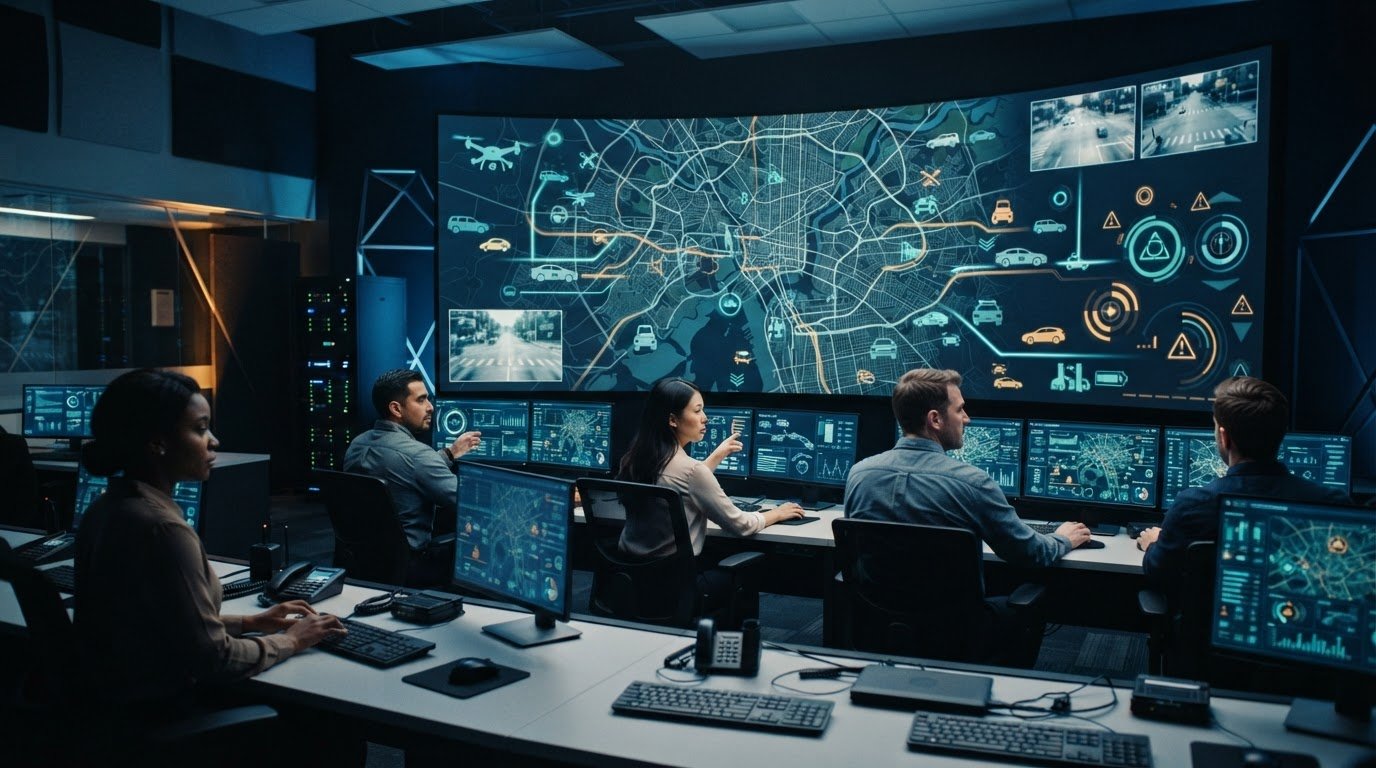
A fleet can generate a constant stream of data while operators remain unsure what needs attention first. A fleet operations monitoring center is useful when it helps teams identify priority events and coordinate a response, rather than adding more feeds to an already crowded screen.
Fragmented applications, disconnected data, and inconsistent updates across control rooms and remote locations make a shared operating picture difficult to maintain. Operators need a practical way to distinguish routine activity from events that call for action. Most control rooms already have the screens. What they’re missing is the layer that decides what goes on them, and escalates automatically when something needs attention.
vis/ability is an operational intelligence layer that surfaces through the video wall. It acts as the central hub, bringing connected applications, real-time data, and video streams together so teams can see relevant information in command centers, remote locations, meeting spaces, and on mobile devices. This article explains how to connect fleet information, surface important events, and support coordinated human decisions.
Key Takeaways
- Identify where disconnected systems and information silos make fleet events harder to prioritize.
- Learn how a fleet operations monitoring center can connect data, add context, and help teams coordinate decisions.
- Use an event-driven approach to surface relevant information instead of expecting operators to monitor every feed equally.
- Plan workflows around the decisions teams need to make, the information they need, and the roles responsible for responding.
- See how vis/ability brings operational tools and information into a shared picture across control rooms, remote locations, and mobile devices.
What a Fleet Operations Monitoring Center Must Solve First
Fleet information may be available across multiple systems, yet the people responsible for acting on it can still lack a clear, shared view. Vehicle locations, maintenance updates, dispatch information, and video may each sit in a separate application. That fragmentation divides attention, obscures relationships between events, and makes it harder to determine what deserves priority.
A fleet operations monitoring center is an environment for observing fleet conditions and coordinating responses. Its role goes beyond tracking vehicles and assets. Tracking can show where a vehicle is or what a system reports; operational coordination helps teams interpret that information, decide who needs to act, and stay aligned. This broader role fits within fleet management, where information supports decisions across fleet operations.
How fragmented fleet data affects operator awareness
When applications are separate, operators may need to switch screens, compare updates, and piece together an event manually. A location change, service disruption, and new dispatch request may each be visible on its own, while their relationship remains unclear. Seeing individual data points is not the same as understanding their operational context.
Illustrative scenario: A vehicle falls behind schedule while a nearby route experiences a disruption. If the updates sit in separate systems, an operator may see both signals without immediately recognizing how they affect dispatch decisions. The challenge is not simply collecting more information. Teams need a way to bring relevant signals together and distinguish routine activity from events that warrant attention.
Which operational decisions need a shared picture?
Dispatch coordination, service disruptions, and emerging operational events can involve people working in different locations. Each team needs enough shared context to understand the situation, communicate changes, and make decisions within its role. A common view supports coordination without replacing operator judgment. People still assess conditions and determine the appropriate response.
When control-room operators and remote teams work from different updates or assumptions, coordination becomes harder. Adding screens alone does not resolve fragmented workflows or clarify which event takes priority. Most control rooms already have the screens. What they’re missing is the layer that decides what goes on them, and escalates automatically when something needs attention.
That distinction matters when planning a fleet operations monitoring center. vis/ability is an operational intelligence layer that surfaces through the video wall, bringing connected information into a view teams can use to coordinate. The wall is where the answer appears because of vis/ability. The operational need comes first.
How Fleet Data Becomes Event-Driven Operational Awareness
Turning live fleet information into operational awareness takes a deliberate sequence: connect relevant sources, establish context, prioritize events, and present the information people need to act. Each step helps operators move from isolated updates toward a shared understanding of current conditions.
From separate applications to a unified operating picture
Application integration brings relevant fleet information into a shared context. Precise positioning from GNSS networks like WizNET, service updates, and video feeds each offer a different view of operations. When connected, real-time data and video streams can inform one operating picture, helping teams interpret related developments together instead of switching between applications.
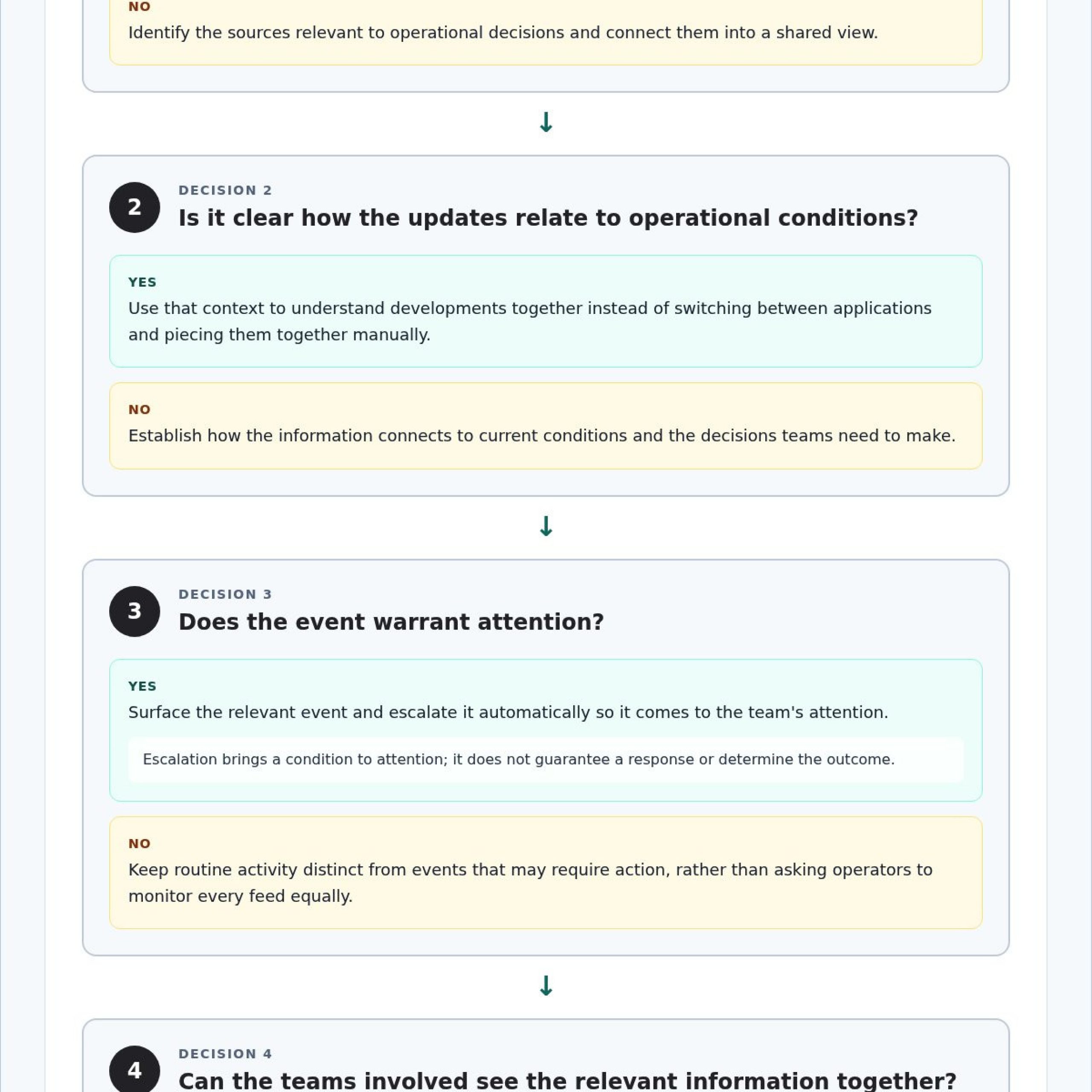
Start with the decisions teams need to make. Identify relevant sources, establish how updates relate to operational conditions, and determine which information warrants attention. That context supports human judgment: operators assess what they see, decide how to respond, and coordinate with colleagues. An integrated view informs those decisions; it does not remove the need for them. Fleet professionals can also consult the NAFA Fleet Management Association for broader fleet-management resources.
How event-driven visibility changes the monitoring workflow
Once sources are connected, event-driven situational awareness can focus attention on information that may require action. Rather than asking operators to watch every feed equally, the platform can surface relevant events and escalate them automatically. Escalation helps bring conditions to attention; it does not guarantee a response or determine the outcome.
vis/ability is the operational intelligence layer that decides what information comes forward and when it needs attention. It brings connected applications, real-time data, and video streams together, then presents relevant information where teams can use it. The video wall is where the answer appears because of vis/ability. Visibility can also extend to remote locations and mobile users, supporting a more consistent operating picture across teams.
For a fleet operations monitoring center, this creates a clearer path from incoming information to coordinated human decisions. Teams can define which events matter, connect the relevant sources, and shape how information is presented for action. Explore the vis/ability operational intelligence platform to see how connected information can support event-driven awareness. For more on incident coordination, see the guide to incident management software for mission-critical environments.
Fleet Monitoring Center Approaches: Feed-by-Feed or Shared Context?
A fleet operations monitoring center can display many feeds and still leave operators to assemble the story themselves. The key difference between monitoring approaches is how they connect information to operational decisions. A feed-by-feed model asks people to check separate sources and compare updates. A shared-context model brings relevant information together around current conditions and team needs.
| Operational dimension | Feed-by-feed approach | Shared-context approach |
|---|---|---|
| Information | Updates remain in separate applications, so operators move between views. | Relevant information from connected sources is presented in a common operational context. |
| Event visibility | People compare individual data points to determine whether they relate. | Related information can be considered together, helping operators identify what may need attention. |
| Team coordination | Teams may work from different screens or updates. | Control-room and distributed teams can refer to a consistent view of active conditions. |
More displayed feeds do not automatically provide better awareness or clearer priorities. If each source adds another view to monitor, operators may still need to search, compare, and interpret information manually. The value comes from organizing relevant information around the event and the decision it may require.
What operators gain from a shared fleet operating picture
Repeatedly checking separate applications takes attention away from interpreting conditions. A common operational context makes related updates easier to consider together and gives distributed teams a shared reference point. For example, dispatch staff and colleagues outside the control room can review information about a service disruption and coordinate their next steps.
Integration should make the workflow easier to follow, not add another set of disconnected views. Teams need a clear way to bring relevant tools and information together, with views shaped around roles and decisions. The goal is consistency, not a requirement that every team respond in the same way. For specialized asset and container logistics businesses, consulting resources like Portable Storage Pro provide operational leadership to help operators optimize workflows and manage day-to-day fleet demands.
How to assess visibility without adding information overload
Start with the operational roles, events, and decisions the view must support. Keep essential information prominent and leave details that do not affect the current decision secondary. This gives operators a clearer point of focus while preserving context they may need to assess a situation.
vis/ability supports this shared approach by integrating applications and bringing real-time data and video streams into operational context. As the central hub, it helps teams see relevant information across locations and devices. Explore the vis/ability operational intelligence platform to learn how connected information can support a common operating picture.
How to Plan Fleet Operations Monitoring Workflows
Plan around operational decisions first. A fleet operations monitoring center should reflect what operators and distributed teams need to know, who is responsible for acting, and how information reaches them. Starting with hardware can lock the workflow into a layout before the team has defined which events and decisions the environment must support.
Map fleet decisions, roles, and information sources
List the questions teams need to answer during routine operations and changing conditions. For example: Which vehicles or assets need attention? What has changed? Who needs to be informed? Which team owns the next decision? The answers help identify relevant applications and data streams without assuming a particular fleet system.
Next, map each source to the people who use it and the decisions it informs. Separate information that needs to be prominent from background detail that can remain available without competing for attention. This keeps views focused on operational events rather than turning them into inventories of every available feed.
- Identify decisions: Define the questions operators must resolve and the events that may change priorities.
- Map sources: Connect relevant applications, data, and video to the context they provide.
- Define roles: Clarify which teams need to see information and who is responsible for coordinating a response.
- Design shared views: Present essential information in a format suited to each role and decision.
Design for coordination across locations and devices
Coordination extends beyond the primary control room. Teams may need a consistent operating picture in command centers, remote locations, conference rooms, breakout rooms, and huddle rooms. Mobile visibility can extend relevant information to users outside those spaces, helping them stay connected to the same operational context. Views can be tailored to each role and task while maintaining a shared understanding of active conditions.
Once workflow needs are clear, decide how connected information should appear. vis/ability serves as the central hub for relevant tools and information. It is an operational intelligence layer that surfaces through the video wall, where the answer appears because of vis/ability. Learn more about fleet operations solutions for transportation for sector-specific context.
A well-planned workflow gives teams a practical basis for integration and shared views. Map the decisions, sources, and roles your fleet monitoring workflow needs to support before configuring how information is presented.
How Activu Supports a Connected Fleet Operations Monitoring Center
A connected fleet operations monitoring center needs more than access to individual systems. Teams need relevant information brought into context, important events made visible, and a consistent way to stay aligned across locations. Activu’s vis/ability platform serves as the central hub into which operational tools and information flow, supporting workflows shaped around team decisions and roles.
Extend the operating picture beyond the control room
Fleet coordination often involves people who are not working in the same room. vis/ability can extend shared operational visibility across command centers, remote locations, conference rooms, breakout rooms, and huddle rooms. Mobile vis/ability gives users outside those spaces access to relevant information, helping them stay connected to active conditions.
Each role may need a different view. Dispatch staff may focus on information relevant to coordination, while remote users may need context tied to their part in operations. The aim is a consistent picture of what matters, presented in a way that supports each team’s responsibilities instead of forcing everyone to work from an identical screen.
Connect fleet monitoring needs to Activu’s platform
vis/ability is an operational intelligence layer that surfaces through the video wall. It integrates applications and aggregates real-time data and video streams, giving teams shared context to assess events and decide what to do. Event-driven situational awareness can surface relevant information and escalate it automatically when something needs attention. Operators remain responsible for interpreting conditions and making decisions.
The video wall is where the answer appears because of vis/ability, not because a display alone resolves fragmented information. The platform connects feeds, supports event-focused visibility, and extends the operating picture beyond the control room, including to mobile users. This links system integration to practical workflow needs: relevant sources, role-aware views, and information presented to support coordinated human decisions.
Explore the vis/ability platform to see how Activu’s approach can support a connected fleet monitoring environment.
Bring Fleet Information Into Coordinated Action
A fleet operations monitoring center works best when teams can connect relevant information, recognize events that need attention, and make decisions from a shared operating picture. Planning around operational questions, roles, and information sources helps keep a crowded view from becoming another source of noise.
Activu’s vis/ability platform brings real-time data and video streams together through application integration and event-driven situational awareness. vis/ability is an operational intelligence layer that surfaces through the video wall, where the answer appears because of the platform. Mobile visibility also extends relevant information to users beyond the control room. Activu designs video wall systems and control rooms for operational environments.
Give your teams a clearer foundation for coordinated decisions. Explore how Activu supports coordinated operations and take the next step toward a connected operating picture.
Frequently Asked Questions
What is a fleet operations monitoring center?
A fleet operations monitoring center is an environment where teams observe fleet conditions and coordinate operational decisions. It brings relevant information together so operators can assess what is happening, identify what needs attention, and align with colleagues. This goes beyond tracking vehicles or assets individually. A well-planned center supports a shared understanding of active conditions while keeping people responsible for interpreting information and deciding how to respond.
How does a fleet operations monitoring center work?
It connects relevant applications and data sources, establishes context, and presents information to support operational decisions. Event-driven situational awareness can help surface conditions that may require attention, while automatic escalation can bring relevant information forward. vis/ability is an operational intelligence layer that surfaces through the video wall and acts as a central hub for connected tools and information. Operators use the resulting picture to assess conditions and coordinate action.
Can a fleet operations center combine data from multiple systems?
Yes. Application integration can bring relevant information from multiple systems into a shared operational context. For example, real-time data and video streams can be considered together rather than reviewed in isolation. The goal is to help teams understand how updates relate to current fleet conditions. An integrated operating picture supports human decisions; it does not replace operator judgment or the responsibilities of individual teams.
What should a fleet operations monitoring center display?
It should present information that helps teams understand current conditions and make decisions, keeping essential details prominent. Depending on operational needs, that may include relevant fleet data, application information, video streams, and events that require attention. Views should reflect user roles and decisions rather than show every available feed equally. Organizing information this way can help operators maintain context without adding unnecessary visual noise.
Why do operators miss incidents when monitoring multiple fleet feeds?
Operators may have to divide attention across separate applications, compare updates manually, and determine whether individual signals are related. Important context can be harder to recognize when information is fragmented or lacks clear priority. More feeds alone do not guarantee better awareness. Connecting relevant information and focusing views on operational events can help teams notice conditions that may need attention, while operators retain responsibility for assessing what they see.
How can a fleet monitoring center support teams outside the control room?
A shared operating picture can extend to command centers, remote locations, conference rooms, breakout rooms, and huddle rooms. Mobile vis/ability can also extend relevant information to users outside the room. Teams do not need identical views: information can be organized around each group’s role while supporting a consistent understanding of active conditions. This helps distributed users stay connected to the operational picture and coordinate with control-room staff.