
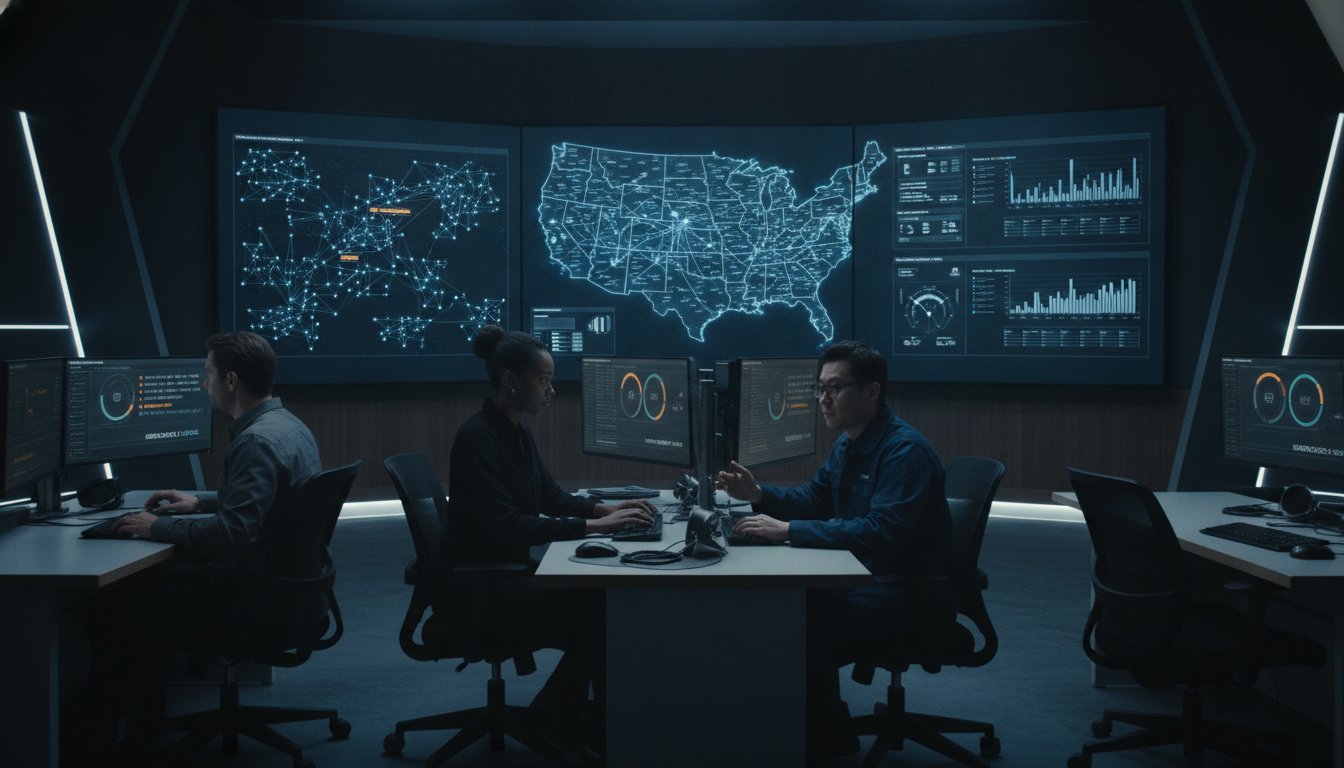
Your multi-million dollar video wall functions as little more than expensive wallpaper if it doesn’t actively drive operator response. In high-pressure environments, the gap between raw data and decisive action represents the difference between a routine resolution and a systemic failure. You recognize that information silos and training fatigue often leave even the most dedicated teams struggling to maintain operational readiness. It’s a critical challenge to convert a vast sea of incoming data into a clear, actionable path for your command center staff.
This article provides the strategic roadmap to bridge that gap using advanced tools for improving control room operator performance. We’ll master the methodologies and technological frameworks required to transform your operators into elite decision-makers through event-driven situational awareness. By leveraging the vis/ability platform and adhering to ISO 11064 ergonomic standards, you can shift from passive monitoring to proactive threat detection. We’ll explore how a unified operational framework reduces time-to-competency for new hires and ensures your workforce remains the reliable engine behind every successful mission.
Key Takeaways
- Eliminate cognitive overload by mastering the ability to filter essential intelligence from background noise.
- Identify the specific tools for improving control room operator performance that empower your team to maintain clarity when stakes are at their highest.
- Transition from static tabletop exercises to high-fidelity simulations that mirror your real-world operational intelligence layer.
- Automate the visualization of critical escalation triggers by mapping operational workflows into a proactive, event-driven framework.
- Leverage the vis/ability platform to integrate disparate data streams into a unified hub for operational readiness and technical integration.
The Crisis of Cognitive Overload in Mission-Critical Centers
The evolution of the mission-critical environment has outpaced the human brain’s capacity for raw data processing. Command centers have transitioned from monitoring a handful of analog feeds to managing a relentless surge of digital data. This deluge creates a paradox where more information often results in less clarity. When operators are forced to process thousands of data points across disparate systems, cognitive overload becomes an inevitability rather than a risk. The primary cause of operator failure in these high-stakes environments is not a lack of data, but the inability to filter essential intelligence from background noise.
Investing in advanced tools for improving control room operator performance is no longer optional; it’s a requirement for survival. Traditional, static training manuals are fundamentally ill-equipped for 24/7 operations. These documents remain frozen in time while the threats they describe are fluid and unpredictable. Similarly, many organizations fall victim to the “wallpaper effect.” This occurs when massive video walls display a constant, unchanging stream of information that operators eventually tune out. Instead of serving as active decision-support tools, these displays become expensive, ambient distractions that mask emerging crises.
The Failure of Fragmented Systems and Silos
Siloed data feeds, including CCTV, SCADA, and SIEM, fragment an operator’s perspective and contribute to dangerous tunnel vision. When information is trapped within separate applications, the burden of synthesis falls entirely on the human element. Even sophisticated partial solutions that focus exclusively on physical security provide only a fraction of the necessary context, leaving operators to guess how a security alert might impact infrastructure health. Forcing manual data synthesis during a crisis is a recipe for catastrophic failure. True operational readiness requires a platform that unifies these streams into a single, coherent narrative before they reach the operator’s station.
Entering Through the Pain: Why Operators Miss Incidents
Alarm fatigue is a direct contributor to delayed response times, particularly in the utilities and energy sectors. When every system competes for attention, critical alerts are often buried under a mountain of non-essential notifications. Effective control room design must prioritize the human element to prevent this exhaustion. By integrating specific tools for improving control room operator performance, organizations can transition from reactive monitoring to event-driven management. This shift ensures that operators only see the information that requires action, allowing them to act with greater certainty and speed when critical infrastructure is at risk.
Core Competencies for the Elite Control Room Operator
Elite performance in high-stakes environments requires more than just technical literacy. It demands a specialized skill set rooted in data synthesis, rapid triage, and collaborative decision-making. While many organizations prioritize software-specific training, technical proficiency is secondary to understanding the broader operational flow. An operator who knows how to navigate a specific menu but fails to recognize the significance of a data anomaly is a liability. Human factors best practices emphasize that the human element remains the ultimate arbiter of critical decisions. Implementing advanced tools for improving control room operator performance starts with redefining the operator’s role from a passive observer to an active intelligence analyst.
The primary instrument for the modern operator is the Common Operating Picture (COP). This isn’t just a display; it’s a dynamic intelligence layer that provides a unified view of the entire operational landscape. Most control rooms already have the screens; what they’re missing is the layer that decides what goes on them and escalates automatically when something needs attention.
Mastering Situational Awareness and Information Flow
True situational awareness consists of three distinct levels: perception of the environment, comprehension of the current situation, and projection of future status. Operators must move beyond constant-watch habits, which lead to fatigue and missed cues. Instead, they should be trained to use the vis/ability platform as their central operational intelligence layer. This shift toward event-driven thinking ensures that attention is only deployed when a specific trigger requires human judgment. When selecting tools for improving control room operator performance, the focus must remain on reducing the cognitive distance between an event and its resolution.
Collaborative Decision-Making Under Pressure
Critical incidents rarely stay confined to the command center. Elite operators must facilitate seamless information sharing between the hub and mobile users in the field. Developing a Unified Operating Picture mindset ensures that every stakeholder, regardless of location, sees the same prioritized intelligence. This approach reduces the friction between raw data discovery and decisive human action. By removing the need for verbal status updates during a crisis, teams can focus entirely on the resolution. If you are looking to enhance your team’s capabilities, exploring vis/ability can provide the necessary framework for this evolution. This level of integration ensures that the right information reaches the right person at the exact moment it’s needed, transforming potential chaos into a structured, manageable process.
High-Fidelity Simulation and Stress-Testing Protocols
Traditional tabletop exercises often fail to replicate the visceral pressure of a live crisis. While these static sessions are useful for reviewing policy, they lack the dynamic data flow required to build operational muscle memory. Modern training requires high-fidelity simulations that mirror the exact operational intelligence layer used in the field. By utilizing advanced incident management software, organizations can create complex, software-driven scenarios that test an operator’s ability to synthesize information under duress. These simulations provide a safe yet rigorous environment where teams can fail, learn, and refine their response protocols before a real-world event occurs.
Training must go beyond routine operations to include “black swan” events and failures in automated escalation. If an operator becomes overly reliant on automation, they may struggle when a system glitch occurs during a critical incident. Integrating robust tools for improving control room operator performance allows supervisors to inject unexpected variables into a scenario, such as a lost sensor feed or a secondary security breach. This level of stress testing ensures that human judgment remains sharp even when the technological baseline is compromised. It transforms the training center from a classroom into a proving ground for elite decision-making.
Replicating the Mission-Critical Environment
Maximum realism is achieved by integrating real-time data feeds into the training environment. Using the vis/ability platform, organizations can deploy a sandbox version of their actual Common Operating Picture (COP). This ensures that every button, alert, and geospatial layer in the simulator is identical to what the operator uses during a live shift. This consistency is vital for maintaining public safety standards and meeting strict regulatory requirements. When the interface in training matches the interface in the hub, the transition from practice to performance is seamless.
Human Factors and Ergonomic Synergy
Physical readiness is a prerequisite for cognitive clarity. Ergonomic console design is not a luxury; it’s a tool that supports performance during long-duration simulations and high-stress shifts. A data-driven approach to assessing control room operator performance demonstrates that speed and accuracy are directly impacted by the physical environment. Operators must be trained to manage their own mental and physical state in 24/7 hubs. A well-planned workstation layout reduces the time required to process critical information, ensuring that physical fatigue never becomes a bottleneck for decisive action. This synergy between human factors and technical tools creates a foundation for unwavering reliability.

Implementing an Event-Driven Training Framework
Transitioning from a reactive posture to a proactive one requires a structured implementation of event-driven workflows. This framework ensures that your team isn’t just reacting to alarms but is instead managing a coordinated response based on prioritized intelligence. By integrating specific tools for improving control room operator performance, you can automate the transition from routine monitoring to emergency management. This systematic approach eliminates the guesswork that often leads to hesitation during a crisis.
Follow these five steps to implement a robust training framework:
- Step 1: Map your operational workflows and identify critical trigger points for escalation. Define exactly which data thresholds represent a threat to your mission.
- Step 2: Configure the operational intelligence layer to automate the visualization of these triggers. Ensure that when a threshold is met, the relevant data is immediately pushed to the operator’s primary view.
- Step 3: Train operators to respond to pushed intelligence rather than pulled data. This shifts their focus from hunting for information to analyzing the intelligence provided.
- Step 4: Conduct multi-team drills that test the transition from standard operations to emergency response. These drills should involve both local hub staff and field personnel.
- Step 5: Review SITREPs and data logs to refine automated filters and operator response protocols. Continuous refinement ensures the system evolves with the threat landscape.
Training for Automated Escalation
Operators must learn to trust and verify automated system alerts. The vis/ability platform serves as a critical filter, reducing background noise so that only actionable intelligence reaches the workstation. Training focuses on managing the hand-off between automated detection and human intervention. Operators practice taking control of the automated workflow, ensuring that technology serves as a force multiplier rather than a replacement for human judgment. This clarity allows for rapid, certain action when every second counts.
Critical Task Analysis in Post-Incident Training
Identifying make or break moments in incident management requires a rigorous analysis of historical data. By reviewing SITREPs and operational logs, supervisors can pinpoint exactly where delays occurred or where situational awareness failed. This data-driven approach is essential for federal government and defense operations, where the margin for error is non-existent. Continuous learning becomes a reality when you use the platform to analyze and improve operator performance over time. If you’re ready to modernize your training protocols, contact our design specialists to discuss building a unified operational framework for your center.
vis/ability: The Hub for Operational Intelligence and Training
The vis/ability platform serves as the unifying engine that makes every other asset in your command center, from video management systems to SIEM alerts, truly actionable. Without this integration layer, operators are left to navigate a fragmented landscape of disconnected applications. By centralizing these tools for improving control room operator performance, organizations move beyond the limitations of simple hardware management. vis/ability provides the essential context that transforms raw data into a coherent narrative, serving as the bedrock for both daily operations and high-fidelity training. This platform ensures that the prioritization of essential information remains the constant focus of every shift.
Modern threats require a specialized oversight capability that transcends traditional physical security. The platform enables a Cybersecurity Common Operating Picture, allowing teams to visualize network health alongside physical sensor data. This synthesis of digital and physical intelligence creates a state of calm amidst potential complexity. It allows decision-makers to act with absolute technical reliability when stakes are at their highest. Transitioning from fragmented monitoring to a state of actionable intelligence is not merely a software upgrade; it’s a fundamental shift in operational readiness.
Extending Visibility Beyond the Video Wall
Operational intelligence must be accessible wherever the mission requires it. Training for mobile and huddle room collaboration ensures operational continuity, allowing the command center to maintain a unified front during distributed crises. The platform scales effortlessly from the federal level down to local operations, ensuring that a single source of truth remains intact across all echelons. Empowering the individual operator with the full weight of the organization’s intelligence ensures that no decision is made in a vacuum. This reach transforms the entire organization into a responsive, vigilant guardian.
The Future of Control Room Readiness
The next generation of operators will demand event-driven tools that replace static screens with dynamic intelligence. These professionals expect a workspace that filters noise and highlights critical triggers automatically. Investing in a platform that prioritizes essential information delivers a long-term ROI by reducing training fatigue and preventing catastrophic oversights. As the complexity of data streams continues to grow, the ability to maintain clarity will define successful operations. Empower your team with the intelligence they need to act with certainty. By choosing tools for improving control room operator performance that focus on the human element, you position your center as a leader in mission-critical excellence.
Advancing Operational Readiness Through Intelligence
Mastery of the mission-critical environment requires a decisive shift from passive monitoring to active, event-driven intelligence. We have established that high-fidelity simulations and a unified operational framework are essential to transform operators into elite decision-makers capable of managing extreme cognitive loads. By integrating advanced tools for improving control room operator performance, organizations ensure that critical information always takes priority over background noise. This transition is anchored by vis/ability, the industry’s only platform designed specifically for event-driven situational awareness.
With over 40 years of experience, we remain a trusted partner for federal defense, major utilities, and public safety agencies. Our solutions provide the bedrock of technical reliability required to act with absolute certainty when the stakes are highest. It’s time to move beyond the limitations of static displays and equip your team with a proactive intelligence layer that scales with your mission. Schedule a Demo of vis/ability for Your Control Room to begin your transformation. Your team deserves the clarity and focus that only a purpose-built operational hub can provide.
Frequently Asked Questions
How does an operational intelligence layer improve operator training?
An operational intelligence layer provides a consistent interface between training environments and live mission-critical hubs. By training on the exact platform used during live shifts, operators develop precise muscle memory for the tools they’ll use in a crisis. This approach reduces the transition period from trainee to competent analyst by removing the friction of learning multiple disparate systems. It ensures that every training hour directly translates to improved performance during high-stakes operations.
What are the most common mistakes in control room training?
Relying on static tabletop exercises and outdated physical manuals is the most frequent error in modern centers. These traditional methods fail to replicate the dynamic data deluge and psychological pressure of a real-world incident. Another significant mistake is training in a vacuum where operators don’t interact with the software-driven triggers they’ll encounter on shift. Without high-fidelity simulations, operators remain ill-prepared for the rapid triage required during a systemic failure.
How can I reduce operator fatigue in high-stress environments?
Implementing event-driven situational awareness is the most effective way to reduce cognitive exhaustion and prevent burnout. By utilizing advanced tools for improving control room operator performance, you can filter out non-essential background noise and only present actionable intelligence. This prevents alarm fatigue and ensures operators remain focused on high-priority decision-making rather than constant, passive monitoring. Beyond software, optimizing the physical environment with high-quality hydration is another key factor for focus; learn more about PrímaVíz and their professional water treatment solutions. A streamlined interface allows the team to maintain clarity even during long-duration shifts.
Why is situational awareness more important than just monitoring video feeds?
Monitoring is a passive activity that often leads to the “wallpaper effect,” whereas situational awareness is an active state of comprehension and projection. True awareness requires understanding the relationship between different data points, such as how a SCADA alert correlates with a specific security breach. It provides the context necessary to predict and prevent failures rather than just witnessing them. Situational awareness empowers operators to act with certainty rather than reacting to isolated events.
What is the role of simulation in modern mission-critical centers?
High-fidelity simulation serves as a rigorous stress-testing protocol for both personnel and your technological infrastructure. It allows teams to practice their response to “black swan” events in a safe, controlled environment. Effective simulations use real-time data feeds to mirror the live operational environment, ensuring that training results in measurable performance improvements. This proving ground is essential for refining response protocols and ensuring that automated escalation paths function as intended during a real crisis.
How do I integrate mobile users into my control room training protocols?
Successful integration requires an intelligence platform that extends the Common Operating Picture to field devices seamlessly. Training drills should include field personnel who receive pushed intelligence via mobile vis/ability rather than relying on verbal status updates. This ensures that the command center and mobile units share a unified view of the incident. Training together in this unified framework reduces communication friction and accelerates the hand-off of critical information during time-sensitive missions.
Can event-driven automation replace the need for extensive operator experience?
Automation doesn’t replace human experience; it accelerates the path to competency for new hires. By automating the visualization of complex triggers, these tools for improving control room operator performance provide a structured decision-making framework. Similar to how students at universities like Tufts use DormWay to centralize their academic schedules and LMS data, these professional systems allow junior operators to act with the confidence of a veteran by surfacing the exact information needed for a specific resolution. It bridges the experience gap and ensures that the organization’s collective intelligence is available to every operator.
What is a Common Operating Picture (COP) and why do operators need to be trained on it?
A COP is a single, identical display of relevant information shared by multiple commands and stakeholders simultaneously. Operators must be trained on it to ensure every team member interprets data through the same prioritized lens. Training on a COP eliminates information silos and ensures that collaborative decision-making is based on a unified, real-time understanding of the operational landscape. It’s the essential bridge between raw data and the human judgment required for successful mission outcomes.