
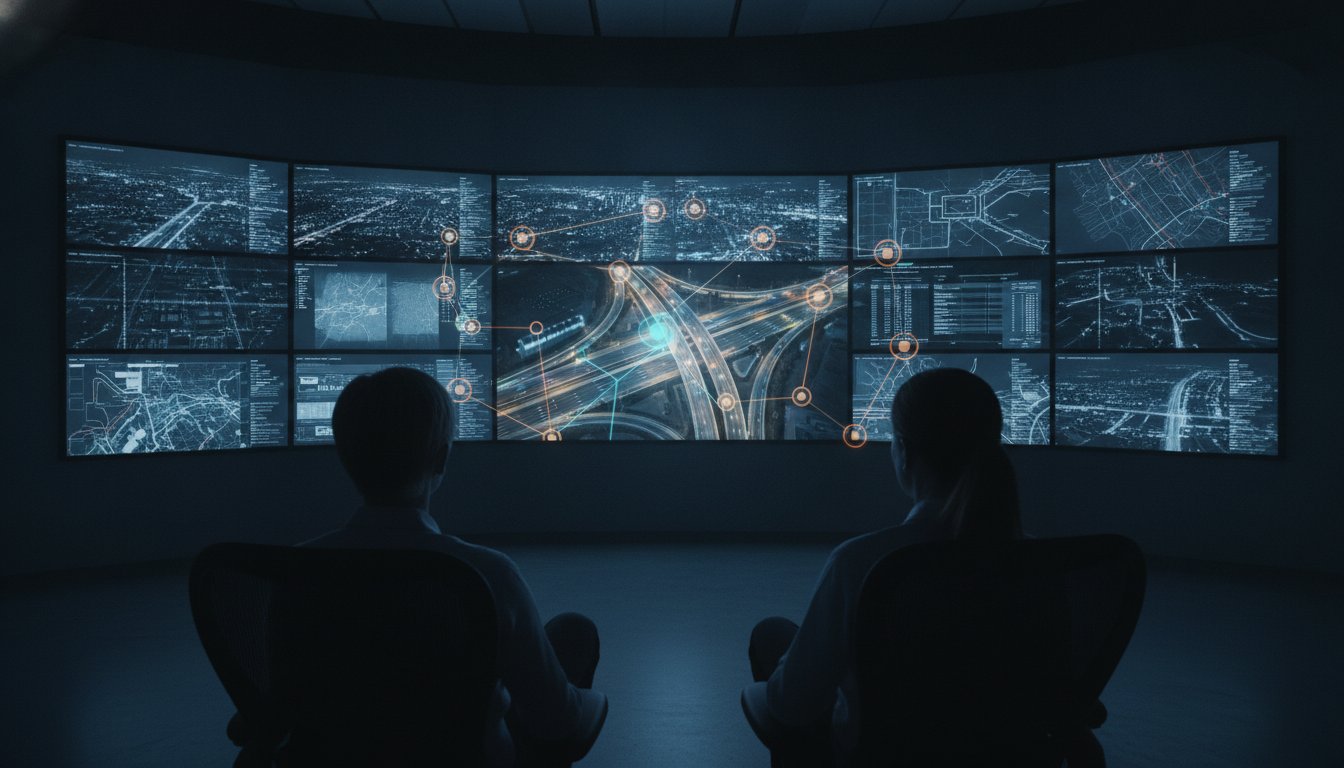
High-resolution video is often mistaken for high-resolution intelligence, but in a crisis, more pixels usually mean more noise. You likely face the daily frustration of fragmented 4K data streams that refuse to communicate, leaving your operators to manage high-latency feeds while trying to spot a needle in a digital haystack. When 4K pixel density leads to cognitive overload, vital incidents are easily missed. Achieving successful 4k video feed integration for control rooms depends on orchestration rather than just hardware capacity. It demands a strategy that prioritizes clarity over raw data volume to ensure your team remains proactive rather than reactive.
The true challenge lies not in acquiring 4K displays, but in implementing the intelligent orchestration layer that dynamically manages what appears on them, ensuring critical information is automatically escalated for immediate attention. This guide, brought to you by Activu Corporation, demonstrates how to seamlessly integrate high-resolution feeds into your operational workflow without overwhelming your network or your operators. We’ll explore how to move beyond hardware silos to create a unified operating picture. You’ll learn to automate the escalation of critical 4K feeds, ensuring that your team maintains total situational awareness from the command center to the mobile edge.
Key Takeaways
- Understand why higher resolution often creates cognitive noise and how to prioritize essential information for faster decision-making.
- Identify the critical network protocols and decoding strategies required for successful 4k video feed integration for control rooms to maintain low latency.
- Recognize that screens are only the canvas; the true value lies in the intelligence layer that automates feed escalation during mission-critical events.
- Learn to unify fragmented data from diverse sources and specialized tools into a single, cohesive operating environment.
- See how extending 4K situational awareness to mobile devices empowers field units to act with the same clarity as command center operators.
The Hidden Complexity of 4K Video Integration in Mission-Critical Hubs
Transitioning to ultra-high-definition video represents a double-edged sword for the modern control room. While 4K resolution is the baseline for new installations in 2026, simply increasing pixel count does not guarantee better decision-making. In high-stakes environments like Emergency Operations Centers (EOCs) or Global Security Operations Centers (GSOCs), fragmented 4K data streams often fail to communicate. This creates a dangerous gap between raw video data and actionable situational intelligence. Traditional signal routing focuses on the physical transport of pixels, yet it often ignores the critical metadata attached to modern streams. Without a way to synthesize this information, 4k video feed integration for control rooms becomes a technical burden rather than a strategic asset.
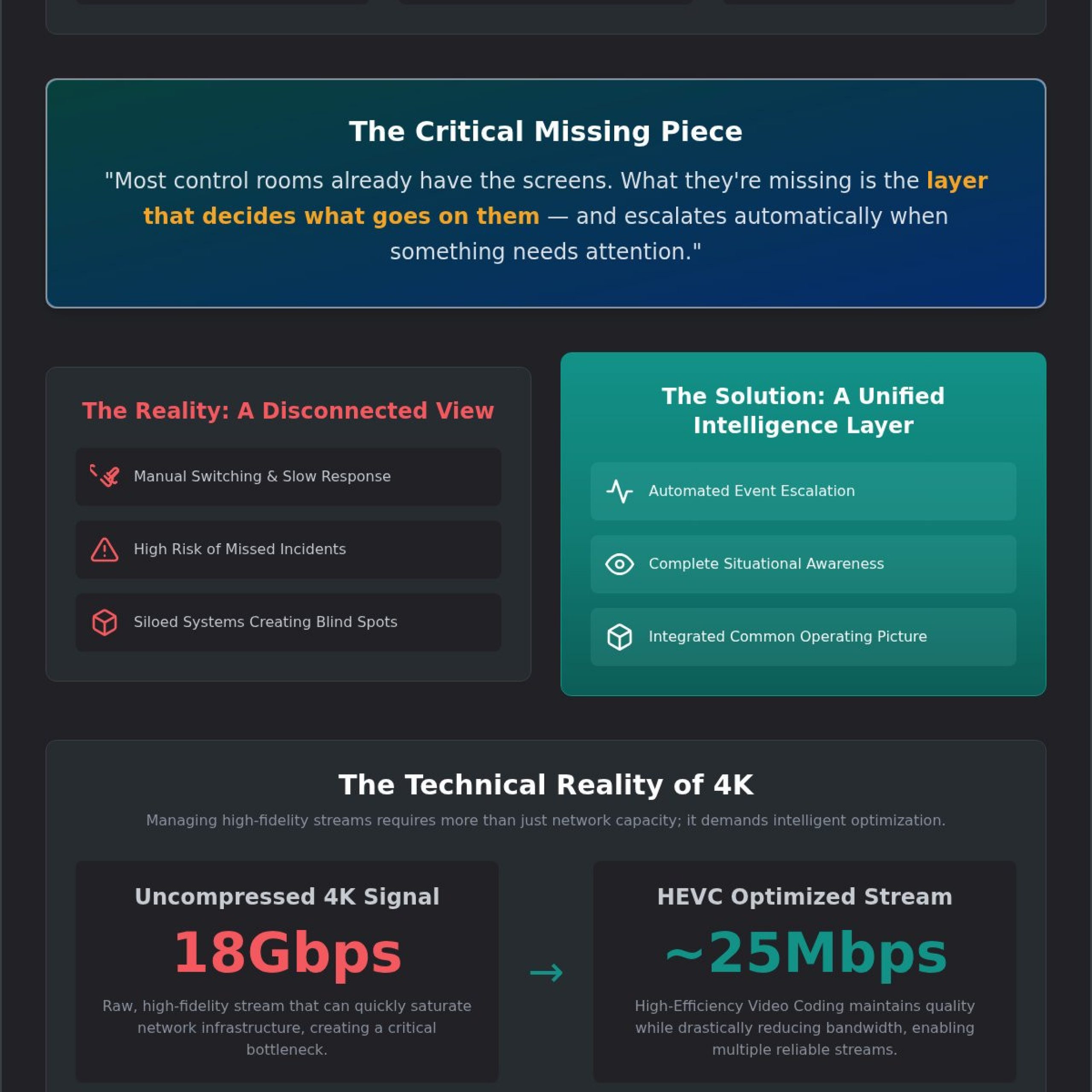
Most control rooms already have the screens. What they’re missing is the layer that decides what goes on them, and escalates automatically when something needs attention. Relying on hardware alone ignores the reality of how human operators process information under pressure. When the focus remains solely on display capacity, organizations risk building a system that provides more detail but less actual clarity during a crisis.
The Operator Fatigue Factor
Integrating 4K resolution significantly increases the cognitive load per square inch of display. When a video wall becomes a dense wall of data, critical alerts are frequently buried in high-fidelity noise. This phenomenon leads to a paradox where more detail results in less clarity. Operators facing a pixel-dense environment can suffer from cognitive overload, causing them to overlook subtle but vital changes in a scene. Effective 4k video feed integration for control rooms requires intelligent filtering. The system must process and prioritize information before the video ever hits the screen, ensuring that only the most relevant data reaches the human eye to facilitate a decisive response.
Identifying Integration Pain Points
A primary reason why operators miss incidents on high-res video walls is the failure of manual switching. Managing dozens of concurrent 4K feeds through traditional interfaces is slow and prone to error. In a mission-critical hub, seconds matter. Organizations often struggle with siloed security data that exists independently of their live video feeds, creating a disjointed view of the operational landscape. For those seeking foundational context on these challenges, The Video Wall: A Strategic Guide offers a deeper look into the requirements of situational awareness. Successful integration must bridge these silos to prevent the high-latency feeds and fragmented views that jeopardize urgent operations.
Technical Architecture: Managing Bandwidth, Latency, and IP Decoding
Building a resilient architecture for 4k video feed integration for control rooms requires a methodical approach to network throughput. High-fidelity streams demand significant capacity, often reaching 18Gbps for uncompressed signals. Managing these loads involves a strategic evaluation of Managing Bandwidth, Latency, and IP Decoding to ensure the network doesn’t become a bottleneck during a crisis. The first step is a rigorous assessment of current network capacity to determine how many concurrent 4K streams the infrastructure can realistically support before performance degrades.
Most control rooms already have the screens. What they’re missing is the layer that decides what goes on them, and escalates automatically when something needs attention. Without this intelligence, even the most advanced technical architecture remains a series of pipes without a central brain to guide the flow of information.
The Role of HEVC and Bitrate Optimization
High Efficiency Video Coding (HEVC) is the critical standard for 4K bandwidth reduction in 2026. While older compression methods struggle with the pixel density of UHD feeds, HEVC provides the efficiency required to maintain multiple concurrent streams without saturating the local network. Bitrate management is essential to prevent network congestion during high-stress incidents when data traffic naturally spikes. Mission-critical requirements demand sub-second latency, a stark contrast to broadcast-level integration where several seconds of delay might be tolerated. This speed ensures that what the operator sees on the wall matches the reality in the field in real time.
Software-Defined vs. Hardware-Centric Integration
Modern operations benefit from utilizing Commercial Off-the-Shelf (COTS) hardware rather than proprietary, fixed-function devices. Decoupling the hardware from the intelligence layer allows for a more flexible 4K feed layout that can adapt to changing mission parameters. This software-defined approach utilizes standardized IP protocols to avoid vendor lock-in and simplify future upgrades. Implementing Secure Reliable Transport (SRT) is a vital step for maintaining stable field-to-base feeds, even when using unpredictable public networks. By establishing a common operating picture that scales with resolution, the system ensures that high-fidelity intelligence is accessible across every display in the command center. If you’re planning a system upgrade, you can consult with our design team to review your current infrastructure requirements.
Moving Beyond the Screen: Why Control Rooms Require an Operational Intelligence Layer
Physical displays are merely the canvas for operational data. Success in high-stakes environments depends on the brain behind the glass. Most control rooms already have the screens. What they’re missing is the layer that decides what goes on them, and escalates automatically when something needs attention. This operational intelligence layer serves as the central hub for the entire team, connecting the command center to huddle rooms and mobile devices. By treating 4k video feed integration for control rooms as a data management challenge rather than a hardware installation, organizations can ensure that critical information always finds the right eyes at the right time. This layer acts as the bedrock for mission-critical decisions, providing the calm and clarity necessary to manage potential complexity without hesitation.
Automating the Escalation of 4K Feeds
Traditional monitoring relies on human vigilance to spot anomalies across a wall of video. This reactive model fails when managing the massive data volume of 4K feeds. Event-driven visualization through Activu vis/ability transforms these feeds into active alerts. When an integrated system detects a threshold breach or a specific event, the platform automatically triggers the relevant 4K stream to the foreground. This shift from passive monitoring to proactive awareness ensures that operators don’t waste time searching for feeds while an incident unfolds. Effective 4k video feed integration for control rooms replaces manual switching with automated logic, allowing the technology to serve as a vigilant guardian that remains focused when the stakes are highest.
Creating a Unified Operating Picture
A true Common Operating Picture (COP) requires more than just high-resolution video. It demands the seamless aggregation of disparate data streams, including GIS mapping, SCADA systems, and real-time 4K video. Fragmented systems often force operators to toggle between different screens, creating dangerous silos that obscure the full context of a situation. Unified visibility breaks these barriers by layering diverse data into a single, cohesive view that is accessible to distributed teams. This transition allows teams to exit the chaos of siloed data and enter the clarity of vis/ability. Whether in the main operations center or a remote huddle room, every stakeholder sees the same high-fidelity intelligence. This level of synchronization is essential for maintaining control and ensuring that the human element is empowered to act with greater certainty.
Bridging Siloed Data: Integrating 4K Feeds with Platforms like Axon and Juvare
Specialized platforms like Axon and Juvare serve vital roles in modern response, but they frequently operate as isolated data islands. While Axon provides essential body-cam and evidence management, and Juvare coordinates emergency resources, these tools only offer a partial solution for situational awareness. The challenge arises when operators must view siloed security data alongside live 4K video feeds. Without a way to unify these inputs, response teams are forced to jump between applications, losing critical seconds during a high-stakes event. Maintaining operational continuity requires a hub that can ingest these disparate streams without compromising the fidelity of the visual data.
Most control rooms already have the screens. What they’re missing is the layer that decides what goes on them, and escalates automatically when something needs attention. This is where 4k video feed integration for control rooms moves beyond simple signal routing. By using vis/ability as the operational intelligence layer, organizations can ingest data from niche applications and present it as part of a single, coherent narrative. This approach ensures that the high-resolution video wall remains a tool for clarity rather than a source of distraction.
The Shortcomings of Fragmented Tools
Public safety agencies often rely on Axon for its robust evidence gathering, yet the data remains trapped within its own interface. Similarly, Juvare’s resource management capabilities are less effective when they aren’t visually synchronized with live tactical feeds. vis/ability makes these tools more useful for the entire team by serving as the central hub where this data meets the main video wall. This integration ensures that every stakeholder, from the dispatcher to the incident commander, shares the same context. You can explore how these elements come together in our Public Safety Solutions.
Case Study Pattern: From Silos to Synergy
Consider a utility NOC managing a widespread power outage. In a traditional setup, operators monitor SCADA alerts on one screen and 4K drone feeds on another. When these data points are unified via vis/ability, the system can automatically overlay SCADA telemetry onto the live drone video. This synergy significantly reduces response time by eliminating the need to cross-reference fragmented reports. This is the primary function of our operational intelligence layer. By empowering operators with better data, the technology enhances human judgment, allowing for more certain action when stakes are highest. To see how this integration can transform your operations, contact our team for a technical consultation.
vis/ability: A Unified Common Operating Picture for Distributed 4K Integration
Activu vis/ability functions as the essential bedrock for mission-critical decisions. It serves as the operational intelligence layer that unifies high-fidelity data across the entire enterprise. Successful 4k video feed integration for control rooms isn’t a byproduct of buying expensive displays; it’s the result of a purposeful orchestration strategy. By aggregating 4K video and real-time data into a single pane of glass, vis/ability ensures that decision-makers remain focused and analytical when stakes are at their highest. This system provides the quiet, powerful engine that turns raw visual data into clear, actionable intelligence for the entire team.
Most control rooms already have the screens. What they’re missing is the layer that decides what goes on them, and escalates automatically when something needs attention. Strategic success requires that professional control room design precedes hardware procurement. Leading with hardware often results in a wall of noise that overwhelms operators during urgent operations. A design-first approach identifies the necessary workflows and data priorities before a single cable is pulled. This ensures the final system empowers individuals to act with greater certainty rather than getting lost in technical complexity.
Distributed Situational Awareness
Field responders shouldn’t be disconnected from the command center’s high-fidelity intelligence. Mobile vis/ability extends the reach of the video wall, taking 4K context into the field on tablets and smartphones. The challenge lies in maintaining this context on smaller screens without losing critical details. vis/ability manages this by delivering intelligently scaled feeds that preserve situational clarity even on mobile bandwidth. This ensures that a responder on the perimeter sees the exact same prioritized information as the commander in the NOC/SOC control room. This level of distributed visibility is vital for seamless collaboration between headquarters and mobile units.
Securing the 4K Ecosystem
High-bandwidth integration introduces potential network vulnerabilities if not properly managed. Activu incorporates a cybersecurity common operating picture within the platform to protect the integrity of integrated 4K feeds. This security architecture ensures that the bedrock of your operation remains resilient against digital threats while maintaining sub-second latency for mission-critical video. By treating security as a core component of the visualization layer, organizations can ensure their 4K feeds don’t create network vulnerabilities. You can request a demo to see how vis/ability provides a secure, unified operating picture for your most urgent operations.
Mastering the Future of Mission-Critical Visualization
Effective 4k video feed integration for control rooms is no longer about the resolution of your displays; it is about the intelligence of your orchestration. You’ve seen how managing bandwidth and latency is only the foundational step. True situational awareness requires moving beyond siloed data from specialized tools to create a unified operating picture that extends from the command center to the field. By decoupling your software from proprietary hardware and utilizing COTS solutions, you gain the flexibility needed for modern, high-stakes response.
Most control rooms already have the screens. What they’re missing is the layer that decides what goes on them, and escalates automatically when something needs attention. Activu vis/ability provides this essential layer, reducing response times through event-driven automation. Trusted by Federal Government and Defense agencies, our platform transforms raw data into the bedrock of certain action. See how vis/ability orchestrates 4K intelligence; Request a Demo. Your team deserves the clarity and reliability that only an intelligent, unified platform can provide.
Frequently Asked Questions
What is the minimum bandwidth required for 4K video feed integration?
Minimum bandwidth requirements for 4K feeds vary based on the compression codec used; however, mission-critical 4K typically requires between 15 and 25 Mbps per stream when using HEVC. While uncompressed signals can reach 18Gbps, most modern networks utilize IP-based distribution to manage traffic effectively. It is essential to conduct a network audit before deployment to ensure your infrastructure can handle the cumulative load of 4k video feed integration for control rooms without inducing latency.
How does 4K integration reduce operator fatigue in a NOC?
4K integration reduces fatigue by providing greater visual clarity, which allows operators to identify vital details without physical strain. However, high-resolution alone can cause cognitive overload if not managed correctly. Using an operational intelligence layer to filter and prioritize information ensures that operators only focus on relevant data. This approach prevents the wall of noise effect, allowing the team to maintain peak performance during long shifts and high-stress events.
Can vis/ability integrate with my existing VMS or CCTV hardware?
Yes, vis/ability is designed to serve as a central hub that integrates seamlessly with your existing VMS and CCTV hardware. It functions as an operational intelligence layer that pulls data from disparate sources into a unified operating picture. Most control rooms already have the screens. What they’re missing is the layer that decides what goes on them and escalates automatically when something needs attention, making your existing hardware more effective for the entire team.
Is a 4K video wall necessary for a common operating picture?
A 4K video wall is not strictly necessary for a Common Operating Picture, but it provides the necessary canvas for high-density data visualization. The true value of a COP lies in the software layer that aggregates GIS, SCADA, and video data into a single view. While 4k video feed integration for control rooms enhances the level of detail available, the goal is to create a synchronized view across huddle rooms and mobile devices regardless of resolution.
What happens if a 4K feed loses connection during a critical incident?
If a 4K feed loses connection, vis/ability immediately triggers an automated alert and can be configured to switch to a redundant backup stream or a lower-resolution failover. This ensures that situational awareness is never fully lost during a critical moment. The system’s logic prioritizes uptime and operational continuity, providing operators with immediate notification of the signal loss so they can adjust their tactical response and maintain control without delay.
How do you manage 4K video feeds for mobile users in the field?
Managing 4K feeds for mobile users requires intelligent scaling and bitrate adjustment to match the bandwidth of cellular or satellite networks. Mobile vis/ability extends the command center’s reach by delivering prioritized video and data directly to field responders’ tablets or smartphones. This ensures that the high-fidelity intelligence generated at headquarters is accessible and useful to those on the perimeter, facilitating seamless collaboration and faster decision-making between distributed teams.
Why do operators miss critical incidents on high-resolution video walls?
Operators often miss incidents on high-resolution walls due to cognitive overload caused by a wall of data that lacks prioritization. When every pixel is equally dense with information, the human eye struggles to spot subtle anomalies. This is a common situational awareness problem in dispatch centers. Without an automated escalation layer to highlight critical events, the sheer volume of 4K data becomes a distraction rather than a strategic asset for the operation.