
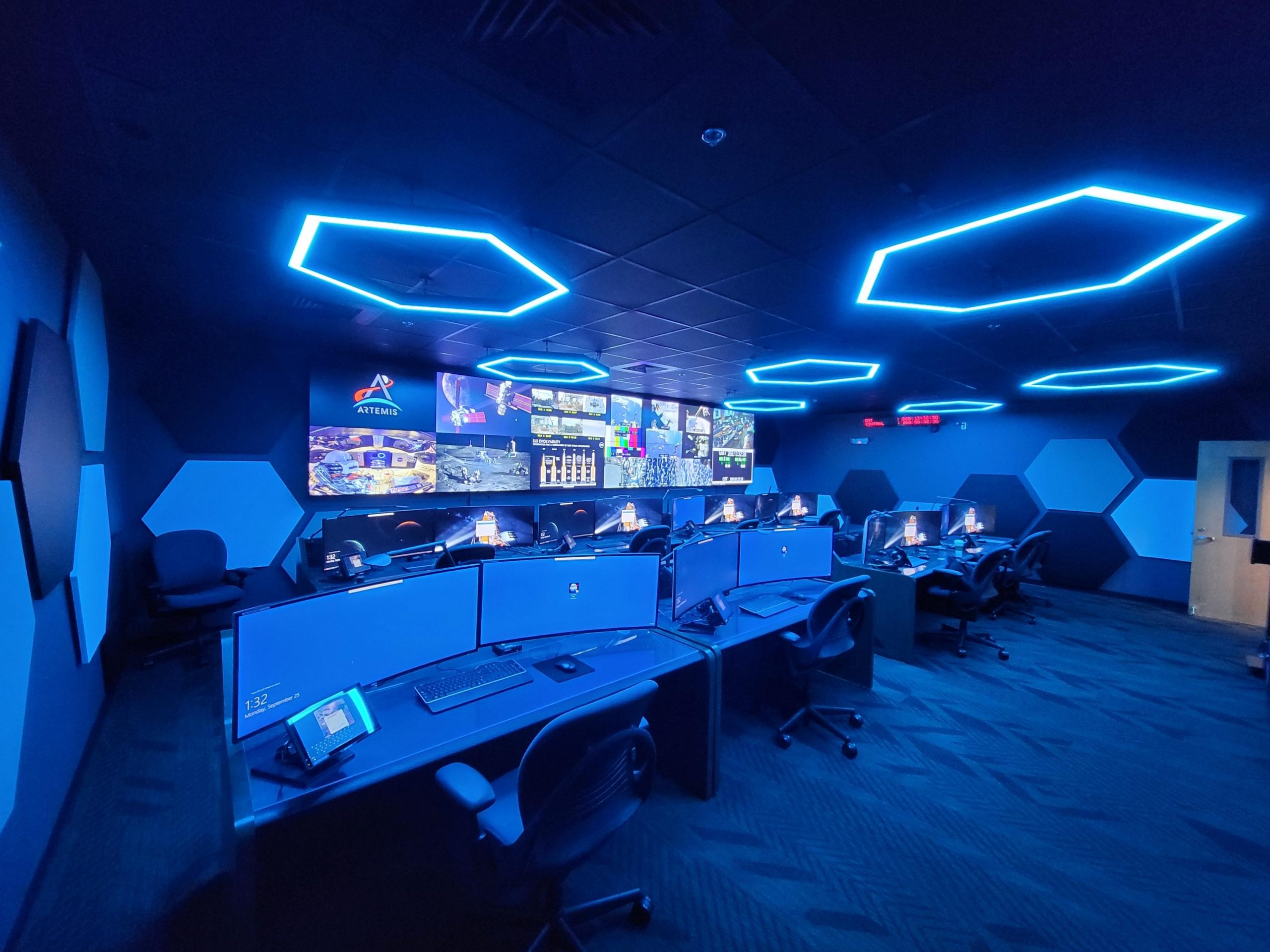
Visability from Activu is helping to support the NASA Artemis mission. The command centers LUCA, which supports Artemis science operations, and LESA, which provide engineering support for landing astronauts on the moon, both rely on visability for flexibility, scalability, and team collaboration. 
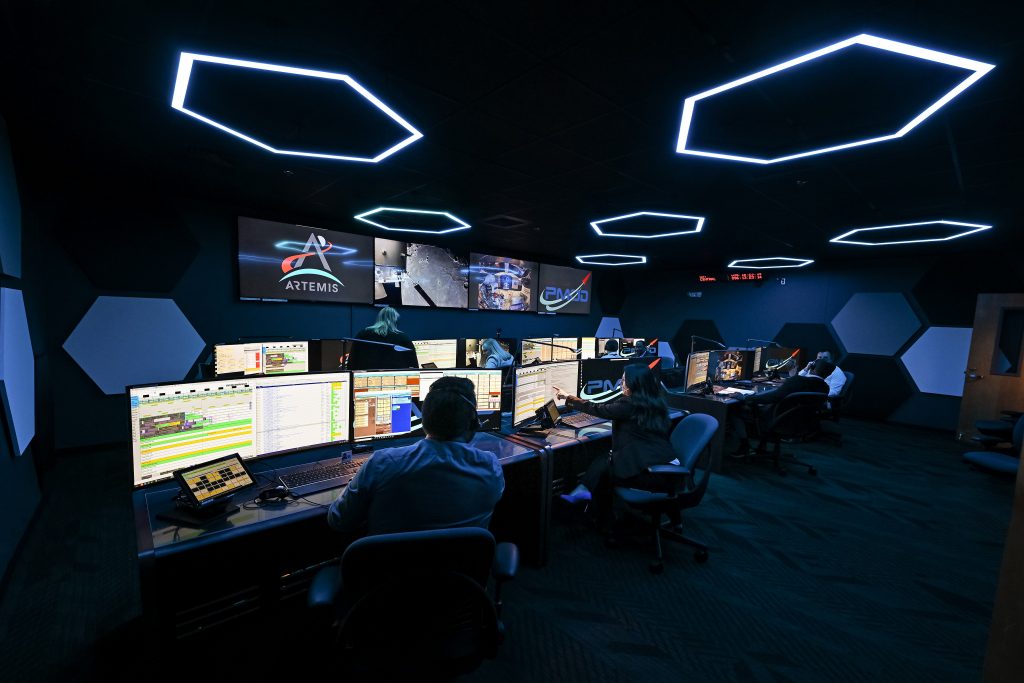
Official NASA MSFC environmental photos of the newly renovated LUCA Control room in the HOSC 4663

HUNTSVILLE , AL – NASA’s Marshall Space Flight Center, the team responsible for the International Space Station, required a shared command center that could support rotating use across multiple contractor teams. Initially, it was thought that multiple single-function rooms would be required. After understanding Activu’s capabilities, NASA decided to deploy only two multi-function rooms. Since these spaces had to accommodate both planned rotations, and adapt to unexpected, mission-critical situations, legacy A/V setups were ruled out. These older, archaic configurations were fixed, difficult to reconfigure, and required manual setup/reset between teams. Activu provided an innovative alternative that offered the unique flexibility to support different NASA tools, data, and workflows.

NASA selected Activu and its software platform visability because it was the ONLY platform that gave the command center the flexibility it needed:

  • Agile: Easily adapting with minimal downtime and adaptability to team needs.
  • Collaborative: Allowing teams to share data, screens, and communication tools instantly.
  • Seamless: Integrating any app, device, video or other visual source into a common operating picture that can be shared securely among team members.
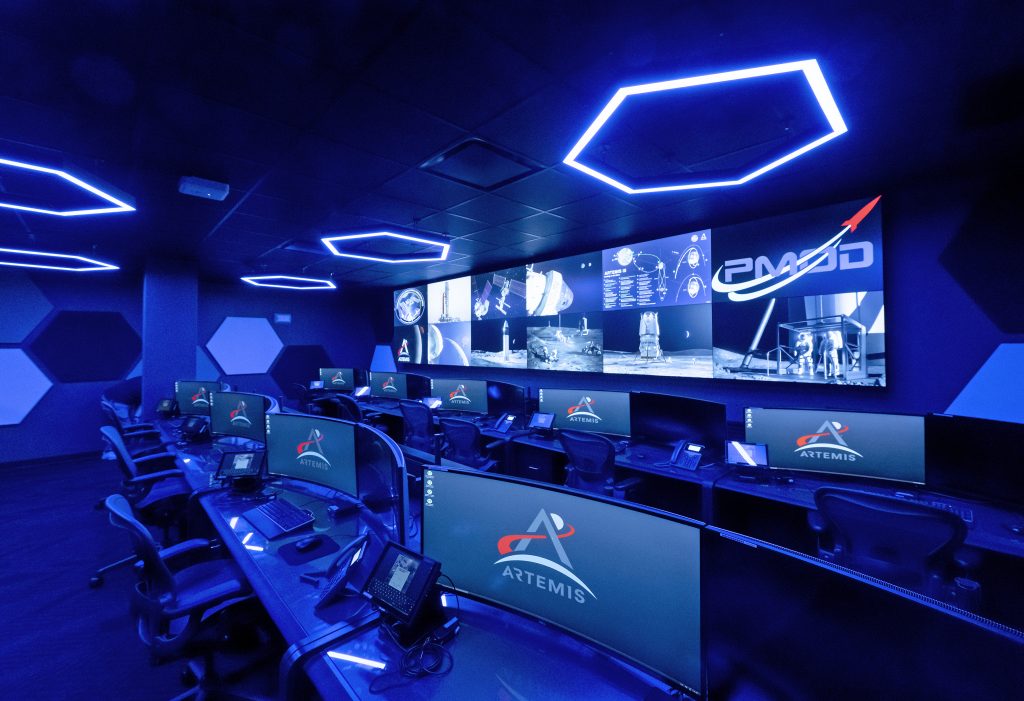
Official NASA MSFC environmental photos of the newly renovated LUCA Control room in the HOSC 4663

Most notably, visability from Activu is helping to support the NASA Artemis mission. The LUCA (Lunar Utilization Control Area) and LESA (Lander Engineering Support Area) rooms, which both rely on visability, are part of the Huntsville Operations Support Center at NASA Marshall Space Flight Center. While the command centers look nearly identical, the two are more like fraternal twins in their focus areas: LUCA primarily supports Artemis science operations, whereas LESA will provide engineering support for landing astronauts on the moon.

See more NOC, SOC, and enterprise control room case studies here.
Click below to read the full article:

Twin NASA Control Rooms Support Artemis Safety, Success

HUNTSVILLE, AL —Twin control rooms at NASA’s Marshall Space Flight Center in Huntsville, Alabama, are actively supporting real-time mission operations in lunar orbit as part of the agency’s Artemis II mission, helping ensure astronaut safety and mission success as the crew prepares to return to Earth Friday, April 10.

The LUCA (Lunar Utilization Control Area) and LESA (Lander Engineering Support Area) rooms are part of the Huntsville Operations Support Center at NASA Marshall. While the spaces look nearly identical, the two are more like fraternal twins in their focus areas: LUCA primarily supports Artemis science operations, while LESA will provide engineering support for landing astronauts on the Moon.

“The Huntsville Operations Support Center at NASA Marshall can be adapted to the needs of the agency’s missions, and LUCA and LESA are some of our newest configurable control rooms for the Artemis campaign,” said Harish Chandranath, Payload and Mission Operations Division Human Landing Systems project lead at Marshall. “In addition to supporting Artemis, our Huntsville Operations Support Center teams also support the Commercial Crew Program, the SLS (Space Launch System) rocket, and International Space Station science operations.”

Support center services include work to manage spacecraft command and telemetry, local and remote voice services for international connections, live and recorded video services, and a telescience resource kit – special software that makes sure two computers far apart can communicate without missing any information and without human help. All Huntsville Operations Support Center services can be tied into both the LUCA and LESA rooms, giving operators the capability to use data and communicate with scientists and experts around the world.

During Artemis II, teams in LUCA are supporting first-of-their-kind science operations designed to better understand the effects of deep space – such as microgravity and radiation – on crew physiology, immune response, and performance. The data gathered during the mission will inform future crewed flights to the Moon.

Meanwhile, teams in LESA are observing Artemis II mission operations in real time, which is a critical opportunity to refine processes and prepare for future crewed landings on the Moon’s surface. For Artemis missions, members of NASA’s Human Landing System Mission Insight Support Team – including engineers, safety leads, flight operations experts, and technical authorities – will operate from LESA to monitor lander systems and support key decision-making.

Through the Artemis program, NASA is returning humans to the Moon for scientific discovery, economic opportunity, and to build the foundation for the first crewed missions to Mars – for the benefit of all.

To learn more about the Artemis program, visit:
https://www.nasa.gov/artemis

About Activu

Vis/ability makes any information visible, collaborative, and proactive for people tasked with monitoring critical operations. Users of the platform see, share, and respond to events in real time, with context, to improve incident response, decision-making, and management. Activu software, solutions, and services benefit the daily lives of billions of people around the globe. Founded in 1983 as the first U.S.-based company to develop command center visualization technology, more than 1,300 control rooms depend on Activu. activu.com.