
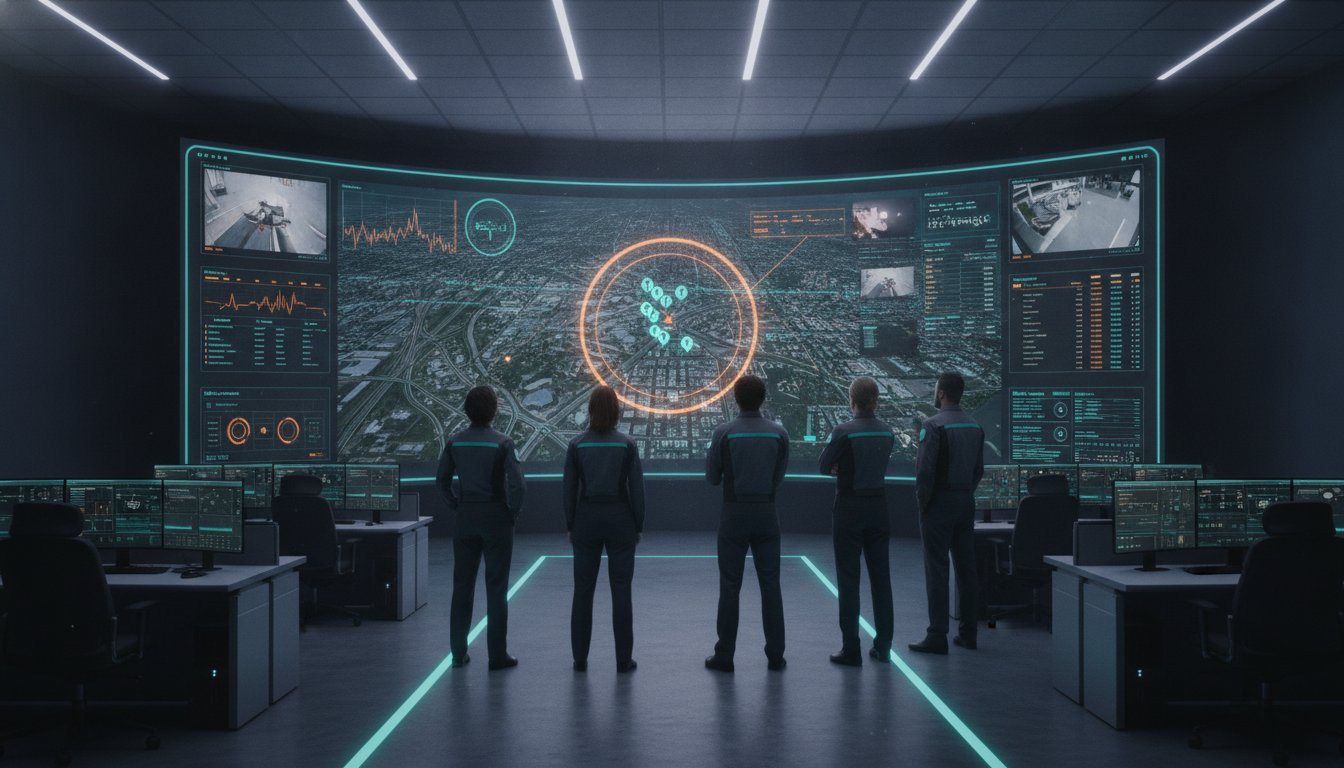
A video wall that requires constant manual intervention isn’t a solution; it’s a liability. In high-pressure environments where every second dictates the outcome of an emergency response or a technical failure, operators often find themselves drowning in fragmented data across dozens of screens. This cognitive overload leads to a dangerous reality where critical incidents are missed simply because the right information didn’t appear at the right time. Many teams searching for alternatives to DIY video wall solutions eventually realize that the bottleneck isn’t the quality of the monitors, but the lack of an intelligent system to manage them.
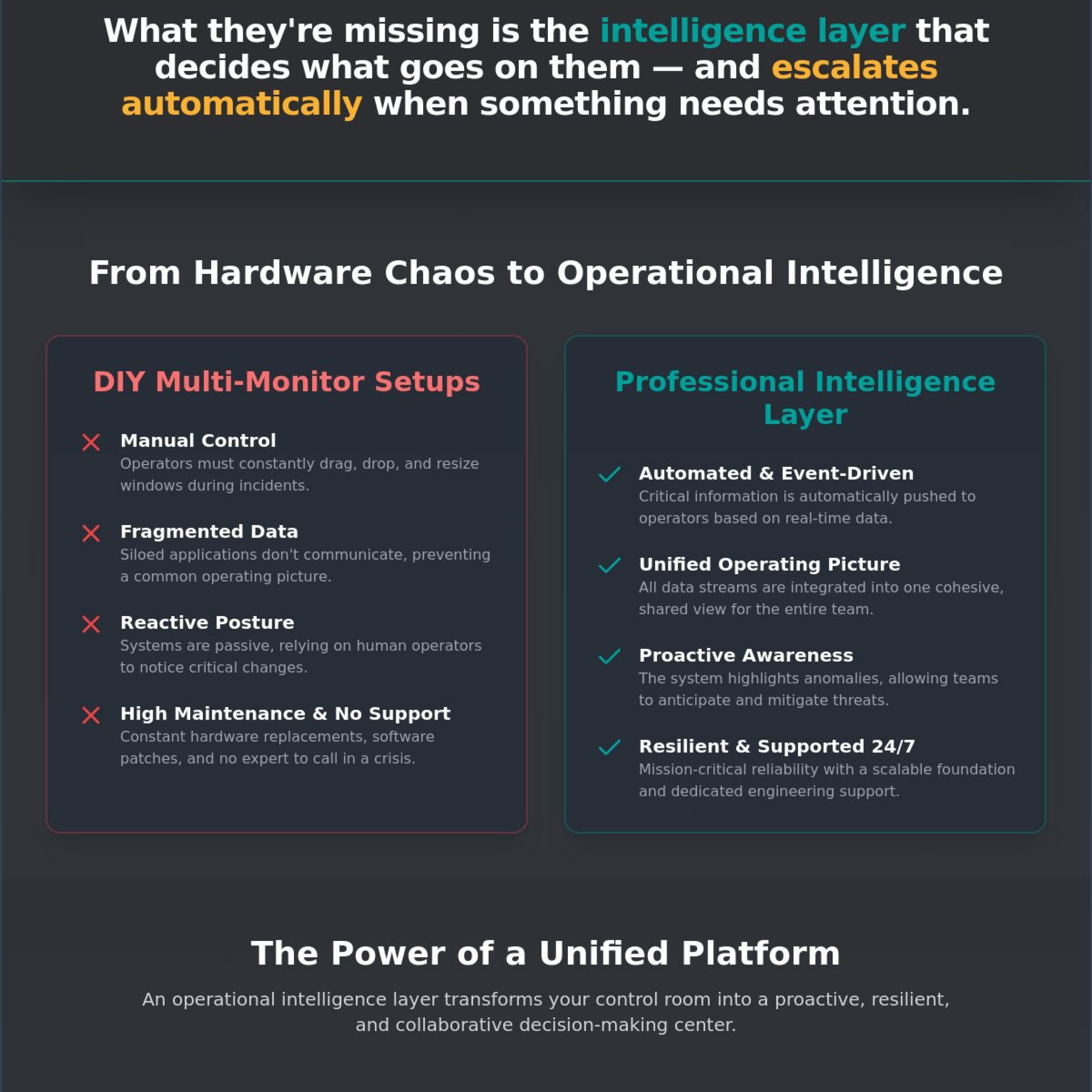
Most control rooms already have the screens. What they’re missing is the layer that decides what goes on them, and escalates automatically when something needs attention. Relying on siloed applications that don’t communicate creates gaps in situational awareness that no amount of manual monitoring can fill. You’ll discover how a professional operational intelligence layer replaces hardware-centric chaos with a unified operating picture. We’ll explore how automating incident escalation and integrating disparate tools ensures your team maintains absolute clarity and reliable 24/7 performance when stakes are at their highest.
Key Takeaways
- Identify why manual window management in DIY setups leads to operator fatigue and the dangerous phenomenon of screen blindness.
- Evaluate professional alternatives to DIY video wall solutions that prioritize an operational intelligence layer over simple hardware configurations.
- Understand that while most control rooms already have the screens, they require an intelligent layer that decides what goes on them and escalates alerts automatically.
- Learn how to unify siloed data from fragmented applications into a single, cohesive operating picture for the entire team.
- Establish a resilient foundation for 24/7 operations through professional control room design and event-driven situational awareness.
The Hidden Risks of DIY Video Walls in High-Stakes Environments
Command centers serve as the critical nerves of any mission, yet many rely on improvised systems that jeopardize the very results they’re meant to protect. When an operation begins by researching what a video wall is, it often leads to a cluster of monitors connected to a high-end consumer PC. This hardware-only approach ignores the psychological and technical demands of 24/7 oversight. If operators are forced to manually manage windows and resize feeds during a crisis, they aren’t analyzing data; they’re acting as desktop administrators.
This manual workload leads directly to cognitive overload. In a high-stakes environment, the human brain can only track a limited number of moving variables before performance degrades. DIY setups lack the ability to prioritize essential information, resulting in “screen blindness” where operators stop seeing critical changes because the visual field is cluttered with non-essential noise. Without an intelligent system to filter and highlight anomalies, the video wall becomes a passive wallpaper rather than a proactive tool for decision-making.
Searching for alternatives to DIY video wall solutions is often a response to the reliability gaps inherent in consumer-grade components. Graphics cards designed for gaming aren’t built for the thermal stress of constant video decoding. When these components fail in a SOC or NOC, the result isn’t just a black screen; it’s a total loss of visibility at the moment it’s needed most. Most control rooms already have the screens. What they’re missing is the layer that decides what goes on them, and escalates automatically when something needs attention.
Why Operators Miss Incidents in Fragmented Systems
Fragmented data is the primary enemy of the OODA loop (Observe, Orient, Decide, Act). When an incident occurs, seconds are lost as operators toggle between siloed applications that don’t talk to each other. This delay is the difference between a contained event and a full-scale crisis. Manual data aggregation is slow and prone to error, especially when visual noise masks the few pixels of actionable intelligence hidden on a crowded screen. Systems that require a human to notice a change before acting are inherently reactive and vulnerable to fatigue.
The True Cost of Maintaining DIY Workarounds
The initial savings of a DIY project disappear quickly under the weight of constant maintenance. IT teams find themselves trapped in a cycle of frequent hardware replacements and software patches for tools never intended for mission-critical use. Scaling these systems is equally difficult. Adding a new data feed or a remote user often requires a complete rebuild of the workstation. More importantly, DIY solutions offer no professional support network. When the system crashes during a major incident, there’s no dedicated engineering team to call, leaving the operation blind and vulnerable.
Shifting Focus from Hardware to Operational Intelligence
Traditional command center design often prioritizes hardware specifications like pixel pitch, bezel width, and processor clock speeds. While these metrics matter for image clarity, they don’t address the core challenge of managing a crisis. Organizations seeking alternatives to DIY video wall solutions must look beyond the physical display to the logic that drives it. The real power of a modern operations center resides in the operational intelligence layer, the digital brain that transforms a collection of monitors into a proactive tool for situational awareness.
Hardware-centric setups are inherently static. They require an operator to decide which feed is important and manually push it to a screen. In contrast, an intelligent platform moves toward dynamic, event-driven visualization. Most control rooms already have the screens. What they’re missing is the layer that decides what goes on them, and escalates automatically when something needs attention. This shift in focus ensures that the most critical data finds the operator, rather than forcing the operator to hunt for the data.
Aligning with national standards for resilience, such as the National Infrastructure Protection Plan, requires a system that can maintain a common operating picture under extreme stress. A software-defined approach provides this resilience by decoupling the data from the physical hardware. This enables a unifying platform to empower teams across distributed locations, whether they are in the primary command center, a remote huddle room, or using mobile devices in the field.
The Role of the Common Operating Picture
A common operating picture (COP) is a single, identical display of relevant information shared by more than one command. It bridges the gap between raw data streams and human judgment by ensuring every team member sees the same critical information simultaneously. Without this single source of truth, teams operate in silos, making decisions based on mismatched or outdated information. Establishing a COP through an integrated platform creates the clarity needed for decisive action.
Beyond Pixels: Why Data Integration Matters
Hardware-based video wall processors are limited by their physical inputs and outputs. They struggle to integrate modern cloud applications with legacy on-premise systems. Software-defined visualization removes these barriers, allowing for the seamless integration of VMS, SCADA, and cybersecurity feeds. This level of integration is essential for modern resilience, as it allows the vis/ability operational intelligence layer to act as the central hub for all organizational data. By unifying these disparate tools, the platform ensures that specialized information becomes useful for the entire team, rather than remaining trapped within a single department.
Professional Systems vs. DIY Multi-Monitor Setups
Relying on consumer graphics processing units (GPUs) to power a command center creates a fragile foundation. While a high-end PC can technically drive multiple monitors, it lacks the specialized architecture required for mission-critical reliability. Decision-makers exploring alternatives to DIY video wall solutions often reach a plateau where hardware alone cannot solve operational bottlenecks. A professional integration platform manages the complexity of disparate data feeds, whereas a DIY setup merely stretches a desktop across several screens. This distinction is vital when an operation requires seamless performance under the weight of hundreds of concurrent data streams.
For trade industry contractors and integrators who specialize in these professional deployments, you can explore Contractor Referral Commissions and Lead Access to streamline your lead generation and referral management.
Professional systems provide the essential bridge between raw data and human judgment. Most control rooms already have the screens. What they’re missing is the layer that decides what goes on them, and escalates automatically when something needs attention. This operational intelligence layer enables collaboration that extends far beyond the physical walls of the command center. Through Mobile vis/ability, field units and remote stakeholders access the same common operating picture as the dispatchers, ensuring that information is never siloed within a single room.
Technical experts recognize that network health and cybersecurity are non-negotiable in modern operations. DIY workarounds often bypass standard security protocols, creating vulnerabilities in the network stack. Professional platforms are designed to visualize network health and cybersecurity threats in real-time, providing a Cybersecurity Common Operating Picture that protects the integrity of the mission. This level of oversight is impossible to achieve with standard multi-monitor configurations that lack integrated security visualization.
Manual Management vs. Automated Escalation
In a crisis, the physical act of dragging and dropping windows across a video wall is an unacceptable waste of time. Manual management forces operators to focus on software navigation rather than incident resolution. Professional systems utilize event-triggered alerts to bring the right data to the right person instantly. By automating layout changes based on incoming telemetry or sensor data, these systems significantly reduce the time from incident detection to a coordinated response, allowing the team to act with greater certainty.
Security and Compliance in Critical Operations
Operations in sectors like utilities and energy must adhere to strict regulatory frameworks such as NERC CIP. DIY systems rarely provide the logging, access control, or data encryption necessary to meet these compliance standards. Professional alternatives ensure secure data transmission across distributed operations while providing real-time visualization of compliance data. This ensures that the organization remains audit-ready while maintaining a secure perimeter against both physical and digital threats.
Unifying Siloed Data for Complete Situational Awareness
Operational effectiveness is frequently hindered by the very tools designed to enhance it. Specialized applications provide valuable data, yet they remain siloed within their own proprietary interfaces. This fragmentation forces operators to act as human bridges, manually correlating information between a Video Management System (VMS), Computer-Aided Dispatch (CAD), and Geographic Information Systems (GIS). Relying on these partial solutions without a unifying layer creates blind spots that delay response times during critical incidents. When evaluating alternatives to DIY video wall solutions, the primary objective must be the total integration of these disparate data streams into a single, actionable interface.
Most control rooms already have the screens. What they’re missing is the layer that decides what goes on them, and escalates automatically when something needs attention. Without this central hub, a command center is merely a collection of isolated workstations. A professional operational intelligence layer transforms these individual feeds into a cohesive narrative. This ensures that every team member, from the analyst in the SOC to the supervisor in a huddle room, operates from the same set of facts at the same time.
Identifying Gaps in Current Operational Tools
High-definition video feeds are insufficient if they lack operational context. An operator might observe a physical security breach on a camera feed, but without integrated CAD data, they won’t know if a security unit is already on the way. The frustration of switching between multiple software interfaces during a high-stakes event causes cognitive fatigue and increases the risk of human error. Siloed data prevents a proactive posture; if a SIEM tool isn’t communicating with the video wall, a cybersecurity threat might go unnoticed until the damage is irreversible. These gaps in visibility are exactly what a hardware-centric DIY approach fails to address.
The vis/ability Platform as a Central Hub
The vis/ability platform serves as the essential operational intelligence layer that unifies these fragmented tools. It aggregates real-time data from every corner of the organization, creating a single source of truth that is accessible to everyone. This integration extends beyond the main command center. By pushing critical information to huddle rooms and mobile devices, the platform enables seamless collaboration between the SOC, NOC, and field units. This ensures that situational awareness is maintained regardless of an individual’s physical location or the device they are using. For deeper technical details on how to consolidate your disparate data streams, explore the vis/ability platform.
To see how a unified platform can eliminate your operational blind spots and streamline incident response, contact our experts for a systems evaluation.
Implementing a Resilient Operational Intelligence Layer
Transitioning from a fragmented DIY setup to a unified professional system requires more than just replacing hardware. It involves a fundamental shift in how information is prioritized and distributed across the organization. When leadership evaluates alternatives to DIY video wall solutions, the objective is to build a sustainable framework that grows alongside the mission. A resilient system doesn’t just display data; it manages it, ensuring that the infrastructure supports the human element of the operation rather than complicating it.
Scalability is a primary advantage of a software-defined environment. Unlike hardware-centric DIY workarounds that require physical intervention to expand, a professional operational intelligence layer allows for the seamless addition of new data feeds, remote users, and distributed locations. This ensures that the initial investment remains viable as the operational scope broadens. Activu empowers organizations to act with absolute certainty by providing a technical bedrock that remains stable and analytical when stakes are at their highest.
Designing for Operational Efficiency
Success begins with professional engineering that aligns technology with human workflows. Through specialized Control Room Design Services, organizations can optimize the synergy between their physical environment and their software tools. This process prioritizes essential information to actively reduce operator fatigue. By filtering out visual noise and focusing on actionable intelligence, the design ensures that operators maintain clarity during prolonged high-pressure shifts. Expert consultation transforms a room full of monitors into a structured command operation where every pixel serves a specific purpose.
The Path to Proactive Incident Response
Most control rooms already have the screens. What they’re missing is the layer that decides what goes on them, and escalates automatically when something needs attention. Moving from reactive monitoring to proactive, event-driven intelligence is the hallmark of a mature operation. This transition allows the system to identify anomalies and alert the team before a situation escalates into a crisis. Leveraging Mobile vis/ability further enhances this capability by extending situational awareness to decision-makers outside the center, ensuring a coordinated response across the entire theater of operation.
The journey toward operational excellence requires identifying existing gaps and implementing a solution that provides total visibility. To understand how your current environment can be transformed into a proactive hub of intelligence, request a tailored demonstration and see how a unified platform ensures your team is always prepared for the moment of a pivotal decision.
Elevating Operational Readiness Through Intelligence
DIY video walls often fail when the mission is most critical because they lack the logic required to prioritize data. Relying on manual window management and consumer components creates a fragile environment where incidents are easily missed. Most control rooms already have the screens. What they’re missing is the layer that decides what goes on them, and escalates automatically when something needs attention. Transitioning to professional alternatives to DIY video wall solutions ensures your team is supported by a system designed for 24/7 reliability.
Activu brings over 40 years of expertise to the most demanding environments, having been founded in 1983 to support federal defense and major utilities. Our platform delivers unified, event-driven situational awareness that bridges the gap between raw data and human judgment. This ensures that every decision is backed by absolute technical reliability and clear, actionable intelligence. Your team deserves a foundation that remains steady when stakes are at their highest.
Request a Demo of the vis/ability Platform
Frequently Asked Questions
What is the difference between a video wall processor and an operational intelligence platform?
A video wall processor is a hardware-centric device that manages the physical arrangement of pixels and inputs, while an operational intelligence platform acts as the brain of the command center. Processors are typically static and require manual control to change layouts. In contrast, a platform like vis/ability integrates disparate data sources to automate content delivery based on real-time events. This shift ensures that the technology serves the mission rather than requiring constant manual configuration by the staff.
Why shouldn’t I use consumer-grade TVs for my control room video wall?
Consumer-grade TVs lack the thermal management and component durability required for 24/7 mission-critical operations. These displays are designed for limited daily use and often suffer from panel degradation or backlight failure when operated continuously. Professional displays offer higher brightness, thinner bezels for seamless visualization, and robust warranties. Using consumer hardware in a high-stakes environment introduces unnecessary risk and higher long-term costs due to frequent replacements and system downtime.
How can I integrate my existing SIEM and VMS data into one view?
Integrating SIEM and VMS data requires an operational intelligence layer that serves as a central hub for all specialized tools. By aggregating these feeds into a single interface, teams eliminate the need to toggle between siloed applications during a crisis. This unified view allows for better correlation between digital threats and physical security events. It transforms fragmented data into actionable intelligence, ensuring the entire team operates from a complete and accurate situational overview.
What are the common causes of operator fatigue in command centers?
Operator fatigue in command centers is primarily caused by cognitive overload from manual window management and excessive visual noise. When staff must constantly resize feeds or monitor dozens of static screens, they experience screen blindness, where critical incidents are overlooked. Most control rooms already have the screens. What they’re missing is the layer that decides what goes on them, and escalates automatically when something needs attention. Reducing manual tasks allows operators to focus on high-level decision-making.
Can professional video wall solutions work with my existing hardware?
Professional alternatives to DIY video wall solutions are often software-defined, meaning they can leverage much of your existing display infrastructure. While consumer GPUs and certain DIY workarounds lack reliability, professional platforms can often integrate with current screens through specialized encoders or decoders. This approach allows organizations to upgrade their operational intelligence without a complete hardware overhaul. It focuses the investment on the software layer that provides the most significant boost to situational awareness.
How does event-driven visualization improve incident response times?
Event-driven visualization improves incident response times by automating the display of critical information the moment a sensor or data feed triggers an alert. Instead of waiting for an operator to notice a change, the system proactively pushes relevant feeds to the center of the video wall. This automation accelerates the OODA loop, bringing the right data to the right person instantly. It ensures that the team can act with greater certainty during the first few minutes of a developing incident.
What is a Common Operating Picture (COP) in a mission-critical context?
A Common Operating Picture is a single, identical display of relevant information shared across different commands or departments. In a mission-critical context, a COP ensures that every stakeholder, from the security analyst to the executive director, sees the same data simultaneously. This eliminates information silos and prevents conflicting decisions based on mismatched data. A COP is the bedrock of coordinated response, providing a unified source of truth for all stakeholders involved in the operation.
Is it possible to extend my control room view to mobile users in the field?
Yes, it is possible to extend the command center view to mobile users through specialized integration tools like Mobile vis/ability. This capability ensures that field units and remote supervisors have access to the same common operating picture as the dispatch center. Extending visibility beyond the physical walls of the control room allows for better coordination during large-scale events. It empowers individuals to act with the full weight of the organization’s data intelligence, regardless of their location.