
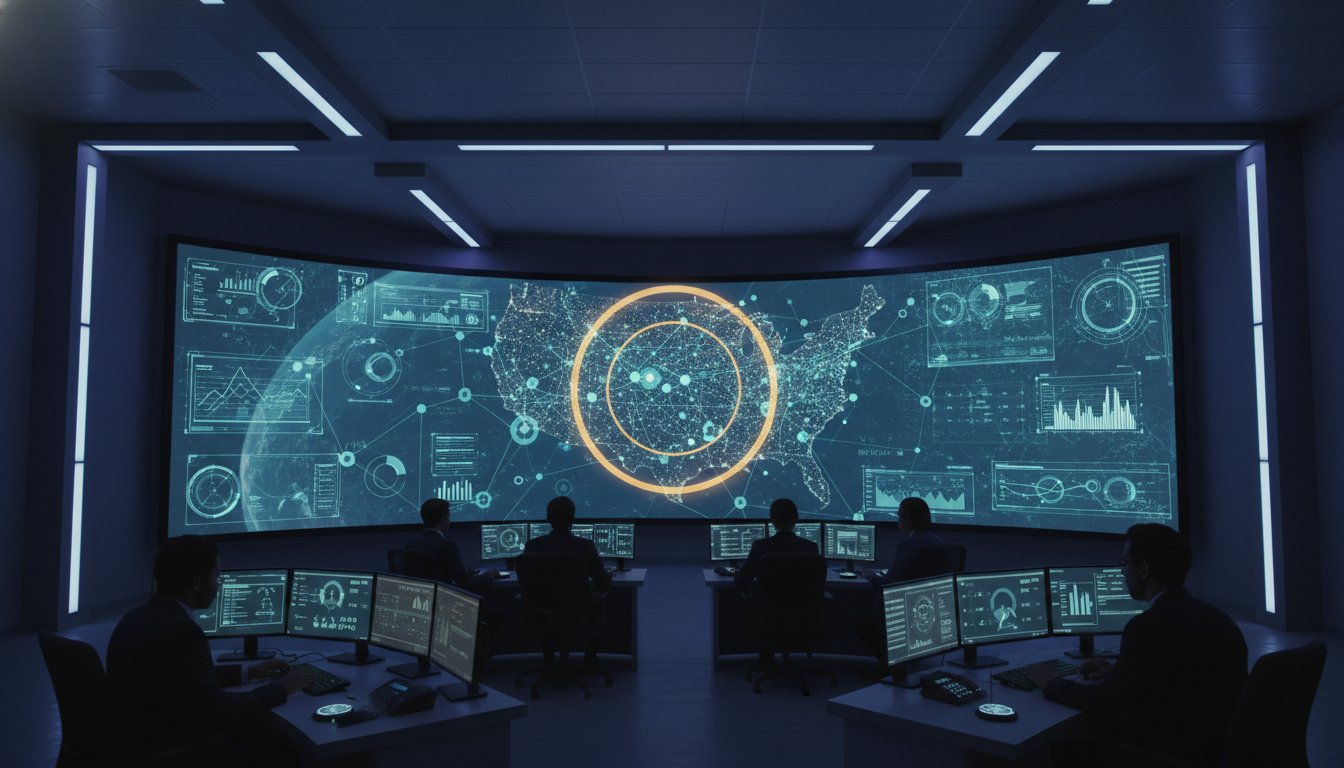
Your command center likely possesses more data than your operators can effectively process. While specialized tools like Axon provide valuable inputs, they only offer a partial solution and often exist as disconnected silos that contribute to cognitive overload. This fragmentation forces teams to manually hunt for insights, a process that slows incident response times when seconds are most critical. Next-generation command center technology transcends the physical resolution of a video wall. It requires a sophisticated platform capable of prioritizing information in real time.
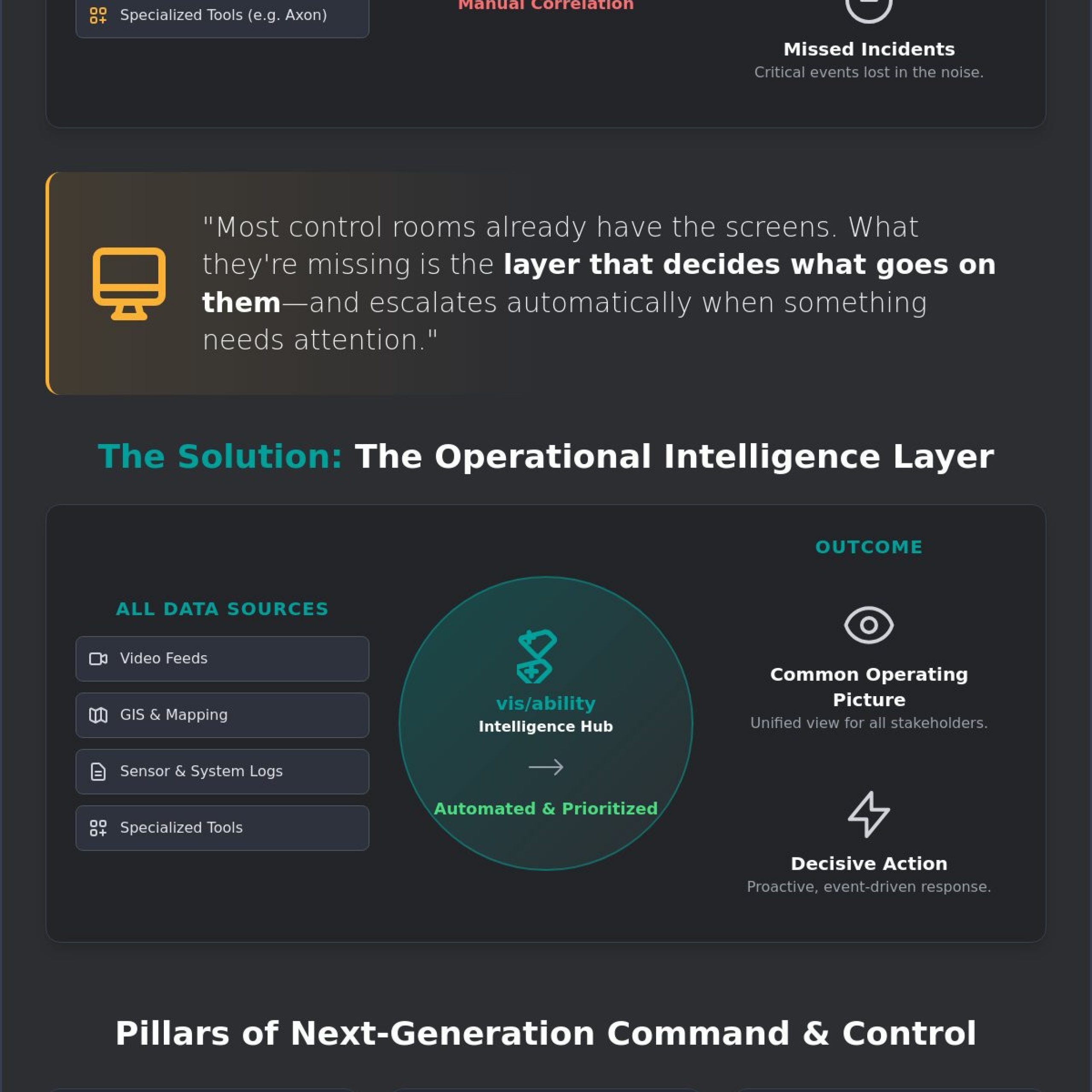
Most control rooms already have the screens. What they’re missing is the layer that decides what goes on them, and escalates automatically when something needs attention. We recognize that maintaining a common operating picture across distributed teams is a constant struggle against technical complexity. This article defines how vis/ability serves as the operational intelligence layer that unifies disparate data streams into a single, automated view. You’ll learn how to achieve real-time situational awareness that empowers your team to act with absolute certainty, moving beyond the limitations of legacy systems toward the integrated future planned for fiscal 2027 and beyond.
Key Takeaways
- Identify visibility gaps caused by siloed applications to shift your operations from reactive monitoring to proactive, event-driven response.
- Build a unified ecosystem that aggregates mission-critical data so your team isn’t manually hunting for information during a crisis.
- Discover how next-generation command center technology serves as the intelligence layer that automates information prioritization and incident escalation.
- Streamline incident management for utilities and infrastructure by implementing a cybersecurity common operating picture to protect critical assets.
- Establish a clear roadmap for integrating your existing legacy systems into the vis/ability platform to achieve a complete common operating picture.
The Evolution of Command Center Complexity and Data Fragmentation
Operators in modern command centers face a paradox. They possess more information than ever before, yet they often lack the clarity required for decisive action. The shift from reactive monitoring to proactive, event-driven operations marks the true transition into next-generation command center technology. Historically, teams relied on a “monitor-everything” approach, assuming that more screens equaled better security. This philosophy has failed. It creates a visibility gap where critical data exists but remains trapped within siloed specialized applications. When streams are fragmented, operators suffer from cognitive overload. They miss subtle indicators of a developing crisis because their attention is divided across dozens of disconnected feeds. In high-stakes environments, this lack of cohesion is a liability.
The Problem with Tool-Specific Silos
Organizations often adopt powerful tools to manage digital evidence or real-time situational awareness. While these platforms excel at their specific functions, they provide only a partial solution for a comprehensive public safety or enterprise command operation. They operate as independent silos. When an incident occurs, an operator must pivot between these specialized tools and other telemetry feeds, such as GIS data or network security logs. This fragmented workflow induces dashboard fatigue. It forces human beings to act as the integration layer, manually correlating data when they should be executing a response. This delay in intelligence often means the difference between containment and escalation. A tool is only as useful as its ability to inform the wider team in real time.
Identifying Gaps in Situational Awareness
Traditional video walls frequently become passive background noise. Operators miss incidents because the “wall of monitors” lacks the intelligence to highlight what actually matters. In high-stakes sectors like utilities and energy or transportation, the cost of delayed awareness is measured in infrastructure failure or public safety risks. When an operator is forced to scan thirty screens for a single anomaly, the system has already failed them.
Most control rooms already have the screens. What they’re missing is the layer that decides what goes on them, and escalates automatically when something needs attention. True operational readiness requires moving beyond pixels to a unified operating picture that prioritizes essential information. Next-generation command center technology must do more than just display data. It must act as a filter that ensures the right person sees the right information at the exact moment it becomes mission-critical. Without this unifying layer, even the most advanced hardware remains a collection of expensive, disconnected parts.
Defining the Core Pillars of Next-Generation Command and Control
Next-generation command center technology is defined by its ability to function as a unified ecosystem rather than a collection of hardware. This architecture aggregates, analyzes, and visualizes mission-critical data from every corner of the operation. True command and control requires a seamless flow of information between disparate systems. While many agencies utilize specialized software for evidence management or field reporting, these applications often lack the ability to communicate with broader infrastructure. They offer a partial view of the field. A resilient operation requires an integrated hub where these tools become part of a larger, actionable intelligence stream.
Most control rooms already have the screens. What they’re missing is the layer that decides what goes on them, and escalates automatically when something needs attention. This transition from manual data monitoring to automated, event-driven intelligence is the hallmark of modern operations. It ensures that the system works for the operator, rather than forcing the operator to work for the system. By centralizing these feeds, organizations can ensure operational continuity through resilient, distributed architectures that keep teams connected regardless of their physical location.
Integrated Application Ecosystems
Building a flexible command center requires the integration of Commercial Off-The-Shelf (COTS) software. This approach allows organizations to fuse real-time telematics, geospatial data, and security feeds into a single interface. By using the vis/ability platform as the central operational intelligence layer, you transform specialized tools into a collaborative resource for the entire team. This ecosystem ensures that data isn’t just stored; it’s utilized across huddle rooms and mobile devices to maintain a consistent common operating picture. This integration maximizes the value of your existing investments by making them accessible to every stakeholder.
Event-Driven Situational Awareness
The shift from acting to watching is driven by intelligent triggers. In a high-stakes environment, operators can’t afford to stare at static video feeds. Event-driven situational awareness uses automation to identify anomalies, such as a perimeter breach or a critical equipment failure, and immediately surfaces the relevant data. This reduces the cognitive load on human operators by filtering out the noise. When the system identifies a specific event, it can automatically trigger an incident escalation. This provides the team with the exact visual context needed for an immediate response. This proactive stance is essential for maintaining control during rapidly evolving incidents.
The Critical Intelligence Layer: Why Screens Alone Are Not Enough
Most control rooms already have the screens. What they’re missing is the layer that decides what goes on them, and escalates automatically when something needs attention. Adding more pixels to a wall doesn’t inherently improve response times or decision quality. In fact, without a strategy for information prioritization, additional displays often exacerbate cognitive load. Next-generation command center technology shifts the focus from the physical glass to the intelligent software that manages it. This layer acts as the bridge between raw, overwhelming data and the human judgment required to resolve a crisis.
Legacy vs. Next-Generation Visualization
Traditional video wall controllers rely on manual layout management. Operators must physically choose which feeds to display, often while they’re simultaneously trying to coordinate a response. This manual process is slow and prone to error. Next-generation systems replace static displays with context-aware content delivery. Instead of “showing data,” these platforms provide intelligence by automatically surfacing the most relevant feeds based on real-time triggers. For example, if a sensor detects a breach, the system doesn’t just alert the operator; it immediately populates the video wall with the nearest camera feeds and geospatial maps. This dynamic approach ensures that the visual environment evolves at the speed of the incident.
The Operational Intelligence Layer
The vis/ability platform serves as this critical intelligence layer. It functions as the central hub into which all other tools flow, including telematics, security feeds, and specialized applications. By prioritizing essential information, it prevents operator overwhelm and ensures that critical indicators aren’t lost in the noise. This intelligence isn’t confined to the main command center. It extends seamlessly to huddle rooms and mobile devices, allowing distributed teams to share the same common operating picture. Whether a commander is in a central hub or a supervisor is in the field, they’re looking at the same actionable view. This level of collaboration ensures that every decision-maker, regardless of their location, acts with the same level of certainty and technical reliability.
Modernizing Operations for Real-Time Incident Management
Modernizing operations requires applying next-generation command center technology to civilian infrastructure and enterprise security. While military-focused solutions often prioritize combat planning, organizations managing power grids or transit hubs face unique, high-stakes pressures that demand absolute technical reliability. Implementing a Cybersecurity Common Operating Picture is now essential for infrastructure protection. It allows teams to visualize digital threats alongside physical security data, ensuring that a network breach doesn’t compromise physical assets. This unified approach transforms how leaders protect the bedrock of modern society.
For utilities and energy providers, streamlining incident response means correlating grid telemetry with physical security alerts in real time. In public safety, real-time crime center integration allows agencies to move beyond fragmented feeds and act with greater speed. Similarly, managing complex transportation networks requires a unified view of traffic flow, weather, and maintenance data. Most control rooms already have the screens. What they’re missing is the layer that decides what goes on them, and escalates automatically when something needs attention. This automated intelligence ensures that when a crisis develops, the relevant data is already positioned for the decision-maker.
Managing Multiple Data Feeds in Dispatch Centers
Dispatch centers often struggle with high-velocity data coming from radio, CAD, and video feeds. Aggregating these into one interface is critical for maintaining operational focus. By using automation to handle the influx of information, operators don’t lose sight of the primary mission. Automated data visualization improves SITREP accuracy by providing a current, verified view of the field. This reduces the time spent on manual updates and allows the team to prioritize response efforts. If your dispatch center is struggling with data silos, contact our experts to discuss an integrated solution.
EOC Common Operating Picture Solutions
Emergency operations centers (EOCs) require a robust common operating picture to facilitate inter-agency collaboration. Shared visual intelligence ensures that every department, from fire to EMS and law enforcement, sees the same threat landscape. This collective visibility is the foundation of a successful SOC or GSOC response. By visualizing threat intelligence in a centralized hub, organizations can identify patterns and respond to incidents before they escalate. This level of coordination is only possible when the technology serves as a bridge between raw data and human judgment, empowering individuals to act with absolute certainty when stakes are highest.
Transitioning to an Integrated Operational Intelligence Platform
Transitioning to a modern ecosystem requires a systematic assessment of your current infrastructure. Many organizations find that while they possess high-end hardware, their software remains siloed and reactive. Identifying these gaps is the first step toward implementing next-generation command center technology. The roadmap for modernization involves integrating legacy tools into a central hub that provides a single, actionable view. By utilizing the vis/ability platform, agencies can bridge the gap between fragmented data and decisive action.
Most control rooms already have the screens. What they’re missing is the layer that decides what goes on them, and escalates automatically when something needs attention. Effective control room design must prioritize this operational intelligence layer to ensure long-term success. Activu Corporation advocates for a human-centric approach; systems should be engineered to support the operator’s judgment, not replace it. This ensures that technical reliability remains the bedrock of every mission-critical decision.
From Reactive to Proactive Operations
Shifting to proactive operations depends on automated escalation workflows. When a critical incident occurs, the system must immediately surface the necessary data without manual intervention. Training operators to work with event-driven visualization tools is essential for this transition. Teams no longer spend their time monitoring static feeds; instead, they focus on resolving incidents identified by the system. Measuring the ROI of these improvements involves tracking reductions in response times and the increased accuracy of situational awareness. These metrics demonstrate the tangible value of a unified platform that empowers individuals to act with greater certainty.
The Future of Command and Control
The next decade of command and control will be defined by the ongoing integration of AI and machine learning. These technologies will play a central role in data prioritization, filtering out noise to highlight the most significant threats. This evolution ensures that next-generation command center technology remains a proactive asset rather than a static display. As mission-critical challenges become more complex, the ability to maintain a common operating picture across all domains will remain the ultimate goal. Preparing for this future starts with a clear understanding of your current capabilities. If you’re ready to modernize your operational environment, contact Activu Corporation for a system assessment to begin defining your intelligence layer.
Achieving Operational Certainty with Automated Intelligence
Transitioning to an integrated ecosystem is no longer a luxury for high-stakes operations. We’ve explored how fragmented data and siloed applications create a visibility gap that compromises incident response. Next-generation command center technology must solve this by acting as the unifying hub for your entire team, whether they are in the center or in the field. Most control rooms already have the screens. What they’re missing is the layer that decides what goes on them, and escalates automatically when something needs attention.
Activu brings over 40 years of mission-critical experience to this challenge. As pioneers of the operational intelligence layer, we’re trusted by federal agencies and Fortune 500 utilities to provide the bedrock for their most critical decisions. Our solutions ensure that when stakes are highest, your team acts with absolute clarity and technical reliability. This approach moves your operation beyond passive monitoring into a state of proactive readiness. Request a demo of the vis/ability platform to unify your operations and take command of your data today. Your team deserves the certainty that only an integrated, intelligent platform can provide.
Frequently Asked Questions
What is next-generation command center technology?
Next-generation command center technology is an integrated ecosystem that unifies fragmented data streams into a single, automated operating picture. It moves beyond traditional hardware to focus on an operational intelligence layer that aggregates, analyzes, and visualizes mission-critical data. This technology ensures that decision-makers receive prioritized information in real time, allowing for faster and more certain responses in high-stakes environments.
How does next-gen C2 differ from traditional video wall systems?
Traditional systems function as passive displays that require manual layout management and constant human monitoring. Most control rooms already have the screens. What they’re missing is the layer that decides what goes on them, and escalates automatically when something needs attention. Next-gen C2 uses automation to surface relevant content based on real-time triggers, transforming the video wall from a static monitor into an active intelligence tool.
Can next-generation platforms integrate with my existing legacy software?
Integration with existing legacy systems and Commercial Off-The-Shelf (COTS) applications is a fundamental requirement for modern platforms. These systems act as a central hub into which all other tools flow, including CAD, GIS, and specialized security feeds. This approach maximizes your current investments by making siloed data accessible and actionable for the entire team across various devices and locations.
How does an operational intelligence layer reduce operator fatigue?
The intelligence layer reduces fatigue by filtering out non-essential noise and preventing cognitive overload. Instead of forcing operators to scan dozens of disconnected screens, the system automatically prioritizes the most critical indicators. This event-driven approach ensures that operators only focus on anomalies that require human judgment, significantly reducing the mental strain associated with traditional monitor-everything strategies.
What are the benefits of a common operating picture (COP) for public safety?
A common operating picture provides a unified view of an incident across multiple agencies and departments. While specialized tools like Axon provide valuable data, they often only offer a partial solution that remains siloed. A true COP integrates these feeds with broader situational awareness, ensuring that law enforcement, fire, and EMS teams act based on the same verified intelligence to improve public safety outcomes.
Why is event-driven visualization important for utilities and energy sectors?
Event-driven visualization allows utility providers to respond instantly to infrastructure failures or security breaches. When a sensor detects an anomaly, the system automatically populates the command center view with relevant telemetry and geospatial data. This proactive delivery of information eliminates the time spent manually hunting for insights, which is critical for maintaining grid stability and protecting essential resources.
How does next-generation command center technology support distributed and mobile teams?
Modern platforms extend situational awareness beyond the physical command center to huddle rooms and mobile devices. This ensures that field supervisors and remote stakeholders access the same real-time data as the central hub. By maintaining a consistent common operating picture across all endpoints, next-generation command center technology empowers distributed teams to coordinate their actions with absolute certainty and technical reliability.
What should I look for when choosing a control room design partner?
Seek a partner who prioritizes the operational intelligence layer over mere hardware installation. A qualified partner should offer comprehensive system engineering and control room design services that focus on human-centric workflows. They must demonstrate deep expertise in high-stakes environments and possess a proven track record of integrating complex data streams into a reliable, mission-oriented environment. If you are interested in how these pre-engineered design principles are applied to the residential sector, check out Viceroy Homes.