
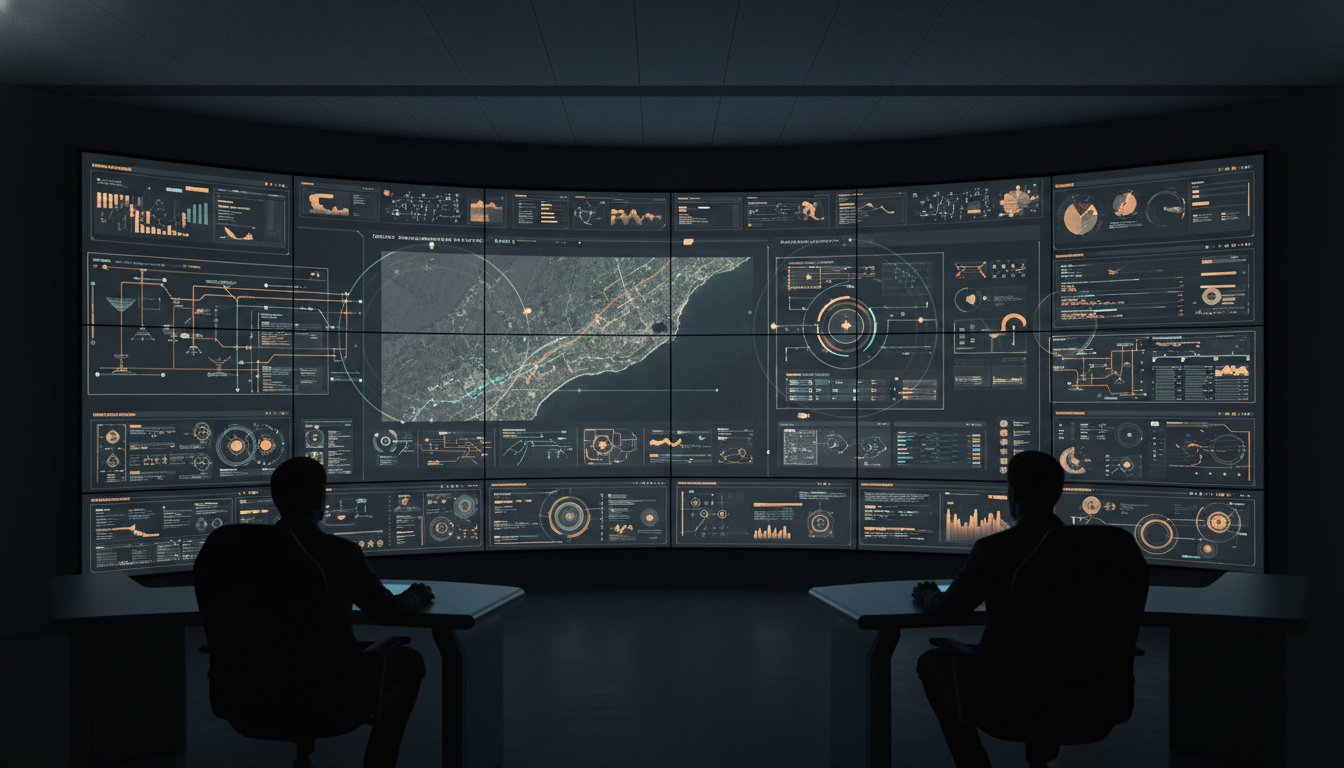
The mission critical communication market is projected to grow to $117.94 billion by 2035 because the cost of fragmented data has become unsustainable. You’ve likely managed high-stakes incidents where response times lagged because vital information was trapped in a silo or lost between the control room and field teams. Most control rooms already have the screens. What they’re missing is the layer that decides what goes on them; it must escalate automatically when something needs attention. Without a way to unify your mission critical collaboration tools, operator fatigue from monitoring disconnected feeds remains a structural risk to your operation.
You can replace this complexity with a unified common operating picture that provides steady clarity when stakes are highest. This article explains how to integrate your systems into a single operational intelligence layer that automates event detection and distribution. We’ll explore how to move beyond partial solutions to create a seamless environment for distributed and mobile teams. You’ll learn to apply the latest CISA guidance from February 2026 to secure your communications while ensuring your team has total visibility into what matters most through the vis/ability platform.
Key Takeaways
- Identify the operational risks of the “swivel-chair” effect where disconnected applications cause delayed response times and operator fatigue.
- Understand how to unify fragmented mission critical collaboration tools into a single, automated operational intelligence layer.
- Most control rooms already have the screens. What they’re missing is the layer that decides what goes on them, and escalates automatically when something needs attention.
- Evaluate the security requirements for high-stakes environments, including NERC CIP and SOC2 standards for air-gapped or cloud deployments.
- Establish a common operating picture that ensures seamless information flow between command centers and mobile field teams.
The Hidden Cost of Fragmented Mission Critical Collaboration
Command centers function as the brain of any high-stakes operation. When this brain is forced to process dozens of disconnected data streams, the resulting fragmentation creates a dangerous lag in response times. Operators often find themselves in a “swivel-chair” environment, physically turning between monitors or clicking through multiple browser tabs to piece together a single event. This manual synthesis of information isn’t just inefficient; it’s a structural vulnerability. In mission-critical systems, a delay of even sixty seconds can mean the difference between a contained incident and a catastrophic failure.
Most control rooms already have the screens. What they’re missing is the layer that decides what goes on them, and escalates automatically when something needs attention. Without this intelligence, mission critical collaboration tools remain nothing more than isolated software packages. They fail to communicate with each other, leaving decision-makers to guess which feed holds the most urgent data. When visibility is fractured, the ability to act with certainty disappears.
The Peril of Data Silos in Emergency Operations
Organizations frequently rely on specialized tools like Axon for video evidence or proprietary telemetry feeds for infrastructure monitoring. While these tools are effective within their specific domains, they only offer a partial solution. They require a unifying layer to create a full common operating picture. Information remains trapped within a single department or on a specific operator’s workstation, creating a significant gap between raw data collection and actionable human judgment. When data doesn’t flow into a unified hub, situational awareness is sacrificed for siloed expertise.
Operator Fatigue and the Multi-Screen Dilemma
Monitoring dozens of static feeds for an entire shift leads to a well-documented phenomenon known as alarm fatigue. The human brain isn’t wired to maintain peak focus on repetitive, unchanging visual data for hours on end. In 24/7 environments like mission-critical operations, the physical and mental toll of managing a fragmented video wall results in missed incidents. Cognitive overload occurs when the sheer volume of “noise” drowns out the “signal,” preventing operators from identifying critical events before they escalate. True mission critical collaboration tools must do more than just display data; they must filter it to protect the decision-maker’s focus.
Beyond Chat: Defining the Operational Intelligence Layer
Office collaboration platforms facilitate conversation, but they lack the visual depth required for emergency response. In a command center, communication isn’t just about chat; it’s about the immediate distribution of visual intelligence. This is why mission critical collaboration tools must function as an operational intelligence layer. This layer acts as the central nervous system for the room, connecting disparate sensors and software into a single, cohesive interface. Most control rooms already have the screens. What they’re missing is the layer that decides what goes on them; it escalates automatically when something needs attention.
This intelligence layer transforms the video wall from a static display into a dynamic asset. While tools like Axon provide essential video feeds, they represent only a partial view of the operational landscape. Without a unifying platform, these feeds remain isolated. An operational intelligence layer integrates these partial solutions, ensuring that every team member, whether in the command center or on a mobile device, sees the same critical information at the same time. It’s the difference between having data and having an actionable strategy.
The Role of Event-Driven Situational Awareness
Traditional screen monitoring is reactive. Operators often wait for a phone call or a radio alert before looking for the corresponding camera feed. Event-driven visualization reverses this workflow. By using automated triggers, the system changes video wall layouts instantly based on real-time data from IoT sensors or CAD systems. If a perimeter breach occurs, the relevant geospatial data and live video feeds populate the screens without human intervention. This proactive approach significantly reduces the time from incident detection to incident management, allowing teams to act before a situation spirals out of control.
Bridging the Gap Between Data and Decision
The transition toward Next Generation 911 standards highlights the need for more sophisticated data integration in public safety. A true Common Operating Picture (COP) is only possible when your mission critical collaboration tools can ingest and visualize complex data sets from any source. Commercial off-the-shelf solutions must be flexible enough to adapt to these specific operational workflows rather than forcing the team to work around the software’s limitations. You can explore how vis/ability unifies these workflows to provide total clarity when it matters most.
Comparing Mission Critical Collaboration Tool Categories
The landscape of mission critical collaboration tools is divided into three primary categories: secure messaging, content collaboration, and visual intelligence. Many organizations utilize platforms like Mattermost or Rocket.Chat for encrypted communication. While these tools manage text-based updates well, they remain limited by their inability to handle real-time visual execution. Similarly, content collaboration suites manage document governance but fail to address the streaming data requirements of a high-stakes control room. They aren’t designed for the velocity of a live incident.
Specialized tools like Axon provide essential data for public safety, yet they often function as isolated silos. These feeds require a unifying layer to become truly effective across a Global Security Operations Center (GSOC). Without this integration, leadership is forced to synthesize data manually from separate applications, a process that invites error during high-stress events. Most control rooms already have the screens. What they’re missing is the layer that decides what goes on them, and escalates automatically when something needs attention.
Secure Messaging vs. Visual Situational Awareness
Text-based updates are insufficient for complex geospatial or infrastructure incidents. While chat is a necessary feature, visual intelligence is the strategy that ensures mission success. Relying solely on messaging creates a “telephone game” effect where critical details are lost in translation between the field and the command center.
| Capability | Chat-Centric Tools | Visual Intelligence (Activu) |
|---|---|---|
| Primary Output | Text and Static Files | Real-time Visual Intelligence |
| Response Type | Manual and Reactive | Automated and Event-Driven |
| Data Context | Isolated Messages | Unified Common Operating Picture |
Integrating Specialized Operational Feeds
Effective decision-making requires the integration of SIEM, SOAR, and CAD data into a single, cohesive interface. Standalone security tools provide depth in their specific niches but often lack the “big picture” visibility required by senior leadership. Activu vis/ability serves as the essential integration hub, transforming raw data from these disconnected sources into a unified operating picture. This approach ensures that your mission critical collaboration tools work for the entire team, whether they’re in a huddle room or responding via mobile devices.
Selection Criteria for Mission-Critical Environments
Rigorous selection of mission critical collaboration tools starts with technical reliability and regulatory compliance. In high-stakes sectors like utilities and defense, standards such as NERC CIP and SOC2 are non-negotiable requirements. These frameworks ensure that sensitive data remains protected against both external cyber threats and internal vulnerabilities. Most control rooms already have the screens. What they’re missing is the layer that decides what goes on them; it must escalate automatically when something needs attention. Without this automated intelligence, the sheer volume of incoming data can overwhelm even the most experienced team during a crisis. To manage these complex IT demands, OC Cubed – Your trusted MSP provides the proactive support and infrastructure management required for mission-critical operations.
Flexible deployment options are a necessity for organizations managing sensitive infrastructure. Whether your operation requires an air-gapped environment for national security or a secure cloud for distributed teams, the software architecture must support your specific reality. Unlike generic messaging platforms that prioritize open-source sovereignty, a true operational hub provides the hardware-software synergy required to drive complex Video Wall Systems. Interoperability ensures that your investment in existing displays and sensors isn’t wasted, but rather enhanced by a superior intelligence layer that unifies your entire ecosystem.
Ensuring Operational Continuity and Resilience
Resilience depends on high-availability architectures that survive network outages or hardware failures. Systems must be designed to maintain a common operating picture even when local disruptions occur. Utilizing Commercial Off-The-Shelf (COTS) hardware reduces long-term maintenance risks and prevents vendor lock-in, ensuring that the technology remains sustainable over a multi-year lifecycle. This approach provides a level of dependability that consumer-grade tools simply cannot match. You can review operational resilience strategies to understand how these systems maintain peak performance in critical environments.
Extending Visibility Beyond the Control Room
Using the term “mobile-first” is often a mistake in mission-critical contexts; the requirement is actually for mobile-integrated systems. Field teams must see the exact same data, maps, and video feeds as the command center to ensure tactical alignment. Providing a partial view to field personnel creates a dangerous information asymmetry that can lead to errors in judgment. Extending this sensitive data to remote huddle rooms or mobile devices introduces unique security challenges that must be addressed at the software layer. A unified platform ensures that your mission critical collaboration tools maintain context as information moves from the NOC to the field. If you are ready to bridge these gaps, contact our experts to discuss your control room requirements.
Activu: The Intelligence Layer for Modern Command Centers
Activu acts as the quiet, powerful engine that unifies fragmented operational environments. While other tools offer isolated views, our platform provides the stability and clarity required when stakes are at their highest. In sectors like Public Safety and Utilities, the vis/ability platform transforms raw, siloed data into a unified operating picture. This human-centric design empowers operators to act with absolute certainty by filtering out noise and highlighting what matters most. Most control rooms already have the screens. What they’re missing is the layer that decides what goes on them, and escalates automatically when something needs attention. By focusing on the moment of the critical decision, we ensure that our technology serves as the essential bridge between raw data and human judgment.
vis/ability: The Unifying Platform
vis/ability aggregates real-time video, geospatial maps, and critical applications into a single, actionable interface. This operational intelligence layer serves as the central hub into which all other mission critical collaboration tools flow. By leveraging event-driven automation, the platform reduces the need for manual screen switching, allowing the team to focus on the incident rather than the interface. A core capability is the cybersecurity common operating picture, which provides real-time visibility into network health and threat levels. This integration ensures that every decision is backed by comprehensive, real-time data. The platform makes other tools useful for the entire team, whether they’re in a command center, a huddle room, or operating via mobile devices.
Ready to Unify Your Operations?
Transitioning from reactive monitoring to proactive intelligence is a necessity for modern command centers. Fragmented systems lead to delayed responses, but a unified platform provides the clarity required for mission success. Activu offers expert Control Room Design Services to help you build an environment optimized for situational awareness and mission critical collaboration tools. We understand that your mission depends on absolute technical reliability and precise execution. Our solutions provide the bedrock upon which infrastructure-critical decisions are made, ensuring that your operators remain focused and analytical when stakes are highest. If you’re ready to eliminate data silos and empower your team with actionable intelligence, request a demo of the vis/ability platform today.
Establishing Total Operational Visibility
Fragmented control rooms create a high-stakes vulnerability that manual monitoring cannot solve. Most control rooms already have the screens. What they’re missing is the layer that decides what goes on them, and escalates automatically when something needs attention. By unifying your mission critical collaboration tools into a single operational intelligence layer, you eliminate the silos that cause delayed response times. This strategic shift ensures that your team maintains a common operating picture across command centers and mobile devices.
Trusted by Federal Defense and Global Utilities, Activu vis/ability integrates seamlessly with Axon, Splunk, and legacy COTS systems to reduce incident response times through event-driven automation. It ensures visibility into what matters most, regardless of the complexity of the incident. You don’t have to manage the chaos of disconnected data feeds alone. Secure your infrastructure and empower your operators to act with absolute certainty during every critical event.
See how Activu vis/ability unifies your mission-critical operations
Frequently Asked Questions
What makes a collaboration tool mission-critical vs. standard enterprise software?
Standard enterprise software handles asynchronous tasks like file sharing or office chat. In contrast, mission critical collaboration tools prioritize real-time situational awareness and absolute technical reliability in high-stakes environments. These tools must maintain operational continuity even during network disruptions. They provide the bedrock upon which life-saving decisions are made, moving beyond simple messaging to provide a unified view of live data and video feeds.
How do mission-critical tools help reduce operator fatigue in 24/7 environments?
Automated visual management is the primary method for reducing fatigue. Most control rooms already have the screens. What they’re missing is the layer that decides what goes on them; it must escalate automatically when something needs attention. By filtering out non-essential data and only highlighting critical events, the system prevents cognitive overload. This allows operators to remain focused and analytical throughout 12-hour shifts.
Can these tools integrate with my existing video wall hardware?
Yes, vis/ability is designed to integrate with existing displays through a hardware-agnostic software approach. It functions as an operational intelligence layer that sits on top of your current infrastructure, whether you use LCD, LED, or projection systems. This ensures that your investment in video wall hardware remains useful while gaining advanced automation and content management capabilities without requiring a total equipment overhaul.
What is the difference between a Common Operating Picture (COP) and a dashboard?
A dashboard typically provides a static or historical overview of performance metrics. A Common Operating Picture is a dynamic, real-time environment where every team member sees the same live data simultaneously. It provides the essential bridge between raw data and human judgment during an active incident. Unlike a dashboard, a COP allows for immediate interaction and distribution of intelligence across the entire organization.
How do mission-critical collaboration tools handle NERC CIP compliance?
These platforms manage NERC CIP compliance through robust security controls, including 256-bit encryption and detailed audit logging. They support air-gapped deployments to ensure that critical infrastructure remains isolated from public networks. By providing a cybersecurity common operating picture, these tools help utilities meet the strict reporting and access control requirements mandated by the North American Electric Reliability Corporation.
Is it possible to extend control room visibility to mobile users securely?
Secure mobile integration allows field teams to view the exact same data as the command center. Using encrypted tunnels and multi-factor authentication, vis/ability extends visibility beyond the physical room without compromising sensitive information. This ensures that mobile users have total clarity when responding to incidents, eliminating the information gaps that often occur when teams rely on voice-only radio communications.
Why do standalone security tools often fail to provide full situational awareness?
Standalone tools like Axon or Splunk provide deep data within a specific niche, but they only offer a partial solution. They lack the unifying layer required to create a full common operating picture for senior leadership. Without an integration hub, these tools become isolated silos that force operators to manually synthesize information, a process that leads to delayed response times during high-stress events.
What does “event-driven visualization” mean for incident response times?
Event-driven visualization uses automated triggers to change screen layouts the moment an incident is detected by IoT sensors or CAD systems. This proactive approach significantly reduces the time from detection to management by removing manual steps. Industry research from March 2026 indicates that automation in command centers can improve response efficiency by 30 percent, allowing teams to act with greater certainty when every second counts.