
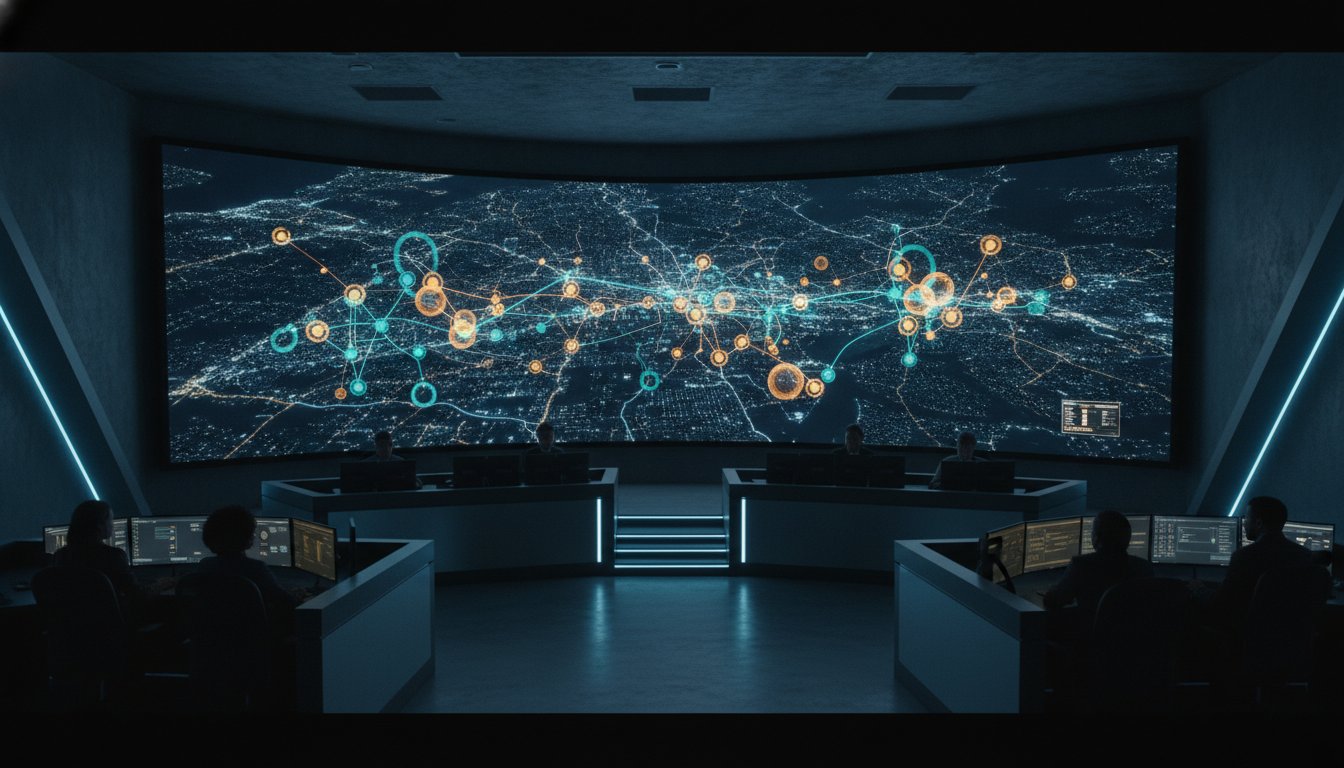
73% of organizations don’t feel prepared to withstand a major incident without significant business disruption. When stakes are high, the bottleneck isn’t usually a lack of data; it’s the fragmentation of that data across disconnected systems. Operators often struggle with information silos and the fatigue that comes from monitoring isolated feeds like Axon, which only provide a partial view of the operational landscape. This lack of a unified operating picture slows down incident response collaboration and forces leaders to make decisions based on incomplete intelligence.
The challenge isn’t the presence of screens, but the absence of an intelligent layer that unifies disparate data, prioritizes critical information, and automates escalation when attention is needed. This article explains how to transform these fragmented streams into a decisive advantage by implementing an operational intelligence layer. You’ll discover how solutions from Activu Corporation can reduce cognitive load and ensure seamless coordination between command centers and field units, enabling you to resolve incidents with absolute clarity and confidence.
Key Takeaways
- Identify why traditional response models fail under the current volume of real-time data feeds and information silos.
- Understand the limitations of manual decision-making loops when responding to high-speed cyber or infrastructure events.
- Improve incident response collaboration by transitioning from static video walls to a dynamic, automated intelligence layer.
- Learn how to integrate fragmented systems into a unified operating picture that empowers both command centers and field operators.
The Anatomy of a Critical Incident in 2026
A critical incident is no longer defined solely by physical boundaries. It is any high-impact event that threatens operational continuity or public safety, ranging from a localized security breach to a wide-scale failure in a regional utility grid. In the current operational environment, these incidents are complex, fast-moving, and data-intensive. While foundational frameworks like the Incident Command System (ICS) provide a necessary hierarchy for response, they often struggle to keep pace with the sheer volume of real-time data feeds generated during a crisis.
This creates a dangerous visibility gap. Raw information exists in abundance across various sensors and platforms, but it is not yet actionable intelligence. Modern readiness requires a shift toward event-driven situational awareness. This approach moves beyond the passive monitoring of feeds, ensuring that the right information reaches the right person at the precise moment a decision is required. Without this focus, incident response collaboration remains reactive rather than proactive.
The Hidden Cost of Information Silos
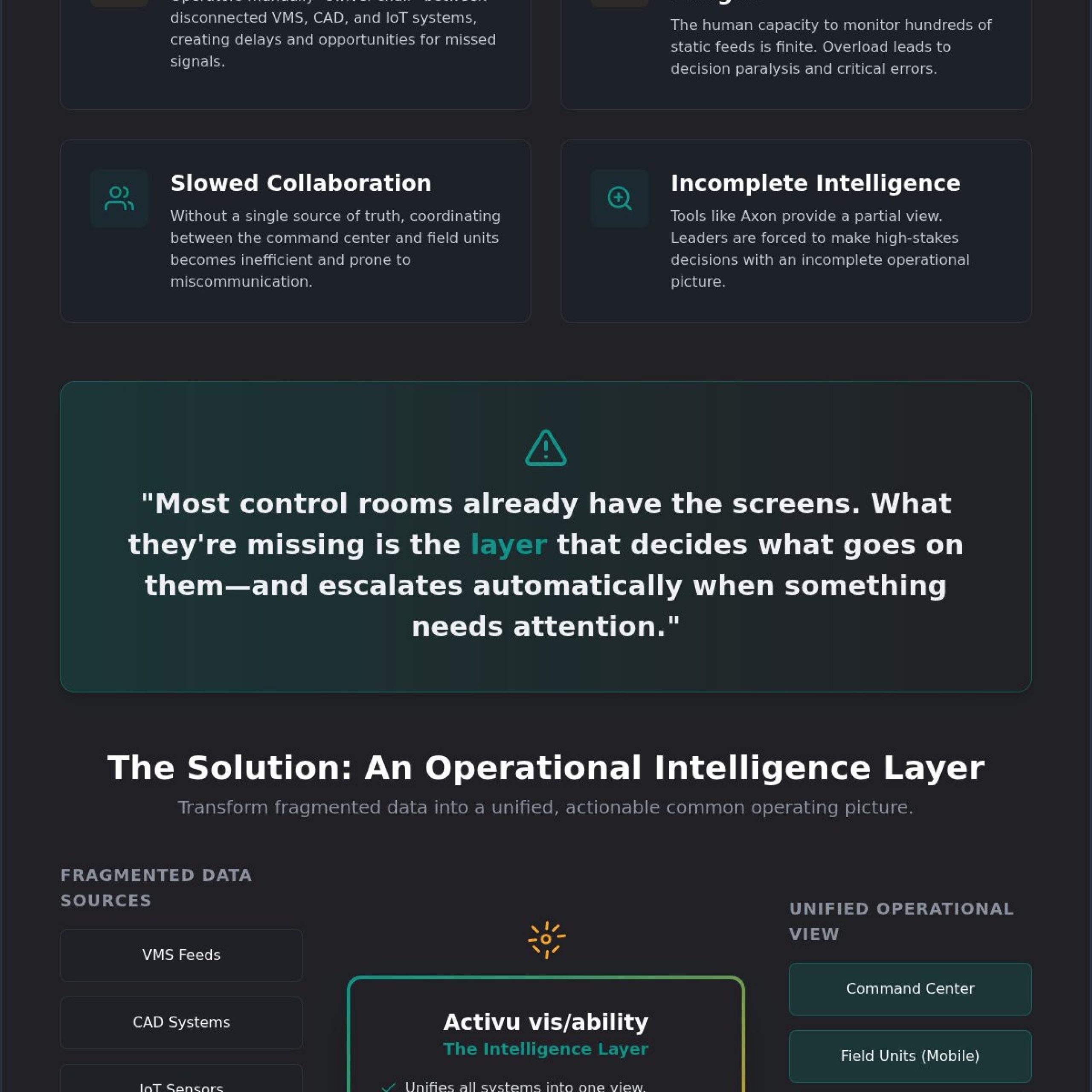
Fragmented systems are the primary obstacle to a unified response. When Video Management Systems (VMS), Computer-Aided Dispatch (CAD), and IoT sensors operate in isolation, they create significant cognitive friction. Operators are often forced into a swivel-chair approach, manually toggling between disconnected applications to verify alerts. This fragmentation is where critical signals are lost in the noise. While platforms like Axon are utilized by many organizations for evidence and field data, they provide only a partial solution. They lack the unifying layer necessary to create a full common operating picture, often leaving command centers with an incomplete view of the unfolding event.
Operator Fatigue and Cognitive Overload
The psychological toll of monitoring hundreds of static feeds is a significant risk factor in mission-critical environments. Cognitive overload occurs when the volume of incoming data exceeds the human capacity to process it, leading to decision paralysis or missed indicators. Most control rooms already have the screens. What they’re missing is the layer that decides what goes on them, and escalates automatically when something needs attention. By filtering for relevance instead of just volume, organizations can protect their operators from fatigue and ensure that high-stakes decisions are made with absolute clarity. This transition is essential for any public safety or SOC environment where every second counts.
The Critical Decision-Making Model (CDM) vs. Data Overload
The Critical Decision-Making Model (CDM) provides a structured framework for high-stakes operations. It functions as a continuous loop: collect information, assess risk, consider policy, and act. While this model remains the gold standard for organized response, it often breaks down when faced with the velocity of modern cyber attacks or infrastructure failures. Manual processing simply cannot keep pace with the current rate of data generation. When information moves at the speed of light, a manual mental process becomes a bottleneck rather than a safeguard.
Most control rooms already have the screens. What they’re missing is the layer that decides what goes on them, and escalates automatically when something needs attention. This is where an operational intelligence layer becomes vital. It acts as the bridge between raw data and human judgment, ensuring that command staff can focus on high-level strategy rather than the mechanics of data retrieval. By automating the preliminary stages of the CDM loop, supervisors gain the clarity needed to make definitive choices under pressure.
Collecting Information: Beyond Manual Search
In a crisis, every second spent searching for a data feed is a second lost to the incident. Automated application integration pulls relevant data into view without operator intervention, removing the friction of manual searching. Standalone tools like Axon are valuable for specific field data, but they only provide a partial solution. Without a unifying hub, these feeds remain isolated, forcing operators to manually cross-reference information during a crisis. Situational awareness is the intersection of data, context, and time. Effective incident response collaboration requires that this intersection is managed by an intelligent platform that presents the right information before it is even requested.
Assessing Risk with Real-Time Visualization
Aligning with the National Incident Management System (NIMS) requires a level of coordination that manual systems cannot sustain. Effective response relies on real-time visualization to assess geospatial and temporal risks accurately. By utilizing specialized incident management software, teams transition from reactive watching to proactive monitoring. This shift allows for a unified operating picture where risk is assessed in context, enabling a more precise and confident response to unfolding threats. To see how this clarity transforms operations, you can speak with our specialists about your control room requirements.
Fragmented Systems vs. The Unified Operating Picture
Many organizations fall into the trap of believing that more screens equate to better visibility. This “wall of video” approach often results in a cluttered environment where operators miss critical indicators because they’re overwhelmed by sheer volume. True situational awareness isn’t about the quantity of pixels on a wall. It’s about the quality and relevance of the information presented. A Common Operating Picture (COP) provides a single source of truth, ensuring that every stakeholder, from the field to the command center, sees the same reality simultaneously.
Most control rooms already have the screens. What they’re missing is the layer that decides what goes on them, and escalates automatically when something needs attention. This distinction marks the difference between a static display and a dynamic wall of intelligence. By prioritizing essential information, teams improve incident response collaboration and act with greater certainty when stakes are highest. This transition from passive monitoring to active intelligence ensures that no critical event goes unnoticed.
The Shortcomings of Partial Solutions
Organizations often rely on specialized tools like Axon for field video or SIEM platforms for network security. While these are effective for their specific tasks, they only provide a partial view of the operational landscape. They operate as silos, requiring operators to manually bridge the gaps between different data streams during a crisis. vis/ability acts as the operational intelligence layer that serves as the glue between these specialized applications. It integrates disparate feeds into a cohesive hub, making every existing tool more useful for the entire team. This integrated approach is essential for a dynamic cybersecurity incident response strategy that values speed and accuracy over manual procedures.
Event-Driven Escalation: The Proactive Shift
The shift from reactive to proactive operations depends on event-driven visualization. This technology uses automated triggers to change what appears on screens based on incoming data streams. When a sensor detects a breach or a system reports a failure, the platform immediately populates the relevant video and data feeds for the entire team. This reduces the critical time between the start of an incident and its identification. Maintaining resilience requires these automated workflows to ensure incident response collaboration begins the moment an anomaly is detected. By removing the need for constant manual monitoring, vis/ability ensures that the command center remains focused on resolution rather than detection.
Managing the 7 Cs with Operational Intelligence
The 7 Cs of incident management provide a vital structure for handling high-stakes events. These principles, Command, Control, Communication, Containment, Coordination, Critique, and the prevention of Complacency, are the pillars of any successful operation. In a modern command center, these aren’t just tactical concepts; they are functions of how effectively a team processes information. When incident response collaboration is supported by a dynamic intelligence layer, these principles move from a manual checklist to a seamless operational flow.
Command, Control, and Communication
Total geospatial awareness is the prerequisite for effective command. A unified screen allows a commander to direct resources while viewing the exact location of assets, live video feeds, and critical sensor data in one place. By utilizing mobile vis/ability, field units and the command center share the exact same view, which removes the risk of miscommunication inherent in radio-only environments. This visual clarity ensures that every member of the team understands the mission parameters. For operators tasked with writing Situation Reports (SITREPs), data captured directly from the video wall serves as an objective, time-stamped record of the unfolding crisis.
Containment and Coordination
Containment often depends on how quickly a perimeter can be established and monitored. Visualizing traffic feeds, IoT sensors, and perimeter alarms on a single interface allows for a rapid response that prevents an incident from escalating. This is especially true when maintaining a cybersecurity common operating picture, where coordination involves managing both physical and digital threats across a distributed network. Resource allocation reaches peak efficiency when logistics data and real-time field intelligence are overlaid, allowing supervisors to move assets where they’re needed most without delay.
The Critique phase is where long-term operational resilience is built. Most control rooms already have the screens. What they’re missing is the layer that decides what goes on them, and escalates automatically when something needs attention. This same intelligence layer provides the incident playback and comprehensive data logging required for a thorough after-action review. By reviewing the timeline of decisions and the data available at each moment, teams can continuously improve their incident response collaboration protocols. To see how these tools can support your mission, reach out to our specialists for a consultation.
Activu vis/ability: The Intelligence Layer for Critical Response
Activu vis/ability functions as the operational intelligence layer that transforms disconnected data streams into a single, cohesive view. It serves as the central hub where all other tools flow, ensuring that information is not just visible, but actionable for the entire team. Whether in a command center, a huddle room, or on mobile devices, the platform provides anywhere visibility to maintain a common operating picture. By prioritizing essential information, vis/ability empowers teams to act with greater certainty, positioning Activu as the indispensable partner for mission-critical operations across the globe.
Most control rooms already have the screens. What they’re missing is the layer that decides what goes on them, and escalates automatically when something needs attention. This intelligent orchestration is what separates modern readiness from traditional, reactive monitoring. It ensures that incident response collaboration is driven by real-time intelligence rather than manual discovery.
Why a Layered Approach Beats a Rip and Replace Strategy
One of the most significant barriers to modernizing a control room is the perceived need for a total overhaul. vis/ability removes this obstacle by working seamlessly with your existing hardware and software infrastructure. There is no need for a “rip and replace” strategy that disrupts current operations. Instead, the platform scales with your organization, from small, specialized SOCs to national-level fusion centers. This flexibility ensures that your investment in current technology remains valuable while adding the intelligence needed for high-stakes incident response collaboration. Organizations ready to evolve their capabilities should contact Activu for a custom control room assessment.
Sector-Specific Incident Management
The platform’s versatility allows it to serve diverse sectors, including utilities, transportation, and public safety. In these environments, speed is the ultimate metric. Imagine a scenario in a regional power grid where a sensor detects a critical transformer failure. Without human intervention, vis/ability identifies the event and immediately changes the video wall layout to display the relevant geospatial data, live repair crew locations, and the affected circuit diagrams. This automated shift ensures the entire team is instantly aligned on the problem and the path to resolution.
This level of automation moves beyond simple digital checklists. While some organizations use basic staff accounting or tactical software, those tools often lack the ability to aggregate real-time video and high-level application data into a single view. vis/ability fills this gap, providing the technical bedrock required when seconds matter most. We invite you to request a platform demo today to see how vis/ability can provide the clarity your mission requires.
Achieving Operational Clarity in High-Stakes Environments
Effective response to a critical incident requires more than just a wall of screens. It demands a sophisticated intelligence layer that unifies fragmented data into a single source of truth. By automating the transition from raw data to actionable intelligence, organizations can significantly reduce the cognitive load on 24/7 operators. This shift ensures that every decision is backed by absolute clarity rather than guesswork.
Most control rooms already have the screens. What they’re missing is the layer that decides what goes on them, and escalates automatically when something needs attention. This is why federal government and defense agencies trust vis/ability to provide the bedrock for their most urgent operations. Event-driven automation reduces time-to-awareness, allowing teams to move from detection to resolution with unprecedented speed. This technical reliability provides the calm necessary to manage complexity under pressure.
Request a Demo of the vis/ability Platform
Frequently Asked Questions
What is the definition of a critical incident in operations management?
A critical incident is any high-impact event that threatens operational continuity, public safety, or organizational assets. These situations require immediate, coordinated intervention to mitigate risk and restore normal functions. Examples include large-scale cybersecurity breaches, utility grid failures, or physical security threats that demand rapid incident response collaboration across multiple departments.
How does a common operating picture (COP) improve incident response?
A common operating picture improves response by ensuring every stakeholder views the same real-time data simultaneously. This alignment eliminates the confusion caused by information silos and fragmented reporting. When the command center and field units share a unified view, decision-makers act with greater certainty, significantly reducing the time required to resolve complex emergencies.
What is the difference between a video wall and an operational intelligence layer?
A video wall is a hardware display that often shows static, unmanaged feeds. An operational intelligence layer is the software that prioritizes and manages that information based on its relevance to the mission. Most control rooms already have the screens. What they’re missing is the layer that decides what goes on them, and escalates automatically when something needs attention.
Can vis/ability integrate with my existing CAD or VMS software?
Yes, vis/ability is built to function as a unifying hub that aggregates data from your existing Computer-Aided Dispatch (CAD), Video Management Systems (VMS), and IoT sensors. This layered approach means you don’t need to replace your current hardware or software. Instead, the platform makes these tools more useful by presenting their data within a single, cohesive operating picture.
How do you reduce operator fatigue in a 24/7 mission-critical environment?
Reducing fatigue requires a shift from passive monitoring to exception-based awareness. By using automated filters, the system only surfaces feeds that require immediate attention, which prevents cognitive overload. This ensures operators remain focused on high-level strategy and resolution rather than being overwhelmed by hundreds of irrelevant, static video streams.
What are the 7 Cs of critical incident management?
The 7 Cs include Command, Control, Communication, Containment, Coordination, Critique, and the prevention of Complacency. These principles provide a structured framework for managing high-stakes events. Modern visualization technology supports these phases by providing the geospatial and temporal context necessary for effective incident response collaboration and thorough after-action reviews.
Why is event-driven situational awareness better than manual monitoring?
Event-driven awareness uses automated triggers to identify anomalies, which is far faster and more reliable than manual observation. Manual monitoring relies on operators spotting a signal in the noise, a process prone to human error and fatigue. Automated escalation ensures that critical data is presented to the team the moment an incident begins, enabling a proactive response.
How does mobile vis/ability support field operations during an emergency?
Mobile vis/ability extends the command center’s intelligence to field units, allowing them to view the same common operating picture on their tablets or smartphones. This shared reality ensures that field personnel aren’t relying solely on voice-based radio reports. By seeing live video and geospatial data, responders in the field can coordinate with the EOC with absolute precision.