


An estimated 49.6 million people are trapped in modern slavery worldwide—including 12 million children—across both sexual exploitation and forced labor.
In the U.S. human trafficking generates $975 million annually, making it the second most profitable illegal enterprise after drug trafficking.
Trafficking thrives in the shadows—hidden in plain sight, buried in online ads, and driven through legitimate sectors like agriculture, construction, and hospitality. It affects more than 200,000 individuals annually in the U.S. alone, with hotspots in California, Texas, Florida, Nevada, and Georgia.
But law enforcement is no longer fighting this war in the dark.
Today technology is being used by Real Time Crime Centers, 911 Call Centers, police and more, giving agencies the upper hand.
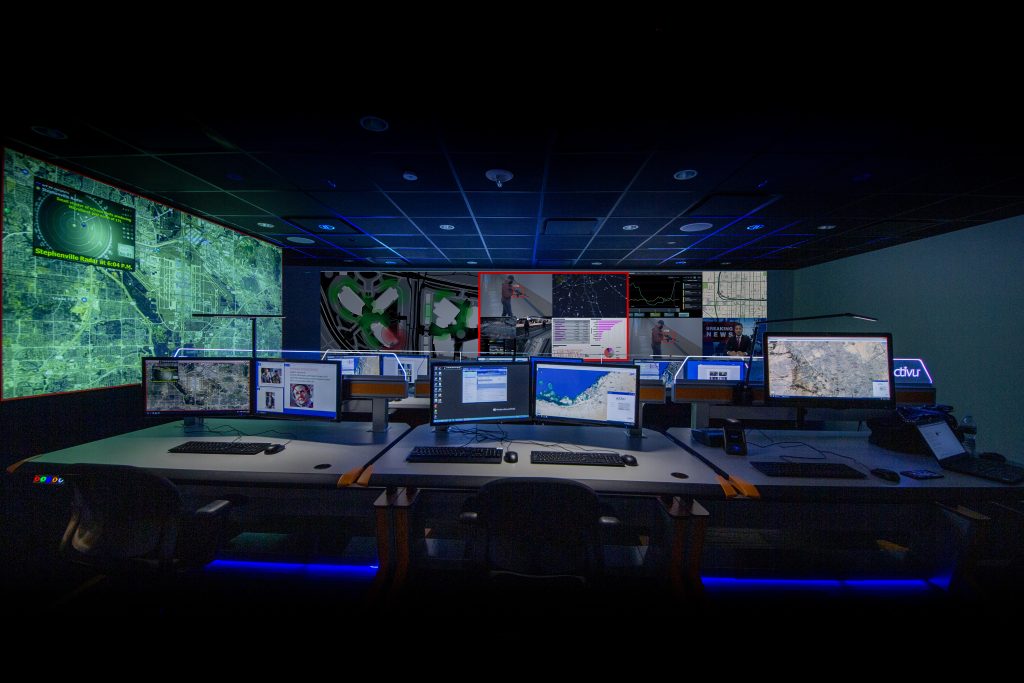
By combining event-driven intelligence, common operating picture insights, and military-tough reliability, police departments and task forces are leveraging technology to expose trafficking networks, rescue victims, and dismantle operations—fast.
Done in the shadows and on the dark web, human trafficking is difficult to detect. Law enforcement agencies are fighting back and adopting innovative methods to combat trafficking and arresting these criminals.
How Technology is Turning the Tide
AI-Powered Pattern Recognition
Artificial intelligence analyzes large datasets—such as communication, online ads, social media, travel records, financial transactions—to detect trafficking patterns and suspicious behavior.
Lifelike AI Personas
Law enforcement uses AI-generated personas to engage with suspects online, gathering intelligence on traffickers. While promising, this tactic raises ethical and effective concerns. (source: Wired)
Web Scraping and Data Mining
Extracts data from escort websites, classifieds, and social platforms.
Uncovers trafficking networks through shared contact info, reused images, or linguistic patterns.
Blockchain Technology
Creates tamper-proof records for survivor care, secure ID verification, and long-term case tracking (source: Safe House Project)
Enhances transparency and security in victim support systems.
Real-Time Surveillance & Stream View
Stream View, developed by DHS, enables live monitoring of suspected trafficking activity and supports cybercrime investigations. (source: DHS, Science and Technology)
Integrates with other intelligence tools to provide real-time situational awareness.
AI-enhanced video analytics flag suspicious behavior in public spaces
Facial Recognition and Image Analysis
Identifies victims and traffickers across jurisdictions, even under false identities. (source: police1)
Cross-references faces with missing persons and arrest database.
Detects potentially exploitative imagery to speed victim identification.
Open-Source Intelligence (OSINT) & Big Data
Mines public data—forums, social media, classified ads—for actionable leads. (source: police1)
Reveals connections between traffickers, victims, and geographic clusters using advanced analytics.
License Plate Readers (LPR)
Tracks suspects vehicles involved in suspected trafficking routes.
Monitors hotels, highways, and known hotspots.
Mobile Apps and Public Reporting Tools
Allows the public—including truckers and hotel staff—to report suspicious activity instantly.
Empowers victims and streamline tip collection for law enforcement.
Digital Forensics
Extracts communications, financials, and location data from traffickers’ devices (phones, laptops, cloud accounts).
Geospatial and Mobile Tracking
Maps trafficking hotspots and routes.
Uses GPS, cell tower data, or transport logs to track victim or suspect movements.
Natural Language Processing (NLP)
NLP scans hotline calls, chat, and social media to identify code language, distress signals, and indicators or exploitation.
Visability is Built for the Fight
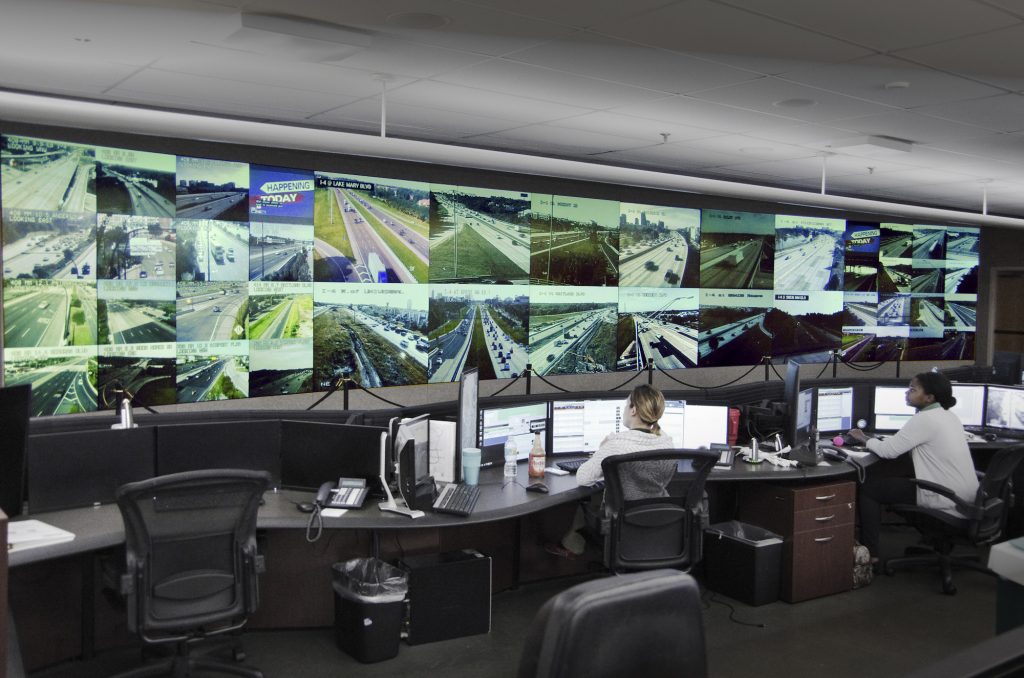
Visability is a mission critical platform designed for real-time collaboration, intelligence sharing, and rapid response. Used by thousands of law enforcement and public safety agencies across North America, visability empowers teams to:
- Build unlimited, flexible unified views of all the tools in the investigative arsenal—surveillance feeds, gun detection, facial recognition alerts, maps, and more.
- Auto-populate event driven dashboards the moment a trafficking alert is triggered.
- Collaborate securely across departments, NGOs, and international partners—with full mobility across control centers, laptops, and smartphones.
- Scale effortlessly across new buildings, breakout rooms, and field teams
Whether it’s responding to an emergency tip from a mobile app or integrating federal intelligence from DHS, visability ensures your team and partners have a common operating picture—when and where it matters most.
Combating Human Trafficking with Real-Time Tech
Human trafficking doesn’t operate on a schedule. It moves across cities, sectors, and screens—requiring law enforcement to be agile, informed, and connected at all times.
With real time technology, event driven intelligence, and real-time collaboration, agencies are no longer reactive. They’re fighting back—with speed, precision, and purpose
Visability from Activu is proud to be down for the fight.
Ready to see visability in Action?
Contact us today or request a demo today to discover how visability can transform your traffic management.
Public Safety Case Studies
- Advanced Emergency Response Integrated Environment at the Pentagon
 Activu’s software platform was the only one that could agnostically unify multiple systems for the Pentagon’s common operating picture.
 - Polk County Sheriff’s Office Switched to vis/ability
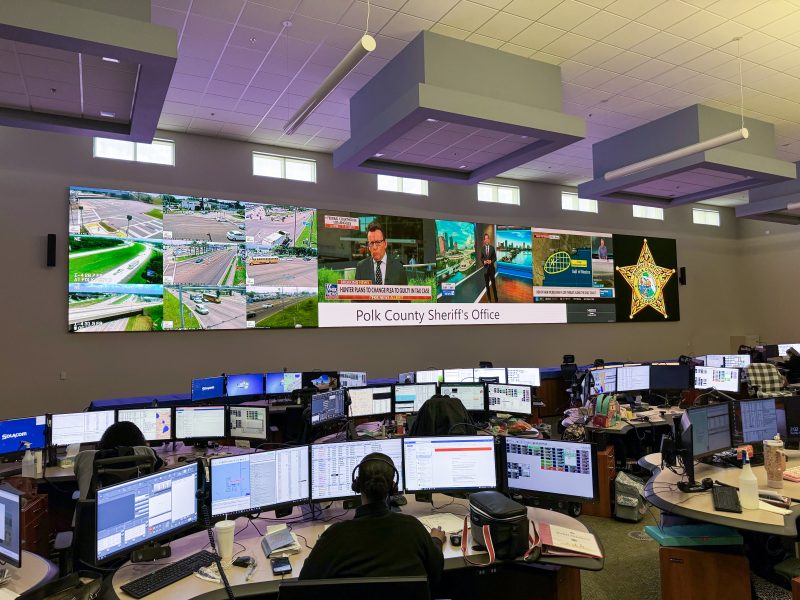 ©2025 Activu. Polk Country Sheriff’s Office modernized their Emergency Communications Center video wall and content management platform with vis/ability, together with the creation of their new Real-Time Crime Center.
 - Visability: The Unifying Platform for a City’s Digital Convergence
 This Israeli city trusts vis/ability for their information security, improving the city’s visual monitoring center, and providing better services for both residents and municipal employees
 - Arlington EOC: Managing the Unexpected in the Entertainment Capital of Texas
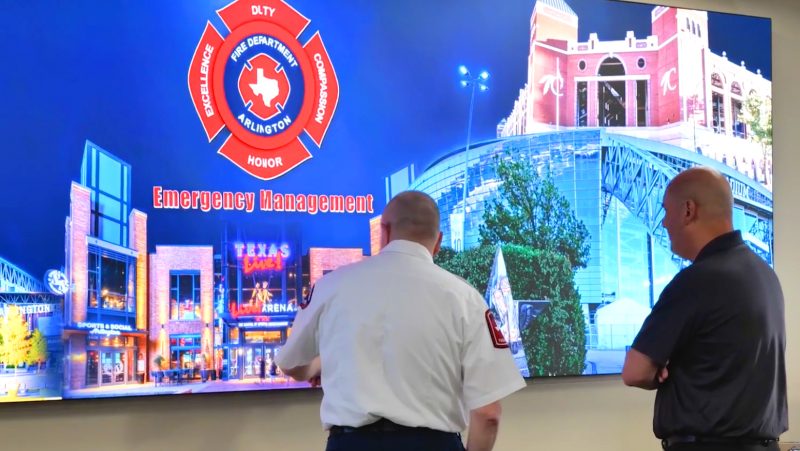 The Emergency Operations Center (EOC) in Arlington, TX—one of the fastest-growing metro areas in the United States—is prepared for the unexpected with Activu’s next-gen control room platform, vis/ability.
 - Global Sports League: An elegant control room solution for a high-profile, enterprise-security challenge
 This sports league chose Activu vis/ability for their demanding GSOC and all-encompassing critical security mission.
 - Mesa Emergency Operations Center upgrades to better protect citizens of the 10th largest metro area in the U.S.
 Natural disasters, accidents, and other threats necessitated a modernization of the Mesa EOC. The Emergency Operations team chose vis/ability from Activu to modernize and future proof their command center, far beyond the limitations of an AV-centric hardware solution.
 - Super Storms and Super Bowls
 Challenge The combination of a large metropolitan population, a subtropical “tornado alley” location, and venues that regularly host major national events makes the… Read more: Super Storms and Super Bowls
 - Ensuring Public Safety, in the Middle of the Middle East
 Challenge In the recent past, the Jordan Public Security Directorate has been beset on nearly all sides by conflicts and has had to… Read more: Ensuring Public Safety, in the Middle of the Middle East