
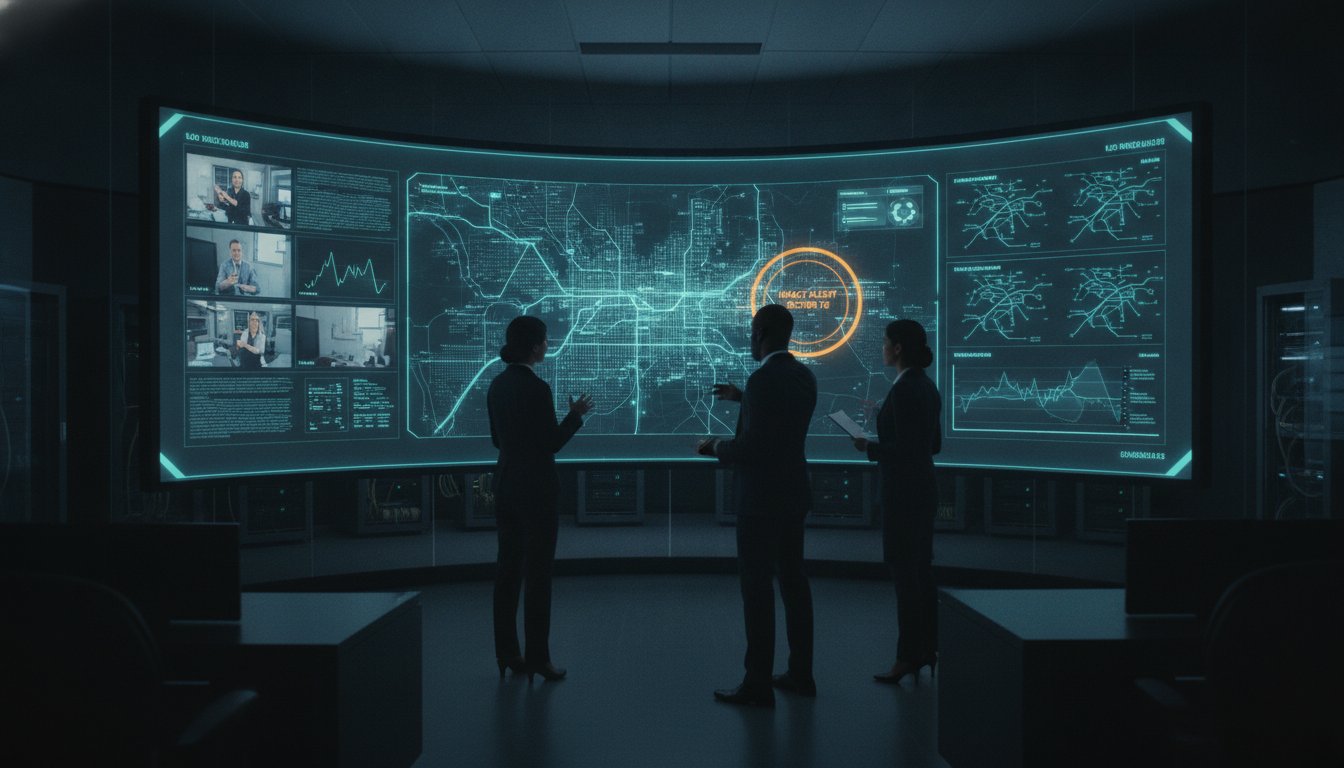
A high-resolution display becomes a liability if your operators are too busy switching inputs to notice a developing crisis. In high-stakes briefing environments, the gap between raw data and a decisive response is often filled with friction. Teams frequently struggle with fragmented feeds and disconnected screens that require manual intervention at the exact moment they need automated clarity. Specialized data sources provide value, but they often offer only a partial solution that remains siloed from the broader mission. Implementing an interactive video wall for briefing rooms shouldn’t just add more pixels. It must solve the problem of cognitive load that occurs when critical alerts are buried under a mountain of static information.
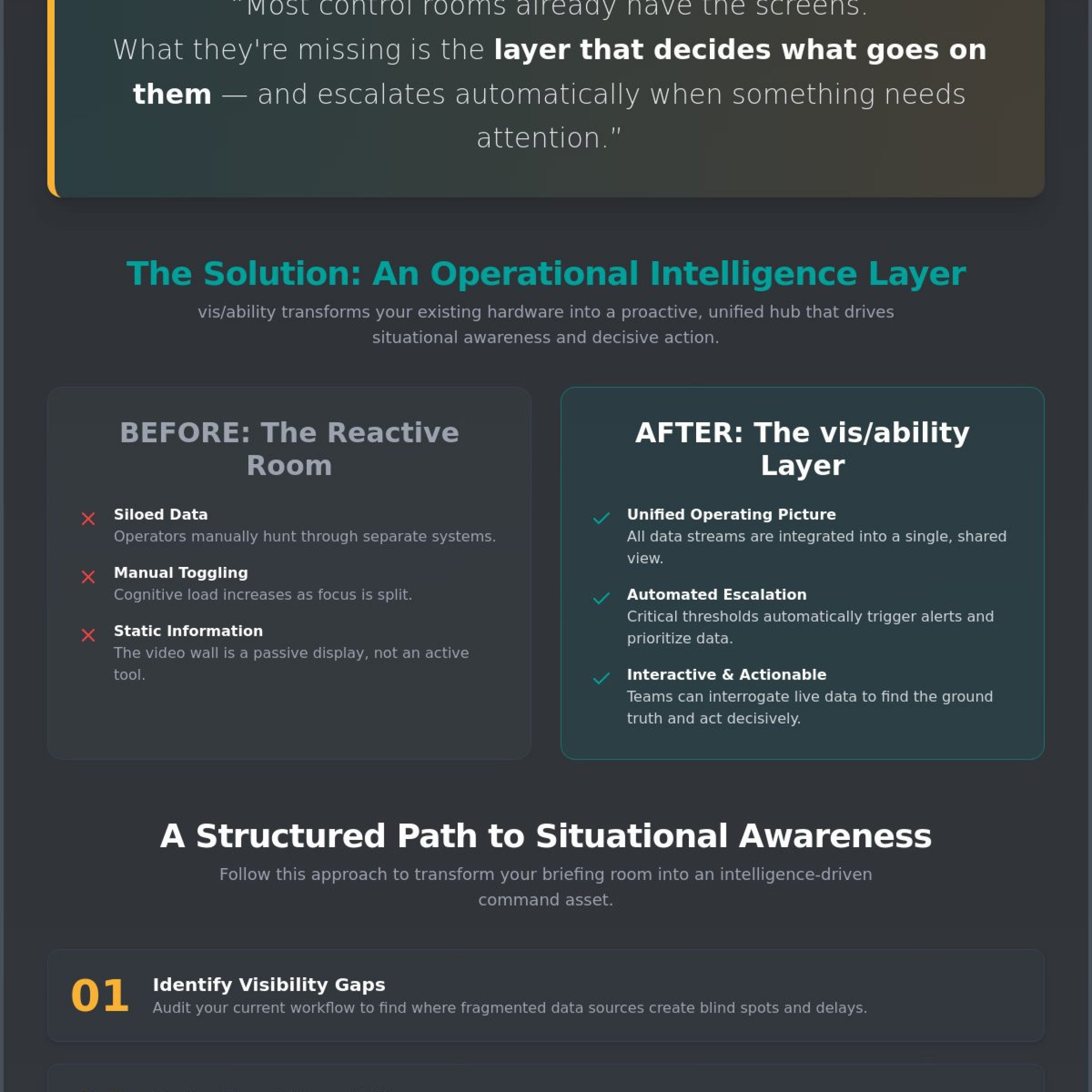
Most control rooms already have the screens. What they’re missing is the layer that decides what goes on them, and escalates automatically when something needs attention. You understand that technology must empower your team rather than distract them during a pivotal decision. This article demonstrates how to transform standard displays into an integrated operational intelligence layer that drives decisive action. We’ll examine how to build a unified operating picture that spans from the command center to the briefing room while ensuring that critical data thresholds trigger immediate visibility for every stakeholder.
Key Takeaways
- Identify the hidden visibility gaps created by fragmented data sources like Axon and SIEM tools that often leave briefing rooms reactive.
- Define the role of an interactive video wall for briefing rooms as a comprehensive operational intelligence layer rather than just a touch-enabled screen.
- Recognize why relying solely on hardware leads to operator fatigue and how automated data escalation provides the clarity needed for decisive action.
- Follow a structured five-step approach to audit existing data silos and identify the mission-critical KPIs required for real-time situational awareness.
- Learn how the vis/ability platform integrates disparate tools into a single, unified hub that connects command centers, huddle rooms, and mobile devices.
The Hidden Gaps in Modern Briefing Room Visualization
Briefing rooms often operate in a state of reactive catch-up. While command centers are flooded with data, the transfer of that intelligence into the briefing environment is frequently manual and slow. An Video wall in these settings must act as a filter, not just a mirror. If your system requires an operator to manually toggle inputs while a crisis is peaking, you’re already behind the curve. Siloed data leads to delayed decision-making, creating a dangerous window of uncertainty during critical incidents.
Most control rooms already have the screens. What they’re missing is the layer that decides what goes on them, and escalates automatically when something needs attention. Without this intelligence layer, an interactive video wall for briefing rooms is simply a collection of pixels rather than a tool for strategic oversight. Fragmented platforms like SIEM tools or localized geospatial maps provide deep data, but they often offer only a partial solution. They require a unifying platform to create a full common operating picture that executives can trust.
The Problem with Disconnected Data Streams
Cognitive friction is the primary enemy of operational readiness. When operators must manually switch between camera feeds and sensor data, the risk of missing a subtle signal increases. Briefing rooms serve as the essential bridge between the tactical command center and executive-level action. If those feeds aren’t integrated, that bridge collapses under the weight of disconnected data. Managing multiple data feeds in an EOC requires a system that automates information flow, ensuring the most relevant data is always front and center.
Why Standard Meeting Room Tech Fails Mission-Critical Needs
Standard corporate technology focuses on creative whiteboarding. Mission-critical environments require situational awareness and data-driven insight. Commercial-grade displays aren’t designed for the 24/7 rigors of Operational Industries. These environments demand resilience and absolute technical reliability. An interactive video wall for briefing rooms must be built on a foundation of steady reassurance. Passive viewing is no longer enough; the modern briefing room requires an active intelligence layer that transforms hardware into a proactive partner.
Defining True Interactivity: From Touchscreens to Data Integration
True interactivity in a mission-critical environment transcends the ability to swipe or tap a screen. For strategic leaders, an interactive video wall for briefing rooms must function as a unified operating picture that adapts to the lifecycle of an incident. It isn’t a static display; it’s an active participant in the decision-making process that allows for the manipulation of live data streams in real-time. This level of engagement ensures that stakeholders don’t just see information. They can interrogate it to find the ground truth.
Most control rooms already have the screens. What they’re missing is the layer that decides what goes on them, and escalates automatically when something needs attention. This operational intelligence layer serves as the bedrock for high-stakes oversight. It ensures that when a threshold is breached, the relevant data streams are not just visible, but are prioritized and presented in a way that demands immediate action. By moving the focus from the hardware to the intelligence it carries, organizations can maintain a state of constant readiness.
Moving Beyond Simple Touch Input
Interactive hardware often gets confused with simple digital whiteboarding. In a command operation, you need to do more than draw on a map; you need to drill into the live data behind that map across distributed sources. The vis/ability platform aggregates real-time streams from disparate sources into a single, actionable interface. This allows teams to pivot from a high-level overview to granular detail without losing situational context. An interactive video wall is a dynamic portal into an organization’s entire data ecosystem. Explore how the vis/ability platform unifies your existing data streams to empower your team.
The Role of Application Integration
Success in a briefing depends on the seamless flow of information from specialized software into a shared space. A high-stakes interactive video wall for briefing rooms must integrate with the COTS applications your team already uses, from geospatial tools to incident management systems. Specialized evidence platforms and sensor networks provide critical data, yet they often exist in isolation. To be truly effective, these streams must feed into a Common Operating Picture (COP). The vis/ability platform acts as the central hub for these disparate tools, ensuring that technical experts and strategic decision-makers are working from the same source of truth during urgent operations.
Why Hardware Alone Fails in Mission-Critical Briefings
High-resolution displays are often mistaken for operational capability. A 4K screen displaying irrelevant data during a crisis is not a tool; it is a distraction. In high-stakes environments, the focus must shift from the quality of the pixels to the utility of information. Most control rooms already have the screens. What they’re missing is the layer that decides what goes on them; it escalates automatically when something needs attention. Relying on hardware-centric designs often leads to operator fatigue. This happens when teams spend more time managing physical inputs and toggling between sources than they do analyzing critical data. This manual workload increases the likelihood of human error when stakes are at their highest.
The Limits of Hardware-Centric Design
Technical debt often accumulates when organizations invest in proprietary, hardware-only switching solutions. These systems are inherently reactive. They require manual intervention to change layouts, adjust windows, or pull up new feeds from disparate sources. In a mission-critical briefing, this manual lag creates a dangerous window of uncertainty. An interactive video wall for briefing rooms must be driven by an event-driven software platform that anticipates needs based on predefined thresholds. Software-based orchestration allows for a level of flexibility that hardware switching cannot match.
- Hardware systems lack the ability to automate data escalation based on live event thresholds.
- Proprietary switches create high technical debt and limit long-term system adaptability.
- Manual source switching increases the cognitive load for operators during peak incident periods.
This software layer serves as the bedrock of Operational Continuity. It ensures that the system remains resilient and adaptable even as hardware components evolve or the operational landscape shifts.
Bridging the Gap Between Data and Decision
The ultimate goal of any visualization system is to empower human judgment. Technology acts as the essential bridge between raw data and the certainty required for executive action. When an interactive video wall for briefing rooms is powered by an operational intelligence layer, it removes the cognitive burden from the operators. This allows leaders to focus entirely on the mission at hand. Instead of viewing isolated pixels, they interact with a cohesive narrative of the situation that flows seamlessly across devices. This human-centric approach ensures that technical tools empower individuals to act with greater certainty. For a deeper understanding of how to implement these strategies, consult our Video Wall Systems guide. This approach ensures that your technology remains a silent, powerful engine behind every successful operation.
Designing a Briefing Room for Real-Time Situational Awareness
Designing a mission-ready briefing environment requires a shift from hardware procurement to workflow engineering. This process ensures that the interactive video wall for briefing rooms becomes a proactive asset rather than a passive monitor. For the architects and engineers tasked with modeling these complex environments, resources like Revitfamily.biz provide essential libraries to streamline the design process. When you design for situational awareness, you’re building a system that anticipates the needs of your leadership team. Most control rooms already have the screens. What they’re missing is the layer that decides what goes on them, and escalates automatically when something needs attention.
Successful design follows a methodical five-step process:
- Step 1: Audit existing data silos. Identify where critical information lives and acknowledge the limitations of tools like Axon that provide only partial visibility.
- Step 2: Map the flow of information. Ensure data moves seamlessly from SOC/NOC/GSOC solutions to the briefing room without manual intervention.
- Step 3: Define automated escalation triggers. Establish the thresholds that should trigger event-driven visualization on the main display.
- Step 4: Ensure mobile and remote parity. Decision-makers in the field must have access to the same common operating picture as those in the room.
- Step 5: Select an operational intelligence layer. Implement a unifying platform that integrates all disparate tools into a single, cohesive hub.
Automating the Flow of Information
Event-driven situational awareness is the engine of rapid response. By implementing predefined escalation rules, the video wall layout changes automatically when a crisis occurs. This removes the need for an operator to manually search for relevant feeds during a peak incident. When a security threshold is met or a critical system fails, the operational intelligence layer instantly prioritizes that data. This automation ensures that the interactive video wall for briefing rooms always displays the most urgent information, allowing leaders to move from observation to action without delay.
Ensuring Distributed Collaboration
A briefing room is only as effective as its ability to connect with stakeholders outside its four walls. Modern operations require seamless collaboration between on-site leaders, remote executives, and field units. The vis/ability platform maintains a unified operating picture across all locations, regardless of the device being used. Mobile vis/ability empowers individuals to act with greater certainty by providing real-time data access on the move. This organizational agility ensures that the entire team remains focused and analytical, even when stakes are at their highest. Contact our control room design services team to begin auditing your existing data silos for better integration.
Implementing the Operational Intelligence Layer with Activu
Transforming a standard display into an interactive video wall for briefing rooms requires more than just adding touch overlays or high-resolution panels. It demands a sophisticated engine capable of unifying fragmented data into a cohesive, actionable narrative. The vis/ability platform serves as this critical operational intelligence layer. It acts as the central hub where disparate streams from tools like Axon, geospatial sensors, and incident management software converge. While some organizations use standalone collaboration boards, those products often lack the deep integration required to communicate with complex mission-critical backend systems. Activu provides the technical bridge that ensures your team isn’t just viewing data, but is actively mastering it.
Most control rooms already have the screens. What they’re missing is the layer that decides what goes on them, and escalates automatically when something needs attention. This is the core value of Activu’s heritage. For decades, we’ve served as the trusted partner for agencies in Public Safety, Defense, and Utilities. Our solutions are the bedrock upon which critical decisions are made, providing a sense of calm and clarity even amidst potential complexity. By moving beyond passive visualization, organizations can ensure that their briefing rooms function with the same precision as their primary command centers. This transition is best achieved through professional Control Room Design Services that prioritize operational outcomes over hardware specs.
The vis/ability Advantage
The vis/ability platform differentiates itself through its event-driven architecture. Unlike traditional systems that require manual layout changes, vis/ability aggregates real-time data and video streams based on predefined operational thresholds. When a critical alert is triggered, the system automatically reprioritizes the video wall to show the most relevant information. This functionality provides a level of steady reassurance and absolute technical reliability that is essential for high-stakes oversight. It ensures that essential information is always prioritized, empowering individuals to act with greater certainty when every second counts. The latest iterations of the platform, such as version 6.7G, continue to set the benchmark for technical integration in federal and military environments.
Next Steps for Your Briefing Environment
Optimizing your briefing room starts with a shift from reactive hardware procurement to strategic intelligence planning. The goal is to move from “screens on a wall” to “intelligence in the room.” This requires a thorough assessment of your current data silos and a clear roadmap for integration. Whether your organization operates in Transportation or is managing critical infrastructure in Utilities, the requirement for a unified operating picture remains constant. A proactive approach to visualization ensures that your technology remains a silent, powerful engine behind every successful operation. To begin this transformation, contact Activu for a specialized briefing room assessment and discover how to build a more resilient common operating picture.
Advancing Toward Operational Intelligence
The transition from passive viewing to active intelligence defines the next era of command readiness. Most control rooms already have the screens. What they’re missing is the layer that decides what goes on them, and escalates automatically when something needs attention. By implementing an interactive video wall for briefing rooms driven by the vis/ability platform, organizations move beyond the constraints of hardware-centric designs. This event-driven methodology ensures that stakeholders aren’t overwhelmed by data noise; instead, they’re empowered by prioritized, actionable insights that surface when they’re needed most.
Activu brings over 40 years of mission-critical experience to every deployment, providing the technical bedrock and national support required for high-stakes operations. Our solutions transform the briefing room into a dynamic hub of situational awareness, ensuring that human judgment remains the focal point of every response. This steady reassurance allows your team to act with absolute certainty during peak incidents. It’s about more than just visibility; it is about providing the clarity required to protect assets and lives.
Request a Consultation to Build Your Unified Operating Picture and secure the technical reliability your mission demands. We’re ready to help you bridge the gap between raw data and decisive action.
Frequently Asked Questions
What is the difference between a standard video wall and an interactive briefing room wall?
An interactive video wall for briefing rooms functions as a dynamic portal into your organization’s data ecosystem rather than a passive display. While standard walls simply show a static feed, an interactive system allows stakeholders to interrogate live data streams in real-time. This capability transforms the wall into an operational intelligence layer that adaptively presents information based on the lifecycle of a specific incident.
Can an interactive video wall integrate with our existing SIEM or CAD systems?
The vis/ability platform is specifically engineered to serve as a central hub for disparate tools like SIEM, CAD, and geospatial software. It aggregates these data streams to provide a comprehensive common operating picture. This integration ensures that technical data from specialized systems flows seamlessly into the briefing environment, allowing leaders to make decisions with full situational context.
How does event-driven visualization help reduce operator fatigue?
Event-driven visualization reduces fatigue by automating the prioritization of essential information based on predefined thresholds. Instead of manually toggling between sources, operators rely on the system to escalate critical data automatically when a crisis peaks. This automation removes the cognitive burden of hardware management, allowing the team to remain focused on analysis and decisive action during high-stakes operations.
Is it possible to share the briefing room view with remote or mobile team members?
Remote and mobile parity is a core feature of the vis/ability platform, ensuring that field units and off-site executives see the same data as those in the briefing room. Mobile vis/ability provides stakeholders with real-time access to the common operating picture on their personal devices. This connectivity ensures organizational agility and maintains a single source of truth across all operational locations.
Do we need to replace our current screens to implement the vis/ability platform?
You generally do not need to replace your current displays to implement the vis/ability platform. Most control rooms already have the screens. What they’re missing is the layer that decides what goes on them, and escalates automatically when something needs attention. Activu’s software-based approach integrates with your existing hardware to transform passive screens into an active intelligence asset.
What industries benefit most from interactive video walls in briefing rooms?
High-stakes sectors such as public safety, utilities, transportation, and defense derive the greatest benefit from an interactive video wall for briefing rooms. Any environment where delayed decision-making carries significant risk requires the steady reassurance of an integrated visualization layer. These industries rely on the technical reliability of Activu to manage complex geospatial oversight and emergency response operations effectively.
How does a common operating picture improve critical incident response?
A common operating picture improves response times by eliminating the confusion caused by siloed data sources. It provides a unified narrative that bridges the gap between raw data and human judgment. When every stakeholder views the same prioritized information, the team can act with greater certainty, reducing the window of uncertainty that often occurs during critical incidents.
What security measures are in place for data visualization in sensitive environments?
Activu designs its platforms with the rigorous security requirements of federal and military environments in mind. The vis/ability platform supports secure data visualization through robust access controls and integration with cybersecurity common operating picture protocols. This ensures that sensitive information remains protected while still being accessible to authorized decision-makers during urgent operations.