
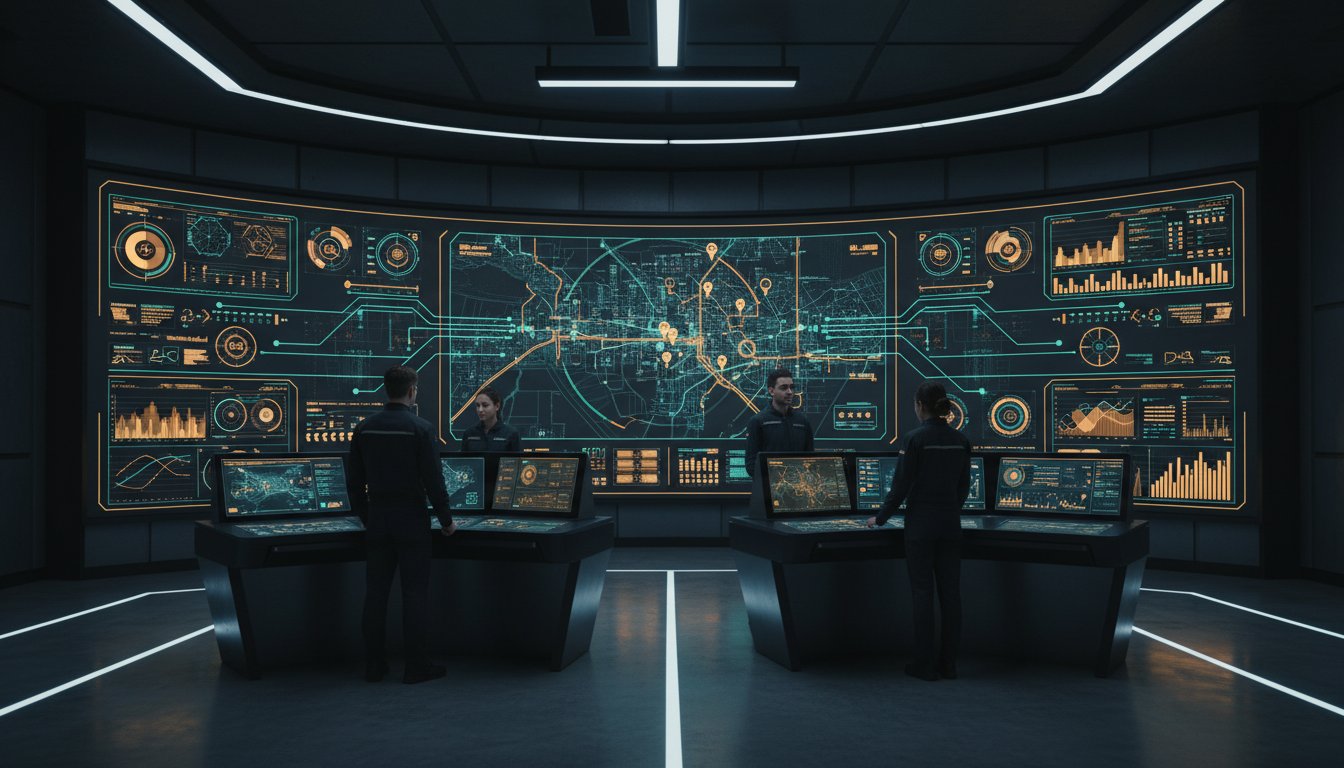
A single second of visual latency in a high-stakes environment can result in a 25 percent increase in emergency response times, according to 2023 public safety benchmark data. You recognize that when every pixel on your video wall represents a life or a critical power grid, fragmented data isn’t just an inconvenience; it’s a liability. Modern operations demand more than just more screens. Effective a/v command center integration replaces the noise of a dozen different feeds with a unified, event-driven operating picture that prioritizes what matters most. It’s the difference between reactive chaos and controlled, intelligent response.
You’ve likely felt the strain of operator fatigue as your team monitors 50 or more disparate data streams, often leading to a 15 percent drop in situational awareness over a standard eight-hour shift. We’re here to show you how to architect a visualization infrastructure that eliminates these silos and slashes your time-to-decision by up to 40 percent. This article explores the technical framework for building a secure, scalable system that ensures your command center remains the bedrock of your mission-critical operations.
Key Takeaways
- Transition from static displays to software-defined architectures that bridge the gap between raw data streams and human judgment.
- Evaluate the essential hardware and secure distribution protocols necessary for maintaining high-availability in 24/7 mission-critical environments.
- Reduce mean time to identify threats by leveraging a/v command center integration to create automated, event-driven visualization triggers.
- Implement human-centric design strategies, including sightline analysis and acoustic treatments, to minimize operator cognitive load during high-stress incidents.
- Learn how a consultative methodology secures long-term operational success by prioritizing lifecycle support over simple vendor transactions.
The Strategic Shift in A/V Command Center Integration
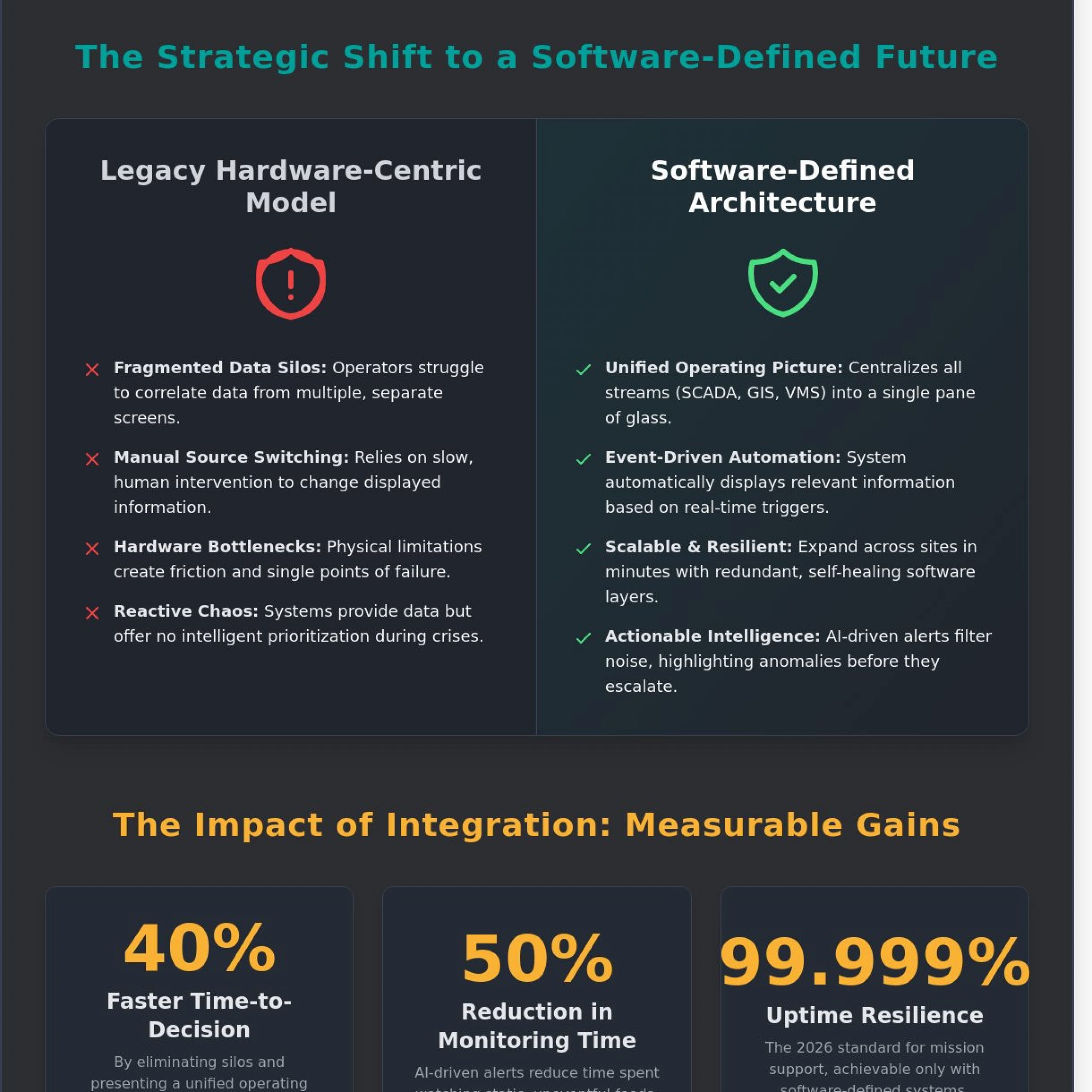
Modern operations demand a fundamental departure from legacy hardware-centric models. The shift toward software-defined visualization architectures marks the end of the traditional A/V era. In high-stakes environments, a/v command center integration must do more than just display video. It serves as the critical link between massive data sets and the human judgment required to act upon them. Unlike commercial A/V setups designed for simple presentation, mission-critical systems require a framework built for 24/7 reliability. This transition moves organizations away from manual source switching and toward automated situational awareness, where the system anticipates the operator’s needs.
Effective command and control systems rely on this architectural evolution to maintain order. When a crisis occurs, seconds determine the outcome. Relying on hardware-bound matrix switchers creates bottlenecks that modern operations can’t afford. By prioritizing software-led a/v command center integration, agencies ensure that data flows where it’s needed without the friction of physical hardware limitations. It’s the difference between seeing a problem and having the tools to solve it immediately.
Information Overload vs. Actionable Intelligence
Fragmented systems are a primary source of cognitive friction. Operators often struggle with “swivel-chair integration,” where they must manually correlate data from different screens. Industry data suggests that un-integrated systems can lead to a 35% increase in response times during critical incidents. A unified operating picture is essential for distributed teams to maintain a single version of the truth. Integrating the vis/ability platform centralizes these disparate streams, filtering out noise so teams focus only on what matters. It’s about turning a flood of data into a clear path for action.
The 2026 Standards for Command Center Resilience
By 2026, the baseline for operational hubs will shift to a mandatory 99.999% uptime. This level of resilience is impossible with traditional hardware that lacks redundant, self-healing software layers. Machine learning now plays a vital role in real-time data visualization, automatically highlighting anomalies before they escalate. Future-proofing your facility means prioritizing software scalability over hardware cycles. Hardware eventually reaches end-of-life, but a software-defined approach allows for continuous updates and expansion without tearing out infrastructure.
- 99.999% uptime ensures zero-fail mission support during peak crisis periods.
- AI-driven alerts reduce the time spent monitoring static feeds by up to 50%.
- Software-defined architectures allow for rapid scaling across global sites within minutes rather than weeks.
This strategic shift isn’t just a technical upgrade. It’s a commitment to operational clarity. When the stakes are highest, the technology behind the scenes must be the most stable element in the room.
Core Components of a High-Availability A/V Infrastructure
Reliability in a command center isn’t a luxury; it’s the baseline. Effective a/v command center integration demands hardware and software that sustain 99.999% uptime. This begins with the display wall. While LCD panels offer cost-effective high resolution for close-up monitoring, many 24/7 facilities now favor direct-view LED for its 100,000-hour lifespan and lack of distracting bezels. These visual surfaces must be backed by processing engines capable of managing 40Gbps of aggregate data throughput without dropping a single frame. When the mission is critical, the hardware must be invisible to the operator.
Data integrity relies on secure transport. Modern systems utilize Secure Reliable Transport (SRT) and High Efficiency Video Coding (HEVC) to maintain low-latency streams across erratic networks. AES 256-bit encryption secures every packet. To eliminate downtime, engineers implement redundant networking through dual-pathed fiber and failover power supplies. If one switch fails, the operational picture remains intact. You can speak with an architect to evaluate your current redundancy levels and identify potential points of failure.
Visualizing Complex Data Streams
Operators shouldn’t toggle between disparate screens to understand a crisis. A unified interface integrates SCADA for utilities, GIS for spatial tracking, and VMS for security footage into one pane of glass. High-resolution clarity allows technicians to read minute telemetry data during 12-hour shifts. This focus on human-centric design in operations centers ensures that cognitive load stays manageable. Teams can then optimize layouts for specific SOC, NOC, and GSOC environments where every second of reaction time counts. Robust a/v command center integration bridges the gap between raw data and actionable intelligence.
Security and Compliance in Integrated Systems
Compliance defines the architecture of critical infrastructure. Systems must adhere to NERC CIP standards for power utilities or NIST frameworks for federal agencies. Finding the balance between air-gapped security and networked flexibility is vital. Multi-level access control ensures that only cleared personnel view sensitive data streams. By implementing role-based permissions, organizations maintain a strict audit trail while providing the visibility needed for decisive action. This layered approach to security prevents unauthorized access without hindering the flow of vital information during an active incident.
Achieving Event-Driven Situational Awareness
Event-driven visualization shifts the burden of constant monitoring from human eyes to intelligent, automated systems. Instead of requiring operators to scan dozens of static screens, the platform uses system triggers to initiate immediate visual responses. This proactive approach directly targets the mean time to identify (MTTI), often reducing detection windows by 40% or more in high-pressure environments. Effective a/v command center integration ensures that when a security breach or a hardware failure occurs, the relevant data surfaces instantly. Operators no longer waste critical minutes on manual search-and-find tasks; the software presents the exact visual context needed for an informed decision the moment a threshold is crossed.
Workflow Automation in the Control Room
Operational efficiency depends on pre-set incident modes that reconfigure the entire visual environment in seconds. By linking SIEM and SOAR platforms directly to visual wall triggers, Activu vis/ability transforms abstract digital alerts into actionable intelligence. In the utilities and energy sectors, these automated triggers have proven to decrease response times to grid anomalies by up to 25%. These protocols ensure that when a critical event occurs, the system prioritizes the right feeds, maps, and diagnostics without human intervention.
Extending Visibility Beyond the Wall
True situational awareness isn’t confined to the physical command center. Modern a/v command center integration must push real-time visuals to mobile devices and remote stakeholders to maintain a consistent common operating picture (COP). Whether an executive is off-site or a technician is in the field, they see the same high-resolution data as the operators in the room. Cloud-hybrid integration facilitates this seamless flow, ensuring that mission-critical information remains accessible across any distance. This unified view eliminates information silos and accelerates the transition from observation to definitive action.
- Automated Logic: System triggers replace manual screen switching.
- Reduced Latency: Critical data surfaces in milliseconds, not minutes.
- Unified Intelligence: Remote teams stay synced with the main control room.
Human-Centric Design: Reducing Cognitive Load
Effective a/v command center integration requires more than high-resolution pixels and fast processors. It demands a deep understanding of human factors. Operators in 24/7 mission-critical environments face immense pressure; their performance depends on a workspace that supports, rather than hinders, their focus. We apply rigorous ergonomic science to ensure every sightline is optimized. This prevents the neck and eye strain that often leads to a 25% drop in reaction speed during 12-hour shifts. Acoustic treatments are equally vital. By dampening ambient noise to levels below 48 decibels, we help operators maintain the deep concentration required for complex decision-making.
Our design philosophy prioritizes a “one touch” control interface. Complexity is the enemy of speed. We remove the layers between the user and the action, ensuring that critical data is never more than a single click away. We also address the physical impact of integrated hardware. High-performance servers and switches generate significant heat and fan noise. We design specialized cooling paths and isolated equipment racks to keep the operational floor quiet and comfortable, ensuring the environment remains conducive to high-stakes work.
Operator Efficiency and Console Ergonomics
Modern consoles must adapt to the person, not the other way around. We integrate KVM systems so a single keyboard and mouse can control multiple secure networks. This eliminates “keyboard creep” and the confusion of managing several input devices. Adjustable workstations allow operators to transition between sitting and standing positions. Research indicates that postural changes can reduce error rates by up to 15% during the final hours of a shift. By reducing physical strain, we prevent the fatigue-driven mistakes that occur during critical windows of operation.
Cognitive Load Management
Visual clutter destroys situational awareness. We use “dark mode” interfaces and precise color-coding to highlight essential information while pushing secondary data to the background. Red is reserved for immediate threats, ensuring that alerts aren’t lost in a sea of unnecessary icons. This approach is vital for a/v command center integration within federal government and defense applications where data density is highest. By managing the psychological impact of information flow, we empower operators to act with absolute certainty. For related needs in creating clear video communications for government or corporate audiences, you can visit Digital Content Studios.
Ready to see how human-centric design improves your operational clarity? Speak with our command center specialists today.
Implementing Your Integrated Solution with Activu
Successful a/v command center integration requires more than just installing screens and running cables. It demands a partnership built on technical precision and operational understanding. Activu follows a rigorous methodology that begins with initial design and extends through the entire lifecycle of your system. This consultative approach differs from typical vendor-customer relationships because it prioritizes your specific operational KPIs over off-the-shelf hardware sales. We build the vis/ability platform to serve your unique mission, whether you’re managing a 500-node utility grid or a municipal emergency response network.
Our experts facilitate a technical discovery process to align the platform with your existing infrastructure. This ensures that every data stream, from geospatial maps to live sensor feeds, is accessible and secure. By focusing on your specific workflows, we eliminate the friction that often plagues complex system deployments. You receive a solution that’s engineered for the exact pressures of your control room environment.
A Proven Framework for Integration Success
Our implementation process uses a phased rollout to guarantee zero operational downtime. This is critical for 24/7 environments where a single minute of lost visibility is unacceptable. We provide comprehensive onboarding for mission-critical personnel, ensuring every operator can navigate the interface with confidence under pressure. Our commitment continues long after the initial launch through:
- Phased Deployment: We integrate new capabilities in stages to maintain continuous situational awareness.
- Personnel Training: Specialized sessions ensure your team masters the ecosystem’s advanced features.
- Remote Health Monitoring: Our team provides 24/7 oversight to identify and resolve technical anomalies before they impact your operations.
Experience the Future of Command Centers
Activu technology powers command center showcases in 43 Microsoft Technology Centers worldwide. These environments demonstrate how our ecosystem turns fragmented data into actionable intelligence. You don’t have to guess how a/v command center integration will look in your space. We invite you to schedule a site survey and a technical discovery session to map your specific requirements. This allows us to tailor the vis/ability platform to your facility’s physical and digital constraints.
Requesting a personalized demo provides your stakeholders with a clear view of how Activu streamlines decision-making. We’ll show you how to bridge the gap between raw data and human judgment, ensuring your team remains focused when the stakes are highest.
Mastering Your Mission-Critical Intelligence
Effective a/v command center integration transforms overwhelming data streams into a unified, actionable intelligence ecosystem. Since 1983, Activu has refined this architectural approach, ensuring that high-availability infrastructure and event-driven situational awareness remain the bedrock of every operation. By prioritizing human-centric design, your team can significantly reduce cognitive load, allowing for faster and more accurate responses during high-stakes events. This isn’t just about hardware; it’s about building a resilient framework that filters noise and highlights the critical details that demand immediate attention.
As a pioneer in the field with DHS Safety Act designated technology, Activu continues to support Fortune 500 companies and Global Defense Agencies in their most demanding environments. Our methodology bridges the gap between complex digital inputs and the human judgment required to manage them effectively. You’ve seen how the right integration strategy secures your operational future and provides the clarity needed to lead with confidence. We’re ready to help you architect a solution that turns your command center into a proactive powerhouse of intelligence and reliability.
Request a Demo of the vis/ability Platform to see how we empower your team to see what matters, when it matters most. Your mission deserves the highest standard of visibility and control.
Frequently Asked Questions
What is the difference between standard A/V and mission-critical A/V integration?
Standard A/V systems focus on basic presentation and conferencing needs within a typical office environment. Mission-critical A/V integration prioritizes 99.999% uptime and the processing of high-density data for 24/7 operations. While consumer-grade hardware might fail under constant use, our systems utilize components rated for 100,000 hours of continuous operation. This ensures that vital information remains visible during high-stakes incidents where a system outage isn’t an option.
How does event-driven situational awareness improve incident response times?
Event-driven situational awareness automates the delivery of critical data to your screens the moment a specific trigger occurs. This functionality can reduce the initial assessment phase of an incident by 30% or more. Instead of operators manually searching through hundreds of camera feeds, the platform identifies the relevant data based on sensor inputs or software alarms. It places the most important information front and center, allowing your team to make informed decisions faster.
Can Activu integrate with our existing legacy hardware and software?
Activu uses a software-defined architecture to bridge the gap between legacy analog hardware and modern digital networks. We connect to your existing systems through standard IP protocols and specialized encoders, which preserves your previous capital investments. Our platform utilizes robust APIs to ingest data from older SCADA or CAD software. This approach ensures that your team maintains visibility into all data sources without requiring a total infrastructure overhaul.
What cybersecurity measures are included in your A/V integration solutions?
Our a/v command center integration solutions utilize AES 256-bit encryption for all data moving across the network. We implement strict Role-Based Access Control and integrate with your existing Active Directory to manage user permissions securely. Every software release undergoes penetration testing to ensure we meet SOC 2 Type II standards. These layers of protection prevent unauthorized access to sensitive video feeds and operational intelligence, keeping your secure facility protected from external threats.
How do you handle A/V distribution for remote or mobile operators?
Remote operators access the command center environment through secure, low-latency streams delivered via a browser or our dedicated mobile app. The platform automatically optimizes bandwidth based on the user’s connection, ensuring clear visuals even on 4G LTE networks. This extension of the video wall allows field supervisors to see the exact same data as the central operations team. It eliminates communication gaps and ensures that everyone works from a single version of the truth.
What are the typical maintenance requirements for a 24/7 video wall system?
Maintenance for a 24/7 system involves quarterly color calibrations and semi-annual hardware inspections to monitor operating temperatures. We recommend installing software updates every 90 days to ensure you have the latest security patches and performance improvements. Proactive monitoring tools can identify potential power supply or fan issues before they lead to a system failure. These scheduled tasks help maintain visual consistency and extend the overall life of your display investment.
How do you ensure NERC CIP compliance in utility control room designs?
Activu supports NERC CIP compliance by isolating critical cyber assets within secure network segments and providing detailed logs for all system access. Our software generates the necessary audit trails required for CIP-004 and CIP-007 documentation automatically. We design physical layouts that restrict the visibility of sensitive information to authorized personnel. By automating these compliance tasks, we help utilities pass regulatory audits with 100% accuracy while maintaining a high level of operational security.
What is the expected lifespan of a modern integrated command center?
A modern integrated command center typically has a functional lifespan of 7 to 10 years before hardware components require significant updates. While video wall panels are rated for approximately 100,000 hours, the underlying software platform receives continuous updates to stay current with new technology. By using an IP-based architecture, you can scale the system as your needs grow. This modular design prevents the entire center from becoming obsolete when a single technology standard changes.